






5.0

"APPWRK IT Solutions Private Limited has demonstrated high confidence in their commitment..."




Sportskeeda operates as a high-growth, digital-first sports media enterprise, delivering real-time i...

A leading home care agency in the United States, operating through a network of family practice clin...
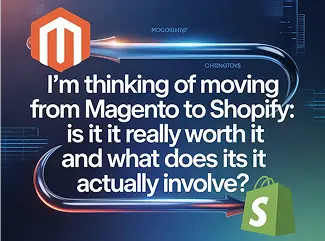
The decision to move from Magento to Shopify is one of the most significant replatforming choices an ecommerce business can make. Magento is powerful, but its power comes with...

Accuracy gap is real: Traditional CPG forecasting carries a 25-40% MAPE error rate. AI-powered models bring that down to 8-15%, according to McKinsey research....
 ReactJs
 Node.js
 AWS
AWS
 Azure
Azure
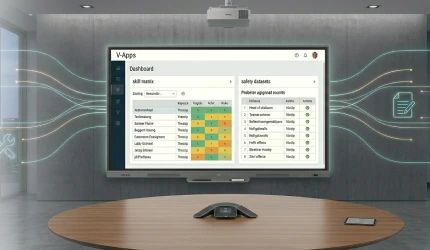
The engineering hiring landscape is evolving rapidly as enterprises compete for highly skilled talent while striving to improve quality of hire and reduce time-to-hire. Traditional recruitment models, built on manual screening, static question banks, and disconnected assessments, often struggle to deliver consistent and scalable competency-based hiring outcomes.
As organizations scale and roles grow more complex, these limitations begin to impact decision reliability, hiring accuracy, and overall confidence in candidate selection. With digital transformation accelerating and skill requirements constantly evolving, inconsistent interview practices create gaps in bias reduction in hiring and weaken structured evaluation standards.
Manual workflows further increase operational workload and extend hiring cycles, reducing visibility into predictive hiring insights and long-term workforce planning analytics, making it clear that enterprises require a more reliable and measurable recruitment framework.
To address this, APPWRK developed an AI recruitment platform that unifies resume-to-skill mapping, structured assessments, and real-time evaluation within a single workflow. The platform automates screening to reduce time-to-hire, delivers predictive candidate scoring based on skills, experience, and future potential, and eliminates manual workload while enhancing decision quality through structured, unbiased analysis.
Reliance on individual judgment and static question banks created uneven assessment depth, limited repeatability, and weakened competency-based hiring consistency across roles, directly impacting quality of hire and decision reliability at scale.
Traditional recruitment workflows centered around manual resume reviews and disconnected evaluation stages increased operational workload, extended time-to-hire, and reduced the organization’s ability to execute structured, data-driven recruitment strategies efficiently.
Conversational interviews, technical assessments, and behavioral evaluations operated in isolated workflows, preventing unified candidate benchmarking and limiting the effectiveness of skills-based hiring across departments and seniority levels.
Inconsistent interview formats and subjective evaluation criteria created gaps in bias reduction in hiring and restricted the implementation of measurable DEI hiring analytics across diverse talent pools.
The absence of structured competency-based hiring frameworks and predictive candidate scoring led to misalignment between candidate capabilities and evolving role requirements, resulting in lower quality of hire, longer ramp-up periods, and increased early attrition risk.
APPWRK implemented a centralized AI recruitment platform that unifies resume-to-skill mapping, structured interview workflows, and role-aligned evaluation models into a single scalable recruitment framework, enabling consistent competency-based hiring across functions and geographies.
The platform automates early-stage screening by converting resume-declared skills into structured screening questions and skills-based hiring assessments, significantly reducing manual workload while accelerating time-to-hire without compromising evaluation depth.
Customizable evaluation tracks allow hiring teams to configure coding assessments, case-based problem solving, behavioral interview scorecards, cognitive ability testing, and soft skills assessment aligned to role requirements, seniority levels, and strategic workforce priorities.
The system delivers predictive candidate scoring based on skills, experience, and future potential, enhancing decision quality through structured, unbiased analysis while providing measurable improvements in quality of hire.
Integrated recruitment analytics dashboards provide predictive hiring insights, DEI hiring analytics, employee potential assessment metrics, and workforce planning analytics, enabling leadership to execute a more transparent and data-driven enterprise talent acquisition strategy.
Structured competency-based hiring and predictive candidate scoring improved alignment between role requirements and candidate capability, resulting in stronger first-year performance outcomes and reduced early attrition across critical functions.
Automated screening and unified assessment workflows accelerated evaluation cycles, enabling faster hiring decisions without compromising depth, and allowing the enterprise to secure high-demand talent ahead of competitors.
Role-aligned evaluation models introduced consistent, scalable hiring standards across geographies and business units, strengthening decision reliability and embedding measurable recruitment KPIs into the enterprise talent acquisition strategy.
Predictive hiring insights, employee potential assessment metrics, and workforce planning analytics provided leadership with real-time visibility into talent quality, succession readiness, and long-term capability planning.
Structured evaluation frameworks and DEI hiring analytics enhanced fairness in candidate assessment, reduced subjectivity, and supported audit-ready compliance standards aligned with enterprise governance expectations.

 June 14, 2026
DocuGuardian extended its secure document platform so organizations can onboard and manage their own clients on a hardened AWS foundation.
 April 22, 2026
Built a scalable cloud-based file upload, processing, and delivery platform to improve reliability, performance, and operational resilience for high-volume application workloads.
 April 22, 2026
Engineering an enterprise-grade, developer-first charting and data visualization SDK used to embed high-performance interactive charts across products and applications.
 April 22, 2026
A multi-tenant SaaS platform centralizing workforce, resource, and cross-organization operations with governed access control and lifecycle management.
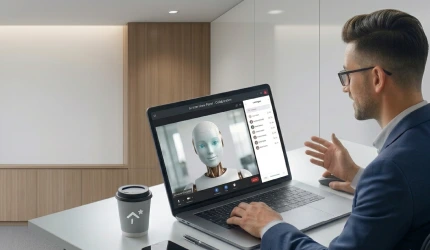 April 22, 2026
An AI-powered career enablement platform delivering ATS-optimized resumes, personalized job discovery, and skill gap insights within a unified candidate experience.
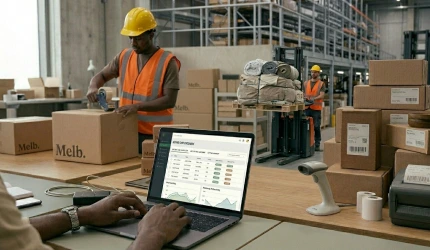 April 17, 2026
A fully integrated Inventory Management System that consolidated all channel operations into a single centrally governed platform.
 April 15, 2026
A global leader in consumer goods faced challenges...
 April 15, 2026
A unified SaaS insurance platform that centralizes claims, policy management, and analytics to streamline end-to-end insurance operations.




 February 15, 2026
A global leader in consumer goods faced challenges...

 February 15, 2026
A global leader in consumer goods faced challenges...

Odds and Ends Supply LLC
Appwrk delivered exactly what we needed a custom Shopify app built with speed, precision, and deep expertise. As a non-technical founder, I especially appreciated how their team guided me through every step and handled all complexities seamlessly. Highly responsive, reliable, and great to work with. I’d strongly recommend them for any Shopify development needs.

ICT Specialist
The communication with the web development team has been great. They respond quickly.

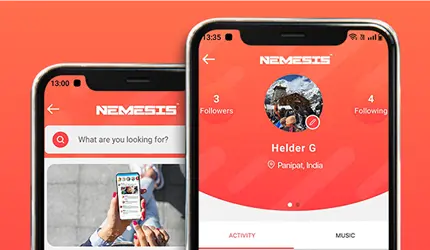
Founder & CEO, Nemesis
The team is very good, very efficient, and they leave me good review videos of the work they’ve done, and they help out a whole lot.

Director, PlusDigital
The product is still under development, but the client has been pleased with APPWRK IT Solutions’ efforts. The team communicates daily and responds quickly via Skype or email. Their high level of professionalism allows them to produce quality work. They’ve also impressed with their coding skills.
Owner, ECONESS Store
APPWRK IT Solutions Private Limited consistently delivers work on time and promptly addresses concerns, requests, and feedback.

Kargo
The company is satisfied with APPWRK IT Solutions Private Limited’s provided engineers. Most of the team was highly communicative and helpful throughout the partnership. Overall, their ability to supply developers across South East Asia stands out.

"APPWRK IT Solutions Private Limited has demonstrated high confidence in their commitment..."
"The team at APPWRK was proactive, transparent, and truly professional."
"They exceeded our expectations — on time, on budget, and with creativity!"
No empty sales pitches, just practical solutions
tailored to your business.
Let us know so we can improve the quality of the content on our pages