







 Download Case Study
5.0

"APPWRK IT Solutions Private Limited has demonstrated high confidence in their commitment..."





 Download Case Study
 Node.js
 Go Lang
 Java
Java
 WebSocket
 Azure SQL
 AWS S3
Idera is a global enterprise technology leader serving worldwide through 20+ brands and offers FusionCharts as a developer-focused visualization toolkit for embedding interactive charting and data-driven dashboards across web and mobile applications. The platform portfolio, led by Suite XT and FusionTime, supports enterprise analytics, reporting, operational monitoring, and advanced time-series visualization requirements across diverse technology environments.
As adoption expanded and product complexity increased, the organization encountered growing challenges in maintaining structured requirements documentation, managing community-reported product inconsistencies at scale, and sustaining release quality across a globally distributed developer ecosystem.
APPWRK partnered with Idera to strengthen requirements definition practices and implement a structured lifecycle process for identifying, tracking, and resolving product-level inconsistencies across the library, enabling greater release predictability and quality governance across the visualization product line.
Managing a continuously evolving JavaScript visualization library demanded a structured product definition process capable of translating diverse developer requirements into consistent, engineering-ready documentation at scale.
FusionCharts extensive chart library, spanning over 100 chart types across finance, analytics and operations domains, introduced significant complexity in sustaining consistent rendering and functional reliability at scale.
Maintaining enterprise-grade SVG and Canvas-based chart rendering consistency across all supported browsers and devices required continuous validation and issue resolution to meet global enterprise reliability expectations.
FusionTime’s ability to process and render large volumes of time-series data required backend-level performance validation and structured issue resolution mechanisms to sustain data accuracy, aggregation reliability and response efficiency across supported environments.
The library’s compatibility requirements across JavaScript, React, Angular, Vue.js and jQuery introduced ongoing complexity in sustaining integration consistency and resolving disruptions arising from major framework version transitions.
User-reported functional issues arrived in an unstructured, decentralized manner across the developer ecosystem, requiring a disciplined triage and documentation process to convert community feedback into prioritized engineering inputs.
Sustaining enterprise-grade reliability across data export, real-time streaming and large dataset handling within the library module required systematic defect identification.
A continuous influx of customer-reported incidents overwhelmed internal resources and forced teams to prioritize reactive firefighting over the strategic development of new visualization features.
Established a structured requirements definition model to translate evolving developer needs into clearly documented, engineering-ready specifications, ensuring consistency in planning, prioritization, and release alignment across the expanding visualization portfolio.
Implemented a governed lifecycle process to identify, categorize, prioritize, and resolve product-level inconsistencies within Suite XT, strengthening quality control and reducing reactive resolution cycles.
Conducted structured validation across the visualization rendering engine to identify output deviations and ensure uniform chart behavior across supported browsers, operating systems, and device environments.
Introduced backend-focused validation and performance monitoring mechanisms to sustain high-volume time-series data processing accuracy, aggregation reliability, and response efficiency for FusionTime.
Provided distributed system consultation alongside dedicated L1 and L2 support coverage to ensure backend stability, controlled incident handling, and uninterrupted operational performance.
Performed structured compatibility assessments across front-end JavaScript frameworks to mitigate version-related disruptions and restore predictable implementation behavior.
Established a formal triage and intake framework to convert decentralized developer feedback into prioritized, roadmap-aligned engineering tasks within a controlled release cycle.
Delivered functional validation across export modules, real-time streaming functions, and large dataset handling features to sustain enterprise-level reliability standards across the product ecosystem.
The partnership between Idera and APPWRK reflects how structured engineering governance and disciplined operational oversight can strengthen a complex product portfolio. By addressing stability, backend performance, and lifecycle management challenges across FusionCharts, the engagement reinforced release consistency and platform reliability within the visualization suite. This collaboration supported Idera’s broader commitment to delivering dependable developer tools to enterprise users, while ensuring sustained operational resilience and quality alignment across its product ecosystem.

 April 14, 2026
A unified SaaS insurance platform that centralizes claims, policy management, and analytics to streamline end-to-end insurance operations.
 January 7, 2026
A centralized digital platform enabling Unilever to standardize frontline training, certification, and compliance across global manufacturing operations.
 January 7, 2026
A unified logistics, supply chain, and transportation management platform built to power enterprise-scale freight operations across multiple brands and partners.
 January 6, 2026
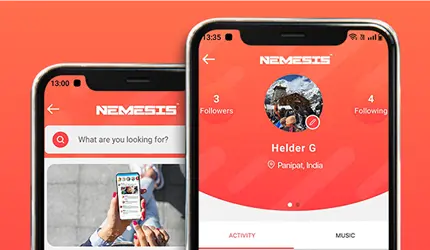
A scalable dual-panel social commerce super app that unifies content discovery, marketplace transactions, payments, and logistics into a single platform.
 December 29, 2025
Built a scalable cloud-based file upload, processing, and delivery platform to improve reliability, performance, and operational resilience for high-volume application workloads.
 June 14, 2026
DocuGuardian extended its secure document platform so organizations can onboard and manage their own clients on a hardened AWS foundation.
 April 22, 2026
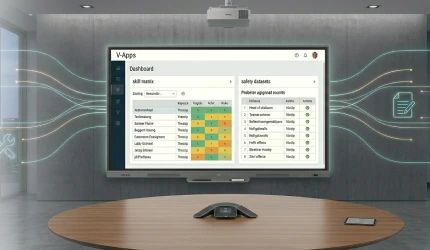
A multi-tenant SaaS platform centralizing workforce, resource, and cross-organization operations with governed access control and lifecycle management.
 April 22, 2026
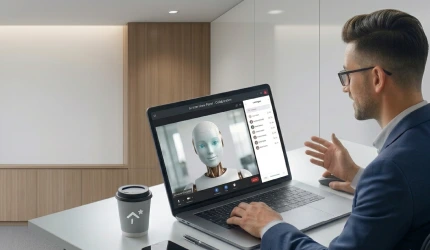
An AI-powered career enablement platform delivering ATS-optimized resumes, personalized job discovery, and skill gap insights within a unified candidate experience.
 April 17, 2026
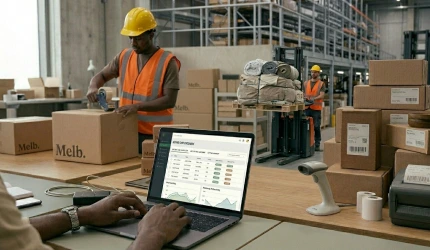
A fully integrated Inventory Management System that consolidated all channel operations into a single centrally governed platform.
 April 15, 2026
A fully integrated, scalable commerce platform enabling dynamic product content, subscription revenue and seamless wholesale operations for a growing D2C health brand.
 January 5, 2026
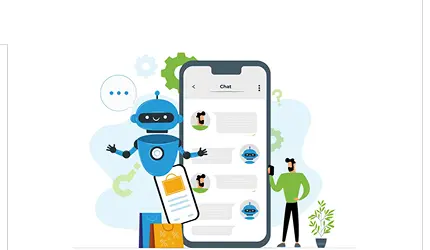
AI-powered, multi-modal conversational sales assistant transforming digital product discovery and assisted selling for a leading consumer appliance brand.

 December 26, 2025
Transforming Technical Hiring Through Dynamic Interviews, Real-Time Evaluation, and Automated Candidate Scoring.
 December 25, 2025
An AI-powered trading platform enabling intelligent strategy creation, automated execution, and real-time performance insights for modern digital traders.
 December 23, 2025
A unified enterprise analytics platform that consolidates operational data across systems into real-time, role-based dashboards, enabling faster decision-making and consistent performance visibility across locations.
 December 11, 2025
A scalable digital experience platform enabling Sportskeeda to deliver high-performance content, real-time engagement, and seamless user journeys across global audiences.
 December 10, 2025
An AI-powered conversational agent that enables intelligent, context-aware customer interactions through natural language understanding, real-time responses, and seamless multi-channel integration.

Odds and Ends Supply LLC
Appwrk delivered exactly what we needed a custom Shopify app built with speed, precision, and deep expertise. As a non-technical founder, I especially appreciated how their team guided me through every step and handled all complexities seamlessly. Highly responsive, reliable, and great to work with. I’d strongly recommend them for any Shopify development needs.

ICT Specialist
The communication with the web development team has been great. They respond quickly.

Founder & CEO, Nemesis
The team is very good, very efficient, and they leave me good review videos of the work they’ve done, and they help out a whole lot.
Director, PlusDigital
The product is still under development, but the client has been pleased with APPWRK IT Solutions’ efforts. The team communicates daily and responds quickly via Skype or email. Their high level of professionalism allows them to produce quality work. They’ve also impressed with their coding skills.
Owner, ECONESS Store
APPWRK IT Solutions Private Limited consistently delivers work on time and promptly addresses concerns, requests, and feedback.
Kargo
The company is satisfied with APPWRK IT Solutions Private Limited’s provided engineers. Most of the team was highly communicative and helpful throughout the partnership. Overall, their ability to supply developers across South East Asia stands out.

"APPWRK IT Solutions Private Limited has demonstrated high confidence in their commitment..."
"The team at APPWRK was proactive, transparent, and truly professional."
"They exceeded our expectations — on time, on budget, and with creativity!"
No empty sales pitches, just practical solutions
tailored to your business.
Let us know so we can improve the quality of the content on our pages