






Our Latest Work
Our Latest Work

Benefits of Product Customization in E-commerce: How It Boosts Sales, Loyalty, and Brand Value

August 12, 2025

Key Takeaways

The benefits of product customization in E-commerce range from boosting sales and margins to building stronger brand loyalty and reducing product returns, making it a game-changer for growth-focused online retailers.
  • E-commerce product customization drives higher sales and profit margins by empowering customers to create products that match their exact preferences, increasing perceived value, willingness to pay, and average order value.
  • It strengthens customer loyalty and advocacy by delivering personalized shopping experiences that create a lasting emotional connection with the brand.
  • Advanced customization tools like 3D configurators and AR previews reduce product return rates by ensuring accurate fit, functionality, and expectation alignment.
  • Every customization choice generates valuable customer insights, enabling precise, data-driven marketing along with more effective upselling and cross-selling strategies.
  • Unique, branded customization experiences that are difficult for competitors to replicate help businesses stand out in even the most competitive markets.
This blog will guide you through a benefits-first breakdown, industry-specific use cases, a real APPWRK success story and regional market insights crafted for E-commerce founders, digital retail marketers, Shopify store owners and product managers aiming to boost revenue, strengthen brand loyalty and elevate customer engagement through impactful product personalization.

With the rapid evolution of online shopping, tailored product design has transformed from a niche perk into a core driver of business growth. Brands that once relied on price competition or mass appeal are now discovering that empowering customers to design their own products, from small adjustments to fully personalized creations, delivers measurable value across every stage of the customer journey and business lifecycle.

Whether you are an emerging Shopify store, a D2C lifestyle brand, or a large-scale marketplace, customization delivers benefits that stretch across sales performance, customer experience, and data-driven marketing intelligence.

Table of contents

Below, we explore these advantages in three key categories, complete with real-world relevance and actionable takeaways.

Benefits of Product Personalization in E-commerce for Businesses

Product personalization is no longer just an add-on in E-commerce. It is a proven growth driver that influences everything from sales and customer loyalty to operational efficiency and brand positioning. By enabling customers to create products that match their exact preferences, brands can achieve higher profit margins, stronger emotional connections, and measurable improvements across the entire customer journey. Below are the key ways businesses benefit from integrating personalization into their E-commerce strategy.

Increased Sales & Higher Margins

A design-your-own shopping experience encourages customers to pay more because they are buying exactly what they envisioned. Real-time tools such as 3D visualizers and live price calculators reinforce the value of higher pricing by giving customers a clear, interactive view of their customized product and removing uncertainty from the buying decision. Brands typically see an average cart value lift within 3-4 weeks of launch.

For example, a custom sneaker store could boost its average basket value by 25% when customers choose exclusive color combinations and limited-edition designs.

Increased Conversions Through Personalized Shopping Journeys

E-commerce customization increases purchase likelihood by keeping shoppers engaged longer and removing uncertainty about the final product. Real-time previews, interactive design tools, and tailored recommendations all contribute to higher conversion rates. Many brands report double-digit conversion lifts within the first two seasonal campaigns. 

Avoid Abandoned Shopping Carts with Real-Time Previews 

One of the main reasons shoppers abandon their carts is uncertainty about what the final product will look like. Customization tools that offer instant 3D or AR previews remove that doubt, making customers confident enough to complete the purchase.

Reduced Product Return Rates: Aligning with Customer Expectations

High product return rates can quickly eat into profits and strain operations, making them one of the biggest challenges for E-commerce brands. Reduced product return rates start with aligning every purchase to the customer’s exact expectations. By involving shoppers in defining key specifications such as size, material, or engraving, brands can significantly cut the gap between what the customer envisions and what they receive. In apparel and home décor, where return rates can exceed 30%, customization can cut that by double digits. These improvements often become measurable in the first 1-2 months. This also aligns better with customer expectations, ensuring the product they receive matches their vision.

According to Deloitte, one in five consumers is willing to pay at least 20% more for tailored products, proving the pricing power of personalized retail.

Stand Out with a Premium Brand Image

Customization showcases craftsmanship, exclusivity, and a commitment to detail, transforming ordinary products into unique experiences that elevate brand perception, inspire trust, and create a lasting competitive edge in the minds of customers. Offering personalized packaging, high-end material choices, Monogramming, embroidery, or limited-edition designs creates an aura of luxury even for mid-market brands. 

Get Ahead of Competitors with Customization

In today’s crowded E-commerce landscape, where products and prices are often easy to replicate, customization offers a powerful competitive edge. It is not just a feature but a strategic moat that makes your brand harder to imitate and more memorable to customers. Competitors can copy your product designs, but it’s much harder for them to replicate a well-integrated, data-backed personalization engine. You can also launch micro-collections faster based on customization data trends.

Most brands see noticeable traction within the first two seasonal campaigns.

Reduces Inventory Costs

Carrying excess stock ties up capital and increases the risk of unsold products, especially in fast-changing markets. Made-to-order and print-on-demand models solve this challenge by producing items only when they’re ordered, eliminating the need to hold massive quantities of pre-produced stock. 

For example, a mid-tier sportswear brand using a made-to-order model saw a 22% drop in returns within three months, simply by adding a live size-visualizer to its custom commerce experience.

Benefits of Product Personalization in E-commerce for Customers

For customers, personalization is more than a shopping feature; it is an experience that deepens their connection to a brand. By giving them the freedom to shape products to their exact preferences, businesses can create moments of excitement, pride, and loyalty that go far beyond a single transaction. From fostering a sense of ownership to sparking repeat purchases and organic word-of-mouth promotion, the impact of personalization on the customer journey is both emotional and long-lasting.

Sense of Ownership & Emotional Connection

When customers design their own product, they don’t just buy it; they own the process. This emotional investment makes the item more meaningful, whether it’s a monogrammed leather wallet or a personalized gaming controller. This connection starts forming from the very first order.

Improved Customer Experience (UX & Engagement)

Interactive customization software, including Virtual Try-On features for physical products, turns passive browsing into active participation. Customers who spend time selecting and previewing designs are more likely to convert. For instance, a jewelry site with a gemstone selector may see users spend 3-5 minutes longer per session, increasing purchase likelihood. Engagement gains can be observed after the first customer interaction with the tool.

Customer Loyalty & Advocacy

A satisfied customization experience often turns customers into repeat buyers and vocal advocates. They share their creations on social media, bringing organic traffic to your store without extra ad spend.

Faster Repeat Purchases

Occasions like birthdays, anniversaries, and holidays become natural touchpoints for repeat business. When a past customization experience was positive, customers return to recreate that experience for different events.

Increase Word of Mouth Marketing

When customers design products they’re proud of, they’re more likely to share them with friends, family, and social media followers. This organic promotion expands your brand reach without additional ad spend. Encouraging customers to share their designs through branded hashtags, referral programs, or in-tool “Share” buttons can turn one purchase into multiple new sales.

Operational & Marketing Benefits of Personalization in E-commerce

Personalization is not just a tool for enhancing the shopping experience; it is a strategic asset that fuels smarter operations and more effective marketing. Every customer choice becomes a valuable data point, enabling brands to refine product offerings, target campaigns with precision, and strengthen brand recall. When executed well, personalization delivers both immediate sales impact and long-term business intelligence that drives sustainable growth.

Gain Better Data About Customers

Every personalization choice, from color preference to size selection, feeds into a richer first-party data profile. These insights help predict seasonal demand, optimize supply chains, and launch products with greater accuracy. Meaningful patterns often emerge as early as the first 100 orders.

Better Segmentation for Targeted Campaigns

Customization data enables hyper-targeted campaigns. For example, customers who prefer eco-friendly materials can receive promotions about your new sustainable line, improving email open and conversion rates.

Higher Personalization Accuracy

By combining customization history with behavioral analytics and customer data platforms, brands can deliver highly relevant recommendations that feel personal, such as suggesting matching accessories for a previously customized bag.

Increased Brand Recall Through Unique Products

When customers design a product themselves, it becomes more than just a purchase; it becomes a personal story they are proud to tell. This emotional connection encourages them to share their creation with others, turning each customized item into a lasting brand ambassador. The resulting word-of-mouth not only boosts long-term brand recall but also strengthens credibility without the need for ongoing ad spend.

How Does Product Customization Work in Different Industries? 

While the value of personalized retail experiences spans all online retail sectors, its business impact is magnified when applied within specific industries and customer contexts. Each category leverages personalization to solve distinct challenges, whether increasing margins, lowering returns, boosting loyalty, or improving engagement.

Below, we explore 12 major industry use cases and how APPWRK’s expertise can help you implement them for maximum ROI.

Industry-Wise Benefits of Product Personalization and How APPWRK Delivers Them

IndustryKey Strategic AdvantagesHow APPWRK Helps
Fashion & ApparelReduces returns and boosts AOVVirtual fitting rooms and dynamic size guides
Jewelry & Luxury GoodsPremium pricing and loyalty3D configurators and engraving preview
Home Décor & FurniturePerfect fit and fewer returnsAR room visualization tools
Gifting IndustryRepeat purchases and brand recallEngraving flows and seasonal gift editions
Sports & FitnessNiche performance fitPerformance-focused customization tools
Tech AccessoriesHigher margins and style appealDesign upload with real-time previews
Food & BeverageSocial sharing and giftingFlavor selection and packaging previews
Stationery & Paper GoodsEvent-driven repeat buysLive template customization
Beauty & Personal CarePersonal match and perceived valueGuided quizzes and dynamic bundlers
Toys & CollectiblesEmotional connectionVisual product builders
Automotive AccessoriesUpsell potential and functional fitFit verification and style selection
Pet ProductsOwner-pet connectionPet profile-based personalization

Fashion & Apparel 

From made-to-measure suits to AI-powered size recommendations, fashion brands see significant benefits from offering personalized fits and designs. This reduces costly size-related returns and encourages customers to pay more for pieces that fit perfectly.


How APPWRK Helps: We build custom virtual fitting room solutions, visual customization tools, and dynamic size guides to minimize returns and boost average order value.

Jewelry & Luxury Goods 

Allowing customers to choose gemstones, metals, engraving, or monogramming adds exclusivity and justifies premium pricing. Luxury buyers are drawn to products that feel one-of-a-kind.


How APPWRK Helps: We design 3D configurators and engraving preview tools to showcase high-value personalization and enhance luxury buying experiences.

Home Décor & Furniture

Letting customers configure dimensions, fabrics, and finishes ensures pieces match their space perfectly, reducing mismatch-related returns.


How APPWRK Helps: We develop AR visualization tools so customers can “place” items in their space before buying, boosting confidence and satisfaction.

Gifting Industry 

Customized gifts create an emotional impact, making buyers return for multiple occasions throughout the year.


How APPWRK Helps: We create intuitive personalization flows for name engraving, themed packaging, and seasonal gift editions using visual product customization to keep customers coming back.

Sports & Fitness: Serving Niche Performance Needs

From racket grips to custom shoe cushioning, sports brands can address highly specific performance needs, winning loyal enthusiasts.


How APPWRK Helps: We build performance-focused customization tools that integrate with equipment databases for optimal fit and function.

Tech Accessories: Increasing Margins Through Personal Style

Personalized phone cases, laptop skins, and accessories appeal to style-conscious buyers, driving higher margins through unique, self-expressive designs.


How APPWRK Helps: We integrate user-friendly design upload systems with real-time previews for style-driven tech accessory brands.

Food & Beverage 

Allowing customers to personalize flavors, blends, or packaging creates products they are proud to share socially.


How APPWRK Helps: We implement flavor selection tools and branded packaging preview systems to enhance the gifting and sharing appeal.
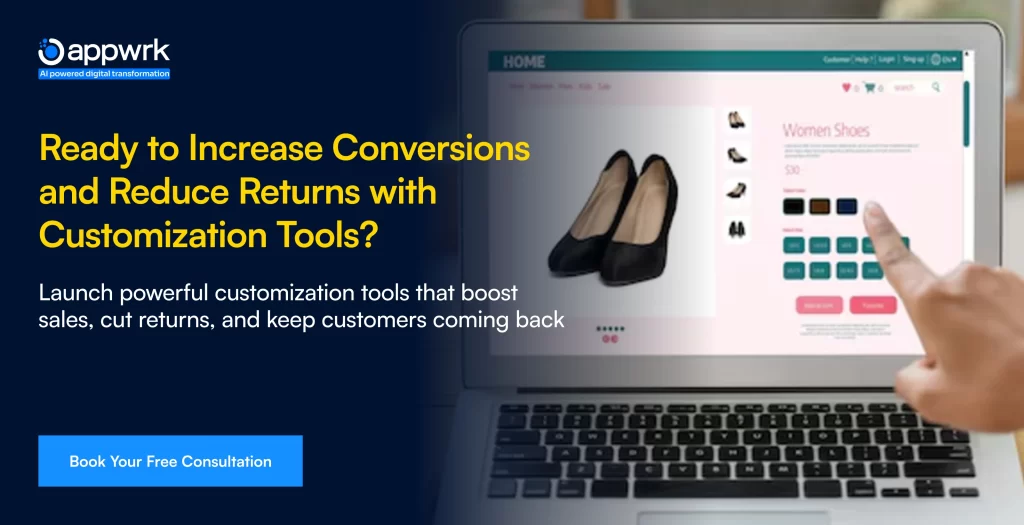
Ready to Increase Conversions and Reduce Returns with Customization Tools?

Launch powerful customization tools that boost sales, cut returns, and keep customers coming back.

Book Your Free Consultation

Custom Printed Products: Stationery and paper goods

Personalized stationery for weddings, graduations, or business branding attracts repeat buyers by adding a unique, memorable touch that encourages customers to return for future events and occasions.


How APPWRK Helps: We design intuitive template customization systems with live previews to help buyers perfect their designs.

Beauty & Personal Care: Matching Unique Consumer Profiles

Skincare and cosmetic brands can offer formulations matched to a buyer’s skin type, tone, and preferences, boosting perceived value.


How APPWRK Helps: We build guided quiz systems and dynamic product bundlers to deliver tailor-made beauty solutions.

Toys & Collectibles: Creating Emotional Ownership

From custom plush toys to personalized figurines, the toys and collectibles segment thrives on emotional connection, turning ordinary items into cherished keepsakes that customers are proud to own and share.


How APPWRK Helps: We create visual product customizers that allow children and collectors to see their designs come to life before ordering.

Automotive Accessories: Unlocking Premium Add-On Revenue

Custom seat covers, mats, and interior trims offer both functional and aesthetic appeal, driving upsells.


How APPWRK Helps: We design customization interfaces that combine fit verification with visual style selection to reduce mismatch risk.

Pet Products: Deepening Owner-Pet Bonds

From engraved collars to personalized feeding bowls, customization in this sector taps into the emotional connection between owners and pets.


How APPWRK Helps: We create easy-to-use pet profile systems that make sizing and personalization seamless.

Case Study: How APPWRK’s Custom Design Tool Increased Conversions by 34% for an E-commerce Brand

Setting the Context: Pain Points & Scale

Before partnering with APPWRK, a niche online retailer specializing in personalized merchandise, faced significant drop-offs during checkout. Customers had no way to visualize their product designs before ordering, which created hesitation and led to high cart abandonment. Return rates were also elevated due to misunderstandings about the final product’s appearance.

Solution Narrative: Interactive Customization Experience

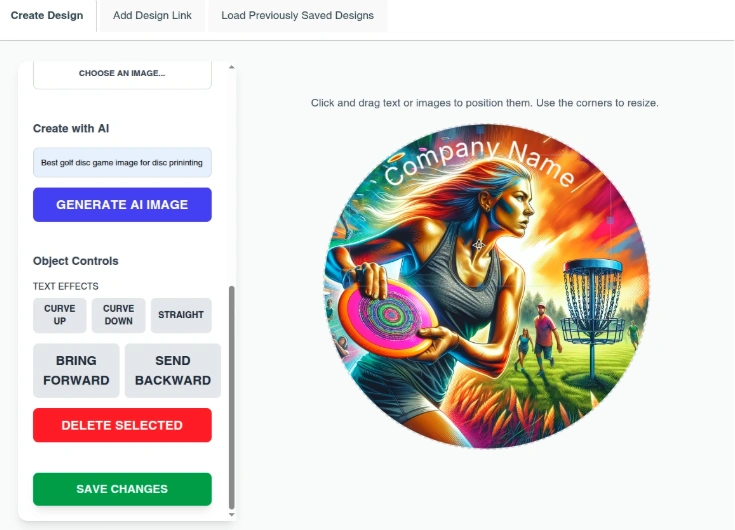
APPWRK developed an immersive, browser-based product customizer that enabled users to:

  • Add custom text in custom fonts and colors.
  • Change background colors and patterns.
  • Upload personal images or graphics.
  • Adjust and layer elements (bring to front/back).
  • Curve and align text for design flexibility.
  • Preview designs in real-time before purchase.
  • Save designs for later use and reload previous versions.
  • Automatically attach design links to orders for production accuracy.

Key Features Implemented

  • Interactive Design Canvas for live editing.
  • Persistent Design Storage to encourage repeat orders.
  • Integrated Checkout Flow with embedded design references.
  • Vector File Support for high-quality printing compatibility.
  • Order Admin Panel Access for production teams to retrieve exact customer designs.

Measurable Business Impact

  • 34% higher conversion rates post-launch.
  • 28% increase in average order value through premium customization upsells.
  • 45% growth in repeat purchase rate within six months.
  • Significant reduction in post-purchase dissatisfaction and returns.

Outcome

By transforming customization into an interactive, visually engaging experience, APPWRK helped the client convert passive shoppers into engaged buyers. This solution can be adapted for any E-commerce brand looking to increase engagement, differentiate products, improve brand awareness, and reduce costly order errors.

How Does Product Customization Demand Differ Across Regions in the Global Market?

While the benefits of made-to-order products are universal, the market maturity, consumer behavior, and adoption pace vary significantly across regions. Understanding these differences helps E-commerce brands tailor their strategies for maximum impact in each geography.

North America: Premium Pricing and Brand Storytelling

North America leads in average spend per online shopper, with consumers showing a high willingness to pay for unique and personalized products. According to reports, US retail E-commerce sales are projected to surpass $1.7 trillion by 2027, with personalization as a key driver.


Opportunity: Focus on premium customization with limited editions, luxury finishes and brand storytelling.


APPWRK’s Approach: We help brands integrate high-end customization features with AR/VR immersive shopping to justify premium pricing.

Europe: Sustainability Meets Customization

European consumers increasingly prioritize sustainable materials and ethically sourced products. Combining customization with eco-friendly materials offers a double advantage of personal relevance and environmental alignment.


Opportunity: Offer green customization options, such as recycled fabrics or low-carbon packaging.


APPWRK’s Approach: We implement eco-conscious product builders that display sustainability metrics alongside customization previews.

Asia-Pacific (APAC): Mobile-First and Social Commerce Integration

APAC markets, especially China and India, are seeing explosive growth in mobile-based customization purchases. Platforms like WeChat and Instagram Shops are driving interactive, on-the-go buying experiences.


Opportunity: Invest in mobile-first customization tools with integrated sharing features for social platforms.


APPWRK’s Approach: We build responsive, mobile-optimized customization flows with embedded social sharing to drive viral reach.

Middle East: Cultural Personalization and Luxury Demand

High disposable income and a strong gifting culture make the Middle East a lucrative market for customization, especially in jewelry, perfumes, and premium apparel.


Opportunity: Leverage cultural motifs, language personalization, and high-value gift packaging.


APPWRK’s Approach: We design customization tools that support multi-language input and luxury packaging previews to appeal to this market.

Latin America: Affordability and Value-Based Customization

While price sensitivity is higher, there is a growing appetite for affordable personalization in apparel, accessories, and gifts.

Opportunity: Provide cost-effective customization with simple design tools that keep production costs low.

APPWRK’s Approach: We create lightweight, easy-to-use customization modules that work on lower bandwidths without compromising on experience.

RegionKey TrendBiggest OpportunityAPPWRK’s Recommended Approach
North AmericaPremium personalizationLimited editions and luxury finishesIntegrate AR-driven customization tools
EuropeSustainability focusEco-friendly material preferencesEco-conscious product builders with carbon impact metrics
APACMobile-first, social shoppingSocial sharing integrationMobile-optimized customization with instant share options
Middle EastLuxury giftingMulti-language cultural personalizationHigh-value packaging and language support
Latin AmericaAffordable customizationSimple and cost-effective toolsLightweight design tools for low bandwidth

Customization vs. Personalization: Which Delivers More ROI?

While customization allows customers to actively create or modify products (e.g., choosing colors, engraving names, or altering dimensions), personalization strategies use data to tailor recommendations and offers without direct user design input.

  • Customization ROI: Customization delivers higher perceived value, greater willingness to pay, and lower return rates by giving customers direct control over product features and design. It is especially effective for products with high visual or functional variation, where personalization enhances both appeal and usability.
  • Personalization ROI: Personalization boosts conversion rates by offering targeted suggestions, streamlining decision-making, and improving cross-sell performance. By tailoring the shopping journey based on customer data and behaviour, brands can deliver relevant experiences that increase satisfaction and repeat purchases.

What’s the Best Way to Implement Product Customization in an Online Store?

Implementing product customization in digital commerce goes far beyond simply adding a tool to your website. It requires a well-planned strategy that aligns technology, operations, customer experience, and profitability to ensure the feature not only works seamlessly but also drives measurable business growth. Brands that execute well can capture higher sales, deepen loyalty, and gain a measurable edge over competitors.

Here’s a proven, four-phase roadmap to deploy personalized retail solutions effectively:

Phase 1: Identifying High-Impact Product Categories

Not every product line will generate a strong return from customization. Focus on products that:

  • Have high emotional or functional purchase value (e.g., fashion, jewelry, home décor, sports gear).
  • Offer visible differentiation when customized so customers clearly see the value.
  • Can be produced with minimal disruption to lead times and margins.

Practical Approach:

  • Conduct customer surveys and analyze sales data to identify demand hotspots.
  • Test customization on hero products before scaling to the full catalog.
  • Prioritize SKUs with proven sales volume to maximize early ROI.

Phase 2: Selecting the Optimal Technology Stack

The user experience is directly tied to the quality of your customization platform. Consider:

  • E-commerce App Integrations: Shopify apps like Zakeke, Inkybay, and Customify for turnkey solutions.
  • Advanced Visualization Tools: 3D visualization for products requiring detailed views (furniture, luxury goods).
  • Augmented Reality (AR) Tools: Let customers preview products in their own environment before purchasing.
  • Mobile-First Interfaces: Crucial in APAC and other mobile-heavy markets.

Phase 3: Streamlining Fulfillment and Production

Customization adds complexity to supply chains. To ensure efficiency:

  • Automate design file transfer from the front-end tool or custom product builder to production systems using manufacturing technology like dyeing, lasering, and physical samples.
  • Implement order verification workflows to catch design errors before manufacturing.
  • Maintain transparent lead times on product pages to set accurate customer expectations.
  • Train fulfillment teams to handle variable orders without bottlenecks.

Phase 4: Measuring ROI and Continuous Optimization

The first launch is only the starting point. To maximize results:

  • Track conversion rates, AOV, and return rates for customized vs. non-customized products.
  • Monitor repeat purchase behavior among customers who used customization features.
  • Collect qualitative feedback via post-purchase surveys to identify improvement areas.
  • Introduce new customization options or seasonal variations based on performance data.
How Can APPWRK Help Launch a Profitable Product Customization Experience?

Get a high-conversion, scalable product customization experience built for your store.

Talk to Our Experts Today

Which Product Customization Tools Are Best for an E-commerce Business?

Choosing the right product customization software is one of the most important steps in creating a seamless, high-conversion shopping experience. The ideal platform should balance ease of use, scalability, real-time previews, and integration capabilities with your E-commerce tech stack.

Below is a comparison of the top product customization tools in 2025, including those used by leading Shopify, WooCommerce, and Magento stores.

Tool NameBest ForKey FeaturesPricing
APPWRK’s Custom SolutionsIndustry-specific scalability and advanced workflowsTailored UX, backend automation, and analytics dashboardsProject-based pricing
InkybayPrint-on-demand, apparel, and signageDesign editor, color swatches, and bulk order features$29-$99/month
CustomifyMulti-category stores and small-to-mid businessesText/image upload, live preview, and mobile-friendly interface$19-$49/month
ThreekitHigh-end 3D/AR customization for enterprise brandsPhotorealistic 3D rendering, AR viewer, and asset managementCustom pricing
Infigic Food & beverage and giftingSimple personalization modules and mobile-friendly checkout$15-$39/month
Kickflip Apparel and accessoriesDrag-and-drop product builder and Shopify integration$29-$79/month
Teeinblue Print-on-demand and giftsClipart library, design layers, and live previews$29-$59/month

Quick Tool Insights

  • APPWRK’s Custom Solutions: Tailored for businesses needing fully customized, scalable E-commerce platforms with deep backend integration and data analytics to optimize conversions and operations.
  • Inkybay: Perfect for print-on-demand businesses and apparel stores. It offers a flexible design editor, easy color swatch selection, and bulk ordering tools, making it ideal for B2B and B2C customization workflows.
  • Customify: A lightweight, budget-friendly option for multi-category online stores. Allows image and text uploads, real-time previews, and works seamlessly on mobile devices.
  • Threekit: A premium solution for brands that require photorealistic 3D models and enterprise-grade AR customization. Ideal for furniture, luxury goods, and high-ticket items.
  • Zakeke: One of the most popular E-commerce customization apps for Shopify, WooCommerce, and Magento. Known for its realistic 3D rendering and AR previews, it’s widely used in fashion, jewelry, and home décor to boost customer confidence before purchase.
  • Infigic: Specializes in simple, fast-to-launch personalization modules for industries like food & beverage and gifting, with a focus on mobile-optimized checkout flows.
  • Kickflip: Offers a drag-and-drop product builder with strong Shopify integration, making it a great fit for apparel and accessories.
  • Teeinblue: A favorite in the POD (print-on-demand) gifting sector, with a clipart library and multi-layer design tools for quick personalization.

Choosing the right platform is not about features alone. It is about how quickly it integrates with your fulfillment process and how well it matches your customers’ buying behavior.

What Are the Best Examples of E-commerce Product Customization in 2025?

Seeing product customization in action can inspire ideas for your own store. Below are five high-impact real-world examples from different industries, showing how brands are using customization to boost AOV, loyalty, and market share.

Example 1: Nike By You (Footwear & Apparel)
Nike’s “Nike By You” lets customers design sneakers with custom colors, materials, and even personal text. The feature has helped Nike capture younger, style-conscious buyers and increase repeat purchases through limited-edition seasonal drops.

Example 2: Swarovski (Jewelry & Luxury Goods)
Swarovski offers engraving and crystal color selection for its jewelry and accessories. This approach adds emotional value to gifts and drives higher margins through perceived exclusivity.

Example 3: Joybird (Home Décor & Furniture)
Joybird’s online configurator lets customers select fabrics, color options, and finishes for furniture. This reduces return rates and positions the brand as a premium, made-to-order furniture retailer.

Example 4: M&M’s Custom Print (Food & Beverage)
M&M’s allows customers to print names, dates, or images on candies for events. It’s a proven driver for seasonal and corporate gifting, turning a commodity product into a memorable keepsake.

Example 5: Starbucks “Drink Personalization” (Food & Beverage)

Starbucks’ mobile app and in-store ordering allow customers to personalize almost every aspect of their drink, from milk alternatives and espresso shots to flavor syrups and toppings. This high level of customization not only boosts ticket size (through upselling add-ons) but also builds customer loyalty by making every order feel uniquely theirs. The feature also drives repeat visits through seasonal, limited-edition flavors and exclusive member personalization options.

What Are the Main Challenges of Product Customization and How To Solve Them?

While there’s no denying that E-commerce product customization can boost average order value, strengthen customer loyalty, and set brands apart in competitive markets, its success depends on navigating key operational, technical, and strategic challenges. By addressing these early and implementing proven solutions, retailers can fully realize the benefits of customization without compromising efficiency, brand integrity, or profitability.

High Technology Adoption Costs

The Drawback:
Advanced customization platforms with 3D product configurators, AR/VR visualization, or AI-driven personalization require substantial investment in product development, integration, and hosting. Smaller and mid-sized retailers may find upfront costs prohibitive.

The Solution:

  • Start lean with core customization features before scaling into high-cost technologies.
  • Leverage cloud-based SaaS solutions (Shopify customization apps, API-driven tools) to spread costs over time.
  • Partner with experienced development teams like APPWRK to build modular, scalable E-commerce platforms that grow alongside your business.

Production and Fulfillment Complexity

The Drawback:
Each custom order introduces variability in production workflows, leading to potential bottlenecks, errors, and inconsistent quality control.

The Solution:

  • Automate design file transfers directly from the customization interface to manufacturing.
  • Standardize on production-ready file formats to prevent costly conversions.
  • Use real-time order tracking for internal teams and customers to increase transparency and trust.

Maintaining Brand Identity at Scale

The Drawback:
Open-ended customization options can result in off-brand designs that dilute visual identity and brand perception.

The Solution:

  • Establish brand-safe customization parameters with predefined fonts, color palettes and templates.
  • Introduce seasonal or limited-edition design frameworks to keep customer creativity aligned with your branding.
  • Use AI-assisted recommendation engines to nudge users toward on-brand selections.

Increased Customer Support Load

The Drawback:
Custom Custom-printed products can trigger higher volumes of pre-sale inquiries and post-purchase disputes about the final product’s appearance.

The Solution:

  • Offer high-resolution, real-time previews to manage expectations.
  • Include interactive tooltips and guided design tutorials to reduce confusion.
  • Implement live chat or chatbot support integrated into the customization process.

Longer Production Timelines

The Drawback:
Customized orders often require more time to produce, which can impact delivery promises and frustrate customers.

The Solution:

  • Clearly communicate estimated delivery windows during checkout.
  • Use batch processing where possible to streamline production.
  • Implement rush order pricing tiers to offset expedited costs.

Data Privacy and Compliance Risks

The Drawback:
Custom designs may involve uploading personal data or copyrighted material, creating potential compliance challenges.

The Solution:

  • Include clear terms of use and copyright policies in the customization flow.
  • Use AI-powered content moderation to filter inappropriate or infringing designs.
  • Ensure GDPR/CCPA compliance for stored user data.

How APPWRK Can Help You Succeed in E-commerce Product Customization

The difference between a customization feature that looks impressive but underperforms and one that delivers consistent revenue growth, customer loyalty, and operational efficiency lies in execution. That’s where APPWRK comes in.

With a proven track record in developing scalable, high-conversion customization platforms, APPWRK has helped brands across fashion, luxury, home décor, sports, and tech achieve measurable results. Our solutions are designed not just to “look good” but to:

  • Increase average order value (AOV) through premium customization upsells.
  • Reduce return rates with real-time visualization and production-accurate previews.
  • Improve customer retention via engaging, easy-to-use design interfaces.
  • Deliver data-driven insights to inform marketing and inventory strategies.

Our Approach

  1. Strategic Discovery: We begin with a deep dive into your product variants, customer personas, and market positioning to identify high-impact customization opportunities.
  2. Technology Blueprint: We recommend and implement the right tech stack, from Shopify, Bigcommerce, and omnichannel E-commerce integrations to bespoke 3D product customization, visual technologies, and AR/VR experiences.
  3. Seamless Integration: Our developers ensure your customization feature integrates flawlessly into your E-commerce platform, checkout flow, and fulfillment systems.
  4. Performance Optimization: Post-launch, we monitor engagement, AOV, return rates, and repeat purchases, iterating for maximum ROI.

Why Partner with APPWRK

  • Full-stack expertise in customization tools, from UX design to backend automation.
  • Experience across 12+ E-commerce industries, ensuring solutions are market-ready.
  • Data-led decision-making for smarter, faster improvements.
  • A collaborative approach that blends technology, design, and business growth strategy.

Let’s Build Your Next Growth Driver


Whether you’re launching your first customization feature or scaling an existing one, APPWRK can help you deliver personalization at scale without sacrificing brand consistency or operational efficiency.

Book a free consultation with our E-commerce customization experts. 

FAQs

Why Should I Invest in Product Customization for My E-commerce Store?

Customization enables businesses to offer custom-printed products tailored to each customer’s unique preferences, leading to higher satisfaction, stronger brand loyalty, and increased sales. It also opens the door to upselling, supports premium pricing strategies, and helps reduce return rates by ensuring the final product meets customer expectations.

What are the advantages and disadvantages of product customization?

Advantages: Higher customer engagement, competitive differentiation, premium pricing potential, improved retention, and valuable customer data insights.


Disadvantages: Increased production complexity, higher initial technology costs, potential for longer delivery times, and additional customer support requirements.

What are the top five benefits of offering customized production or service?

Customized production or service allows brands to meet unique customer needs, command higher margins, and reduce unsold inventory risk by producing on demand. It also strengthens brand differentiation in competitive markets.

Does product customization increase sales?

Yes. By aligning products with personal tastes, customization increases perceived value, encourages premium purchases, and drives repeat orders. Brands using effective customizers often report double-digit growth in average order value (AOV).

How does customization improve customer loyalty?

Customization fosters emotional connection and ownership, making customers more likely to return. A personalized experience signals that the brand understands and values the buyer, encouraging long-term loyalty.

What’s the Best Product Customization Tool for an E-commerce Business?

Top tools include 3D product configurators, AR/VR visualization platforms, AI-driven recommendation engines, and customization apps for platforms like Shopify, WooCommerce, and Magento. The choice depends on budget, complexity, and scalability needs.

Is product customization profitable?

When implemented strategically, tailored E-commerce offerings can significantly improve profitability by enabling premium pricing, reducing returns, and increasing customer lifetime value (CLV). Success depends on efficient production workflows and strong user experience design.

How does AI change product customization in 2025?

AI is moving customization from static options to dynamic suggestions, predicting a customer’s ideal design based on browsing history, purchase patterns, and even social media behavior.

What’s the ROI timeline for small Shopify stores adding customization?

Most small Shopify brands see measurable ROI within 4-6 months, especially if customization is introduced on high-margin products first.

Which Industries Should Avoid Product Customization and What Makes It Fail?
Industries with low perceived personal value (e.g., basic commodities) or complex production bottlenecks often fail to see ROI. Success depends on both emotional and functional appeal.

About The Author

Gourav

Gourav Khanna is the Co-founder and CEO of APPWRK, leading the company’s vision to deliver AI-first, scalable digital solutions for enterprises and high-growth startups. With over 16 years of leadership in technology, he is known for driving digital transformation strategies that connect business ambition with outcome-focused execution across healthcare, retail, logistics, and enterprise operations. Recognized as a strategic industry voice, Gourav brings deep expertise in product strategy, AI adoption, and platform engineering. Through his insights, he helps decision-makers prioritize market traction, operational efficiency, and long-term ROI while building resilient, user-centric digital systems.

Related Post
Our Premium Clientele
IFB- APPWRK Client
Sencha - APPWRK Client
Idera - APPWRK Client
Fusion Charts - APPWRK Client
Froala - APPWRK Client
Beesers - APPWRK Client
SpinCV - APPWRK Client
Sportskeeda
Tracker Products - APPWRK Client
Kargo - APPWRK Client
Renew Power - APPWRK Client
MobileTape - APPWRK Client
FatFinger - APPWRK Client
Proactive Health - APPWRK Client
Week Plan-APPWRK Client
Fetch Pet Care - APPWRK Client
All About Labels - APPWRK Client
Fashion Store - APPWRK Client
August Robotics - APPWRK Client
Atar Calculator - APPWRK Client
Ayyeka - APPWRK Client
Noteworthy AI - APPWRK Client
NEMESIS - APPWRK Client
Snagajob - APPWRK Client
Byepix - APPWRK Client
Hyring Spree - APPWRK Client
Podcast Buddy - APPWRK Client
Passing Plan - APPWRK Client
Fashion Central - APPWRK Client
Opsio - APPWRK Client
Spinola - APPWRK Client
Vidchops - APPWRK Client
MYBOS - APPWRK Client
Notadvise Financial - APPPWRK Client
Tubeify - APPWRK Client
Sportskeeda - APPWRK Client
APPWRK Clients' Success Stories