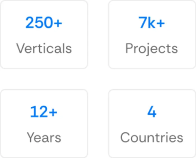
150+ minds across 4 countries. Join a culture of innovation, ownership & growth.
Rewire for AI
From machine learning to deep learning, from classification tools to overall process automation – our AI engineers will help you retool your existing system or enhance your company results.
Ship faster, scale smarter, built for product companies and SaaS teams
Our Latest Work
We strive hard to deliver result-driven digital solutions across the globe. Check out our case studies to get a glimpse of how we ideate, innovate, and create unconventional digital solutions according to the requirements of our clients.
Discover diverse and passionate insights from our tech enthusiasts. We collaborate across various sectors to streamline operations and drive innovation. Explore our rapidly growing collection of articles to see why we’re at the forefront of IT solutions.
The decision to move from Magento to Shopify is one of the most significant replatforming choices an ecommerce business can make. Magento is powerful, but its power comes with...
Accuracy gap is real: Traditional CPG forecasting carries a 25-40% MAPE error rate. AI-powered models bring that down to 8-15%, according to McKinsey research....
Real stories from global leaders who trusted us with their ideas.
Partnering with APPWRK helped us build a compliant and scalable healthcare platform, accelerating our time-to-market by 35%. Their team consistently delivered outstanding work.
Beesers
Digital Healthcare Client
Collaborating with APPWRK, Sportskeeda modernized its platform into a real-time sports engagement ecosystem, enabling seamless content delivery, scalable fan interactions, and high-velocity performance.
Sportskeeda
Sports & Entertainment Partner
Working with APPWRK was effortless. They captured our vision, maintained full compliance, and delivered a digital experience that built trust and elevated how customers interact with our fintech brand.
PayPenny
Fintech Partner
Working with APPWRK gave us confidence in adopting AI responsibly. Their team built a safe, intelligent bot that transformed how we engage with leads and helped us achieve measurable revenue growth.
IFB
AI Transformation Partner
Leveraging APPWRK’s digital expertise, Nemesis launched a scalable, compliant, and safe super app that connects content delivery, real-time communication, and logistics management within a single platform.
Are your digital systems becoming harder to scale, slower to adapt, and costlier to maintain? Do you feel like every new feature request or customer demand turns into a lengthy, expensive IT overhaul? In today’s fast-paced market, where business agility and customer experience are top priorities, relying on monolithic or rigid tech stacks can seriously hold your growth back.
Composable architecture is emerging as a powerful solution for modern businesses that need to move fast without breaking things. By allowing you to build and update applications using interchangeable, modular components, composable architecture helps you become more agile and adapt faster to market changes. In fact, according to Gartner, organizations that use composable architecture are seen to be implementing new features 80% faster than their competitors.
In this blog, let’s explore what composable architecture really means, its key characteristics, and how implementing it the right way can transform your business.
Core Concept of Composable Architecture: Composable architecture uses modular, plug-and-play components to create flexible, scalable systems that adapt quickly to change.
Comparison with Other Architectures: Unlike monolithic and headless models, composable architecture decouples the front and back ends entirely, enabling more agile development and deployment.
Real-World Applications: From SwiftUI and Android apps to eCommerce platforms and open-source projects, composable architecture is being used to accelerate innovation across industries.
Step-by-Step Implementation Plan: Adopting a composable architecture involves assessing your current system, modularizing components, integrating API-first tools like TCA, and testing each layer independently.
Common Pitfalls: Challenges like managing deeply nested state, performance slowdowns, and securing loosely connected services can arise without thoughtful architectural planning.
What Is Composable Architecture?
Composable architecture is a modular approach to software design that allows systems to be built using independent, self-contained components. These components can be developed, deployed, and scaled independently, then “composed” together through APIs or orchestration layers to form complete applications or digital experiences.
While the term “composable architecture” was first coined by Jonathan Murray in 2013, it has only recently gained mainstream traction, especially as businesses increasingly demand agility, scalability, and faster time to market. With more developers and enterprises discovering its strategic advantages, composable architecture is fast becoming the preferred choice for building modern digital systems.
Not only does composable architecture allow businesses to mix and match best-of-breed solutions for specific needs, but it also empowers them to rapidly innovate, respond to customer demands, and minimize technical debt, without overhauling entire systems.
By using composable architecture, businesses can achieve:
Faster innovation cycles through plug-and-play components
Greater flexibility in adapting to market shifts or customer feedback
Reduced risk and cost when integrating new technologies
A future-proof foundation for digital transformation and growth
Key Characteristics of Composable Architecture
Often drawn comparisons to Lego and building blocks, composable architecture allows applications to be assembled using modular, interchangeable components that can be easily combined, rearranged, or replaced. As companies push for greater agility and faster innovation, this approach allows them to swap out or upgrade individual components without disrupting the entire application.
By understanding the core traits of composable architecture, businesses can ensure their digital products are made up of the right elements to support rapid growth, seamless updates, and long-term adaptability. Let’s take a closer look at the core characteristics that define composable architecture:
1. Modularity
Composable architecture is built on the principle of modularity, where each feature or function of a system is broken down into self-contained units or components. These components can be developed, maintained, and deployed independently, which makes it easier to manage complexity, fix bugs, and roll out updates.
2. Reusability
One of the biggest advantages of composable architecture is reusability. Components built for one application can be reused in other projects or across different departments, saving development time, ensuring consistency, and reducing operational overhead. This promotes a more efficient development cycle and a better return on investment.
3. Scalability
As your business grows, your systems need to scale with it. Composable architecture allows you to scale individual components based on demand rather than the entire application. Whether it’s handling more users, adding new features, or integrating third-party services, you can scale parts of your system as needed, ensuring performance and cost-efficiency.
4. Interoperability
In today’s digital ecosystems, systems must work well with others. Composable architecture ensures interoperability by using standard APIs and protocols that allow different components and services to communicate seamlessly.
This enables smooth integration with existing tools, platforms, and third-party applications, helping businesses avoid vendor lock-in and build ecosystems that work in harmony.
5. Flexibility
Perhaps the most compelling trait of composable architecture is flexibility. Businesses can quickly respond to changing market needs, customer feedback, or technological advances by swapping, upgrading, or reconfiguring components, without needing to rebuild entire applications. This enables continuous improvement and rapid innovation.
Benefits of Using Composable Architecture
In an era where digital agility can define a company’s success or failure, composable architecture has become a strategic necessity for modern businesses. This shows just how critical modular, adaptable systems are for businesses aiming to stay ahead in a rapidly changing digital landscape.
By embracing composable architecture, organizations gain the ability to move faster, reduce IT complexity, and build future-ready systems that scale with their evolving needs. Here are five key benefits of using a composable architecture:
1. Faster Time to Market
Composable systems enable teams to build and launch features more quickly by using pre-built, interchangeable components. This accelerates development cycles and allows businesses to respond to market demands or customer feedback with greater speed.
2. Reduced Development and Maintenance Costs
By reusing existing components and decoupling systems, businesses can significantly reduce the time and cost of development. Maintenance becomes simpler, as changes can be made to individual components without impacting the entire application. Choosing the right mobile app development company can make all the difference in ensuring that your architecture remains scalable, maintainable, and aligned with long-term business goals.
3. Vendor and Technology Independence
Since composable systems rely on open standards and APIs, organizations are not locked into a single vendor or platform. This freedom allows businesses to integrate best-of-breed technologies and swap out components as better solutions emerge.
4. Increased Innovation Velocity
With modular systems, teams can experiment, test, and roll out new ideas quickly, without disrupting core services. This sandbox-style flexibility supports continuous innovation and helps businesses capitalize on emerging trends and technologies faster than competitors.
5. Seamless Integration with Existing Systems
Composable architecture is built for interoperability, which means businesses can integrate new capabilities without having to rip and replace legacy systems. This hybrid approach reduces risk and cost, especially for enterprises transitioning to modern platforms.
6. Resilience and Risk Mitigation
Decoupled components reduce the impact of failure; if one module experiences an issue, the rest of the system can continue functioning. This increases uptime and reliability, which are critical for maintaining customer trust and operational continuity.
Composable Architecture in Modern App Development
Traditional monolithic architectures have become increasingly unsustainable, leading to bloated codebases, slower release cycles, and higher maintenance costs. By structuring applications as collections of modular, self-contained components, modern app developers are able to reduce development bottlenecks and accelerate time to market.
Swift Composable Architecture (TCA)
The Swift Composable Architecture (TCA), developed by Point-Free, is a popular framework that brings the principles of composable architecture to the Swift ecosystem. It provides a clear structure for managing state, actions, and effects using a unidirectional data flow.
With TCA, iOS developers can build apps that are testable, predictable, and easy to maintain, especially as complexity grows. It promotes high-quality coding, code reuse, and enforces architectural consistency across large-scale Swift projects.
TCA Architecture in SwiftUI
When paired with SwiftUI, TCA enhances the declarative UI experience by cleanly separating concerns such as UI rendering, state management, and business logic. Developers can define views as functions of state and respond to changes through well-structured actions.
This integration leads to scalable app designs that are easier to test and debug, especially in data-intensive applications or apps requiring complex workflows.
Using Composable Architecture with Android
On the Android side, composable architecture is supported through modern tools like Jetpack Compose, Hilt, and MVI/MVVM patterns. Android developers can structure their apps using reusable UI and logic components that communicate through defined interfaces.
This modularity simplifies testing and enables faster development, especially in large teams or multi-module applications. Composability in Android encourages feature isolation, making updates and rollbacks safer and more efficient.
Vue & iOS Integration in Composable Architecture
In some hybrid app development or cross-platform scenarios, developers are integrating frameworks like Vue.js with native platforms such as iOS to leverage composable design across the frontend and mobile layers. For instance, a Vue-based web interface can share logic or data layers with an iOS app using common APIs or bridging layers.
This approach allows iOS app development companies to reuse business logic across platforms while still tailoring UI experiences for each, leading to more efficient development cycles and consistent cross-platform behavior.
Composable Architecture vs Monolithic vs Headless
As businesses look to modernize their digital infrastructure, the choice of architectural model becomes critical. Three key approaches dominate the conversation today: monolithic, headless, and composable. Each has its own strengths, limitations, and ideal use cases.
However, in a landscape where flexibility, speed, and scalability are paramount, composable architecture is quickly emerging as the clear path forward. Let’s break down how it compares with the other two with a comprehensive table:
Aspect
Composable Architecture
Monolithic Architecture
Headless Architecture
Structure
Built from modular, interchangeable components
All components are tightly integrated into a single codebase
The backend is decoupled from the frontend
Flexibility
Highly flexible and adaptable to change
Rigid; changes require altering the entire system
Flexible in frontend delivery, but backend may still be monolithic
Scalability
Easily scalable by adding or updating individual components
Scaling often requires duplicating the entire app
Frontend scalability is high; backend depends on its structure
Development Speed
Enables parallel development and faster iteration
Slower development due to tight coupling
Allows fast frontend updates, but backend changes still require effort
Integration Capabilities
Designed for API-first and multi-service integration
Limited integration flexibility
Good for frontend APIs; backend integrations may need workarounds
Technology Stack Freedom
Teams can use different stacks for each component
Single tech stack across the entire app
Frontend can use any framework; backend stack is fixed unless customized
Maintenance
Easier to maintain and update parts independently
Maintenance is complex and risk-prone
Frontend maintenance is easy; backend updates still require coordination
Monolithic Systems: The Old Way
Monolithic architecture refers to a traditional, all-in-one system where the frontend, backend, and database are tightly coupled into a single codebase. While once effective for simple applications or smaller teams, this approach becomes unwieldy as applications scale.
Any change, big or small, often requires testing and redeploying the entire application, leading to slower release cycles, increased risk, and higher development costs. For today’s rapidly evolving digital needs, monolithic systems often hinder agility and innovation.
Headless vs Composable: What’s the Difference?
Headless architecture decouples the frontend (the “head”) from the backend, allowing developers to build custom user experiences across different channels (web, mobile, IoT) using APIs. While this model improves flexibility compared to monolithic systems, it often lacks business logic modularity and is typically centered around content delivery systems like CMSs.
Composable architecture, on the other hand, goes a step further. It not only decouples the frontend and backend but also breaks the backend into modular, reusable components that are each responsible for a specific function (like checkout, product search, or user authentication). This results in greater flexibility, faster development, and the ability to evolve individual components without impacting the entire system.
Why Composable Is Future-Proof
Composable architecture is built for change, and that makes it inherently future-proof. As customer expectations shift and new technologies emerge, businesses need an architecture that allows them to adapt without rebuilding their entire system. Composable enables that through:
Incremental updates and scaling, reducing risk and cost.
Technology agnosticism, allowing easy integration of best-of-breed tools.
Faster time to market with reusable, API-connected services.
Support for omnichannel experiences, personalization, and rapid experimentation.
Real-World Examples of Composable Architecture
As composable architecture continues to gain traction, it’s being widely adopted in real-world mobile and web projects where scalability, modularity, and testability are essential. Frameworks like The Composable Architecture (TCA) by Point-Free have provided developers with practical tools to apply these principles, particularly in SwiftUI development. This section explores practical applications, live projects, and open-source examples that demonstrate how composable architecture is solving real problems in production environments.
Example Use Cases from iOS and Android
In the iOS ecosystem, TCA is used to power apps that require robust state management and modular feature design. One well-documented use case is the Point-Free app itself, which showcases how TCA can manage complex navigation, dependencies, and user flows.
On Android, similar composable patterns are adopted using frameworks like Jetpack Compose combined with Unidirectional Data Flow (UDF) architectures like MVI (Model-View-Intent), which reflect composable principles through modular, testable state containers. Apps that manage dynamic content, real-time data updates, or multi-feature workflows are particularly well-suited for this approach.
GitHub Projects Using TCA (The Composable Architecture)
There is a growing list of the composable architecture github projects that actively implement The Composable Architecture (TCA), demonstrating its real-world applicability and flexibility.
One standout example is isowords, a full-featured word puzzle game developed by the creators of TCA at Point-Free. This project is particularly notable because it showcases advanced usage of TCA principles, including complex user interfaces, navigation patterns, multiplayer interactions, and asynchronous data handling, all managed through a clean, modular, composable architecture.
What Is Composable Commerce Architecture?
Composable commerce architecture is a modern approach to building eCommerce platforms that prioritizes flexibility, speed, and customization. Unlike traditional, monolithic eCommerce systems that come as one-size-fits-all solutions, composable commerce breaks down the digital commerce stack into modular, best-of-breed components, each responsible for a specific business capability like checkout, product search, content management, or customer data.
Recent studies reveal that around 72% of retailers have already adopted a composable approach to commerce. With this type of architecture, retailers are empowered to build tailored experiences and adapt to market shifts faster, without being locked into rigid legacy platforms.
Key Components of Composable Commerce
Composable commerce is structured around Packaged Business Capabilities (PBCs), which are standalone services that handle specific functions in the commerce journey. Some core components include:
Product Information Management (PIM)
Order Management System (OMS)
Shopping Cart & Checkout
Content Management System (CMS)
Customer Relationship Management (CRM)
Search and Recommendations
These components communicate via APIs, giving businesses the freedom to choose the best tools for each function and compose them into a custom commerce experience.
Benefits of Composable Commerce for Modern Retail
Modern retailers operate in a highly competitive, fast-moving digital landscape. Composable commerce offers strategic advantages such as:
Agility: Launch new features or campaigns quickly without overhauling the entire system.
Scalability: Independently scale services based on demand (e.g., during holiday sales).
Personalization: Use real-time data to craft more personalized and engaging shopping experiences.
Lower Total Cost of Ownership (TCO): Replace only what’s needed instead of replatforming entirely.
Future-Proofing: Easily integrate emerging tech and stay ahead of digital trends.
Composable Commerce vs Traditional eCommerce Platforms
Composable commerce offers far more adaptability compared to traditional platforms, which often struggle to support today’s complex, omnichannel buying journeys. Here is a detailed comparison table between the two:
Feature
Traditional E-commerce
Composable Commerce
Architecture
Monolithic, all-in-one
Modular, API-first
Customization
Limited, vendor-dependent
Highly customizable
Flexibility
Hard to change or scale
Easy to adapt, extend, or replace
Time to Market
Slower due to tight coupling
Faster with independent components
Vendor Lock-in
High
Low
When Should You Choose Composable Commerce?
Composable commerce is a powerful solution, but it’s not for every business at every stage. You should consider it if:
You’re outgrowing your legacy or all-in-one commerce platform.
Your team wants to innovate quickly and run A/B tests across channels.
You need advanced personalization, integrations, or omnichannel capabilities.
You’re expanding globally and need a scalable, flexible infrastructure.
You want freedom from vendor lock-in and control over your tech stack.
How to Implement Composable Architecture
Adopting composable architecture isn’t just a technical shift but a strategic evolution that impacts how your organization builds, scales, and maintains digital products. By embracing modularity and an API-first mindset, businesses can create systems that are resilient, agile, and primed for continuous innovation. Below is a step-by-step guide to implementing composable architecture effectively.
Step 1 – Assess Your Current Architecture
Before diving into composability, start by auditing your existing architecture. Identify the components that are tightly coupled, difficult to scale, or create bottlenecks. Understand how your current system handles key functions like data processing, user interaction, and third-party integrations. This will help you pinpoint what to modernize, retain, or replace as you transition.
Step 2 – Break into Modular Components
Next, deconstruct your application into modular, function-specific units. Each module should serve a single purpose, such as authentication, search, checkout, or content delivery. By isolating these functions, teams can independently develop, update, and scale different parts of the application without impacting the whole system.
Expert Tip
Organize your development teams to mirror your component structure (e.g., one team for checkout, another for user profiles). This decentralization speeds up development and minimizes inter-team dependencies.
Step 3 – Choose a Headless or API-First Approach
A composable system thrives on API-first or headless infrastructure. This allows each component, be it frontend or backend, to communicate through APIs, enabling seamless integration across platforms and services. Tools like GraphQL, RESTful APIs, and headless CMSs make it easier to decouple services and support omnichannel delivery.
Step 4 – Integrate TCA or Relevant Libraries
If you’re developing in the Swift ecosystem, consider using the Swift Composable Architecture (TCA). TCA SwiftUI brings structure, predictability, and testability to applications through modular state management and unidirectional data flow. For other platforms, leverage architecture libraries and frameworks that align with composable principles, such as Redux (JavaScript), Jetpack Compose (Android), or Recoil (React).
Expert Tip
Choose technologies and vendors that support open APIs, headless principles, and interoperability. This future-proofs your architecture and gives you the freedom to switch or upgrade components as your needs evolve.
Step 5 – Test and Optimize by Component
Finally, shift your testing strategy to focus on individual components. Since each module is self-contained, you can conduct isolated unit tests, performance benchmarks, and security checks with minimal cross-impact. Optimize components based on usage patterns, load behavior, and user feedback. This granular testing approach leads to faster iterations and higher-quality releases.
Challenges and Considerations
While composable architecture offers unmatched flexibility and scalability, adopting it isn’t without challenges, especially when using frameworks like The Composable Architecture (TCA) or working with modular systems.
From managing state complexity to ensuring secure data flows, businesses and development teams must be aware of the common pitfalls and considerations to make composable systems both effective and sustainable.
Performance Bottlenecks in TCA
Performance Bottlenecks in TCA often emerge when applications scale and the state tree becomes too large or deeply nested. In Swift Composable Architecture, all state changes flow through a central store and reducer system, which, while powerful for consistency and testability, can lead to unnecessary view re-renders and sluggish performance if not optimized properly.
Common issues include over-scoped state, excessive use of effects, or inefficient reducer composition. Developers must carefully scope stores to smaller views, debounce side effects, and avoid redundant computations to maintain responsiveness, especially in complex SwiftUI applications.
Managing State in SwiftUI with TCA
TCA architecture Swift simplifies UI development, but state management becomes more intricate with TCA. Developers often face challenges such as:
Navigating deeply nested or interdependent state structures
Ensuring consistent data flow across modules
Debugging view updates triggered by global state changes
Expert Tip
If too much of your app relies on a single data source or logic core, it can slow everything down. It is important to push for decentralization wherever possible.
Security & Data Handling in Modular Systems
With composable and modular systems, data flows between independently developed services, increasing the surface area for security vulnerabilities. Key considerations include:
API authentication and access control across components
Data consistency and validation across microservices
Ensuring compliance with data privacy regulations (e.g., GDPR, HIPAA)
Implementing secure APIs, encrypting sensitive data, and enforcing strict data contracts between services are critical to maintaining system integrity. Additionally, consider using API gateways, audit trails, and token-based access to reduce risks in distributed environments.
Resources & Documentation
Whether you are planning to implement a composable architecture or looking to deepen your technical understanding, having access to the right resources is essential. This section compiles authoritative documentation, open-source repositories, and recommended learning paths to help you or your team explore, adopt, and scale composable architecture effectively across platforms like Swift, iOS, Vue, and Android.
The Composable Architecture GitHub Repo
The official Composable Architecture GitHub repository, created and maintained by Point-Free, is the central hub for everything related to Swift Composable Architecture (TCA). It offers comprehensive, production-ready implementations of core architectural principles, like state management, effect handling, and modularity, built specifically for Swift and SwiftUI apps.
Official Docs for Swift TCA
For teams looking to implement TCA with confidence, the official Swift Composable Architecture docs provide clear, actionable guidance. From architectural principles to integration strategies, it’s a vital reference point for scalable app development.
Recommended Learning Paths (Vue, iOS, Android)
To effectively adopt a composable architecture across different platforms, it is important to follow structured learning paths tailored to each ecosystem. Whether you’re working with Vue.js, iOS (Swift/TCA), or Android, following the official resources will help your team build a strong foundation and scale with confidence.
Final Thoughts: Is Composable Architecture Right for You?
As with any architecture choice, it’s essential to evaluate your current needs, team capabilities, and long-term goals in order to make the right choice. If your business values rapid iteration, seamless integrations, and future-ready infrastructure, then adopting composable architecture will be the right decision that guides your business towards the path of scalability and agility.
Looking for the right development company to bring your composable architecture to life? Whether you’re modernizing a legacy stack, moving away from a monolithic setup, or building a scalable app from scratch, APPWRK IT Solutions, the best app development, and AI-powered digital transformation company, helps you implement composable architecture in a way that aligns with your business goals and accelerates your path to innovation. Contact us today and take the first step toward scalable innovation!
Frequently Asked Questions (FAQs)
What is Swift Composable Architecture (TCA)?
Swift Composable Architecture is an open-source framework created by Point-Free for building applications in a modular, testable, and composable way using Swift and SwiftUI TCA. It promotes unidirectional data flow, centralized state management, and reducer-based logic to make app development more scalable and predictable, particularly useful in complex applications that require structured state handling.
How is TCA different from traditional MVC or MVVM in SwiftUI?
Unlike MVC (Model-View-Controller) or MVVM (Model-View-ViewModel), which often blur boundaries and create tightly coupled components, TCA strictly separates concerns. It centralizes state and business logic in reducers, encourages pure functions, and offers composability through scoped stores. This makes it easier to test, debug, and manage state across large applications, which is often challenging with traditional patterns in SwiftUI.
Is composable architecture only for mobile apps like iOS/Android?
Not at all. Composable architecture is a universal design principle that applies to both frontend and backend systems across mobile, web, and cloud applications. While mobile apps benefit significantly from composable state management (like in TCA or Redux), the broader concept is used in enterprise architectures, SaaS platforms, and headless E-commerce where modular services need to interoperate seamlessly.
Can I use composable architecture with frameworks like Vue or React?
Yes, composable architecture works very well with Vue, React, and other modern JavaScript frameworks. In React, for example, state management libraries like Redux, Recoil, Zustand, or architectural patterns like Atomic Design support composability. Similarly, Vue’s Composition API allows developers to break logic into reusable, independent functions, mirroring the principles of composable architecture.
Are there any open-source projects using composable architecture?
Yes, several open-source projects and libraries embrace composable principles. Point-Free’s TCA, Redux, Vuex, and tools like Apollo GraphQL follow modular, composable patterns. Additionally, eCommerce platforms like Vendure and Saleor, and CMSs like Sanity.io and Contentful, are built with composability in mind, offering public repos or API-first headless models.
Is there a Gartner report for composable architecture or iPaaS vendors?
Yes, Gartner has published reports on composable architecture and iPaaS (Integration Platform as a Service). They also release Magic Quadrants evaluating leading iPaaS and composable technology vendors, which are valuable resources for enterprise decision-makers.
What is the difference between modular and composable architecture?
While modular architecture refers to breaking a system into self-contained components, composable architecture takes it further by focusing on business capabilities and enabling seamless integration via APIs.
Composable systems are more flexible and built with change in mind; they’re designed to reassemble, replace, or extend components without disrupting the entire system, making them better suited for fast-paced digital environments.
Where can I find documentation for composable architecture?
You can find official documentation on Point-Free’s website for Swift TCA, as well as detailed guides on platforms like GitHub, Vue’s Composition API docs, or Redux Toolkit for React. For enterprise-level resources, Gartner, MACH Alliance, and blogs from tech leaders like Netlify, Contentful, or CommerceTools regularly publish insights and best practices related to composable and headless architecture.
Gourav Khanna is the Co-founder and CEO of APPWRK, leading the company’s vision to deliver AI-first, scalable digital solutions for enterprises and high-growth startups. With over 16 years of leadership in technology, he is known for driving digital transformation strategies that connect business ambition with outcome-focused execution across healthcare, retail, logistics, and enterprise operations.
Recognized as a strategic industry voice, Gourav brings deep expertise in product strategy, AI adoption, and platform engineering. Through his insights, he helps decision-makers prioritize market traction, operational efficiency, and long-term ROI while building resilient, user-centric digital systems.
Subscribe to APPWRK Blogs, We'll Do the Rest!
Get Blogs on UI/UX, Mobile Apps, Online Marketing, and Web development technology.
Unlock worthy and priceless suggestions from the masters of mobile and web app development