150+ minds across 4 countries. Join a culture of innovation, ownership & growth.
Rewire for AI
From machine learning to deep learning, from classification tools to overall process automation – our AI engineers will help you retool your existing system or enhance your company results.
Ship faster, scale smarter, built for product companies and SaaS teams
Our Latest Work
We strive hard to deliver result-driven digital solutions across the globe. Check out our case studies to get a glimpse of how we ideate, innovate, and create unconventional digital solutions according to the requirements of our clients.
Discover diverse and passionate insights from our tech enthusiasts. We collaborate across various sectors to streamline operations and drive innovation. Explore our rapidly growing collection of articles to see why we’re at the forefront of IT solutions.
The decision to move from Magento to Shopify is one of the most significant replatforming choices an ecommerce business can make. Magento is powerful, but its power comes with...
Accuracy gap is real: Traditional CPG forecasting carries a 25-40% MAPE error rate. AI-powered models bring that down to 8-15%, according to McKinsey research....
Real stories from global leaders who trusted us with their ideas.
Partnering with APPWRK helped us build a compliant and scalable healthcare platform, accelerating our time-to-market by 35%. Their team consistently delivered outstanding work.
Beesers
Digital Healthcare Client
Collaborating with APPWRK, Sportskeeda modernized its platform into a real-time sports engagement ecosystem, enabling seamless content delivery, scalable fan interactions, and high-velocity performance.
Sportskeeda
Sports & Entertainment Partner
Working with APPWRK was effortless. They captured our vision, maintained full compliance, and delivered a digital experience that built trust and elevated how customers interact with our fintech brand.
PayPenny
Fintech Partner
Working with APPWRK gave us confidence in adopting AI responsibly. Their team built a safe, intelligent bot that transformed how we engage with leads and helped us achieve measurable revenue growth.
IFB
AI Transformation Partner
Leveraging APPWRK’s digital expertise, Nemesis launched a scalable, compliant, and safe super app that connects content delivery, real-time communication, and logistics management within a single platform.
Nemesis
Super App Partner
Your Yard. Our Technology. Total Upgrade.
Partner with Appwrk to build a smarter, automated YMS that grows with your logistics network.
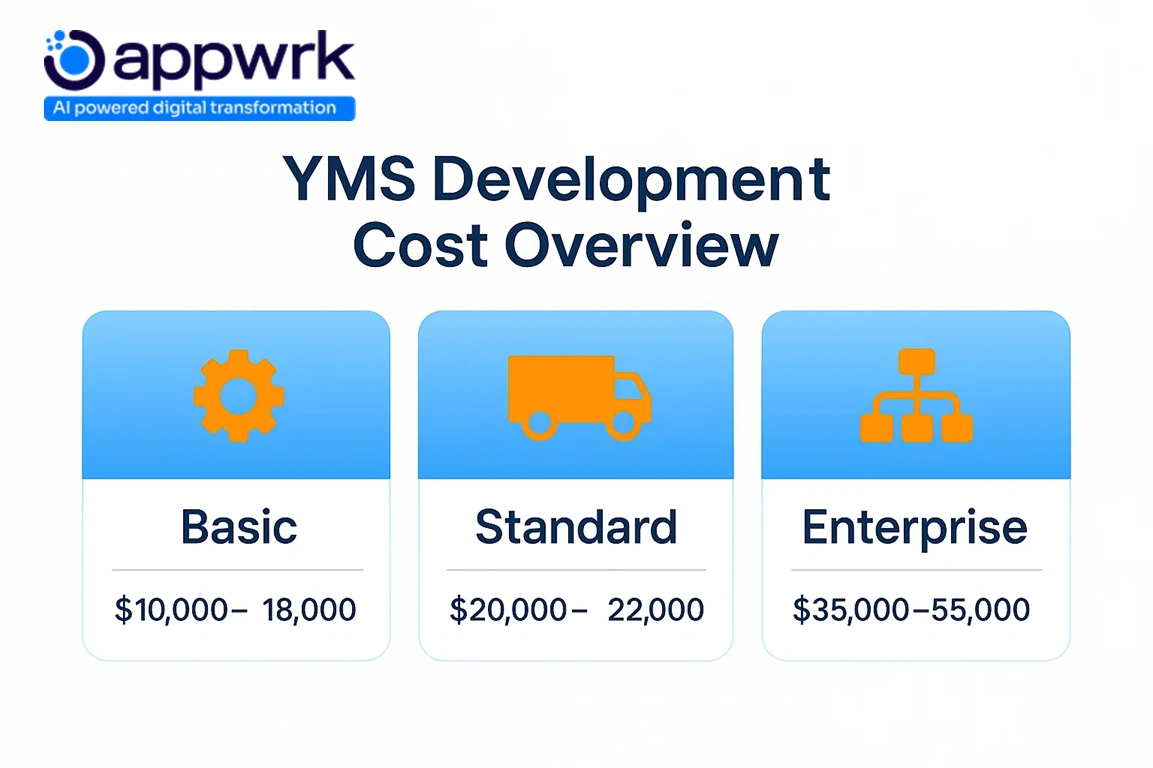
The cost to build a yard management system (YMS) ranges from $10,000 to $65,000, supported by development rates of $25 to $45/hour. This gives logistics leaders, warehouse operators, and supply-chain teams a fast, realistic cost benchmark.
A basic yard management system software MVP, covering gate check-ins, dock scheduling, and real-time yard visibility, can be built in 4 to 6 weeks.
Advanced versions with RFID/IoT tracking, workflow automation, AI-based yard forecasting, and WMS/TMS/ERP integrations take 12 to 20 weeks.
Pricing increases when adding multi-facility access, fleet coordination, yard slotting, or cross-system synchronisation, yet remains significantly lower than enterprise vendor packages.
Custom YMS builds are ideal for operations replacing manual yard logs with digital coordination, reduced dwell time, faster truck turnaround, and automated dock and yard workflows.
For teams evaluating the best yard management systems or dock and yard management system options, this cost range serves as the clearest starting point.
Developing a Yard Management System (YMS) helps logistics teams replace manual gate checks with a digital, real-time orchestration model. Modern yard management software improves asset flow, cuts dwell time, boosts safety, and gives operations teams stronger visibility, trailer utilisation insights, and tighter control over dock and yard workflows.
In the U.S., the market stood atUS$1.5B, supported by rapid digitalisation and demand for real-time asset tracking and automated gate processes.
The broader YMS sector is accelerating even faster, with a 31.6% CAGR and a total value of US$4.98B by 2032, driven by Visual AI, Computer Vision, RFID, and AI-based automation across multi-yard networks.
Research & Markets projects the global market to reach US$13.3B by 2030, powered by control tower logistics, electronic documentation, advanced scheduling, and 2D/3D visualisation.
Grand View Research reports that billing & yard management alone will grow from US$1.14B (2024) to US$3.08B (2030), supported by demand for detention reduction, bottleneck control, carrier coordination, and labour optimisation.
ABI Research also notes that manufacturers and 3PLs will each exceed US$1B in YMS investments by 2032 as they adopt automation, AV support, and next-gen web-based control dashboards.
Yard Management System Development Cost
A custom Yard Management System (YMS) can be built starting at $12,000, making it far more affordable than most enterprise Yard Management Software alternatives. This covers a functional MVP featuring gate management, automated check-in / check-out, real-time yard visibility, a trailer status board, and basic dock scheduling. Costs increase with IoT/RFID integration, carrier-booked appointments, yard map visualisation, and multi-yard support, but remain accessible for mid-market logistics teams.
Cost Range by Complexity (Basic, Standard, Enterprise)
YMS Type
Features Included in the Yard Management System (YMS) development
Estimated Cost for YMS development
Basic YMS MVP
Gate check-ins, trailer utilisation view, and manual dock assignment
$12,000 to $18,000
Standard YMS
Real-Time Yard Visibility, automated dock scheduling, carrier sync, Mobile Access
Typical annual run cost for most midsize operations is $5,000 to $8,500.
Build vs Buy: Cost Implications of YMS Development
YMS Option
Year-1 Cost of YMS development
Notes
Custom Build
$12K to $65K
One-time cost, custom workflows
Enterprise YMS License
$120K to $350K+
Recurring per-yard licensing costs
Hybrid Customization
$40K to $90K
Extends vendor platform with custom logic
Why mid-market teams prefer custom YMS builds:
Lower long-term TCO with Fixed-Rate Pricing and Unlimited User Seats
Tailored dock & yard workflows
Faster scaling across facilities
Better alignment with bottlenecks, detention monitoring, carrier collaboration, and spotter/yard jockey efficiency
Problems a Yard Management System Solves
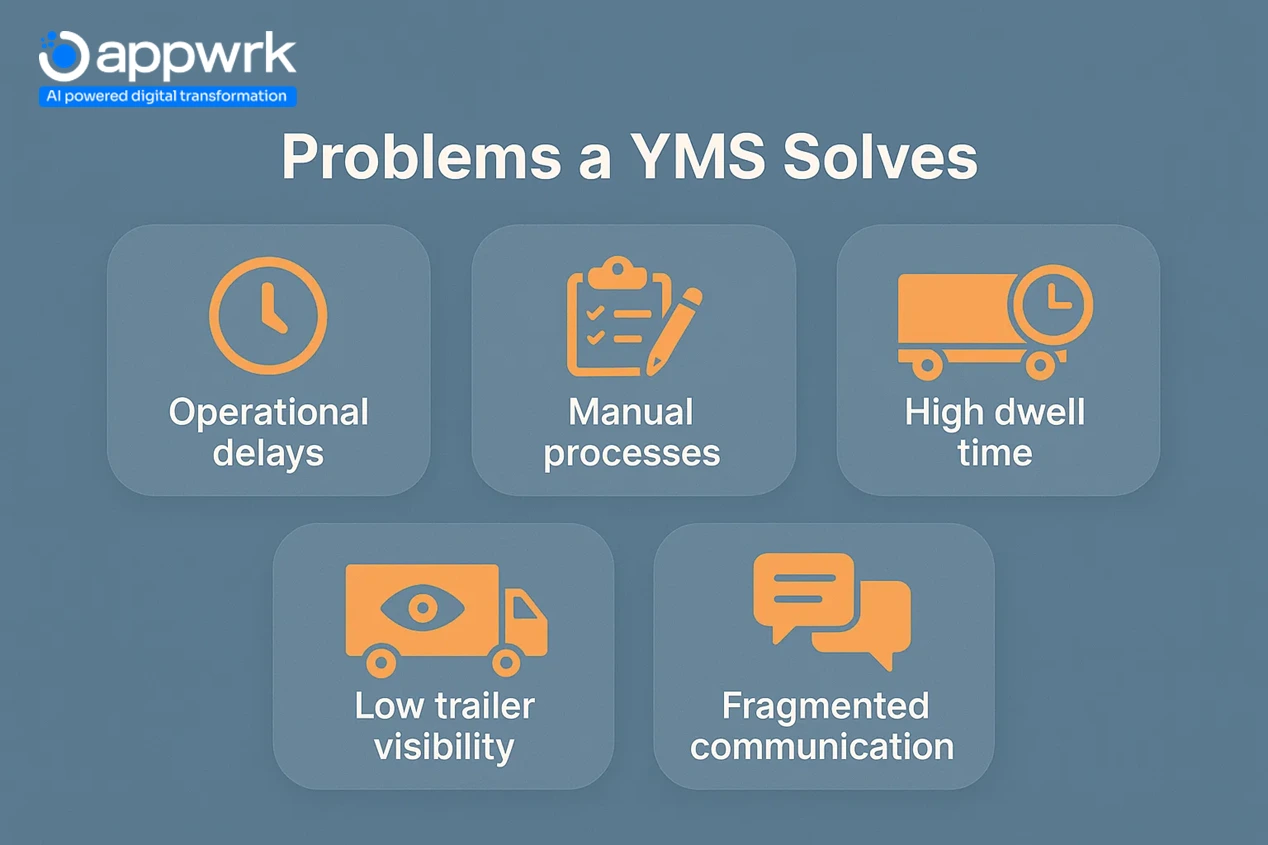
A Yard Management System solves the core operational gaps that slow down trailer flow, increase dwell time, and create avoidable delays across logistics sites. By replacing manual processes with real-time visibility and automated coordination, a YMS keeps movements predictable, compliant, and cost-efficient.
Inefficient Yard Movements & Operational Delays
Unplanned trailer moves slow dock turnover. A modern Yard Management System (YMS) improves Trailer Utilisation by giving teams Real-Time Yard Visibility, automated check-in / check-out, Yard Driver Task Optimisation, and Intelligent Move Logic that reduces manual decision-making.
Lack of Visibility into Trailer, Dock & Asset Status
A YMS replaces guesswork with digital tracking. Operators instantly see loaded, idle, delayed, or ready trailers on a live Yard Map / Interactive Yard Layout, improving accuracy and reducing bottlenecks.
Manual Gate Operations & Paper-Based Processes
Paper logs cause check-in delays. A YMS digitises Check-In / Check-Out Processes, captures driver details, automates workflow steps, and speeds up gate management by 30 to 40%.
High Dwell Times & Detention Costs
Without automated dock scheduling, detention skyrockets. YMS tools provide Appointment Scheduling, detention monitoring/alerts, and Carrier-Booked Appointments, reducing dwell time by 10 to 25%.
Fragmented Communication Across Logistics Teams
Multiple teams operate in silos. A YMS unifies warehouse, yard, carriers, and security through shared dashboards, Mobile Access, Driver Communication, and Event & Exception Alerts, preventing misrouting and delays.
Use Cases of Yard Management System Across Logistics & Supply Chain
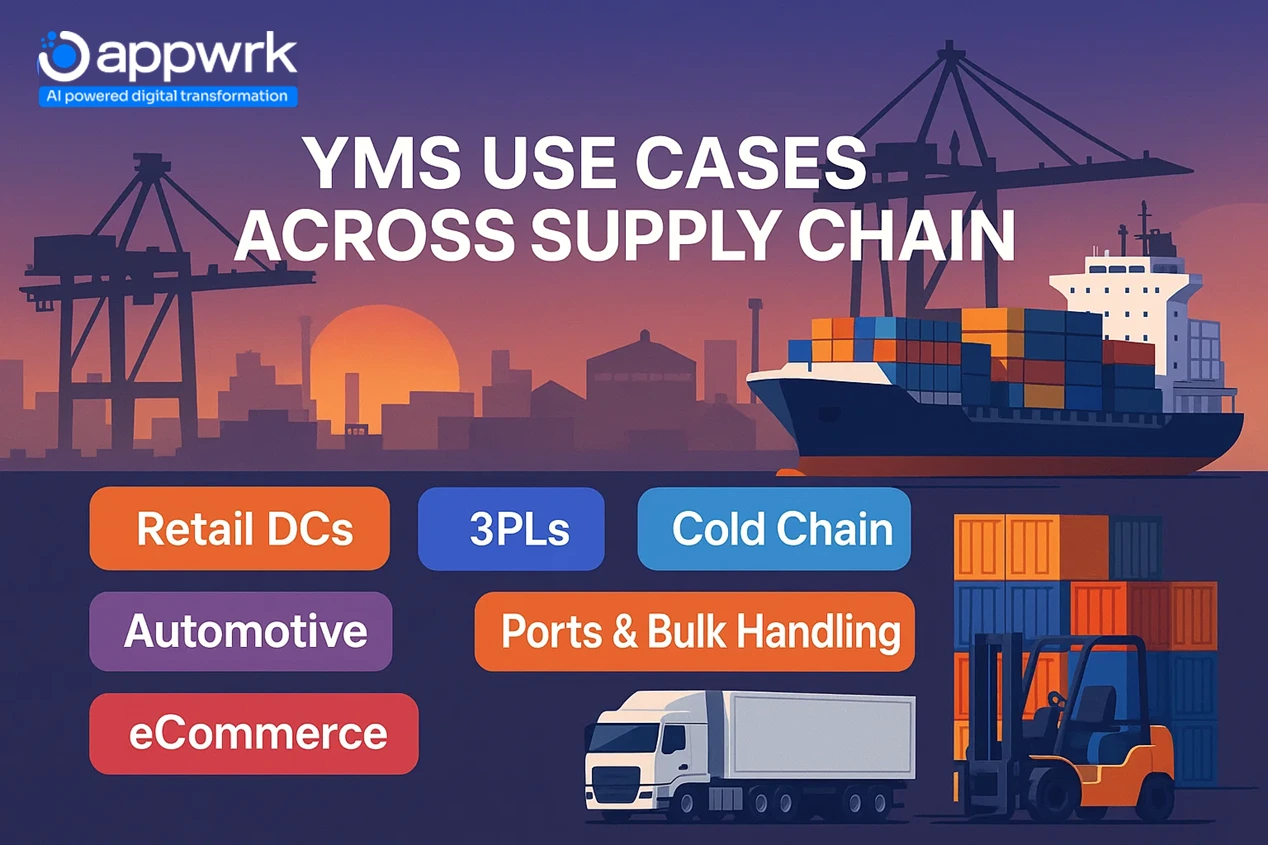
A modern Yard Management System adapts to the unique operational rhythms of every logistics environment, from high-velocity retail hubs to complex port operations. By delivering real-time trailer visibility, smoother gate-to-dock moves, and standardized workflows, a YMS strengthens efficiency across the entire Supply Chain network.
Retail Distribution Centres
Retail yards handle high inbound volume. A YMS helps by:
Tracking priority SKUs and trailer locations
Automating Dock Scheduling
Reducing peak-season queues
Stores gain better visibility, fewer stockouts, and faster truck turns.
Third-Party Logistics (3PLs)
3PL operations need accuracy across multiple clients. A YMS provides:
Smooth dock scheduling, carrier collaboration, and dock labour optimisation
Conduit
Small to mid-sized sites
Simple UI, quick onboarding, fixed-rate pricing
Core Features of a Modern YMS
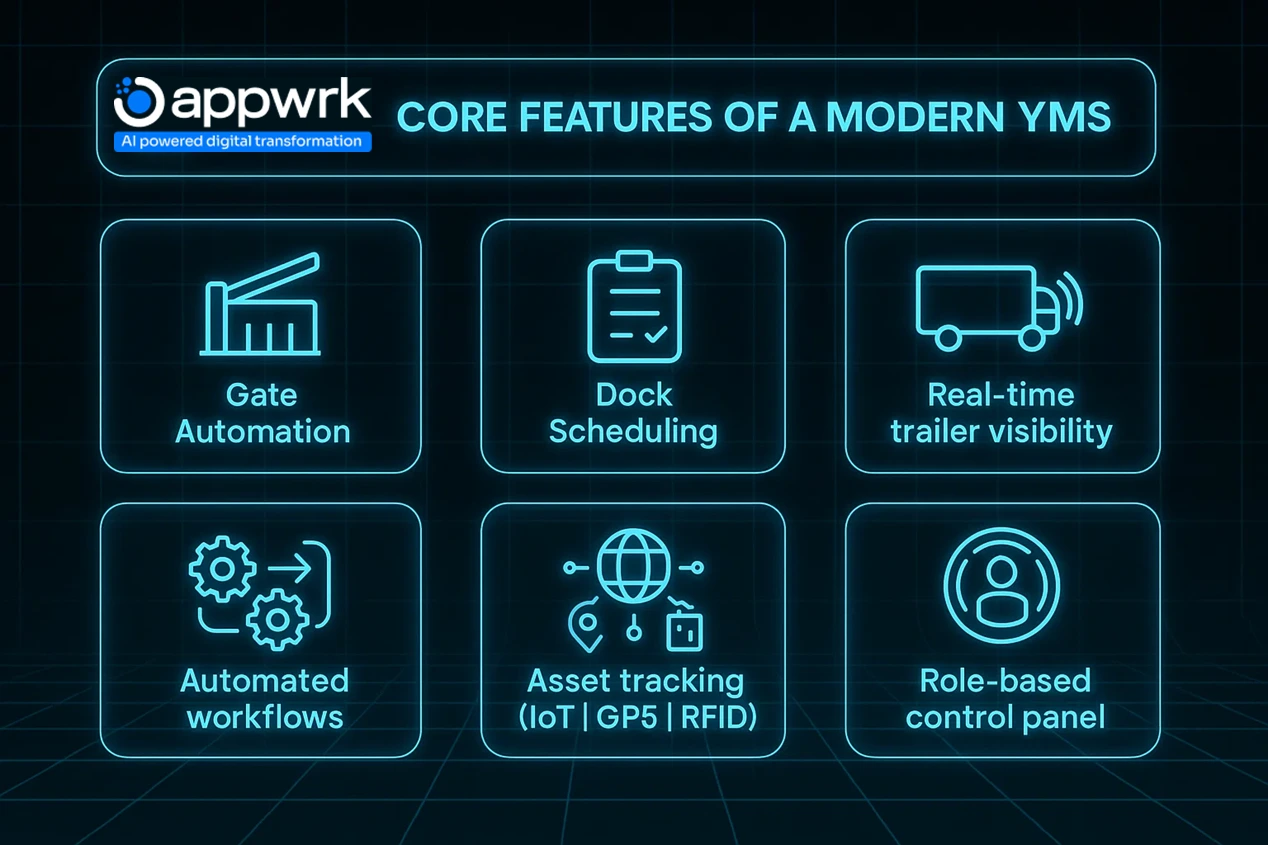
The strength of any Yard Management System lies in its ability to streamline daily operations through automation, visibility, and data-driven control. These core features create a unified environment where every trailer, task, and movement is monitored and optimized in real time.
Gate & Security Management
Modern Yard Management Software improves gate throughput using Gate Management, Automated Check-In / Check-Out, Electronic Documentation, and SmartGate-style digitalisation. Security teams access a Web-Based Control Room with Real-Time Yard Visibility, Real-Time Asset Tracking, and Safety & Security at Yard alerts that track carriers, assets, and incoming vehicles. The system supports Carrier Self-Service Portal, Unlimited User Seats, and Fixed-Rate Pricing.
Dock Scheduling & Automated Appointments
A YMS enhances Dock Scheduling, Carrier-Booked Appointments, Appointment Scheduling, and Appointment Windows to reduce Bottlenecks and detention risk. Operators get drag-and-drop moves, Intelligent Move Logic, and Optimisation of Yard & Dock Labour. Capacity Issues / KPIs Dashboard views help improve throughput and reduce detention using Detention Monitoring / Alerts.
Real-Time Yard Visibility Dashboard
Dashboards show Trailer Utilisation, parking lot positions, and yard zones using 3D / 2D Yard Visualisation, Yard Map / Interactive Yard Layout, RTLS, Radar Tracking / Positioning, and Container Zones mapping. Tools like C3 Yard, YardView, GoRamp, and Opendock YMS emphasise digital Single Source of Truth workflows. Operators track Inventory Tracking, Equipment Utilisation Tracking, Trailer Movements, and Supply Chain flow with Visual AI and Computer Vision.
Driver Task Allocation & Workflows
Role-based dashboards support Yard Driver Task Optimisation, Task Allocation, and automated workflows for shunters and spotters, improving Spotter / Yard Jockey Efficiency. Mobile Access and Event & Exception Alerts ensure coordinated activity, while Business Rules Automation improves consistency across the yard.
Carrier Performance & Operational Analytics
A strong YMS enhances Performance Reporting, Operating Cost Reduction, and Carrier Collaboration. Cloud-native analytics track KPIs such as dwell time, dock efficiency, load accuracy, and detention exposure. Customizable Dashboards and real-time reporting help teams make faster decisions.
Asset Tracking via GPS / IoT / RFID
IoT sensors, RFID Integration, GPS, and Visual AI provide real-time positioning for trailers and containers. Integration with TMS / ERP / WMS ensures seamless connectivity across Supply Chain networks and eliminates manual checks.
Multi-Tenant Role-Based Access
Cloud-native setups allow multi-tenant access with Elastic Capacity, Unlimited User Seats, and configurable permissions. These accessible solutions support supervisors, drivers, 3PL teams, and carriers working across Network View / Multi-Yard Visibility environments.
Predictive Yard Optimisation (AI-Driven)
AI-driven automation supports congestion prediction, Autonomous Vehicles coordination, sequencing, and automated dispatching. Platforms such as C3 Yard, Kaleris, GoRamp, and DataDocks use AI-driven automation and forecasting models to reduce waste and improve operational agility.
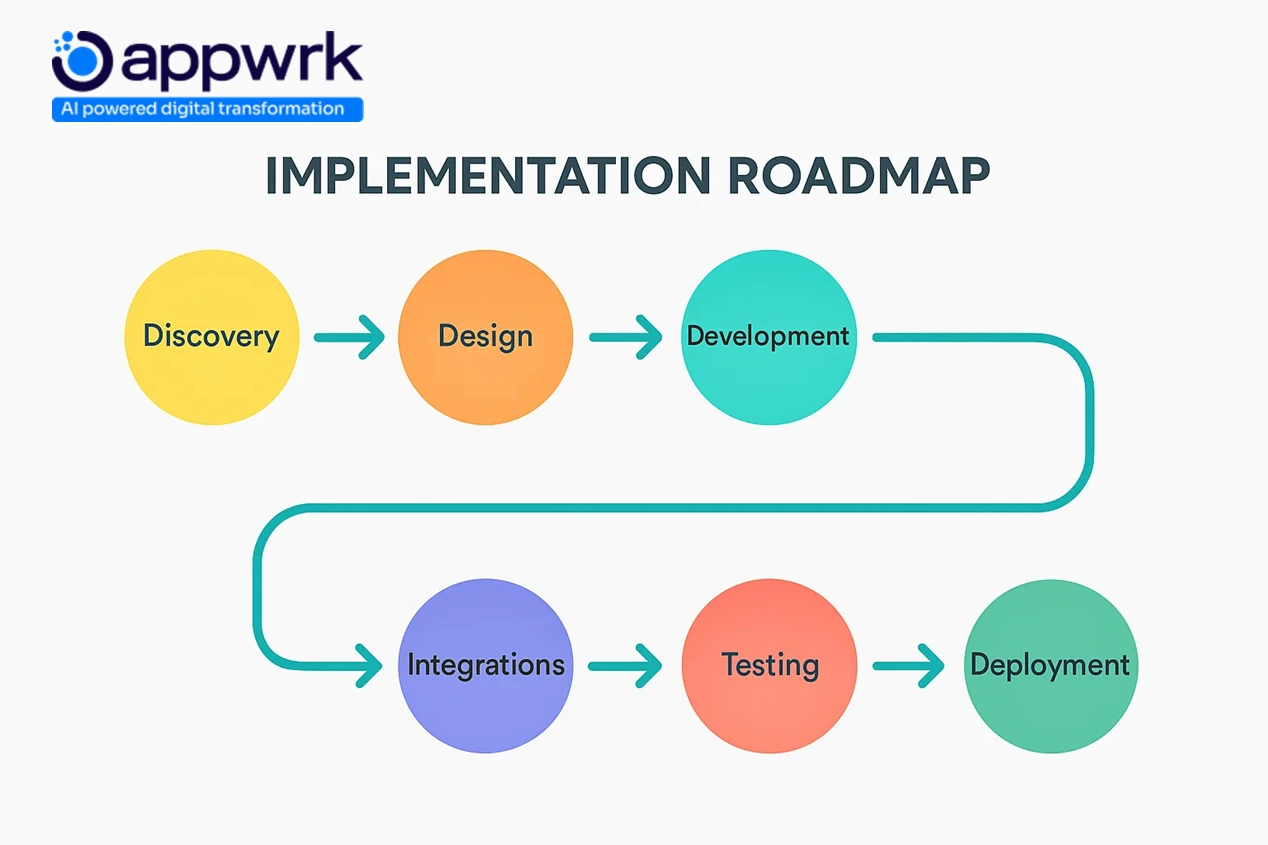
Yard Management System Implementation Roadmap
Implementing a Yard Management System requires a structured roadmap that aligns technology, operations, and multi-team workflows. Each phase ensures smoother adoption, predictable integration, and a faster move toward real-time visibility and process automation.
Requirement Discovery & Alignment
Teams analyse Trailer Movements, Check-In / Check-Out Processes, delays, inventory, and carrier workflows. Stakeholders define automation scope, Integration with TMS / ERP / WMS, and Digital Single Source of Truth requirements.
Architecture & System Design
A cloud-native backend is designed with Elastic Capacity, Intelligent Move Logic, yard mapping, Inventory Tracking workflows, and Control Tower (Logistics) visibility. Designs include RTLS, Automated Workflows, and role-based dashboards.
Core Platform Development
Gate Automation, Electronic Documentation, Appointment Windows, and Mobile Access modules are built. YMS features optimise Trailer Utilisation, reduce manual actions, and enhance digital workflows.
Systems Integration
WMS, TMS, ERP, and Syncrotess integrate real-time data for load status, Carrier Collaboration, and Warehouse Shipping accuracy to support efficient and effective retail execution.
Testing & Stabilization
Testing validates Real-Time Yard Visibility, Safety & Security at Yard, Container Zones, KPIs, dwell, and predictive logic to ensure stable, predictable operations.
Deployment & Training
Teams learn drag-and-drop moves, Appointment Scheduling, container navigation, and driver communication tools. Training ensures smooth adoption and improves workforce productivity.
Challenges in Implementing or Integrating a YMS
Handling Legacy System Constraints
Older warehouse and transportation systems may block seamless connectivity. Teams often require middleware to sync Real-Time Yard Visibility, Inventory Tracking, and digital workflows.
Data Security, Compliance & Privacy
Yards must enforce strict access controls, audit logs, encryption, and role-based permissions to protect driver and carrier data.
Multi-Site Scalability
Scaling across multiple Supply Chain nodes introduces differences in layouts, dock patterns, and labour models. Network View / Multi-Yard Visibility and Elastic Capacity become essential.
Workforce Adoption & Change Management
Operators used to manual processes may resist automation. Training focuses on improving Spotter / Yard Jockey Efficiency, reducing unnecessary moves, and leveraging alerts.
Regulatory & Vertical-Specific Requirements
Chemical, FMCG, and high-velocity eCommerce operations need specific yard configurations, including Container Zones, Electronic Documentation, RTLS, and compliance-ready workflows.
How Yard Management Systems Work
Arrival → Verification → Gate Automation
Truck arrives
Automated driver check-in captures carrier, load, and appointment details
SmartGate + Gate Automation validates documents and assigns the initial zone
Real-time data is pushed to the visual workspace
Routing → Parking → Trailer Movements
The system guides drivers or Shunters to parking lots, Container zones, or staging lanes.
System validates load completion, safety checks, and dock labour clearance
Driver receives digital exit instructions
Gate releases the truck with accurate timestamping for KPIs and fee calculations.
Benefits & ROI of YMS Deployment
Lower Dwell Times, Detention & Bottlenecks
Digital workflows, Automated workflows, and Gate Automation shorten gate-to-dock time, reduce delays, and cut unnecessary Trailer movements, lowering detention fees and truck costs.
Higher Dock Efficiency & Throughput
Real-time trailer visibility, load prioritisation, and urgency cues improve dock labour planning and Warehouse Shipping accuracy.
Operational Clarity with Real-Time Data
RTLS, GPS, RFID, and cloud-native back ends create a unified visual workspace. Tools like DataDocks, GoRamp, C3 Yard, and Opendock YMS enhance monitoring and predictability.
Standardised Processes & Compliance Reporting
Role-based control panels, automated driver check-in, and seamless connectivity support safety, audit requirements, and consistent process quality.
Lower Total Cost of Ownership (TCO)
Cloud-based architecture offers Elastic capacity, predictable economics, and reduced labour and fuel overhead while improving trailer and asset utilisation.
Regional Cost Analysis of YMS Development
North America (U.S. & Canada) — Higher Logistics Operations Complexity
Cost range: $10,000 to $55,000 Hourly rates: $40 to $95/hr
Western Europe (Germany, Netherlands, U.K.) — Strong Supply Chain Digitalisation
Cost range: $12,000 to $50,000 Hourly rates: $35 to $80/hr
Eastern Europe (Poland, Romania, Ukraine) — Cost-Optimised Engineering Talent
Cost range: $8,000 to $35,000 Hourly rates: $25 to $55/hr
Asia-Pacific (India, Vietnam, Philippines) — Best Value for Cloud-Based YMS Builds
Cost range: $6,500 to $32,000 Hourly rates: $18 to $45/hr
Middle East (UAE, Saudi Arabia) — Port-Driven Modernisation
Cost range: $10,000 to $48,000 Hourly rates: $30 to $70/hr
Region
Typical Cost Range of YMS Development
Avg. Hourly Rate of YMS Development
Key Drivers of YMS Development Cost
USA & Canada
$10k to $55k
$40 to $95/hr
Compliance, automation features, analytics
W. Europe
$12k to $50k
$35 to $80/hr
Ports, chemical compliance, RTLS
E. Europe
$8k to $35k
$25 to $55/hr
Value engineering, cloud-native back ends
Asia-Pacific
$6.5k to $32k
$18 to $45/hr
Digital workflows, scalable cloud builds
Middle East
$10k to $48k
$30 to $70/hr
Port logistics, carrier control, visibility
Compliance & Safety Framework in YMS Development
FMCSA Requirements
Automated Check-In / Check-Out, Gate Management, and Electronic Documentation ensure compliance with FMCSA rules for carrier verification, Check-In / Check-Out Processes, and Real-Time Asset Tracking.
OSHA Safety Standards
Dock Scheduling, Yard Driver Task Optimisation, Trailer Utilisation checks, and Safety & Security at Yard monitoring support OSHA compliance. Event & Exception Alerts reduce operator risk across Yard Management Software.
Environmental Compliance
Sensors, RFID Integration, and Inventory Tracking help Ports and Distribution Centres control emissions, optimise Equipment Utilisation Tracking, and reduce idling-related operating costs.
Cybersecurity (GDPR, SOC 2, ISO 27001)
Cloud-native Yard Management System (YMS) deployments use encrypted data flows, role-based access, and Mobile Access protections. Integration with TMS / ERP / WMS maintains a Digital Single Source of Truth.
Architecture Impact
Compliance adds minimal overhead but strengthens Network View / Multi-Yard Visibility, predictable economics, and long-term Supply Chain optimization inside modern Yard Management Software.
Activate a cloud-based environment with Unlimited User Seats and Fixed-Rate Pricing support.
Training & Handover
1 to 2 weeks
Train teams on Mobile Access, Drag-and-drop moves, Radar Tracking / Positioning, and Interactive Yard Layout navigation.
Outcome: A predictable rollout aligned with seamless connectivity and efficient optimisation of Yard & Dock Labour.
IoT Hardware Cost Add-Ons in Yard Management System Development
Key IoT Devices Used in Yard Automation
Yard Management Software commonly uses RFID tags, RTLS anchors, GPS trackers, Gate Cameras, and wireless scanners to enhance Real-Time Yard Visibility, Trailer Utilisation accuracy, and Computer Vision capabilities.
Cost Range per Device Type
Device Type
Typical Cost
RFID Tags
$1 to $4 per tag
RFID Readers
$450 to $1,100
GPS Trackers
$35 to $85
RTLS Anchors / Sensors
$120 to $280
Gate Cameras
$90 to $150
Wireless Yard Scanners
$160 to $320
On-Site Installation & Network Alignment
Installation and network calibration for Real-Time Asset Tracking, yard positioning, and Autonomous Vehicles support usually adds $1,200 to $4,000, depending on yard size.
Integration with YMS Data Pipelines
IoT devices stream data into cloud-native pipelines to support AI-Driven Automation, Task Allocation, Performance Reporting, and seamless visibility via the Web-Based Control Room.
Total IoT Cost Estimates by Facility Size
Facility Scale
Estimated IoT Add-On Cost
Small DC / Warehouse
$2,500 to $7,500
Mid-Size Logistics Hub
$6,000 to $18,000
Large Port / High-Volume Site
$15,000 to $38,000
Cloud Provider Comparison for YMS Hosting
Provider
Monthly Cost
Notes
AWS
$90 to $190
Strong for RTLS, AI-Driven Automation, and Appointment Windows.
Azure
$85 to $175
Ideal for enterprise-grade Integration with TMS / ERP / WMS.
GCP
$70 to $160
Efficient for automation tasks, Intelligent Move Logic, and high-frequency trailer tracking.
What Matters for YMS
Stable performance for Trailer movements, Inventory Tracking, and Real-Time Yard Visibility
Seamless connectivity with carrier networks and WMS/TMS/ERP
Elastic capacity for scaling across multi-yard networks
Overall Insight
AWS offers a strong global reach, Azure excels in enterprise integration, and GCP provides accessible solutions with cost efficiency.
Training & Change Management Costs in YMS Development
Item
Cost Range
Operator & Yard Jockey Training
$400 to $1,200 total
Supervisor / Control Panel Training
$350 to $900
Process Change Workshops
$500 to $1,000
Post-Go-Live Support
$300 to $800/month
What This Covers
Quick onboarding for Automated Check-In / Check-Out, Gate Management, Appointment Scheduling, and Carrier-Booked Appointments.
Fast adoption of Drag-and-drop moves, Intelligent Move Logic, Task Allocation, Yard Driver Task Optimisation, and Inventory Tracking.
Minimal operational disruption with Mobile Access, Customizable Dashboards, and Event & Exception Alerts supporting predictable economics.
Maintenance & Long-Term Ownership Costs in YMS Development
Continuous improvements in Yard Map visibility, Interactive Yard Layout performance, and
Digital Single Source of Truth maintenance. Seamless connectivity with TMS / ERP / WMS and Web-Based Control Room stability.
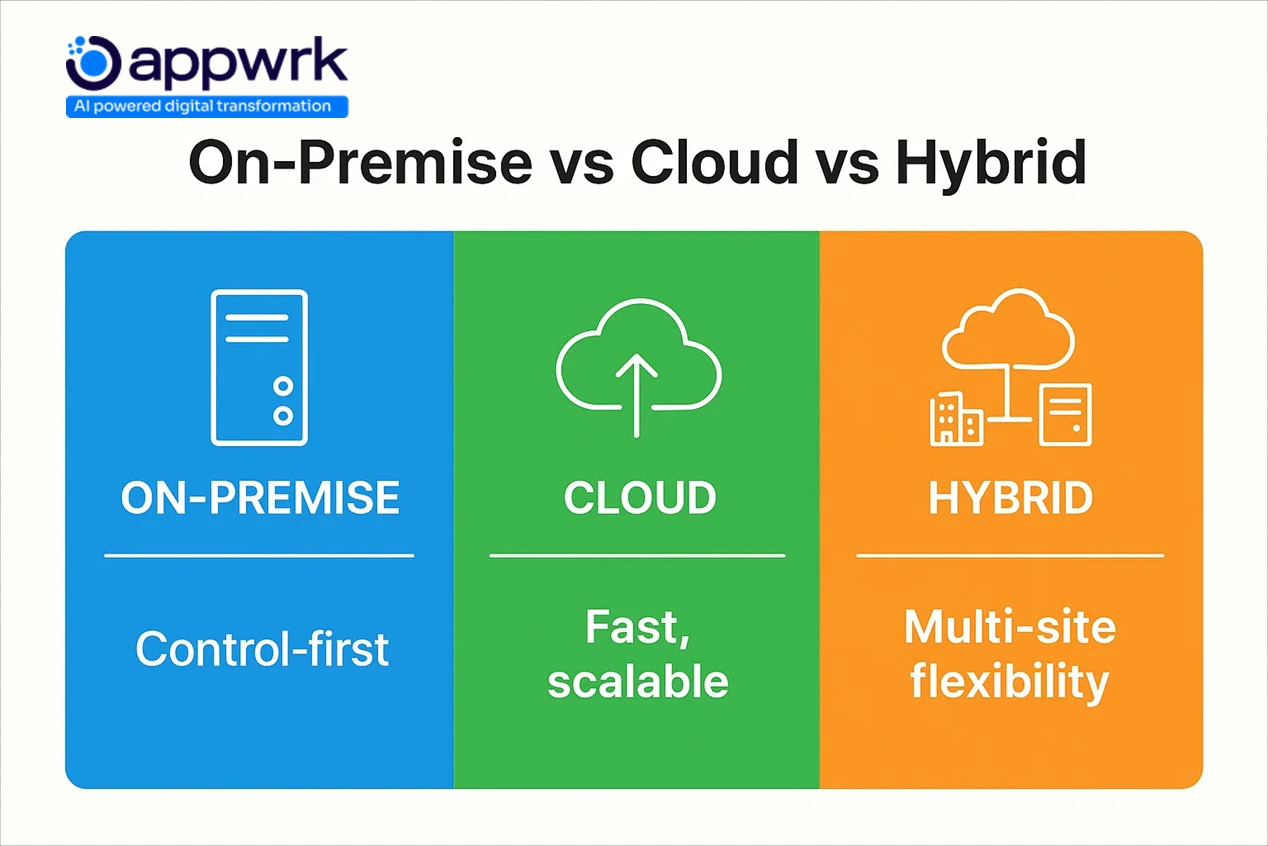
On-Premise vs Cloud vs Hybrid YMS Deployment Models
Choosing between on-premise, cloud, and hybrid YMS deployments depends on your operation’s security needs, scalability goals, and infrastructure readiness. Understanding how each model impacts cost, performance, and long-term flexibility helps teams adopt the right approach for their Supply Chain environment.
When On-Premise Makes Business Sense
Best for chemical yards, Ports, or Safety & Security at Yard environments needing strict control, limited internet, or slower digitalisation cycles.
Ideal when companies already own infrastructure and require predictable economics, Electronic Documentation control, and secured Carrier Communication.
Advantages of Cloud-Native YMS
Cloud-native YMS enables:
Elastic capacity
Network View / Multi-Yard Visibility
Unlimited User Seats
Fixed-Rate Pricing
Automated workflows, Mobile Access, and AI-Driven Automation
Cloud is ideal for Distribution Centres, increasing the optimisation of Yard & Dock Labour and Warehouse Shipping throughput.
Hybrid YMS Deployment for Multi-Site Networks
Combines on-premise security with cloud scalability. Supports multi-yard Carrier Collaboration, Appointment Windows, Dock Scheduling alignment, and Carrier Self-Service Portal access.
Hybrid → balanced economics for a large Supply Chain ecosystem.
All support Integration with TMS / ERP / WMS and Real-Time Asset Tracking.
Operational, Security & Scalability Considerations in YMS Development
Cloud supports Digital workflows, Automated workflows, SmartGate efficiency, Business Rules Automation, and Visual AI / Computer Vision for high-volume trailer analysis. Hybrid ensures enterprise-grade continuity across Check-In / Check-Out Processes and carrier networks.
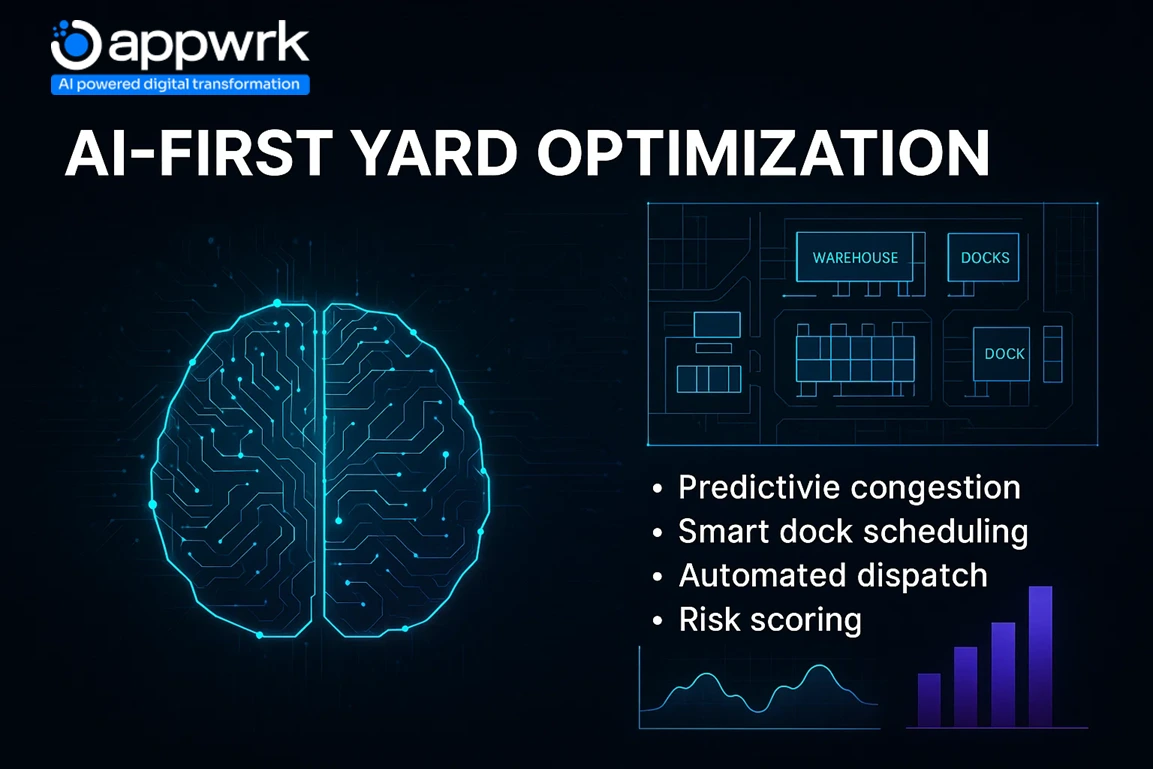
AI-First Yard Optimisation
AI-first yard optimization transforms static yard operations into intelligent, predictive ecosystems driven by real-time data. By automating decisions and forecasting bottlenecks before they occur, AI ensures smoother movements, higher throughput, and consistently smarter Supply Chain performance.
Predictive Congestion Management
AI analyzes Trailer movements, Yard Map congestion points, and RTLS patterns to detect Bottlenecks early and improve Operating Cost Reduction.
ML-Based Dock & Driver Scheduling
Machine learning optimises Dock Scheduling, adjusts Appointment Scheduling dynamically, and enhances Spotter / Yard Jockey Efficiency.
Resource Allocation & Automated Dispatch
AI distributes tasks across yard jockeys, Shunters, and drivers using Intelligent Move Logic, Task Allocation, and Real-Time Asset Tracking for continuous flow.
Exception Handling & Risk Scoring Mechanisms
Platforms like GoRamp, C3 Yard, YardView, and DataDocks use AI-Driven Automation and Computer Vision to flag Detention Risk / Dwell Time issues, late arrivals, and safety exceptions. KPIs are monitored using the Capacity Issues / KPIs Dashboard and Control Tower (Logistics) visibility.
Integration Blueprint for Multi-Region Supply Chains
API Gateways & Middleware Architecture
Lightweight gateways streamline connectivity between Yard Management Software, Syncrotess logistics software, transportation management systems, and warehouse management systems. Middleware supports Business Rules Automation, Real-Time Asset Tracking, and Digital Single Source of Truth workflows across regions.
Integration Standards for WMS/TMS/ERP
JSON, AS2, EDI, and REST APIs enable Integration with TMS / ERP / WMS at scale. These standards keep Yard Map accuracy intact, support Electronic Documentation, and ensure Check-In / Check-Out Processes run cleanly across global sites.
Multi-yard environments depend on Network View / Multi-Yard Visibility with Real-Time Yard Visibility, RTLS, and Radar Tracking / Positioning. This enables container zones coordination, 3D / 2D Yard Visualisation, and seamless Real-Time trailer visibility across shifts, weeks, and continents.
Cross-Border Compliance Mechanisms
Supports customs workflows, Carrier Communication rules, safety certifications, and chemical documentation without breaking digitalisation cycles. Carrier Self-Service Portal and Appointment Windows make cross-border movements smoother and prevent Bottlenecks.
Digital Twin Adoption for Yard Operations
Real-Time Simulation of Yard Flows
Digital twins replicate Trailer pool activity, capacity issues, parking lots constraints, and Detention Risk / Dwell Time patterns. This improves Safety & Security at the Yard and helps facilities forecast load behaviour.
Scenario Planning & Operator Training
Supervisors test emergency routing, peak-hour congestion, C3 Yard layouts, Intelligent Move Logic, and Spotter / Yard Jockey Efficiency inside a fully visual workspace or Web-Based Control Room.
Predictive Asset Allocation Optimisation
Predictive models optimise trailer utilisation, Equipment Utilisation Tracking, inventory staging, and Real-Time Asset Tracking before physical moves occur.
Enhanced Decision Support for Yard Control Towers
Control Tower (Logistics) dashboards show KPIs through the Capacity Issues / KPIs Dashboard, Visual AI, Computer Vision, and Event & Exception Alerts for faster decision-making.
How Appwrk Helps Build Scalable, Secure YMS Solutions
Integration Expertise Across SCM, WMS, TMS & ERP
Appwrk implements Yard Management System (YMS) capabilities with seamless connectivity. Integrations ensure Appointment Scheduling, Dock Scheduling, Carrier-Booked Appointments, and Automated Check-In / Check-Out run reliably.
AI-Driven Automation enhances Performance Reporting, yard Driver Communication, exception alerts, and asset utilisation. It also improves Yard Driver Task Optimisation and Optimisation of Yard & Dock Labour.
Cloud-Native, Secure & Scalable Architecture
Appwrk builds cloud-native and cloud-based, modular solutions with Fixed-Rate Pricing, Elastic capacity, Unlimited User Seats, and future-ready support for Autonomous Vehicles and Real-Time Yard Visibility.
Enterprise Delivery Governance & Support
Partner-level support ensures safe rollouts, stable operations, and ongoing Operating Cost Reduction across multi-site supply chain networks.
Appwrk Case Study: Global Leader in FMCG
Client Background & Operational Landscape
A global FMCG leader operating high-volume Distribution Centers and Ports with thousands of Trailer movements requiring Real-Time Asset Tracking and Intelligent Move Logic.
Challenges in Yard to Warehouse Coordination
Weak Real-Time reporting, slow Check-In / Check-Out Processes, missing trailer visibility, and inconsistent Data Sync were affecting Warehouse Shipping and Optimisation of Yard & Dock labour.
Appwrk’s Integrated YMS-WMS-Dispatch Solution
Appwrk deployed Yard Management Software integrated with WMS and TMS to unify Digital workflows. Includes automated driver check-in, Dock Scheduling, carrier coordination, RFID Integration, Drag-and-drop moves, and GoRamp-style Real-Time Yard Visibility.
Technology Stack & Architecture
Built on a cloud-native back end with RTLS, 3D / 2D Yard Visualisation, DataDocks-inspired dashboards, and secure multi-tenant control. Supports Appointment Windows, Intelligent Move Logic, and seamless Integration with TMS / ERP / WMS.
Extend: Ideal for enterprises using Control Towers, AV support, and real-time asset tracking.
Vendor Qualification
Look for: cloud-native design, strong integrations, reporting quality, dock scheduling strength, RFID support, automation capabilities, and mobile-friendly access.
3-Year TCO Snapshot
Compare build cost, hosting, licensing, IoT upkeep, automation efficiency, and labour savings created by smoother yard & dock workflows.
Common Pitfalls
Avoid outdated processes, siloed systems, and non-scalable architecture.
Plan integrations, safety controls, and documentation early to prevent Bottlenecks.
Frequently Asked Questions
What is a YMS, and how does it work? A Yard Management System manages trailer visibility, gate throughput, Check-In / Check-Out Processes, and yard assets using Real-Time Yard Visibility, RTLS, RFID, and digital workflows.
What components make up a modern YMS? Gate Automation, Dock Scheduling, Appointment Windows, Inventory Tracking, Task Allocation, Carrier Communication, Equipment Utilisation Tracking, Customizable Dashboards, and Digital Single Source of Truth capabilities.
How much does it cost to build a custom YMS? Custom YMS development typically begins at $10,000, depending on automation depth, AI-Driven Automation, and Integration with TMS / ERP / WMS.
Get a fast, accurate estimate — book a free YMS cost assessment with Appwrk.
What affects YMS development cost the most? Integrations, RFID hardware, Real-Time Asset Tracking, predictive logic, IoT devices, compliance needs, and scalable cloud-native architecture.
How long does YMS development take? A full build takes about 12 to 20 weeks, including yard mapping, automated workflows, and system connectivity.
Is integration with WMS/TMS/ERP mandatory? Not mandatory, but Integration with TMS / ERP / WMS dramatically improves Supply Chain visibility and reduces Bottlenecks.
Which industries benefit the most? FMCG, automotive, chemical logistics, 3PL networks, Ports, and Distribution Centres requiring advanced scheduling and Yard Driver Task optimisation.
How does YMS reduce detention and dwell time? By improving Trailer Utilisation, enabling Detention Monitoring / Alerts, optimising Appointment Scheduling, and using Live trailer visibility for faster routing.
What security and compliance standards apply? SOC 2, ISO 27001, and chemical handling standards, plus secure role-based access and encrypted Web-Based Control Room workflows.
Should I build or buy a YMS? Built for flexible workflows, fixed-rate pricing, and Unlimited User Seats; buy for faster deployment or if you need instant Dock Scheduling automation.
Can AI significantly improve yard operations? Yes, AI supports congestion forecasting, automated driver assignment, optimisation of yard & dock labour, exception alerts, and real-time risk detection.
What ROI can enterprises expect? Lower detention fees, reduced dwell time, better trailer tracking, smoother Warehouse Shipping, and measurable Operating Cost Reduction within weeks.
Gourav Khanna is the Co-founder and CEO of APPWRK, leading the company’s vision to deliver AI-first, scalable digital solutions for enterprises and high-growth startups. With over 16 years of leadership in technology, he is known for driving digital transformation strategies that connect business ambition with outcome-focused execution across healthcare, retail, logistics, and enterprise operations.
Recognized as a strategic industry voice, Gourav brings deep expertise in product strategy, AI adoption, and platform engineering. Through his insights, he helps decision-makers prioritize market traction, operational efficiency, and long-term ROI while building resilient, user-centric digital systems.
Subscribe to APPWRK Blogs, We'll Do the Rest!
Get Blogs on UI/UX, Mobile Apps, Online Marketing, and Web development technology.
Unlock worthy and priceless suggestions from the masters of mobile and web app development