150+ minds across 4 countries. Join a culture of innovation, ownership & growth.
Rewire for AI
From machine learning to deep learning, from classification tools to overall process automation – our AI engineers will help you retool your existing system or enhance your company results.
Ship faster, scale smarter, built for product companies and SaaS teams
Our Latest Work
We strive hard to deliver result-driven digital solutions across the globe. Check out our case studies to get a glimpse of how we ideate, innovate, and create unconventional digital solutions according to the requirements of our clients.
Discover diverse and passionate insights from our tech enthusiasts. We collaborate across various sectors to streamline operations and drive innovation. Explore our rapidly growing collection of articles to see why we’re at the forefront of IT solutions.
The decision to move from Magento to Shopify is one of the most significant replatforming choices an ecommerce business can make. Magento is powerful, but its power comes with...
Accuracy gap is real: Traditional CPG forecasting carries a 25-40% MAPE error rate. AI-powered models bring that down to 8-15%, according to McKinsey research....
Real stories from global leaders who trusted us with their ideas.
Partnering with APPWRK helped us build a compliant and scalable healthcare platform, accelerating our time-to-market by 35%. Their team consistently delivered outstanding work.
Beesers
Digital Healthcare Client
Collaborating with APPWRK, Sportskeeda modernized its platform into a real-time sports engagement ecosystem, enabling seamless content delivery, scalable fan interactions, and high-velocity performance.
Sportskeeda
Sports & Entertainment Partner
Working with APPWRK was effortless. They captured our vision, maintained full compliance, and delivered a digital experience that built trust and elevated how customers interact with our fintech brand.
PayPenny
Fintech Partner
Working with APPWRK gave us confidence in adopting AI responsibly. Their team built a safe, intelligent bot that transformed how we engage with leads and helped us achieve measurable revenue growth.
IFB
AI Transformation Partner
Leveraging APPWRK’s digital expertise, Nemesis launched a scalable, compliant, and safe super app that connects content delivery, real-time communication, and logistics management within a single platform.
Nemesis
Super App Partner
Partner to Transform Restaurant Operations
Build scalable, AI-ready restaurant management software that reduces cost, improves control, and grows with your business.
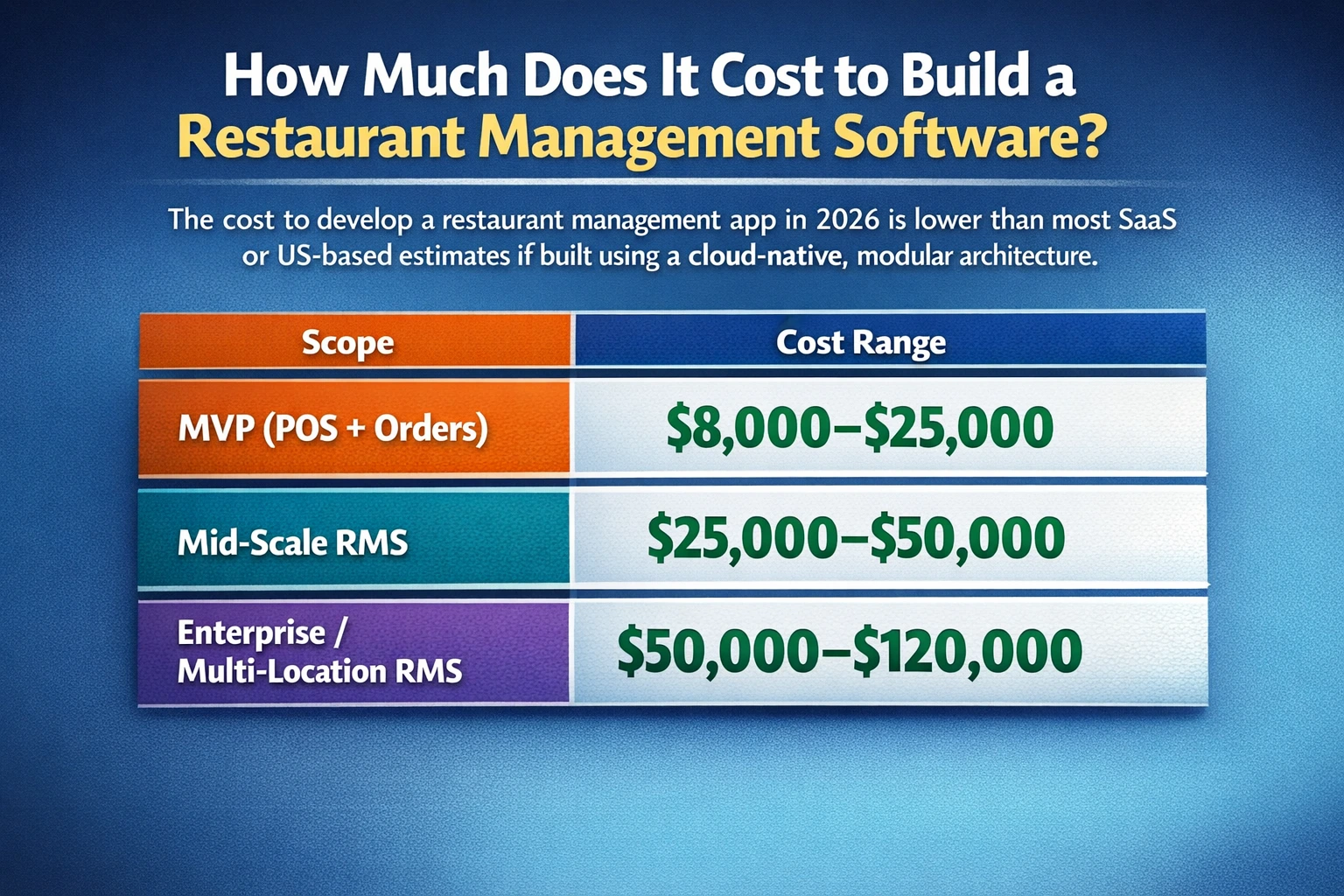
How much does it cost to develop a restaurant management app? The restaurant management software development cost typically starts as low as $8,000 and can scale up to $120,000+ based on features, integrations, and architecture.
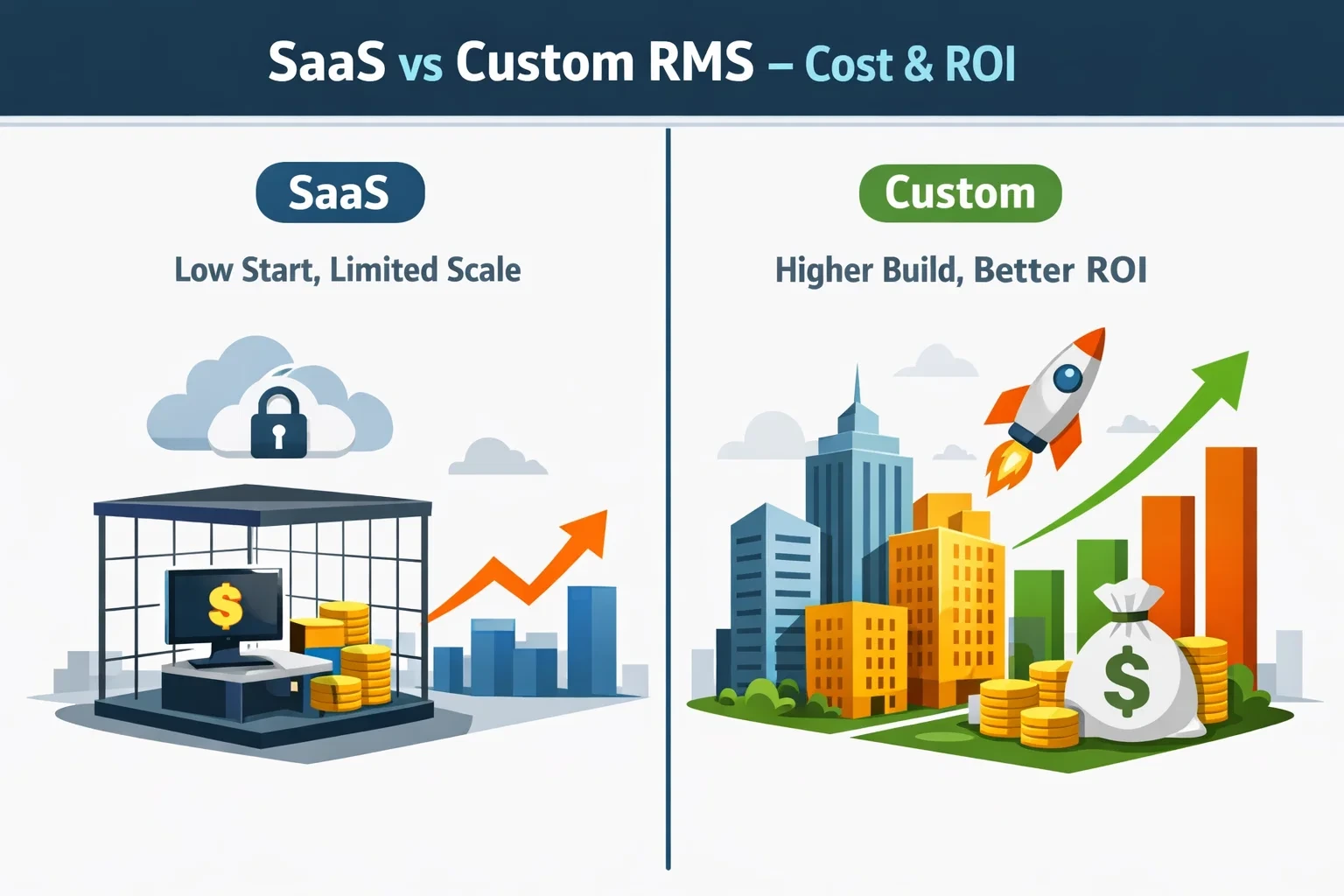
The cost to build a restaurant management app is lower upfront for MVPs, but custom platforms outperform SaaS tools in scalability, ROI, and integration flexibility.
With the right architecture, 80% of operational value is achievable within $30K–$60K. Costs rise mainly with multi-location sync, analytics, and automation.
What is Restaurant Management Software (RMS)?
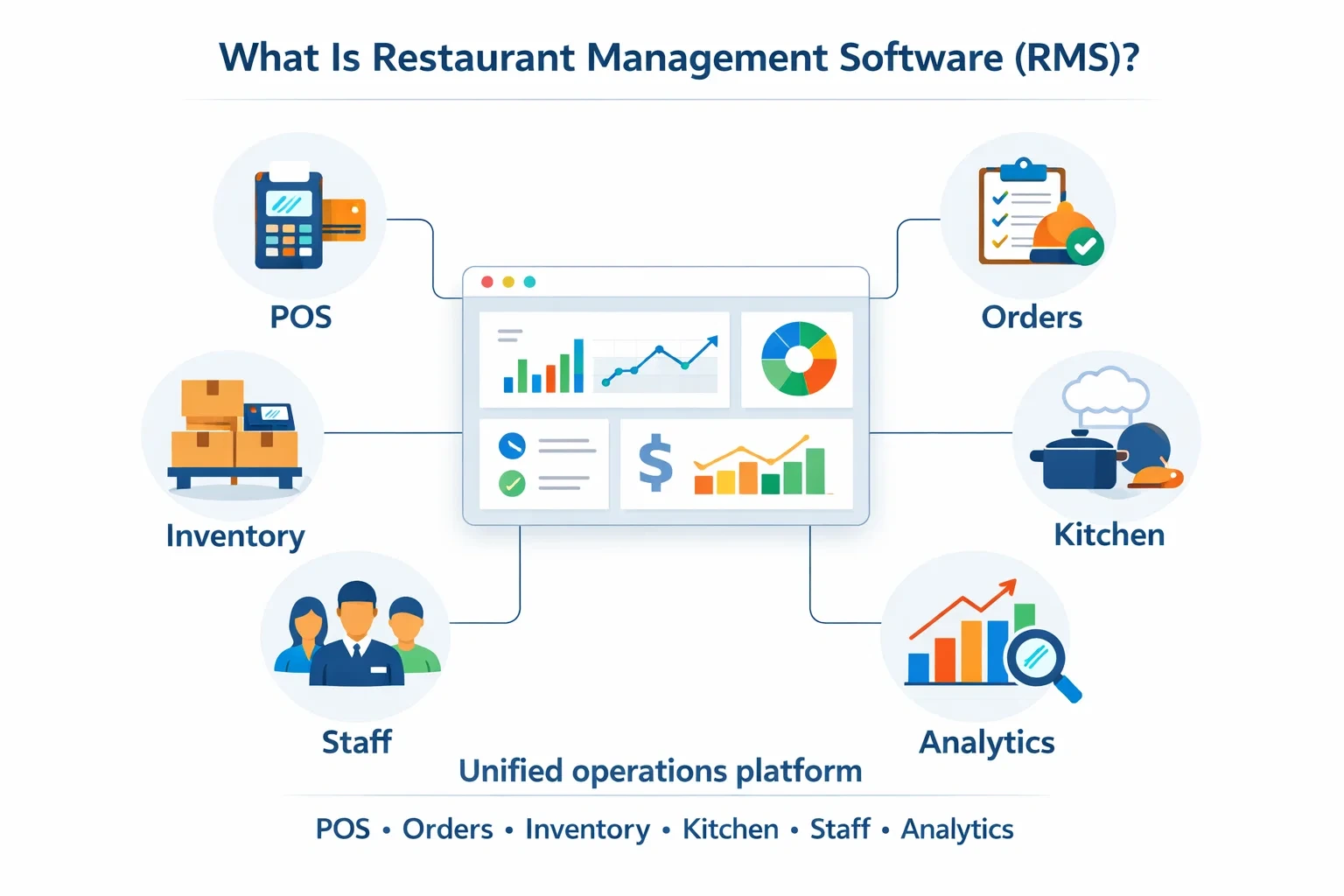
Restaurant Management Software (RMS) is a unified platform that centralises daily restaurant operations into one system.
It typically includes:
POS and online ordering
Menu management and table reservations
Smart inventory and inventory tracking
Kitchen Display System (KDS) and kitchen order tickets (KOT)
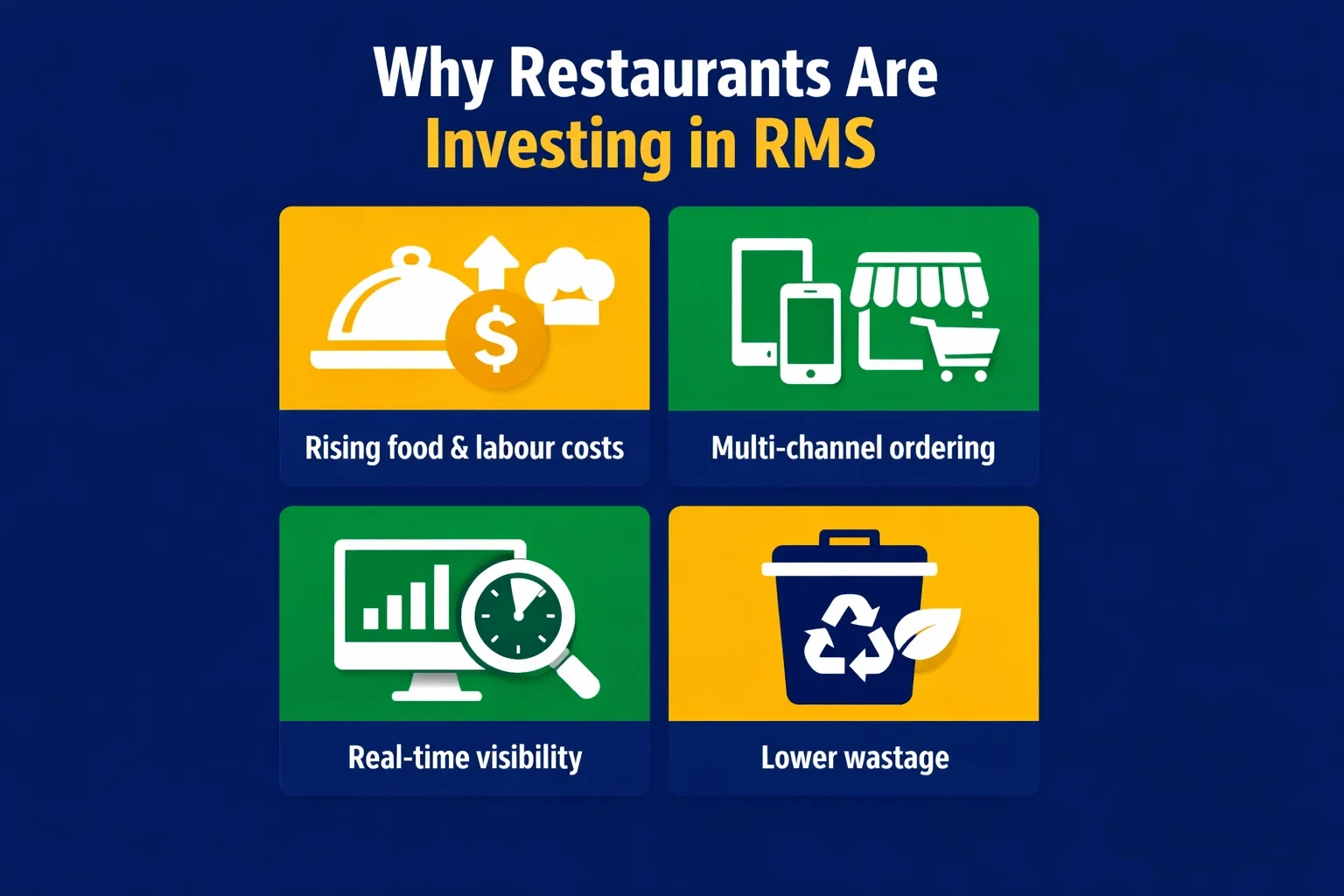
Reduced wastage through automated inventory management
A custom RMS delivers better long-term ROI, scalability, and flexibility than off-the-shelf tools, especially as operations grow.
Core Modules and Feature-Wise Cost Breakdown
The restaurant management software development cost is primarily driven by the modules you choose and how deeply they integrate with day-to-day restaurant operations. Below is a practical breakdown aligned with competitive, custom RMS builds.
Customer-Facing Modules
These features influence ordering flow, repeat usage, and customer retention.
Feature
Cost Impact
Online ordering (web & mobile)
Medium
Table reservations & waitlist
Low–Medium
Loyalty programs & rewards
Medium
These modules are typically part of an MVP (Minimum Viable Product) because they directly support revenue and reduce dependency on third-party food delivery platforms.
Restaurant Operations Modules
This layer forms the core cost driver in restaurant software development.
Feature
Cost Impact
POS system (orders, payments, receipts)
High
Inventory management (smart inventory, alerts)
High
Kitchen Display System (KDS) / KOT
Medium
Insight: The POS system and Intelligent Inventory Management System account for the largest share of the restaurant software development cost due to real-time processing, hardware integrations, and secure payment and POS integrations.
Admin & Analytics Layer
This layer enables scalability and multi-location control.
Factors That Influence Restaurant Software Development Cost
The cost to build restaurant software depends on a small set of high-impact decisions. Managing these keeps the restaurant software development cost within budget.
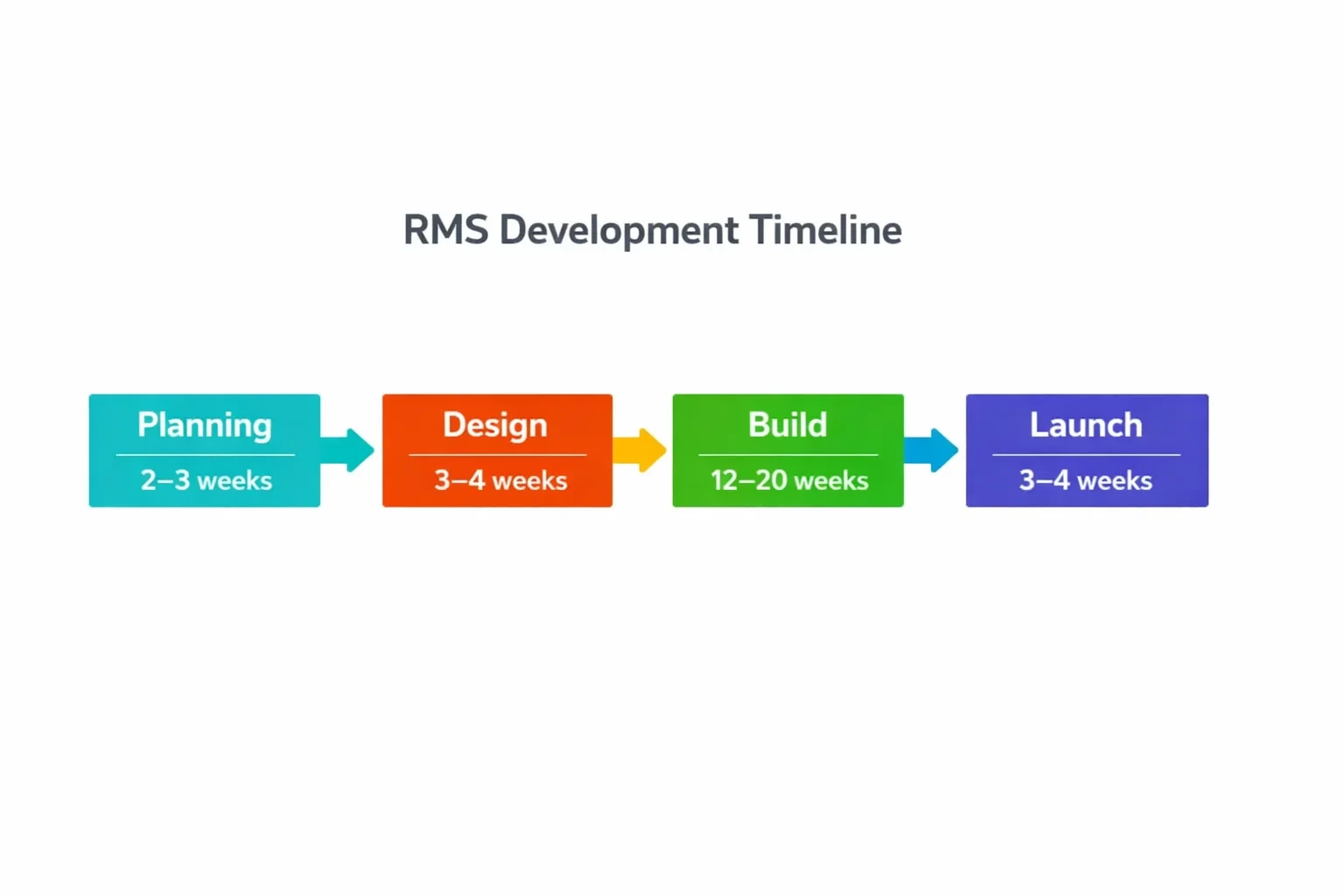
Enterprise RMS (multi-location, analytics, integrations): 6+ months, depending on complexity
This timeline assumes standard POS, inventory management, online ordering, and admin dashboards, with additional time required for advanced integrations or AI-driven features.
SaaS vs Custom-Built Restaurant Management Software
Choosing between SaaS and custom-built restaurant management software directly affects restaurant software development cost, scalability, and long-term ROI.
SaaS tools suit single-location or early-stage restaurants. A custom restaurant management app becomes more cost-effective when multi-location scaling, smart inventory, or custom workflows are required, especially when evaluating how much restaurant management software costs over 3–5 years.
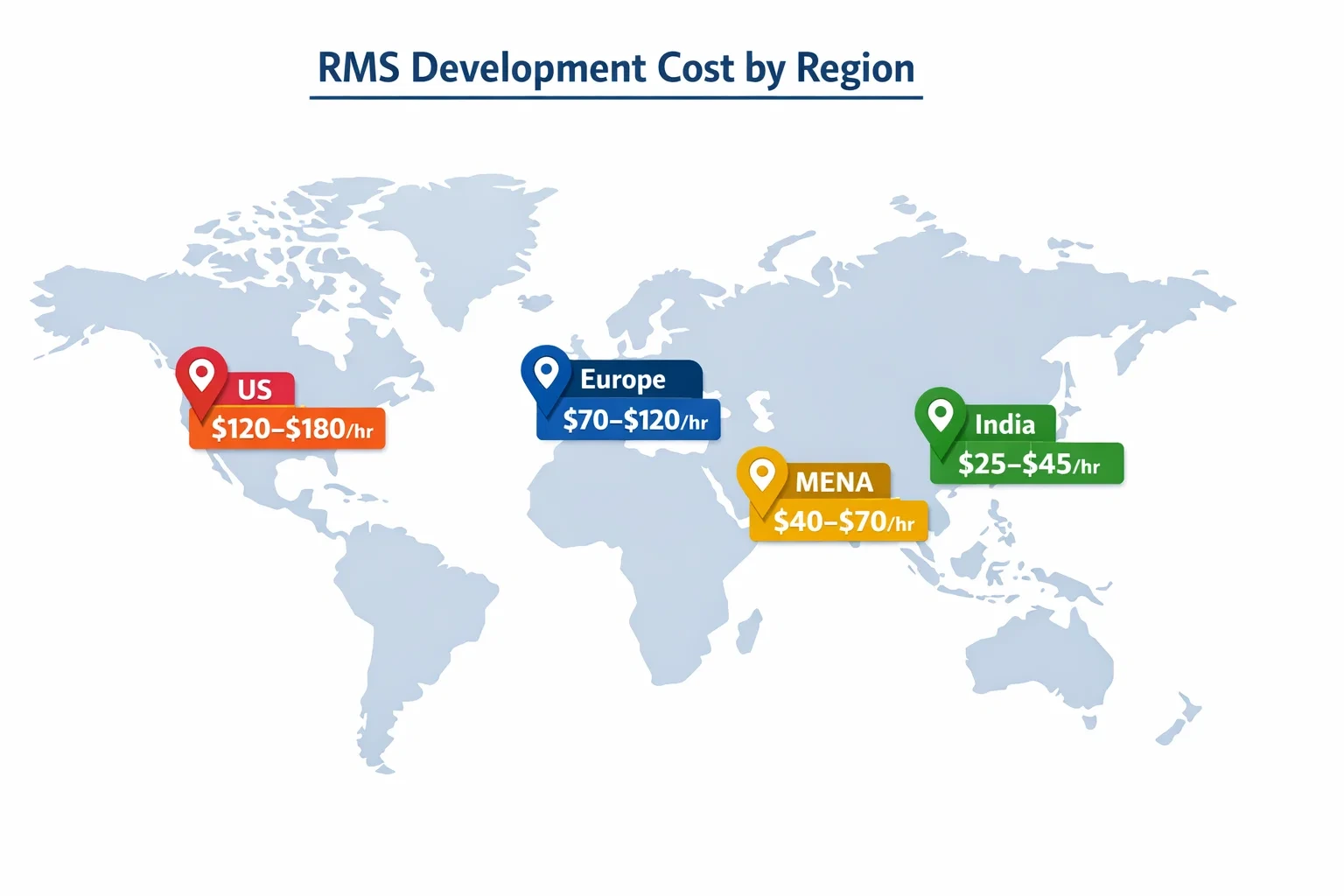
Regional Cost Analysis: Restaurant Management Software Development Teams & Costs
Avg Hourly Rate to develop a restaurant management Software
Cost Implication
US / Canada
$120–$180
Highest
Europe
$70–$120
High
India
$25–$45
Most cost-efficient
MENA
$40–$70
Mid-range
A hybrid model (onshore product ownership + offshore engineering) typically reduces restaurant software development cost by 30–50% without sacrificing quality or scalability.
AI-First Restaurant Software: Cost vs Competitive Advantage
Predictive labour scheduling to control staffing costs
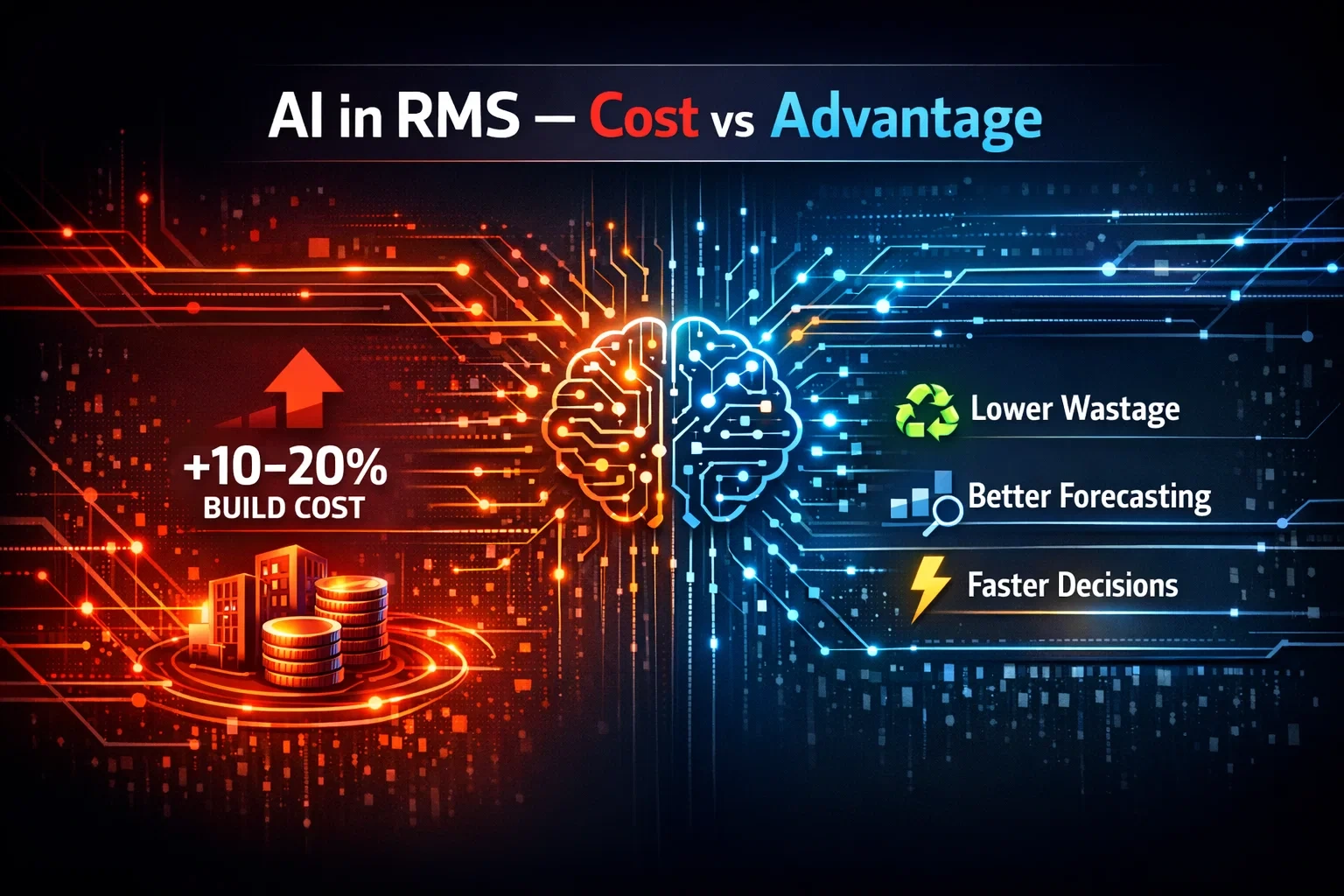
Cost vs payoff AI typically adds 10–20% to the cost to build restaurant software, but improves margins through:
Lower wastage
Better labor utilization
Faster, data-driven decisions across locations
AI insight: Restaurants recover the added AI cost within 6–12 months, making it one of the highest-ROI upgrades in restaurant management software development.
Cost Optimisation Strategies for Restaurant Management Software Development (Without Sacrificing Scalability)
The cost to build restaurant software stays low through sequencing and architecture, not shortcuts.
MVP-first roadmap Start with a POS system, online ordering, and admin dashboards. Layer inventory tracking, analytics, and AI later.
Modular or microservices architecture Avoid expensive rewrites as features scale across outlets or cloud kitchens.
Cloud-native infrastructure Reduces long-term DevOps, maintenance, and update costs.
Final cost insight: Well-planned RMS projects cut 20–30% of total restaurant management software development cost by avoiding rework and premature complexity, improving ROI without limiting growth.
Total Cost of Ownership (TCO) of the Restaurant Management Software: 3–5 Year View
The true restaurant software development cost extends beyond launch.
Cost Component
Share of TCO
Initial development
40–50%
Maintenance & updates
20–25%
Infrastructure & hosting
15–20%
Enhancements
10–15%
TCO insight: Custom RMS platforms typically reach cost parity with SaaS in 24–36 months, after which operating costs remain significantly lower due to zero vendor lock-in.
How APPWRK Helps Build Scalable Restaurant Management Software
APPWRK delivers restaurant management app development services focused on scalability, performance, and long-term ROI, without inflating the restaurant software development cost.
Cloud-native, secure architecture Built for high availability, real-time tracking, and secure payment & POS integrations across single or multi-location restaurants.
Proven multi-location delivery Experience building custom RMS platforms for restaurants, cloud kitchens, and franchises, scaling across outlets, regions, and delivery platforms.
Positioning: APPWRK focuses on lowering the total cost to build restaurant software over time, not just shipping features fast.
Founder’s Guide to Building Restaurant Management Software
Build vs Buy Use SaaS for speed and single outlets. Build a custom RMS when multi-location scale, integrations, or ROI matter.
Budget Reality An MVP is only ~50% of the total restaurant software development cost. Plan early for integrations, hosting, maintenance, and updates.
Avoid Over-Customization Customise core workflows (POS, inventory tracking, KDS). Overbuilding early increases the cost to develop a restaurant management app without improving outcomes.
Think Scale From Day One Architect for centralised dashboards, role-based access, peak-hour performance, and future AI automation.
Frequently Asked Questions (FAQs)
How much does it cost to build restaurant management software? The restaurant software development cost typically ranges from $8,000 to $120,000+, depending on features, integrations, and scale. This answers How Much Does Restaurant Management Software Cost? in real-world terms. Want to create a Custom Software Development Software? Contact APPWRK Today.
How much does it cost to develop a restaurant management app? The cost to develop a restaurant management app depends on the scope. An MVP with POS and online ordering is cheaper, while multi-location systems with smart inventory and analytics increase the restaurant software development cost.
What features drive the highest development cost? The biggest cost drivers are POS systems, Intelligent Inventory Management System, Kitchen Display System (KDS), multi-location admin dashboards, and third-party integrations (payment gateways, delivery platforms).
Is custom RMS better than SaaS in the long run? Yes. Custom restaurant management app development offers better scalability, no vendor lock-in, flexible integrations, and a stronger return on investment compared to SaaS subscriptions.
How long does it take to build restaurant management software? An MVP (Minimum Viable Product) takes 4–5 months. Mid-scale systems take 5–6 months, depending on UI/UX design, backend development, QA & testing, and integrations.
What is the minimum viable feature set for an RMS? Core POS system, order management, basic inventory tracking, menu management, role-based access, and admin dashboards.
How does AI impact restaurant software development cost? AI features (demand forecast, automated inventory management, predictive analytics) add 10–20% to the cost to build restaurant software, but improve margins and operational efficiency.
What are common hidden costs in restaurant software development? UI/UX design changes, third-party integrations, cloud hosting, maintenance & updates, performance tuning, and Android/iOS cross-platform optimisation.
How much does maintenance cost annually? Maintenance & updates usually cost 15–25% of the initial restaurant management app development cost.
Can RMS integrate with existing POS or delivery platforms? Yes. Modern systems use microservices architecture and secure APIs for POS, payment gateways, food delivery app development, and hardware integrations.
What is the expected ROI timeline? Most restaurants recover their cost to create restaurant software within 12–24 months through reduced wastage, better inventory tracking, and improved labour efficiency.
How much does it cost to build a restaurant management app like eZee? The cost to develop a restaurant management app like eZee typically starts at mid-scale pricing and increases with automation, analytics, and multi-location support.
Gourav Khanna is the Co-founder and CEO of APPWRK, leading the company’s vision to deliver AI-first, scalable digital solutions for enterprises and high-growth startups. With over 16 years of leadership in technology, he is known for driving digital transformation strategies that connect business ambition with outcome-focused execution across healthcare, retail, logistics, and enterprise operations.
Recognized as a strategic industry voice, Gourav brings deep expertise in product strategy, AI adoption, and platform engineering. Through his insights, he helps decision-makers prioritize market traction, operational efficiency, and long-term ROI while building resilient, user-centric digital systems.
Subscribe to APPWRK Blogs, We'll Do the Rest!
Get Blogs on UI/UX, Mobile Apps, Online Marketing, and Web development technology.
Unlock worthy and priceless suggestions from the masters of mobile and web app development