150+ minds across 4 countries. Join a culture of innovation, ownership & growth.
Rewire for AI
From machine learning to deep learning, from classification tools to overall process automation – our AI engineers will help you retool your existing system or enhance your company results.
Ship faster, scale smarter, built for product companies and SaaS teams
Our Latest Work
We strive hard to deliver result-driven digital solutions across the globe. Check out our case studies to get a glimpse of how we ideate, innovate, and create unconventional digital solutions according to the requirements of our clients.
Discover diverse and passionate insights from our tech enthusiasts. We collaborate across various sectors to streamline operations and drive innovation. Explore our rapidly growing collection of articles to see why we’re at the forefront of IT solutions.
The decision to move from Magento to Shopify is one of the most significant replatforming choices an ecommerce business can make. Magento is powerful, but its power comes with...
Accuracy gap is real: Traditional CPG forecasting carries a 25-40% MAPE error rate. AI-powered models bring that down to 8-15%, according to McKinsey research....
Real stories from global leaders who trusted us with their ideas.
Partnering with APPWRK helped us build a compliant and scalable healthcare platform, accelerating our time-to-market by 35%. Their team consistently delivered outstanding work.
Beesers
Digital Healthcare Client
Collaborating with APPWRK, Sportskeeda modernized its platform into a real-time sports engagement ecosystem, enabling seamless content delivery, scalable fan interactions, and high-velocity performance.
Sportskeeda
Sports & Entertainment Partner
Working with APPWRK was effortless. They captured our vision, maintained full compliance, and delivered a digital experience that built trust and elevated how customers interact with our fintech brand.
PayPenny
Fintech Partner
Working with APPWRK gave us confidence in adopting AI responsibly. Their team built a safe, intelligent bot that transformed how we engage with leads and helped us achieve measurable revenue growth.
IFB
AI Transformation Partner
Leveraging APPWRK’s digital expertise, Nemesis launched a scalable, compliant, and safe super app that connects content delivery, real-time communication, and logistics management within a single platform.
The cost of mid-tier WMS software development ranges from $15,000 to $50,000, depending on modules such as barcode scanning, slotting, or access controls.
Enterprise-grade warehouse management software with AI forecasting, IoT connectivity, and ERP integration can exceed $120,000.
Hidden costs, training, hardware upgrades, and third-party APIs add 15 to 30% to the total budget.
A cloud-based WMS can lower infrastructure and deployment costs by up to 40% compared to on-premise setups.
What You’ll Learn
Key warehouse cost calculation factors that drive pricing.
Subscription vs. perpetual licensing models and how they affect long-term cost.
Hidden WMS implementation costs are often missed during planning.
How cloud migration and modular builds reduce the total cost of ownership.
How to measure warehouse automation ROI across key KPIs like accuracy, lead time, and shrinkage.
What Is a Warehouse Management System and Why Are Businesses Rushing to Build One?
A Warehouse Management System (WMS) is a digital software solution that streamlines inventory control, warehouse operations, and order fulfillment. It eliminates manual errors, boosts speed, and ensures real-time visibility across the supply chain.
Businesses across logistics, retail, manufacturing, and e-commerce are accelerating WMS adoption to improve efficiency, accuracy, and scalability.
According to Grand View Research, the global WMS market was valued at $2.88 billion in 2024 and is expected to reach $8.38 billion by 2030, growing at a CAGR of 19.9%, clear proof of how critical warehouse automation has become.
Businesses are moving from spreadsheets to cloud-based warehouse management systems for faster deployment and scalability.
Adoption is highest among 3PL providers, retailers, and FMCG manufacturers focusing on automation, efficiency, and tighter inventory monitoring.
How Much Does It Cost to Build a Warehouse Management System?
The cost to implement WMS varies based on your operation’s size, required features, and deployment type. A basic prototype can start at $3,000, while a fully custom enterprise-grade WMS can exceed $120,000 depending on integrations, hardware upgrades, and compliance layers.
Business Type
WMS Scope
Warehouse Management System Development Cost Estimate
Warehouse Management System Deployment
Small Warehouse / Startup
Inventory, order tracking
$3,000 to $12,000
Cloud
Mid-Market Company
Barcode, returns, basic analytics
$15,000 to $35,000
Cloud / Hybrid
Retail Chain (Omnichannel)
Real-time inventory sync, stock management
$30,000 to $60,000
ERP-integrated
FMCG / Manufacturing
Labour tracking, forecasting, and automation
$40,000 to $75,000
On-Premise
3PL Provider
Client billing, multi-user, custom integrations
$60,000 to $120,000+
Custom
Note: The total cost of ownership also includes installation costs, customisation costs, hardware and equipment upgrades, and post-implementation support, which can add 15 to 30% to your overall warehouse implementation cost.
What’s the Cost Difference Between SaaS and Custom Warehouse Management Software?
Choosing between SaaS and custom WMS depends on your business goals, scalability, and control requirements. SaaS platforms are quicker to launch with lower upfront costs, while custom WMS solutions offer deeper control, integrations, and long-term ROI.
Criteria
SaaS WMS
Custom WMS
Pricing Structure
Monthly or annual subscription
One-time development + support fees
Cost Range
$200 to $2,500/month
$15,000 to $120,000+
Setup Time
2 to 7 days
4 to16 weeks
Customizability
Limited
Fully tailored
Maintenance
Included by the vendor
In-house or outsourced team
Best For
Startups, SMBs
3PL, enterprises, complex workflows
Choose a SaaS WMS if you want fast setup and predictable monthly billing. Opt for a custom warehouse management system if you have unique workflows, need deep ERP integration, or plan for long-term scalability.
How Does Cloud-Based WMS Cost Compare to On-Premise Deployment?
Your warehouse software pricing changes drastically depending on whether you deploy it on the cloud or on-premises.
Cloud-based WMS platforms offer faster setup, minimal infrastructure, and easier scaling, ideal for startups and mid-size companies. On-premise WMS systems demand higher upfront investment but deliver full data control and tighter compliance for large or regulated operations.
Attribute
Cloud-Based WMS
On-Premise WMS
Setup Speed
1 to 2 weeks
4 to 8 weeks
Initial Cost
$3,000 to $25,000
$30,000 to $120,000+
Infra Requirements
Cloud infrastructure, no servers needed
Dedicated database servers, networking hardware
Scalability
High (auto scaling)
Moderate (manual config)
Data Control
Shared/cloud-hosted
Fully owned infrastructure
Maintenance
Vendor managed
The IT team managed
Go for cloud-based warehouse management systems if you want cost-effective solutions, rapid deployment, and simplified upgrades. Choose on-premises setups for high-security operations, hybrid WMS environments, or compliance-heavy industries.
What Are the Key Features That Drive WMS Development Cost?
The cost of implementing a warehouse management system (WMS) depends heavily on the number and complexity of features you include. Each additional module, from automation to analytics, adds logic, integrations, and testing layers that increase both WMS implementation cost and time.
Below are the must-have features that most modern warehouse management applications include, and how they shape both efficiency and cost.
Inventory Management
The foundation of every WMS. Tracks product quantities across SKUs, bins, and warehouse zones in real time. Supports lot and serial number tracking, low-stock alerts, and real-time inventory reports for better visibility.
Automates order flow from entry to fulfilment. Syncs data across sales channels and shipping modules, ensuring accurate, on-time deliveries. Crucial for multi-channel retail and 3PL fulfilment
Location Management
Assigns products to racks, bins, or zones to optimise picking paths and warehouse slotting. Reduces travel time, improves pick accuracy, and supports automated warehouse routing for fast fulfilment.
Receiving & Putaway
Manages inbound goods using barcoding solutions, RFID readers, and quantity validation. Efficient putaway processes prevent congestion, speed up cycle times, and ensure accurate inventory placement.
Picking & Packing
Handles the movement of goods from storage to shipment using pick-and-pack capabilities and voice or visual navigation guides human error and labour cost while improving order accuracy.
Cycle Counting
Replaces full stock audits with rolling section-based checks during operations. Enhances data accuracy and supports cycle count planning for high-volume environments.
Labor Management
Monitors workforce productivity, shift performance, and order completion rates. Advanced systems use AI-driven analytics for workfooptimisation and warehouse automation ROI tracking.
System Integrations
Custom WMS platforms often integrate with ERP software, Customer Relationship Management (CRM) tools, and Transportation Management Systems (TMS). These links eliminate data silos and streamline billing, order, and shipment flows.
Delivers real-time data analytics, advanced reporting, and Business Intelligence dashboards. Predictive analytics help forecast demand, identify bottlenecks, and measure KPI performance across warehouses.
Mobile Access
Enables WMS operations via wireless RF terminals, tablets, or handheld scanners. Mobile access reduces paperwork, simplifies training, and increases operational flexibility.
Returns Management
Simplifies reverse logistics, automating return approvals, restocking, and refurbishing workflows. Tracks root causes to improve product quality and customer satisfaction.
Summary: Every added module increases complexity but also turns your WMS into a smarter, fully connected system. Striking the right balance between advanced functionalities and cost-effective solutions is key to optimising your total cost of ownership.
WMS Pricing Models and How to Choose the Right One
Your WMS pricing structure depends on how the software is delivered and licensed. Each model changes upfront cost, long-term ownership, and scalability options.
1. Subscription vs. Perpetual Licensing
Subscription (SaaS WMS): Pay monthly or annually based on users, transactions, or features. Ideal for startups or small warehouses that need quick setup and minimal upfront investment.
Perpetual Licensing Model: A one-time payment for lifetime ownership. You’ll pay separately for upgrades, license renewals, and post-implementation support. Best for enterprises seeking predictable long-term ROI.
Quick Tip: If you’re still testing scalability, start with subscription. Once your process stabilises, perpetual licensing pays off.
2. Cloud vs. On-Premise Deployment
Cloud-Based WMS: Hosted on external servers, easy to scale, and has a lower deployment cost ($3,000 to $25,000). Ideal for businesses undergoing cloud migration or managing multiple sites.
On-Premise WMS: Installed on internal database servers and networks. Offers higher security and offline functionality but demands a larger upfront investment ($30,000 to $120,000+).
3. SaaS vs. Custom Development
SaaS WMS: Quick to launch, limited customisation. Great for small or standard operations.
Custom WMS Software: Fully tailored with custom modules, automation interfaces, and integration into legacy systems. Suited for 3PLs, multi-brand warehouses, and enterprises requiring hybrid WMS setups.
When to Go Custom: If your workflows involve complex routing, real-time IoT connectivity, or multi-system integrations (ERP, CRM, or TMS).
What Hidden Costs Should You Consider in WMS Implementation?
Many teams budget for core WMS software but miss hidden costs that surface during rollout. These can raise your warehouse implementation cost by up to 25 to 30%.
Common Hidden Costs:
Hardware & Equipment Upgrades: New barcode label printers, RFID scanners, or autonomous mobile robots for automation compatibility.
Customisation & Configuration: Tailoring workflows, dashboards, and alerts for your exact operations.
Integration Costs: Backend work for ERP, CRM, or eCommerce (e.g., Shopify, SAP, NetSuite).
Training & Change Management: Onboarding, in-app tutorials, and retraining staff.
Infrastructure & Connectivity: Upgrading Wi-Fi, VPNs, and cloud infrastructure.
Data Migration & Backup: Cleaning and importing historical data from legacy systems.
Support & Maintenance: Continuous bug fixes, version updates, and QA testing.
Bottom Line: Plan early for these hidden WMS implementation costs to avoid overruns and delays. A transparent cost breakdown of WMS ensures a realistic budget and smoother post-launch performance.
Common WMS Implementation Mistakes & How to Avoid Them
Many WMS projects go over budget due to preventable mistakes.
Underestimating training and adoption → leads to delays and poor ROI.
Inadequate data migration planning → results in inventory sync errors.
Ignoring change management → lowers team adoption rates.
Over-customization too early → causes scope creep and rising costs.
Avoid these pitfalls with phased rollouts, clear documentation, and early stakeholder involvement.
How Is a Warehouse Management System Used Across Different Industries?
A warehouse management system (WMS) isn’t just a storage tool; it’s a procoptimiserizer. From real-time inventory tracking to automated billing and analytics, WMS software adapts to every industry’s unique workflows, reducing human errors and improving turnaround times.
Below’s a quick look at how warehouse management system software delivers measurable ROI across different sectors.
eCommerce & Retail Distribution
Functionality: Real-time inventory sync across Shopify, Amazon, and POS systems; order batching; pick-pack-ship automation; returns and labelling workflows.
Why it matters:
Prevents overselling and stockouts
Supports flash sales and multi-brand inventory
Automates labelling, invoicing, and packaging for faster dispatch
Simplifies return validation through condition-based checks
Ensures region-specific compliance documentation
Apparel, Footwear & Fashion
Functionality: Size-style-colour matrix, automated bin allocation, and QC-driven return-to-stock workflows.
Why it matters:
Handles rapid SKU turnover and personalisation
Reduces mismatched orders
Manages multi-brand and bulk discount flows seamlessly
Industrial & Heavy Equipment Warehousing
Functionality: Custom field-based tracking, oversized SKU handling, fleet and yard management integration, and preventive maintenance scheduling.
Why it matters:
Supports high-weight or large-dimension items
Integrates with asset tracking and maintenance systems
Enables real-time visibility into parts replacement cycles
How Much Does Warehouse Management System Development Cost by Region?
The WMS implementation cost varies sharply across regions, influenced by hourly developer rates, technical expertise, and infrastructure costs. Below is a global comparison to guide your warehouse cost calculation and budget planning.
What Is the Cost of Building a WMS in India?
Hourly Rate: $18 to $35/hr MVP Build: $3,000 to $10,000 Custom Full Build: $12,000 to $25,000
Why India: Access to top SaaS and logistics software developers, modular architecture expertise, and 24/7 post-implementation support at globally competitive pricing.
How Much Does WMS Software Development Cost in Eastern Europe? (Poland, Ukraine, Romania)
Hourly Rate: $40 to $70/hr MVP Build: $10,000 to $20,000 Custom Full Build: $25,000 to $45,000
Why Eastern Europe: Renowned for AI-driven warehouse automation, IoT connectivity, and secure cloud-based WMS builds with full GDPR compliance.
What’s the Cost of Developing a WMS in the USA?
Hourly Rate: $120 to $200/hr MVP Build: $30,000 to $70,000 Custom Full Build: $75,000 to $150,000+
Why USA: Best for onshore projects requiring integration with proprietary ERP software or systems handling critical supply chain data.
WMS Software Development Pricing in the Middle East (UAE, Saudi Arabia)
Hourly Rate: $60 to $100/hr MVP Build: $15,000 to $35,000 Custom Full Build: $40,000 to $80,000
Why Middle East: High demand driven by smart warehouse infrastructure, automated logistics hubs, and import-heavy economies investing in WMS modernisation.
What Does It Cost to Develop a Warehouse Management System in Southeast Asia? (Philippines, Vietnam)
Hourly Rate: $25 to $45/hr MVP Build: $5,000 to $12,000 Custom Full Build: $15,000 to $30,000
Why SEA: Emerging SaaS and hybrid WMS development market with English-fluent talent and timezone alignment with global clients.
Summary: Choosing the right development sourcing model can change your total WMS development cost by up to 60%. Offshore partnerships, especially in India or Southeast Asia, offer the best balance between cost-effectiveness, quality, and scalability for long-term success.
What Are the Different Types of Warehouse Management Systems and Which One Should You Choose?
The type of warehouse management system you choose determines how efficiently your operations scale, and how much you ultimately spend. The key is to match the system’s flexibility, integration capability, and cost with your warehouse’s real needs.
Here are the four main types of WMS software and when to use each.
1. Standalone WMS
Overview: A standalone WMS handles essential warehouse tasks like inventory tracking, barcode scanning, and order picking. It operates independently without ERP or CRM integration.
Best For: Small retailers or single-location warehouses that need basic WMS functionality without high setup or integration costs.
Overview: This type is built directly into enterprise ERP systems like SAP, Oracle, or NetSuite. It synchronises warehouse data with procurement, accounting, and logistics workflows in real time.
Best For: Large-scale manufacturers, distributors, and enterprises need unified visibility across finance, supply chain, and warehouse operations.
Example: SAP Extended Warehouse Management (EWM), Oracle WMS Cloud
3. Cloud-Based WMS (SaaS)
Overview: Hosted on the cloud and offered on a subscription (SaaS) basis, this model supports multi-location scalability with low infrastructure and deployment costs.
Best For: 3PL providers, eCommerce brands, or fast-growing companies looking for cost-effective, easily scalable WMS systems.
Overview: A fully custom WMS is designed around your workflows, technology stack, and operational challenges. It can include advanced integrations like real-time fleet tracking, IoT connectivity, or microservices-based automation.
Best For: Complex logistics networks and multi-warehouse enterprises require unique dashboards, multilingual interfaces, and deep analytics integration.
Total Cost of Ownership (TCO) of a Warehouse Management System
The total cost of ownership (TCO) of a warehouse management system includes far more than its upfront development cost. It covers every layer, from installation, customisation, and training to ongoing license renewals, upgrades, and maintenance.
Here’s how it breaks down:
Deployment Model:
Perpetual licensing (on-premise WMS) requires heavy investment in database servers, networking hardware, and IT staff.
Cloud-based WMS offers a lower entry cost, faster updates, and easy user scalability.
Automation & Equipment: Integrating RFID readers, barcode scanners, Autonomous Mobile Robots (AMRs), and AS/RS systems can boost throughput and accuracy but raise capital expenditure.
System Integrations: Linking with ERP, Transportation Management Systems (TMS), and Customer Relationship Management (CRM) platforms adds long-term value, but also integration costs.
Post-Implementation Factors: Ongoing training, support, data migration, and cloud infrastructure management contribute to recurring spend.
Investing strategically in these layers drives measurable operational efficiency. Solutions like Optimus from Addverb Technologies have shown how strong TCO planning leads to faster picking, smoother cross-docking, and greater customer satisfaction.
What ROI Can You Expect From a Warehouse Management System Investment?
A WMS implementation isn’t just a tech upgrade; it’s an operational investment that typically pays for itself within 9 to 18 months. The actual ROI depends on order volumes, automation adoption, and error rates before deployment.
Key ROI Metrics from WMS Deployments
Inventory accuracy: Improves from ~70% to over 99.5%
Order picking time: Reduced by 35 to 50%
Error-related returns: Drop by up to 60%
Labour cost savings: Between 25 to 40% with automation
Storage space optimisation: Up to 30% reclaimed through smarter slotting and warehouse design
Implementing a WMS isn’t just about cost, but it’s about measurable operational gains.
For example, if your warehouse processes 100,000 orders per month, reducing picking time by 30% can save 4,000+ labor hours annually, translating into approximately ₹25–30 lakh in saved operational costs.
These savings grow further with automation, improved order accuracy, and reduced returns, helping most businesses achieve a WMS ROI within 9–18 months.
How Appwrk Transformed Real Business Operations with Custom Warehouse Management Systems
Off-the-shelf WMS platforms often hit limits when workflows get complex. That’s where a custom warehouse management system software makes a difference. Here are two examples of how Appwrk delivered measurable results across logistics and FMCG industries.
Case Study 1: Kargo to Automating Multi-Location Supply Chains in Indonesia’s Logistics Industry
Industry: Transportation & Logistics
Challenge: Kargo needed centralised control over shipments, vendors, fleets, and warehouse operations spread across Indonesia.
Solution:
Developed a full-stack cargo and warehouse management system tailored for multi-location scalability.
What Are the Top 10 Warehouse Management Systems in the Market Today?
Choosing the right warehouse management system software depends on your operations’ scale, complexity, and integration needs. Here’s a comparison of the top 10 WMS platforms, both custom and commercial, across pricing, use cases, and fit.
Choose a custom warehouse management system if your operations demand specialised integrations or non-standard workflows.
Prefer cloud-based WMS platforms for faster deployment, easier upgrades, and lower maintenance overhead.
Opt for enterprise-grade systems like SAP EWM or Infor only if you require deep automation, advanced analytics, or regulatory compliance at scale.
How WMS Systems Integrate with Other Technologies in Your Supply Chain
Modern warehouse management systems are no longer isolated tools. Their real value comes from how seamlessly they connect across the digital supply chain, enabling automation, visibility, and faster decision-making at every stage.
ERP Systems (SAP, Oracle, NetSuite)
Synchronises inventory, order flow, and financial data across procurement, fulfilment, and billing, ensuring complete operational transparency.
CRM Tools (Salesforce, HubSpot)
Bridges customer orders, fulfilment status, and shipment updates for improved service and proactive communication.
Auto-syncs stock levels, orders, and returns in real time, preventing overselling and improving order accuracy.
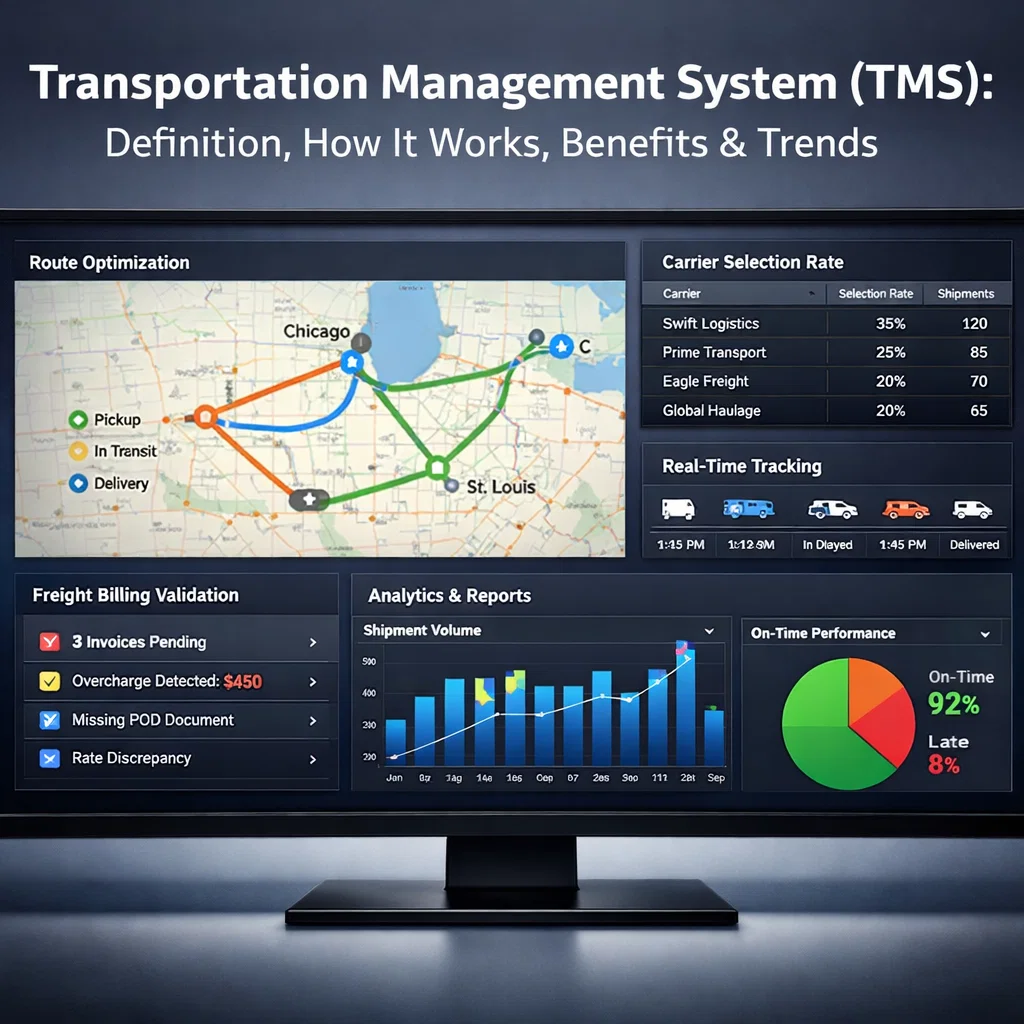
TMS & Fleet Management Systems
Integrates transportation scheduling, route optimisation, and real-time fleet tracking, creating a connected flow between the warehouse and last-mile delivery.
Barcode & RFID Scanners
Delivers item-level visibility with faster picking, scanning, and inventory validation, critical for high-volume warehouses.
IoT & Smart Sensors
Monitors conditions like temperature, humidity, or vibration, triggering instant alerts for sensitive or high-value goods.
Business Intelligence (BI) & Analytics Dashboards
Turns warehouse data into actionable insights, helping leaders identify inefficiencies, reduce bottlenecks, and forecast demand more accurately.
Bottom line: These integrations future-proof your WMS, transforming your warehouse into a responsive, intelligent hub for real-time decision-making and performance tracking.
From AI Forecasting to Robotic Picking: The Future of Warehouse Management Systems
The next phase of warehouse management system software is defined by automation, intelligence, and agility. WMS platforms are evolving from operational systems into predictive, self-optimising ecosystems.
Predictive Inventory Analytics
AI-driven WMS systems forecast demand surges, optimise reorder cycles, and auto-prioritise replenishment. This not only reduces dead stock but also improves turnover rates and aligns inventory with real-time market trends.
Automation, AGVs, and Robotics
Warehouses are deploying Automated Guided Vehicles (AGVs), robotic arms, and conveyor-based systems that integrate directly with WMS platforms. Your system now instructs robots for picking, sorting, and restocking in real time, cutting manual labour costs and minimising human error.
Headless Architecture and Microservices
The future of WMS is modular and API-first. Headless architectures built on microservices allow you to add, scale, or replace modules, like analytics, fulfilment, or IoT monitoring, without disrupting operations. This composable setup is ideal for multi-warehouse, multi-region enterprises aiming for faster innovation and seamless scalability.
As warehouses digitize, cybersecurity and compliance costs are becoming critical budget factors.
Data protection: Securing order, inventory, and customer data requires firewalls, encryption, and secure APIs.
Regulatory compliance: Standards like GDPR, CCPA, and ISO 27001 add both implementation and audit costs.
Access control: Role-based authentication and activity logging prevent unauthorized access.
Factoring these costs upfront helps avoid breaches, penalties, and expensive retrofits later.
How Appwrk Can Help in Warehouse Management System Development
Whether you’re digitising a legacy setup or building a next-gen warehouse management system from scratch, Appwrk delivers systems built for speed, precision, and scale, with measurable ROI.
Why Our Clients Choose Us
Proven results across 500+ warehouse networks
Deep expertise in FMCG, 3PL, and logistics ecosystems
Product consulting paired with full-stack engineering execution. tion
Development Track Record & Speed
MVP deployment in 6 to 8 weeks
Agile development with weekly feedback loops
Modular architecture for faster customisation and scaling
Support, Scaling, and Post-Launch Care
24/7 support SLAs across regions
Built-in multilingual and regional configurations
Continuous performance optimisation and feature upgrades
Founder’s Guide to Budgeting, Scaling, and Future-Proofing a Warehouse Management System
WMS Budgeting from Startup to Scale
Startups can launch a cloud-based WMS MVP for $3,000 to $5,000, covering inventory control, order tracking, and stock visibility.
For growing businesses, budgets scale to $20,000–$100,000+ with ERP/CRM integrations, barcode scanning, RFID, and analytics.
Always budget for development, deployment, and post-launch support to ensure scalability and stable performance.
SaaS vs Custom WMS Decisions
Choose a SaaS WMS for quick deployment and lower IT load. It’s ideal for standard workflows with auto updates and cloud hosting.
Opt for custom WMS software when you need deep integration, automation, advanced routing, or warehouse-wide data control.
Questions Every Founder Must Ask
What tools must your WMS integrate with: ERP, CRM, and eCommerce?
Can it scale with SKUs or new warehouses?
Who owns the WMS code and configuration?
What’s the true cost of ownership after users, upgrades, and maintenance?
Avoiding Burn and Scaling Smart
Avoid investing in a full-scale WMS upfront.
Begin with essential features, validate workflows, then scale with dashboards, RFID, or slotting tools.
This keeps your WMS cost predictable and scalable without overspending.
FAQs
How much does a warehouse management system cost? Costs range from $3,000 to $5,000 for an MVP to $25,000 to $150,000+ for enterprise builds with AI forecasting, multi-site management, and integrations.
How much does it cost to build an app? Basic apps start at $5,000; enterprise-grade systems can exceed $100,000. A custom WMS fits within this range based on modules, APIs, and analytics depth.
How much does a WMS license cost? Most SaaS WMS licenses start at $300/month and can reach $5,000/month, depending on user count, warehouse size, and feature tiers. Perpetual licensing models begin at around $15,000 one-time.
How much does an order management system cost? Typically $4,000 to $25,000, depending on real-time sync, fulfilment automation, and integrations. Many modern WMS systems include order management natively.
How much does a WMS system cost overall? Anywhere from $3,000 for a small cloud setup to $100,000+ for complex, custom deployments integrated with ERP, TMS, and advanced analytics. Talk to Appwrk’s WMS experts today and build a warehouse that works smarter, not harder.
How long does it take to develop a WMS? A basic cloud-based WMS MVP takes around 4 to 8 weeks. Full-featured custom systems can take 3 to 6 months, depending on integrations, automation, and custom logic.
Can I build a WMS on a tight budget? Yes. A lightweight warehouse management system can start at $3,000 to $5,000, covering inventory, orders, and shipping workflows.
What’s better: ERP or standalone WMS? ERPs handle finance, HR, and procurement. A standalone WMS is better for real-time inventory monitoring, faster updates, and logistics flexibility.
How do I calculate the ROI of a warehouse system? Track metrics like reduced picking time, inventory shrinkage, order accuracy, and labour hours saved. Most businesses achieve ROI within 9 to 18 months.
What’s the most affordable warehouse management system for SMBs? Zoho Inventory, Fishbowl, and Appwrk’s custom WMS are cost-effective and scalable options that grow with your operations.
How much does it cost to build a 2000 sq ft warehouse in India? Between ₹16 to 28 lakhs ($20,000 to $35,000 USD), excluding WMS and automation tech installations.
How much does it cost to build a warehouse globally? Construction typically costs $30 to $70 per sq ft, while smart warehouses with IoT and robotics can exceed $120 per sq ft.
How much does Oracle WMS cost? Oracle WMS Cloud starts around $5,000/month, scaling by users, SKUs, and modules, ideal for large, multi-site operations.
What is the cost of a stock management system? A standalone stock system costs $2,000 to $10,000, but a full-featured WMS offers more ROI through connected inventory, order, and shipment modules.
Gourav Khanna is the Co-founder and CEO of APPWRK, leading the company’s vision to deliver AI-first, scalable digital solutions for enterprises and high-growth startups. With over 16 years of leadership in technology, he is known for driving digital transformation strategies that connect business ambition with outcome-focused execution across healthcare, retail, logistics, and enterprise operations.
Recognized as a strategic industry voice, Gourav brings deep expertise in product strategy, AI adoption, and platform engineering. Through his insights, he helps decision-makers prioritize market traction, operational efficiency, and long-term ROI while building resilient, user-centric digital systems.
Subscribe to APPWRK Blogs, We'll Do the Rest!
Get Blogs on UI/UX, Mobile Apps, Online Marketing, and Web development technology.
Unlock worthy and priceless suggestions from the masters of mobile and web app development