150+ minds across 4 countries. Join a culture of innovation, ownership & growth.
Rewire for AI
From machine learning to deep learning, from classification tools to overall process automation – our AI engineers will help you retool your existing system or enhance your company results.
Ship faster, scale smarter, built for product companies and SaaS teams
Our Latest Work
We strive hard to deliver result-driven digital solutions across the globe. Check out our case studies to get a glimpse of how we ideate, innovate, and create unconventional digital solutions according to the requirements of our clients.
Discover diverse and passionate insights from our tech enthusiasts. We collaborate across various sectors to streamline operations and drive innovation. Explore our rapidly growing collection of articles to see why we’re at the forefront of IT solutions.
The decision to move from Magento to Shopify is one of the most significant replatforming choices an ecommerce business can make. Magento is powerful, but its power comes with...
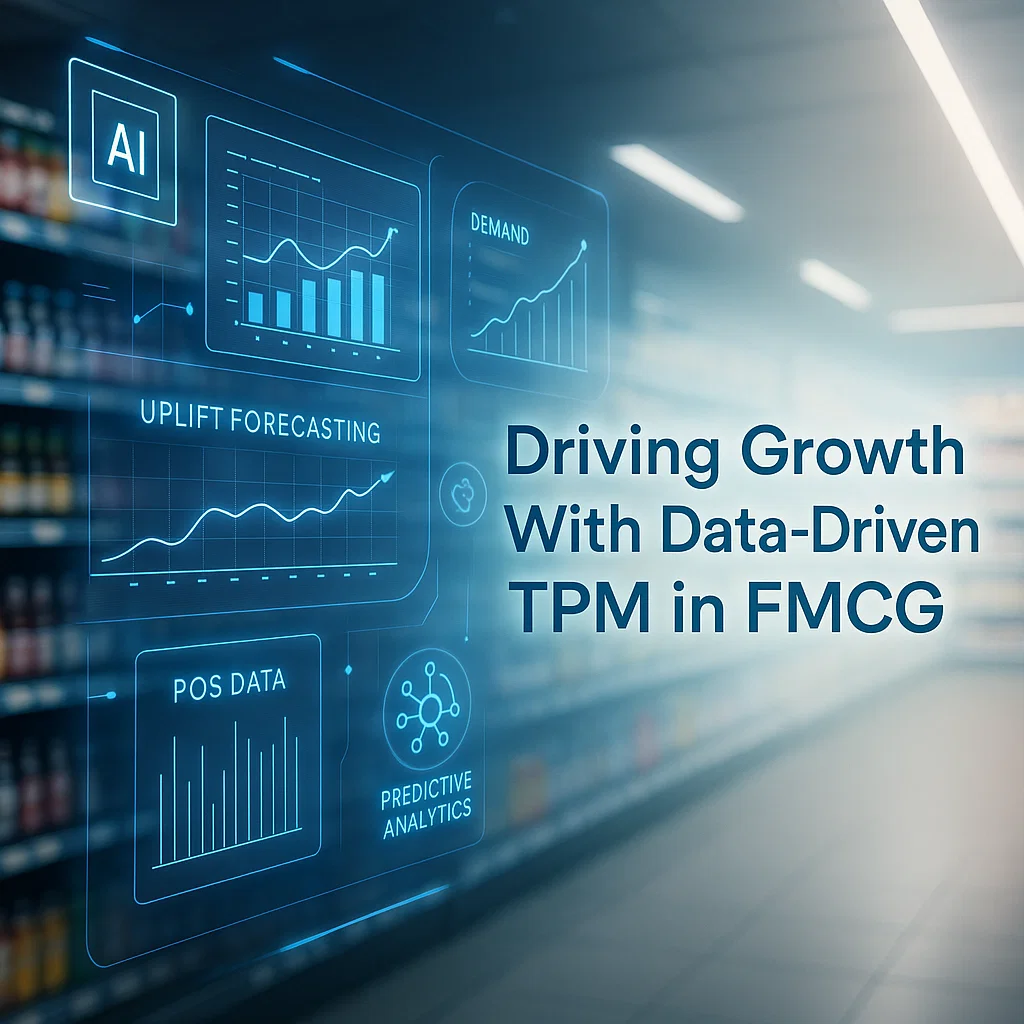
Accuracy gap is real: Traditional CPG forecasting carries a 25-40% MAPE error rate. AI-powered models bring that down to 8-15%, according to McKinsey research....
Real stories from global leaders who trusted us with their ideas.
Partnering with APPWRK helped us build a compliant and scalable healthcare platform, accelerating our time-to-market by 35%. Their team consistently delivered outstanding work.
Beesers
Digital Healthcare Client
Collaborating with APPWRK, Sportskeeda modernized its platform into a real-time sports engagement ecosystem, enabling seamless content delivery, scalable fan interactions, and high-velocity performance.
Sportskeeda
Sports & Entertainment Partner
Working with APPWRK was effortless. They captured our vision, maintained full compliance, and delivered a digital experience that built trust and elevated how customers interact with our fintech brand.
PayPenny
Fintech Partner
Working with APPWRK gave us confidence in adopting AI responsibly. Their team built a safe, intelligent bot that transformed how we engage with leads and helped us achieve measurable revenue growth.
IFB
AI Transformation Partner
Leveraging APPWRK’s digital expertise, Nemesis launched a scalable, compliant, and safe super app that connects content delivery, real-time communication, and logistics management within a single platform.
In 2025, custom CRM software development typically starts at $15,000, with most projects falling between $25,000 and $200,000. The final cost depends on the complexity of features, the deployment approach (cloud or on-premise), and the structure of the development team.
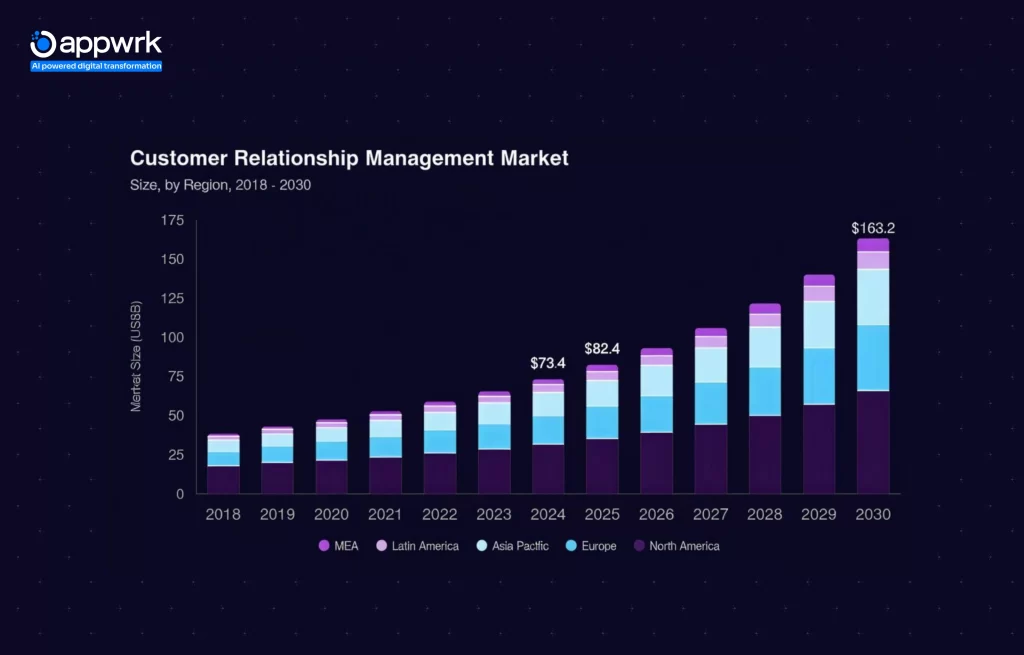
The global CRM software market is surging toward $150 billion in value, driving an urgent need for scalable, business-specific CRM solutions across industries.
Choosing between cloud, on-premise, or hybrid deployment changes both your upfront and lifetime CRM spend, and most founders miss this early.
Unlike off-the-shelf tools, custom CRM software lets you build around your team's workflows, integrations, and scale, often saving costs in the long run.
This blog is built for tech-enabled founders, digital product heads, and mid-sized business decision-makers who want full control over how customer data drives revenue and retention.
UI/UX design, third-party integrations, and the development team's location can account for up to 60% of your total CRM development cost, making it essential to know where to optimize.
This blog will walk you through CRM cost breakdowns, architecture choices, feature-specific budgeting, deployment options, and strategies to optimize spending, helping you stay on budget while building efficiently.
CRM Market Size, Growth Trends & Why 2025 Is the Year for Custom CRMs
There’s no denying that customer Relationship Management (CRM) software continues to play a critical role in how businesses manage interactions, data, and growth in 2025. As organizations prioritize personalized experiences, process automation, and unified data handling, CRM platforms have evolved from simple contact databases into full-fledged operational backbones.
The global CRM software market is expected to grow at a CAGR of 14.6% from 2025 to 2030, signaling rising demand for intelligent, customizable, and scalable CRM solutions.
Why Custom CRM Development Costs Matter Now
The Rapid rise in SMB & startup adoption: Smaller businesses now demand tailored CRM solutions built for their nuanced workflows, blending lead management, contact management, sales pipeline monitoring, and customer support in one integrated platform.
Explosion of feature-driven complexity: Modern CRM systems aren’t basic address books, but they include reporting and analytics, email integration, and activities tracking, all with strict security functionality, which all influence the $15,000 base cost and push you toward the $25,000 to $200,000 range.
Deployment & infrastructure choices: Deployment and infrastructure decisions, such as choosing between cloud, on-premise, or hybrid setups, come with varying upfront and ongoing costs. Custom workflows and integration layers can further increase the overall investment.
Integration requirements matter more than ever: Integration requirements play a critical role in CRM development. Enabling real-time dashboards or connecting with ERP and marketing platforms demands a solid integration architecture, which can consume a significant portion of the development budget.
Custom CRM Development Costs by Business Type and ROI Impact
Building a tailored CRM today doesn’t always require six figures. You can get started from a base of $15,000, with most projects falling between $25,000 and $200,000, shaped by factors like functionality, integrations, and business size. Let’s have a look at the features and the costs of the custom CRM software for various business tiers, along with the development timelines for each tier.
Startups/SMBs
Startups and small businesses often need streamlined solutions that deliver results quickly. A custom CRM at this level typically includes lead tracking and simple dashboards, with development taking around 3 to 4 months. Budgets generally fall between $25,000 and $45,000, covering just enough functionality to support early growth and keep operations organized.
Mid-Market Firms
Mid-market companies often require more advanced capabilities to support scaling operations. These CRMs are designed with deeper automation, third-party integrations, and built-in analytics to enhance efficiency and insight. Development timelines usually range from 4 to 7 months, with budgets falling between $50,000 and $120,000, depending on scope and feature depth.
Enterprise
Tailored for large-scale operations, these CRMs support complex workflows, advanced security protocols, and cross-departmental automation. With a focus on compliance, scalability, and multi-region deployment, development typically takes 6 to 12 months, and costs range from $125,000 to over $200,000, depending on customization and regulatory needs.
Business Tier
Features Included
Estimated cost for CRM development
Typical Dev Time
Startups / SMBs
Lead & contact tracking, basic dashboard, and simple reporting.
$25,000 to $45,000
3-4 months
Mid-Market Firms
Custom workflows, multi-tool integrations, and enhanced analytics.
$50,000 to $120,000
4-7 months
Enterprise
Role-based access, multi-department automation, and performance optimizations.
$125,000 to $200,000+
6-12 months
Your final CRM cost can fluctuate based on regional pricing models, particularly developer rates, compliance needs, and timezone-synced collaboration. For example, US projects often invest more in architecture, while Indian teams offer greater cost flexibility for iterative builds.
US and Western European agencies typically charge between $150-$250/hour, while high-skill CRM development teams in India offer full-stack delivery between $25-$60/hour. This makes India a top choice for startups and SMEs building MVPs or scalable CRM solutions with tight timelines and budgets.
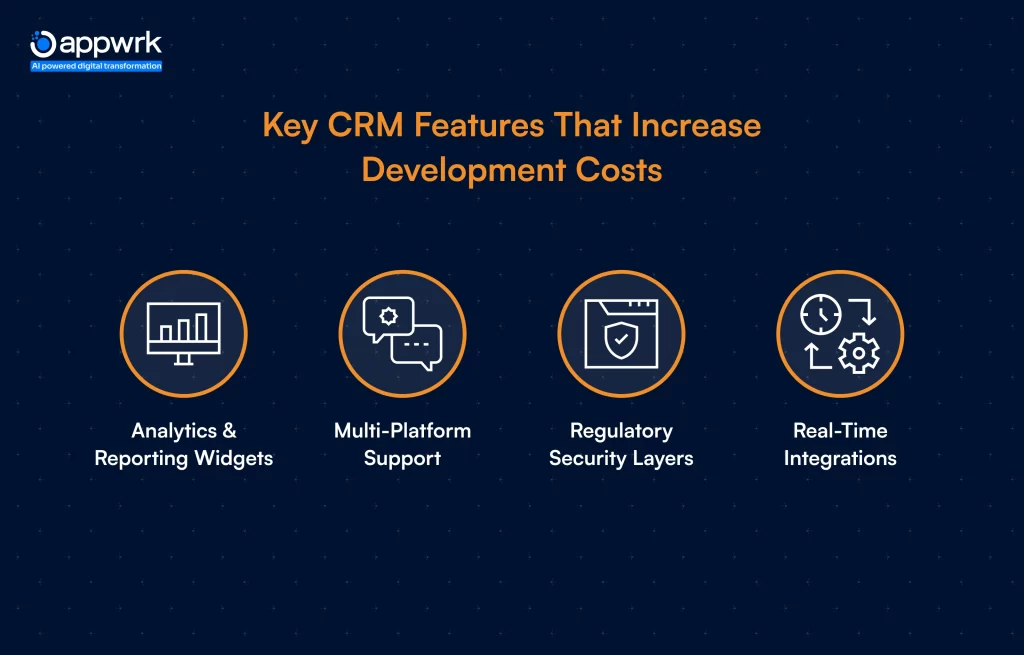
Key CRM Features That Increase Development Costs
Not all CRM features cost the same, but the ones that do significantly influence operational efficiency, compliance readiness, and decision-making agility. Here’s how:
Analytics & Reporting Widgets
These tools turn raw customer data into actionable insights, enabling leadership to identify conversion bottlenecks, track KPIs, and forecast trends.
Why it matters: Without these dashboards and BI layers, teams operate reactively rather than proactively. Reporting modules directly impact executive decisions, resource allocation, and campaign optimization.
Budget Impact: $10,000 to $30,000 for ad-hoc dashboards, BI layers, and real-time visualization
Multi-Platform Support (Web + Mobile)
Modern CRMs must support sales and support reps on the move. Ensuring seamless experiences across platforms drives real-time engagement and cross-platform productivity.
Why it matters: Mobile access increases user adoption by up to 60% among field teams. It ensures your CRM becomes a daily workflow tool, not just a desktop-bound repository.
Budget Impact: $50,000 to $150,000, depending on the depth of native or cross-platform builds.
Real-Time Integrations
CRMs must function as the command center connected to marketing, finance, and support tools. Real-time integrations automate tasks and reduce manual data hops.
Why it matters: Manual syncing slows down decision-making and introduces errors. Real-time integrations keep data consistent across tools and enable instant actions, like triggering follow-ups or syncing invoices.
Budget Impact: $4,000 to $10,000+ per integration, depending on endpoint complexity and API maturity.
Regulatory Security Layers
Compliance protocols like GDPR or HIPAA ensure trust, data sovereignty, and auditability. These layers include encryption, role-based access, and secure logging.
Why it matters: Data breaches can cost millions and destroy customer trust. For healthcare, finance, and education sectors, skipping compliance features risks both lawsuits and platform rejection in regulated markets.
Budget Impact: Typically adds $10,000 to $30,000 for encryption, audit logs, role access control, and compliance workflows.
What Drives the Cost of Custom CRM Software Builds
Tailored to Your Workflow: Custom code eliminates wasting budget on unused SaaS features.
Ownership & Control: You’re not locked into monthly licensing and can host your data securely on‑premise or in a private cloud.
Scalable Architecture: Custom‑built CRMs grow with your team and avoid bloated modular upgrades and costly extensions.
Summarised CRM Investment Range
Start with $15,000 for an MVP-level CRM (minimum viable product).
Expect your budget to fall between $25,000 and $200,000 based on features, integrations, UI complexity, deployment, and compliance.
Knowing what moves the cost helps you strategically plan phases, thus maximizing ROI and avoiding unexpected budget spikes.
CRM Hosting Options Explained: Cloud vs. On-Premise vs. Hybrid
Whether you opt for cloud, on-premise, or a hybrid setup, your decision directly affects upfront investments, scalability, security, and long-term operational costs. Understanding how each model functions can help you align your deployment strategy with business goals and budget realities.
Cloud-Based CRM: Scale Fast, Pay as You Grow
Most businesses opt for cloud deployments, such as leveraging AWS, Azure, or GCP, to host their custom CRM. The benefits include fast deployment, reduced hardware costs, and vendor-maintained servers. However, recurring fees can accumulate as usage grows.
For custom projects, cloud costs typically start low but may escalate if you need heavy processing, large storage, or advanced data workflows. Cloud is ideal for organizations seeking scalability, mobility, and minimal IT overhead.
According to a recent study, 87% of CRM adopters now use cloud-based platforms, giving evidence of its ubiquity and evolving cost-efficiency.
On-Premise CRM: Control Costs at Scale
For industries bound by compliance or sensitive data regulations, on-premise deployment remains relevant. Hosting your CRM internally grants total control over data and the environment, lending peace of mind to heavily regulated businesses.
However, this control carries significant costs:
Hardware purchases, server maintenance, and power usage
Skilled IT staff for upkeep and security updates
Longer initial deployment timelines
These expenses compound quickly, often making on-premise less cost-effective, except where regulatory certainty is paramount.
Hybrid CRM: Best of Both Worlds
The hybrid CRM model lets you keep sensitive systems in-house while leveraging the cloud for customer-facing tools. This dual strategy balances security, performance, and flexibility. Hybrid setups combine cloud agility with on-premise control. It is ideal for industries needing partial local hosting for compliance (e.g., healthcare) while retaining cloud-based scalability.
Hybrid setups typically cost more upfront due to infrastructure duplication but offer peace of mind and long-term compliance benefits.
Choosing the Right CRM Pricing Approach
Your custom CRM’s cost behavior ultimately depends on your billing and deployment model:
Fixed-Fee Model Ideal for clearly defined MVPs with minimal scope changes. This model offers a single, agreed-upon price upfront, making it easier to manage budgets and timelines with your development partner.
Impact: Predictable budgeting and zero scope deviation, but limited flexibility. Ideal for startups launching with very specific, validated requirements.
Time & Material (T&M) Ideal for evolving projects with shifting priorities. You pay based on actual hours and resources used, offering flexibility to adapt features, timelines, and scope as the build progresses.
Impact: Higher visibility into work-in-progress, but requires tighter project oversight. Offers agility to iterate based on user feedback, which is helpful in a fast-changing market or product pivots.
Dedicated Team Ideal for long-term CRM evolution. A full team works exclusively on your product under a monthly retainer, ensuring continuity, deep domain understanding, and faster iteration over time.
Impact: Best suited for enterprises or scale-ups planning multiple features, integrations, and long-term CRM evolution. Higher control, institutional knowledge retention, and predictable resource planning.
In most cases, cloud + T&M is the go-to for businesses validating product-market fit. Once stability and roadmap maturity are achieved, shifting to dedicated teams ensures cost control and deeper institutional knowledge.
Comparing CRM Deployment Models and Their Costs
Cloud CRM: Low initial setup, pay-per-use, ideal for agile teams.
On-Premise CRM: High initial expense, but gives data sovereignty.
Hybrid CRM: Balances both, though with complexity and infrastructure overhead.
Pricing Strategy: Choose the model that aligns with your phase, from MVP to scale.
By aligning your deployment choice with your business maturity, regulatory environment, and funding stage, you can significantly influence your total cost of ownership (TCO) and long-term ROI.
Furthermore, for US-based companies seeking rapid MVP delivery, Indian teams offer timezone-aligned agile collaboration, while European startups often benefit from regional grants or compliance-ready deployment models suited for GDPR.
IFB’s AI-Enabled CRM Strategy for Cost-Efficient Growth
When IFB, a major appliance manufacturer, needed smarter lead qualification and seamless CRM workflows, APPWRK built an AI-powered sales bot integrated with their CRM, web, and mobile systems. The hybrid cloud-on-prem architecture ensured GDPR compliance while delivering low-latency responsiveness across India and Europe.
Impact Highlights:
35% boost in lead scoring accuracy within 90 days.
25% reduction in lead-to-appointment cycles.
Full compliance with EU data regulations while using offshore development teams.
This case study validates the real-world power of custom CRM features like AI scoring and hybrid deployment, and showcases how APPWRK turns complexity into measurable outcomes.
When Should You Build, Customize, or Buy CRM Tools? Key Factors to Consider
Choosing the right CRM path isn’t just about what the tool can do; it’s about how well it fits your growth strategy, internal processes, and long-term budget. Whether you’re considering building from scratch, customizing an existing platform, or buying an off-the-shelf solution, understanding the trade-offs is critical. Here’s a breakdown of the three main CRM approaches to help guide your decision.
Ready-Made CRM Platforms
Examples: HubSpot, Zoho CRM, Pipedrive
Ideal for: Solo professionals or micro-teams with standard processes
Quick deployment and low upfront cost, often enabling free or starter plans.
Comes with ready-made integrations, workflows, and automation tools that accelerate setup and deliver immediate operational value.
Costs escalate with users: per-seat subscription fees can become a hidden long-term expense.
Limitations:
Limited customization locks you into generic workflows.
Over time, extra user licenses and unused features raise your TCO significantly.
Customizable SaaS CRM
Examples: Salesforce, Microsoft Dynamics, Insightly
Ideal for: SMBs needing a balance of flexibility and support
Configurable modules and API access allow adaptation without full custom builds.
Ecosystems, integrations, and vendor support expedite deployment.
Drawbacks:
You still deal with licensing costs and some vendor lock-in.
Custom features may require partner help, adding to TCO.
Although this model offers more flexibility, it often falls short on data ownership, control, and cost predictability.
Fully Custom CRM Software
Tailored from the ground up to match your unique workflows, data models, and customer journeys.
Ideal for: Businesses with unique workflows, complex integrations, or heavy compliance needs
Tailored architecture ensures optimal alignment with your internal processes and data policies.
Offers complete data ownership, security controls, and no recurring licensing fees.
Easier long-term management and scaling, ideal for enterprises with evolving business models.
Considerations:
Highest initial investment and development life cycle (3-12 months).
Ongoing maintenance and updates require dedicated teams.
Use-Case Alignment Table for Various Business Scenarios
Business Scenario
Ideal CRM Type
Why It Fits
Solo freelance lead management
Ready-Made CRM
Low cost, easy setup
SMB with evolving sales processes
Customizable SaaS CRM
Flexibility + ecosystem benefits
Healthcare firm with HIPAA compliance
Fully Custom CRM
Regulatory compliance & data ownership
Real estate agency with unique data flows
Fully Custom CRM
Built-for-purpose integrations
Tech startups with proprietary tools
Fully Custom CRM
Aligns with product & growth trajectory
Key Distinctions When Choosing
TCO Consideration: Custom CRM may have the highest upfront cost but avoids per-seat fees and excessive modules, often more cost-effective long-term.
Customization vs Control: Only fully custom options give total flexibility in workflows, UI, data collection, and security functionality.
Implementation Time: Ready-made CRMs launch in weeks; custom builds take months. Balance speed versus fit.
Breakdown of CRM Features by Business Value and Cost Impact
In today’s highly competitive business environment, a custom CRM must do more than manage contacts, as it needs to become an operational backbone. Every selected feature should deliver real-world value and should reflect your 2025 CRM investment goals, aligning directly with features like lead management, reporting and analytics, and security functionality, avoiding unnecessary bloat.
Key Feature Blocks and Their Impact on the Software Budget
Feature
Business Value
Approx. Budget Impact
Lead Management
Central tracking, lifecycle stages, and conversion insights.
Low (~$3,000 to $70,00)
Contact Management
Database with segmentation, and interaction history.
Low (~$3,000 to $7,000)
Sales Pipeline Monitoring
Custom stages, drag-and-drop, and bottleneck alerts.
Medium (~$10,000)
Email Integration
Two-way sync, tracking, and automation.
Medium (~$8,000 to $12,000)
Task & Activity Tracking
Notifications, reminders, and collaboration workflows.
Medium (~$8,000 to $12,000)
Reporting & Analytics
Dashboards, KPIs, data visualization and ad-hoc querying.
High (~$15,000 to $30,000)
Security Functionality
Role-based access, audit logs, encryption, and compliance.
High (~$15,000 to $30,000)
Customer Support Module
Ticketing, SLA management, and service history.
High (~$12,000 to $25,000)
How These CRM Features Boost Efficiency and ROI
Lead & Contact Management are foundational and quick to build, but vital for data centralization.
Sales Pipeline Monitoring reveals revenue leaks, and guides process refinement, and has a moderate cost with high ROI.
Email & Task Automation streamlines execution by reducing sales cycle length by up to 25% and improving task follow-through rates by 30-40%, especially when follow-ups are auto-triggered via CRM-based reminders.
Reporting & Analytics transforms your CRM into a predictive engine. By highlighting where deals stall, or what campaigns fail to convert, it gives you forward-looking control and not just reactive stats.
Security & Compliance protect your data and reputation. Salesforce emphasizes that security is essential to maintain trust.
Support Modules extend CRM to stand as a cross-departmental system.
What Advanced CRM Features Really Cost, and When to Invest?
Predictive Lead Scoring & AI: AI modules such as predictive lead scoring, sentiment analysis, and behavior-based routing can lift CRM value but often increase budgets by 20-40%.
Progressive Web App (PWA) CRM solutions offer a cost-efficient way to deliver mobile-like functionality with offline sync, which is especially valuable for sales teams and distributed field agents.
Mobile Access with Offline Sync: Enables field teams to perform offline, and adds complexity and testing time.
Third-Party Integrations: ERP, marketing platforms, or custom APIs cost $4,000 to $10,000+ per connector.
Roadmap for Balanced Feature Planning
Start with Lead & Contact Management and add email/task automation to stay within the MVP budget.
Add reporting dashboards and mobile interfaces as business processes mature.
Capstone with security frameworks, compliance workflows, and advanced analytics.
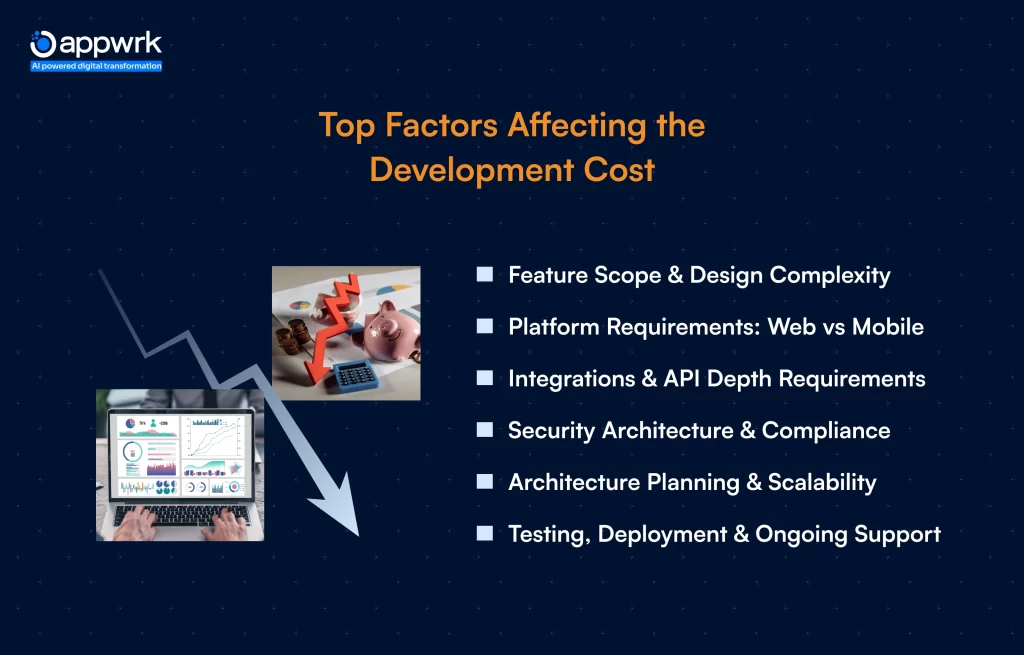
Top Factors Affecting the Development Cost
When building a custom CRM, developers don’t charge a flat rate. It’s your feature choices, platform architecture, security needs, and team dynamics that scale the cost from the $25,000 to $200,000 range.
Let’s explore each high-impact cost driver, how they affect budgets, and where you can strategically optimize.
Feature Scope & Design Complexity
Overview: Basic CRM features such as lead and contact management start low (around $3,000 and $7,000), but as you layer on custom pipeline builders, interactive dashboards, and analytics modules, costs climb into $15,000 to $30,000+ territory.
Data point: UI/UX can dominate up to 25-30% of total CRM cost.
Platform Requirements: Web vs Mobile
Overview: A web-based CRM keeps dev streamlined but adds mobile access, native or cross-platform, with offline sync that can boost costs by $20,000 to $50,000+, with offlinensync adding notable complexity.
Note: Apps using frameworks like React Native save time, but still require customization and testing.
Integrations & API Depth Requirements
Overview: Every system you integrate (ERP, Mailchimp, Xero, Slack) needs a robust API pipeline, each costing $5,000 to $10,000+, plus ongoing support infrastructure.
Expert insight: “Integrations are often underestimated in complexity and cost”.
Security Architecture & Compliance
Overview: As you layer on role-based access, encryption, logging, and compliance workflows, costs often increase by $10,000 to $30,000, depending on depth and regulatory standards.
Context: Finance or healthcare CRMs typically incur an added 10-20% on security build efforts.
Developer Team & Outsourcing Strategy
Overview: US/UK agencies charge $150-$250/hr, Eastern Europe $35-$75/hr, South Asia/Latin America $25-$60/hr. Outsourcing can cut your total development bill by 30-60%.
Trade-off: Lower hourly rates may offer upfront savings, but long-term success depends just as much on the partner’s expertise, communication clarity, and ability to navigate challenges effectively. India continues to dominate CRM outsourcing for its developer depth and agile methodologies. Eastern Europe (e.g., Poland, Ukraine) offers timezone alignment for EU clients, while US-based founders often opt for hybrid setups between India and the US to balance velocity and control.
Architecture Planning & Scalability
Overview: MVP CRMs cost $10,000 to $30,000; scalable microservices-backed CRM architecture can add $50,000 to $80,000, but pays dividends in ease of new feature deployment.
Insight:Scalable architecture reduces long-term technical debt and improves ROI.
Testing, Deployment & Ongoing Support
Overview: Comprehensive automated testing and CI/CD pipelines often account for 15-20% of dev cost, plus routine annual maintenance (~15% of initial build).
Research note: V&V (verification & validation) effort can represent up to 50% of total development effort.
Budget-Friendly Strategies for Building a Scalable CRM
Saving money on your custom CRM isn’t about dropping quality, but it’s about making smart, strategic decisions that maximize value.
To effectively control development expenses while ensuring the system scales, let’s go deeper into four proven tactics that balance investment and impact.
Prioritize Core Features, Delay Non-Essentials
Begin by building only the features your team needs right now. Avoid adding advanced tools like AI or deep analytics in the first phase. This helps control costs, reduces development time, and keeps your CRM focused and functional from day one.
A phased approach delivers quicker ROI:
Phase 1: Core Need: Lead management, sales pipeline tracking, and basic reporting.
Phase 2: Operational Support: Email integration, task automation, and user activity logs.
Phase 3: Advanced Layer: Analytics dashboards, mobile access, and compliance workflows.
This way, you prevent feature creep and align spending with proven business impact.
To avoid reinventing the wheel, use pre-existing modules and tools whenever possible:
Integrate with platforms like SendGrid, Mailchimp, or Calendly via public APIs.
Use open-source UI components (e.g., dashboards, date pickers) to cut front-end development time by 20-30%.
By using proven libraries, you’re aligning with best practices and retaining the budget for custom logic and integrations.
Tap High-Value Offshore & Nearshore Development Resources
Opting for international development talent can significantly reduce costs without compromising quality. Here’s how:
Work with vetted agencies or freelance teams from Eastern Europe, South Asia, or LATAM:
Rates often fall between $30-$70/hr, compared to $150-$250/hr in North America.
Choose proven teams with clear milestone systems, robust sprint planning, and QA integration in project pipelines.
This strategy often yields a 40-60% cost saving while maintaining delivery reliability, only if you pair it with clear architecture and communication plans.
Adopt a Phased Engagement Model
Avoid signing large upfront contracts. Instead, structure your project in three growth phases:
MVP Build (Fixed-Price): Define 3-5 core features and deliver within a clear timeline.
Iterative Expansion (Time & Material): Adapt and pivot based on user feedback, adding modules organically.
Long-Term Support (Dedicated Team): Once the system scales, maintain a devoted offshore/development team for feature rollout and upkeep.
This model gives you flexibility and accountability at each stage, protecting both your timeline and wallet.
Why These Approaches Save Money & Improve Performance
Focused Scope drives early ROI and prevents wasted effort.
Pre-built modules accelerate release time and improve stability.
Outsourced delivery combines high-skill execution with cost efficiency.
Phased engagement increases transparency, reduces risk, and aligns payment with progress.
By embedding open-source use, outsourcing strategies, and optimal cooperation models into the project plan, you’re setting the stage for fast, efficient builds that are fully prepared for future scaling.
Budget Overruns in CRM Projects- Real-life Lessons & Prevention Tips
Even with the best planning, many custom CRM projects overshoot their budgets due to hidden factors. Learning from common pitfalls can help you avoid turning a $50K build into a $150000 surprise.
What Usually Goes Wrong
Underestimating Feature Creep: Founders often keep adding “just one more” dashboard, AI tool, or workflow automation mid-project. These additions snowball, especially when scoped late.
Ignoring Testing Budgets: QA, regression testing, and CI/CD pipelines can account for 15-25% of your development spend, yet many teams treat it as an afterthought.
Inflexible Deployment Decisions: Locking into the cloud or on-premise too early without a hybrid fallback leads to expensive migration or re-architecture down the road.
Real Example: A US SaaS startup budgeted $75K for a hybrid CRM system, but failed to plan for HIPAA compliance and offline mobile sync. These two missed scopes alone added $40,000 and delayed the launch by 3 months.
What You Can Do Instead
Lock features into phased milestones, and each sprint should have a “cut-off” point.
Prioritize compliance planning from day one, especially if handling sensitive data.
Involve QA engineers early; don’t just test in the final month.
Tip: Ask your dev partner to simulate “worst-case scope creep” in sprint costing. This creates budget buffers without surprise overruns.
How CRM Development Translates into Long-Term Business ROI
Investors and business leaders often fixate on the upfront cost of building a CRM, but the real return lies in long-term value creation. A strategic investment of $25,000 to $200,000 can yield outsized dividends when measured across retention, revenue, and control. Let’s see how:
Customization Reduces Churn and Elevates Retention
Every industry has unique sales cycles and customer engagement styles. When your CRM is built to reflect this:
Advanced lead management captures nuances of your funnel, making outreach timely and personalized.
Activities tracking ensures follow-ups happen and logging is automatic, boosting team accountability.
Custom customer support flows nurture satisfaction and loyalty, resulting in measurable retention lifts. Businesses using custom CRMs report 30-40% lower churn, especially in B2B verticals where personalized engagement and intelligent follow-up flows increase customer lifetime value. A well-structured CRM also boosts repeat deal velocity by up to 35% by reducing friction in cross-team handoffs.
By owning the engagement design, you prevent customer drop-offs and build systems that adapt as your business evolves.
Full Data Ownership Unlocks Smarter Decisions
With off-the-shelf SaaS CRMs, you’re often forced into predefined views and limited dashboards. But a custom CRM empowers you to:
Identify exactly where deals lose momentum, which support tickets signal potential churn, and which campaigns fall short in specific regions. These insights empower your team to make proactive, data-backed decisions that drive growth and competitive advantage.
Integrate support, billing, and marketing data under a single pane, enabling real-time trend recognition.
Retain full data ownership, a critical advantage for industries facing heavy regulations or data-portability needs.
This control reduces reporting friction and enables strategic pivots fueled by internal data.
Total Cost of Ownership Becomes Lower Over Time
While upfront costs may seem steep, custom CRMs often prove more cost-effective in the long run.
Over an 18 to 24-month period, they typically outperform off-the-shelf SaaS tools in terms of total cost of ownership due to several long-term advantages:
You avoid per-seat licensing fees that can escalate unpredictably.
You’re free from forced upgrades when feature gates restrict use on SaaS platforms.
You avoid unnecessary modules or bolt-ons that drive up subscription prices.
A comparative study found clients save 40-60% over 3 years, while also experiencing 20% fewer process drop-offs and up to 35% faster user adoption internally, owing to UI/UX built around actual team workflows.
Custom CRM as a Growth Enabler
A custom CRM evolves with you as and when your operations expand, such as adding new sales channels, entering global markets, or building internal tools. It doesn’t force rigid structures or create integration bottlenecks.
The following options are readily possible without rebuilding your system:
Embedding AI for predictive lead scoring.
Adding offline mobile sync for sales teams on the field.
Adapting business logic to new compliance zones.
This agile scalability transforms CRM from a static tool into your core business backbone.
Why APPWRK Is the Ideal Partner for Custom CRM Development in 2025
Choosing the right development partner is just as crucial as selecting the right CRM features. APPWRK combines technical excellence, business insight, and strategic partnership to help you build a high-performing CRM platform that drives retention, scales effortlessly, and delivers measurable ROI.
Proven Track Record with 2,100+ Custom Software Projects
With over 2,100+ successful custom software deployments and a 4.7+ average client rating, APPWRK doesn’t just promise results, but it delivers them consistently.
This experience spans industries from SaaS and real estate to healthcare and retail, ensuring your CRM benefits from best practices gleaned across multiple business models and compliance environments.
Agile, Retainer-Ready Delivery for Scalable Growth
Post-launch, 87% of APPWRK clients, spanning the US, Europe, and Asia-Pacific, continue expanding integrations and features. APPWRK’s offshore delivery centers in India ensure round-the-clock builds, while GDPR-compliant expertise enables seamless EU-region deployments for privacy-critical sectors.
Their three-phase model ensures you gain value early and retain control:
Phase 1- MVP Build: Clearly defined, fixed-price development aligned to your core workflows.
Phase 2- Iterative Evolution: Flexible T&M model for agile feature enhancement.
Phase 3- Dedicated Scaling: Offshore-led team plans for long-term support, integrations, and feature growth.
This structure keeps costs transparent and tied directly to business outcomes.
Security by Design, Catering to Regulated Industries
APPWRK engineers implement strong audit logging, encryption, and role-based access controls and bring hands-on experience with GDPR, HIPAA, and CCPA regulations. Whether you’re in Europe, the US, or Asia, APPWRK architects tailor compliance protocols to fit regional laws and industry frameworks.
Whether your CRM needs to live entirely in the cloud (AWS, Azure), remain on-premise for compliance, or blend both, APPWRK supports it all. They also deliver smooth integrations with ERP, marketing automation, and analytics stacks to make your CRM the heart of your ecosystem.
Expert Process: From Discovery to Support
A structured, insight-driven workflow means your CRM build is always aligned to real business goals:
Discovery & Workflow Mapping: Detailed sessions to uncover your unique processes.
MVP Planning: Clear goals, sprint breakdowns, and outcome-based milestones.
Transparent Costing: No hidden upsells; budget tied to feature delivery.
Post-Launch Roadmap: Ongoing support plan with clear performance metrics.
Security & Compliance: Ongoing reviews and patches to ensure long-term trust.
Accelerated feature delivery without technical debt
Global execution model supported by India-based product teams, delivering cost efficiency without compromising on sprint velocity with timezone-aligned collaboration for US startups and EU-based founders.
This isn’t just software; it’s your business engine.
Bottom Line: Partnering with APPWRK means you gain seasoned execution, secure architecture, and scalable workflows, all while maintaining development clarity and cost discipline. It’s what turns CRM development from an expensive project into a growth asset.
FAQs
1. What is the pricing range for custom CRM software in 2025? Custom CRM development typically starts at $15,000 for an MVP, scaling to $25,000 to $120,000 for mid-tier builds with automation and third-party integrations. Enterprise CRM systems range between $125,000 and $200,000+, driven by architecture, security, and compliance layers.
2. Which features increase CRM development costs the most? Core cost drivers include AI scoring tools, predictive analytics, third-party integrations, and compliance modules like GDPR and HIPAA. Security features and scalable microservices-based architecture can also push budgets upward by 20-30%. Contact us to get your scalable CRM software developed right away.
3. Is a SaaS CRM cheaper than a custom CRM? Yes, initially. SaaS tools like HubSpot or Zoho offer free or low-cost entry plans with limited flexibility. But over time, per-user fees, vendor lock-in, and modular feature pricing often make them 25-40% more expensive for growing businesses compared to custom CRMs.
4. How long does it take to build a custom CRM platform? Development time varies by scope. An MVP CRM is often ready in 3-4 months, a mid-range system in 5-7 months, and a feature-rich enterprise in 8-12 months. Phased rollouts ensure functionality delivery without project overruns.
5. Is AI-based lead scoring worth the extra investment? Yes. Tools like AI lead scoring and sentiment analysis improve sales efficiency by prioritizing high-value contacts. While adding $10,000 to $20,000+ in cost, these features reduce churn, boost conversion rates, and often yield ROI within 6 months.
6. What are the hidden CRM development costs I should watch for? Look out for additional costs tied to data migration, integration APIs, custom UI design, performance testing, and ongoing support plans. These can add 15-25% to the baseline if not planned for during discovery and sprint scoping.
Gourav Khanna is the Co-founder and CEO of APPWRK, leading the company’s vision to deliver AI-first, scalable digital solutions for enterprises and high-growth startups. With over 16 years of leadership in technology, he is known for driving digital transformation strategies that connect business ambition with outcome-focused execution across healthcare, retail, logistics, and enterprise operations.
Recognized as a strategic industry voice, Gourav brings deep expertise in product strategy, AI adoption, and platform engineering. Through his insights, he helps decision-makers prioritize market traction, operational efficiency, and long-term ROI while building resilient, user-centric digital systems.
Subscribe to APPWRK Blogs, We'll Do the Rest!
Get Blogs on UI/UX, Mobile Apps, Online Marketing, and Web development technology.
Unlock worthy and priceless suggestions from the masters of mobile and web app development