150+ minds across 4 countries. Join a culture of innovation, ownership & growth.
Rewire for AI
From machine learning to deep learning, from classification tools to overall process automation – our AI engineers will help you retool your existing system or enhance your company results.
Ship faster, scale smarter, built for product companies and SaaS teams
Our Latest Work
We strive hard to deliver result-driven digital solutions across the globe. Check out our case studies to get a glimpse of how we ideate, innovate, and create unconventional digital solutions according to the requirements of our clients.
Discover diverse and passionate insights from our tech enthusiasts. We collaborate across various sectors to streamline operations and drive innovation. Explore our rapidly growing collection of articles to see why we’re at the forefront of IT solutions.
The decision to move from Magento to Shopify is one of the most significant replatforming choices an ecommerce business can make. Magento is powerful, but its power comes with...
Accuracy gap is real: Traditional CPG forecasting carries a 25-40% MAPE error rate. AI-powered models bring that down to 8-15%, according to McKinsey research....
Real stories from global leaders who trusted us with their ideas.
Partnering with APPWRK helped us build a compliant and scalable healthcare platform, accelerating our time-to-market by 35%. Their team consistently delivered outstanding work.
Beesers
Digital Healthcare Client
Collaborating with APPWRK, Sportskeeda modernized its platform into a real-time sports engagement ecosystem, enabling seamless content delivery, scalable fan interactions, and high-velocity performance.
Sportskeeda
Sports & Entertainment Partner
Working with APPWRK was effortless. They captured our vision, maintained full compliance, and delivered a digital experience that built trust and elevated how customers interact with our fintech brand.
PayPenny
Fintech Partner
Working with APPWRK gave us confidence in adopting AI responsibly. Their team built a safe, intelligent bot that transformed how we engage with leads and helped us achieve measurable revenue growth.
IFB
AI Transformation Partner
Leveraging APPWRK’s digital expertise, Nemesis launched a scalable, compliant, and safe super app that connects content delivery, real-time communication, and logistics management within a single platform.
Nemesis
Super App Partner
Reimagine Banking Performance Through Analytics
Partner with Appwrk to deploy predictive, real-time dashboards.
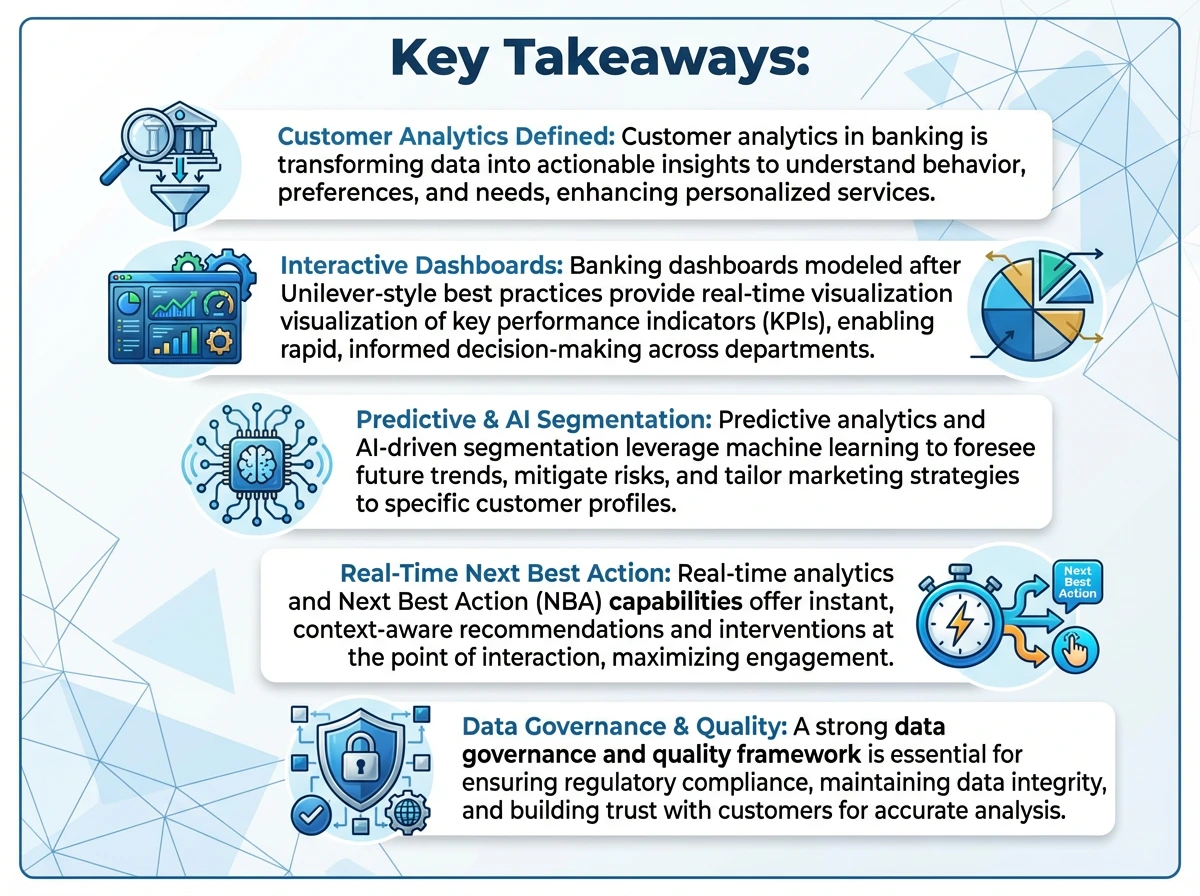
Modern customer analytics dashboards for banks enable hyper-accurate segmentation, churn prediction, risk scoring, and product propensity modelling, dramatically improving customer insights, operational visibility, and service responsiveness.
Banks using predictive analytics and AI-driven customer models can identify churn risk earlier, surface cross-sell opportunities with higher relevance, and improve customer engagement across digital and physical channels.
Real-time banking dashboards support faster decision-making by delivering unified customer insights across CX, credit, fraud, risk, and marketing teams, reducing dependency on manual reports and legacy MIS workflows.
Strong governance, data quality frameworks, and compliance controls ensure that banking analytics dashboards remain secure, auditable, and aligned with regulatory requirements in highly regulated BFSI environments.
When implemented effectively, customer analytics dashboards accelerate data-driven banking, resulting in measurable improvements in customer satisfaction, retention, cross-sell performance, and operational efficiency.
Introduction — Why Banks Need Customer Analytics Dashboards Now
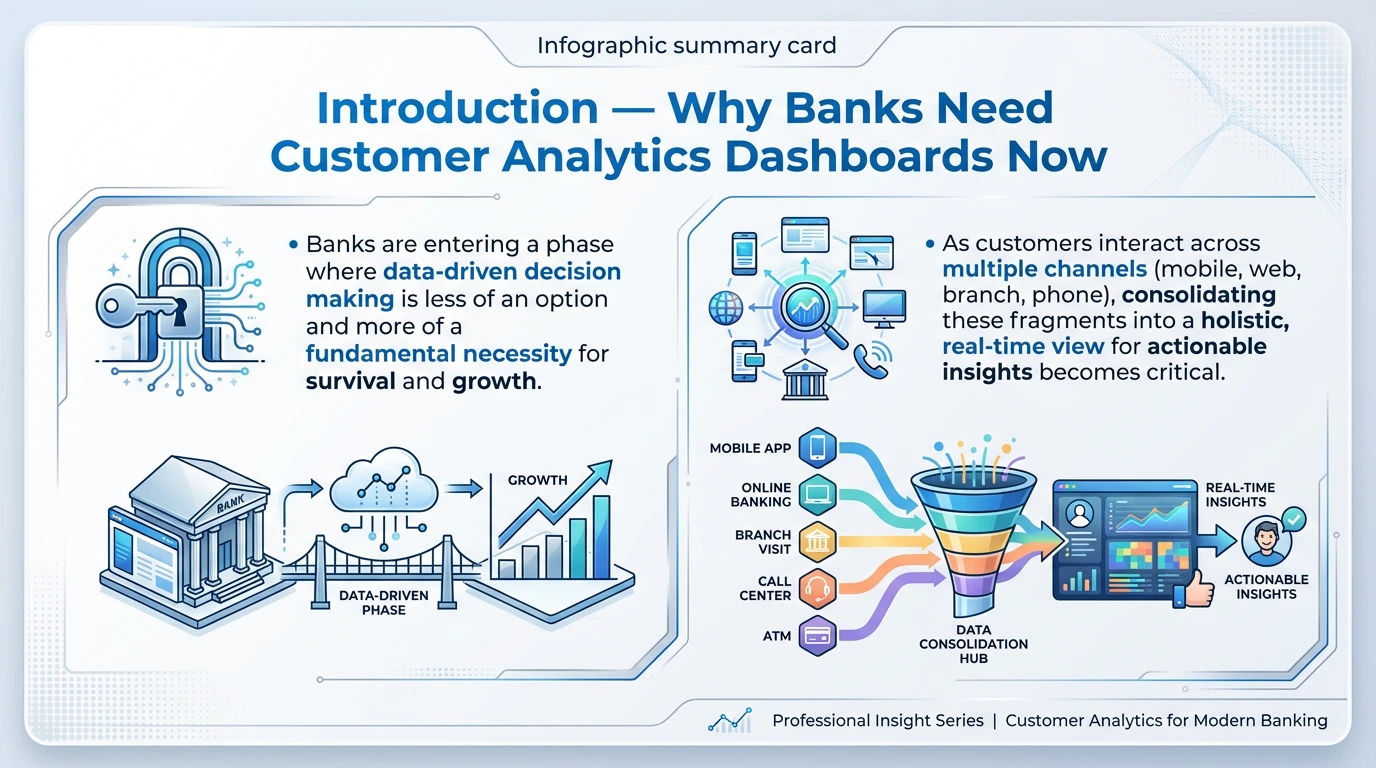
Banks are entering a phase where customer analytics in banking and real-time decisioning are no longer optional; they have become competitive necessities. As customers interact across multiple digital and physical touchpoints, traditional reporting systems can no longer keep pace with the speed and complexity of modern financial behaviour.
Despite this urgency, most institutions still operate with static reports, siloed databases, and outdated dashboards, barriers that limit personalisation, responsiveness, and consistent decision-making.
This is where modern customer analytics dashboards for banks change the landscape. These dashboards unify data into a 360-degree view of the customer, enable real-time banking analytics, and empower teams with governed, trustworthy insights for faster, more accurate decisions.
The result is a bank that doesn’t just store data, it activates it, strengthening customer satisfaction, loyalty, and long-term data-driven growth.
What Customer Analytics in Banking Really Means
Customer analytics in banking refers to the systematic collection, organisation, and analysis of customer data, such as demographics, transaction patterns, digital interactions, feedback, and product usage, to inform smarter, faster business decisions.
Banks are moving beyond legacy MIS reports and adopting advanced techniques like:
Predictive analytics for churn, risk, and product propensity
Behavioural segmentation and customer personas
Customer analytics dashboards for banks that unify insights
Detect churn risks early and trigger proactive retention actions Personalise products, offers, and service journeys.
Adapt strategies based on real-time customer behaviour.
Strengthen fraud detection and credit underwriting decisions.
Monitor engagement across digital and branch channels.
In essence, customer analytics empowers banks to understand customer needs, behaviours, and satisfaction levels, and deliver hyper-personalised, insight-led experiences at scale.
How Customer Analytics Dashboards Transform Banking Decision-Making
Modern customer analytics dashboards for banks turn fragmented data into real-time, actionable intelligence. By integrating customer behaviour, transactions, digital journeys, and risk signals into a unified view, banks can replace intuition-driven decision-making with data-driven banking at scale.
Real-Time Banking Dashboards for Instant Customer Visibility
Banks gain a complete snapshot of each customer’s financial activity, sentiment, product usage, and interaction patterns. This enables frontline teams to respond faster, reduce blind spots, and shift from reactive service to proactive engagement.
Predictive Models for Churn & Risk Identification
Through embedded predictive analytics, dashboards surface customers likely to churn, accounts showing early risk indicators, and segments with changing financial needs. These insights help teams intervene before issues escalate.
Intelligent Cross-Sell & Upsell Acceleration
With unified data and clear customer personas, banking analytics dashboards highlight relevant product opportunities at the right moments in the customer journey. This improves conversion rates and increases lifetime value across retail and commercial portfolios.
These capabilities transform dashboards from static reporting tools into always-on decision engines, enabling banks to make faster, more informed choices across credit, CX, fraud, and marketing operations.
Key Use Cases of Banking Customer Analytics
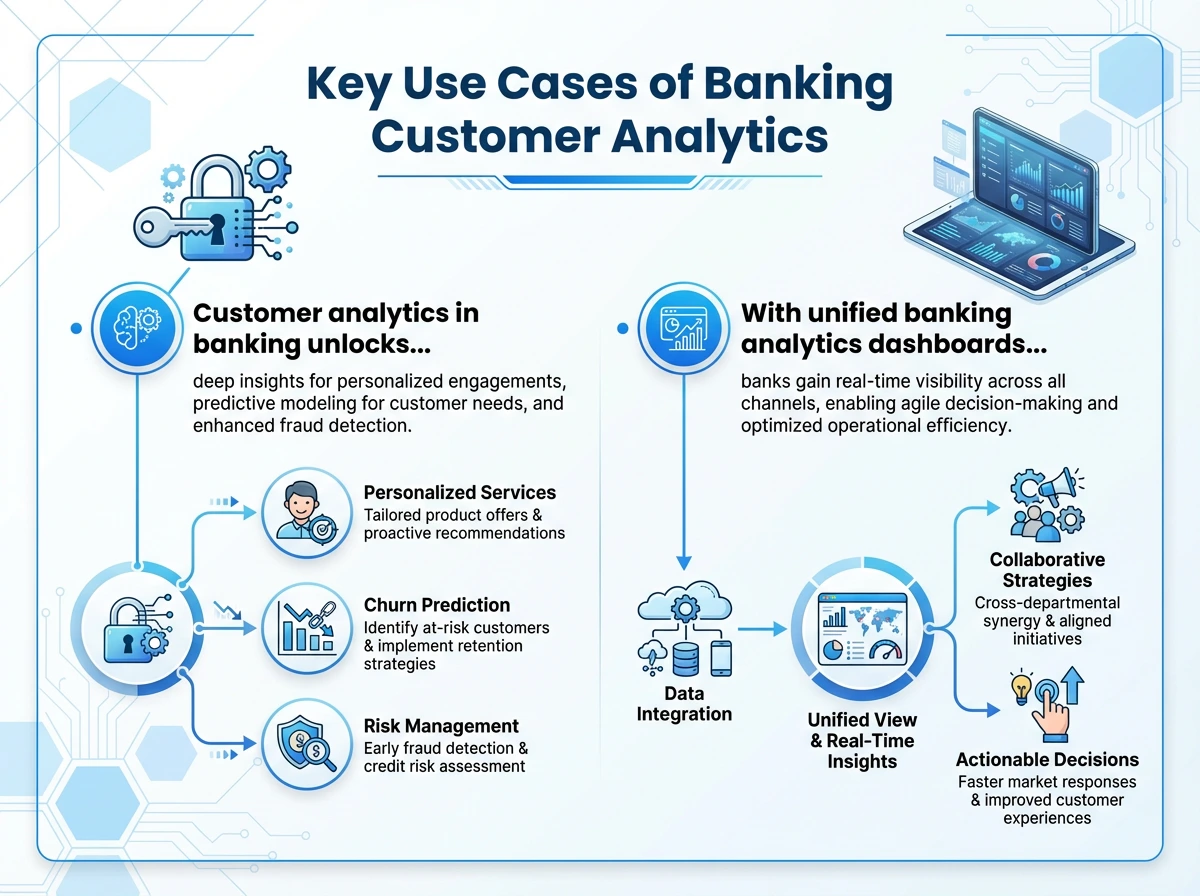
Customer analytics in banking unlocks high-impact opportunities across the customer lifecycle, from acquisition to engagement to retention. With unified banking analytics dashboards, institutions can act on insights faster and more accurately.
Customer Segmentation & Personas
Banks can group customers based on behaviour, demographics, spending patterns, and digital journey trends. This enables far more precise targeting for campaigns, advisory outreach, and personalised product recommendations.
Churn Prediction & Retention Scoring
Using predictive analytics, dashboards identify early churn signals such as declining engagement, reduced balances, or changes in transaction patterns. Teams can act proactively with tailored retention interventions.
Credit Risk & Underwriting Analytics
Risk teams use consolidated customer profiles, transaction history, repayment behaviour, income patterns, and external signals to make faster, more accurate credit decisions while reducing manual evaluation.
Fraud Detection & Anomaly Alerts
Real-time dashboards surface unusual activity instantly, helping banks reduce fraud losses through instant alerts, rule-based triggers, and machine-learning-driven anomaly detection.
Marketing & Campaign Performance Insights
Dashboards track ROI across channels, showing which segments respond best to specific offers, enabling smarter allocation of budgets and more effective campaigns grounded in banking customer insights.
Together, these use cases form the core of data-driven banking, empowering institutions to anticipate customer needs, reduce risk, and deliver hyper-personalised experiences at scale.
Real-Life Examples of Banks Using Customer Analytics Dashboards
Leading financial institutions worldwide have adopted customer analytics dashboards to modernise decision-making, strengthen risk controls, and deliver hyper-personalised experiences. These real-life examples illustrate how data-driven banking is already reshaping the industry.
JP Morgan Chase — Real-Time Fraud & Transaction Analytics
JP Morgan uses real-time analytics dashboards integrated with machine learning models to monitor billions of transactions, detect anomalies instantly, and reduce fraud losses. These dashboards combine customer behaviour, device intelligence, and transaction patterns into a single risk view.
Wells Fargo — Customer 360 Dashboards for Relationship Managers
Wells Fargo equips relationship managers with unified dashboards showing product holdings, engagement scores, digital activity, past complaints, and spending insights. This enables personalised outreach, higher conversion rates, and better retention.
BBVA — Next-Best-Action Dashboards Powered by AI
BBVA leverages predictive models within its customer analytics dashboards to recommend personalised financial actions, such as budgeting alerts, savings nudges, or product upgrades, based on real-time behavioural signals.
HSBC — AML & Compliance Monitoring Dashboards
HSBC uses advanced AML dashboards to track suspicious patterns, customer risk scores, and regulatory triggers. These dashboards help compliance teams prioritise investigations and maintain global regulatory standards.
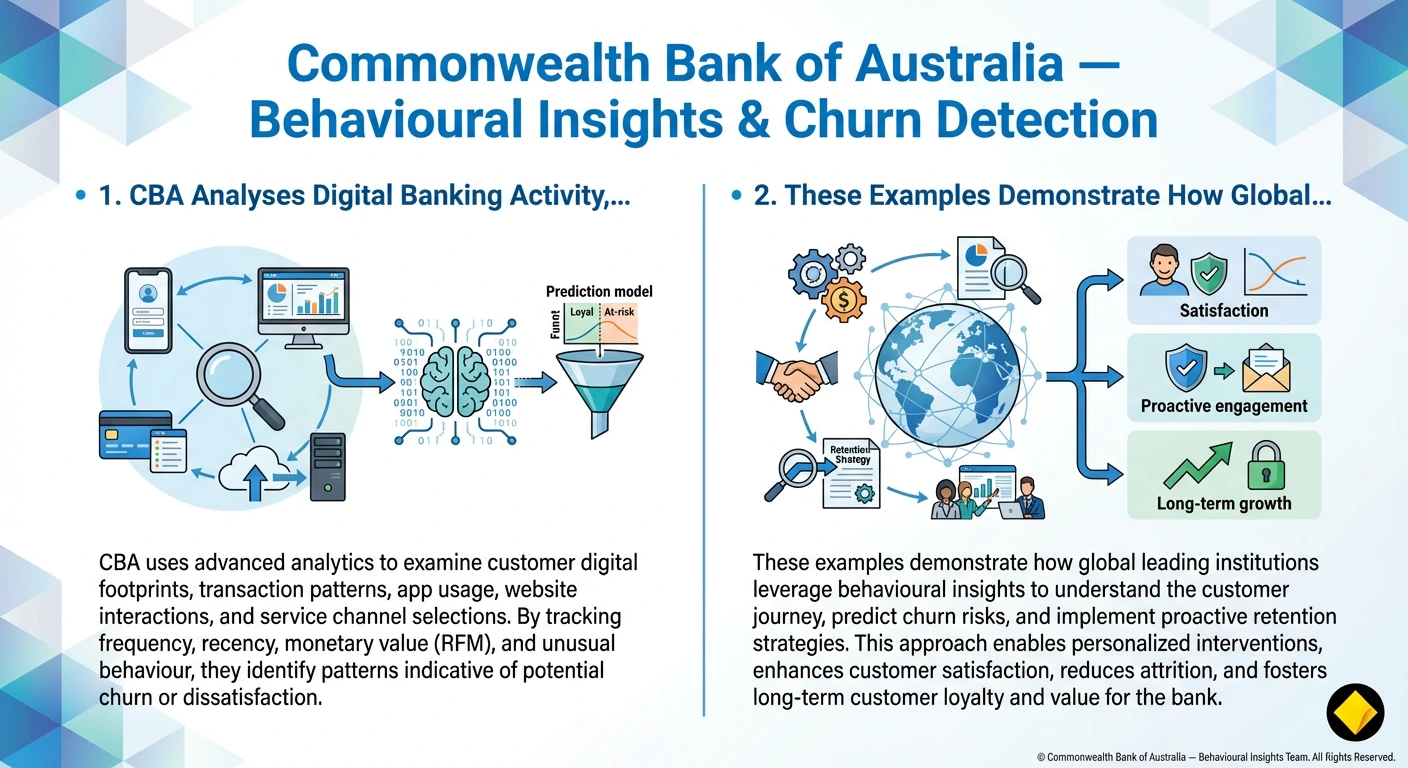
Commonwealth Bank of Australia — Behavioural Insights & Churn Detection
CBA analyses digital banking activity, spending behaviour, and engagement frequency through customer insights dashboards to predict dissatisfaction early and deploy targeted retention strategies.
These examples demonstrate how global banks are using banking analytics dashboards to unify insights, improve decision accuracy, and enhance both operational efficiency and customer experience.
A high-performing customer analytics dashboard for banks is far more than a visualisation layer. It is a secure, governed, real-time insights engine built on top of a robust data architecture designed specifically for the needs of modern financial institutions.
Below is the essential architecture that enables banks to unlock trusted, scalable, and actionable customer insights.
Data Ingestion Layer
Ingests data from core banking systems, CRM platforms, credit engines, digital channels (web/app), card networks, call centres, and third-party data sources. This layer ensures clean, standardised data flows into the analytics ecosystem.
Data Warehouse / Lakehouse
Serves as the single source of truth for customer data. It stores demographic information, transaction history, behavioural signals, interaction data, and risk attributes, enabling comprehensive customer 360 analysis.
Runs models for churn prediction, credit scoring, cross-sell propensity, fraud detection, and segmentation. This layer transforms raw data into decision intelligence consumed by dashboards and operational systems.
Visualization & Role-Based Access Layer
Provides role-based access for CX leaders, relationship managers, risk analysts, marketers, and operations teams. Dashboards display KPIs, trends, alerts, and journey-level insights, enabling data-driven banking decisions at every customer touchpoint.
Governance & Security Layer
Ensures compliance with GDPR, PCI-DSS, FFIEC, SOC 2, and regional banking regulations. Includes data lineage, access control, encryption, audit trails, and quality checks, critical for regulated BFSI environments.
Together, these components allow banks to move from fragmented reporting to real-time banking analytics dashboards that drive accuracy, trust, and consistent operational excellence.
Role of Emerging Technologies in Modern Banking Analytics
Modern customer analytics dashboards for banks are powered by advancements in AI, data engineering, cloud ecosystems, and real-time processing. These technologies enable financial institutions to shift from static reporting to intelligent, predictive, and automated decision-making.
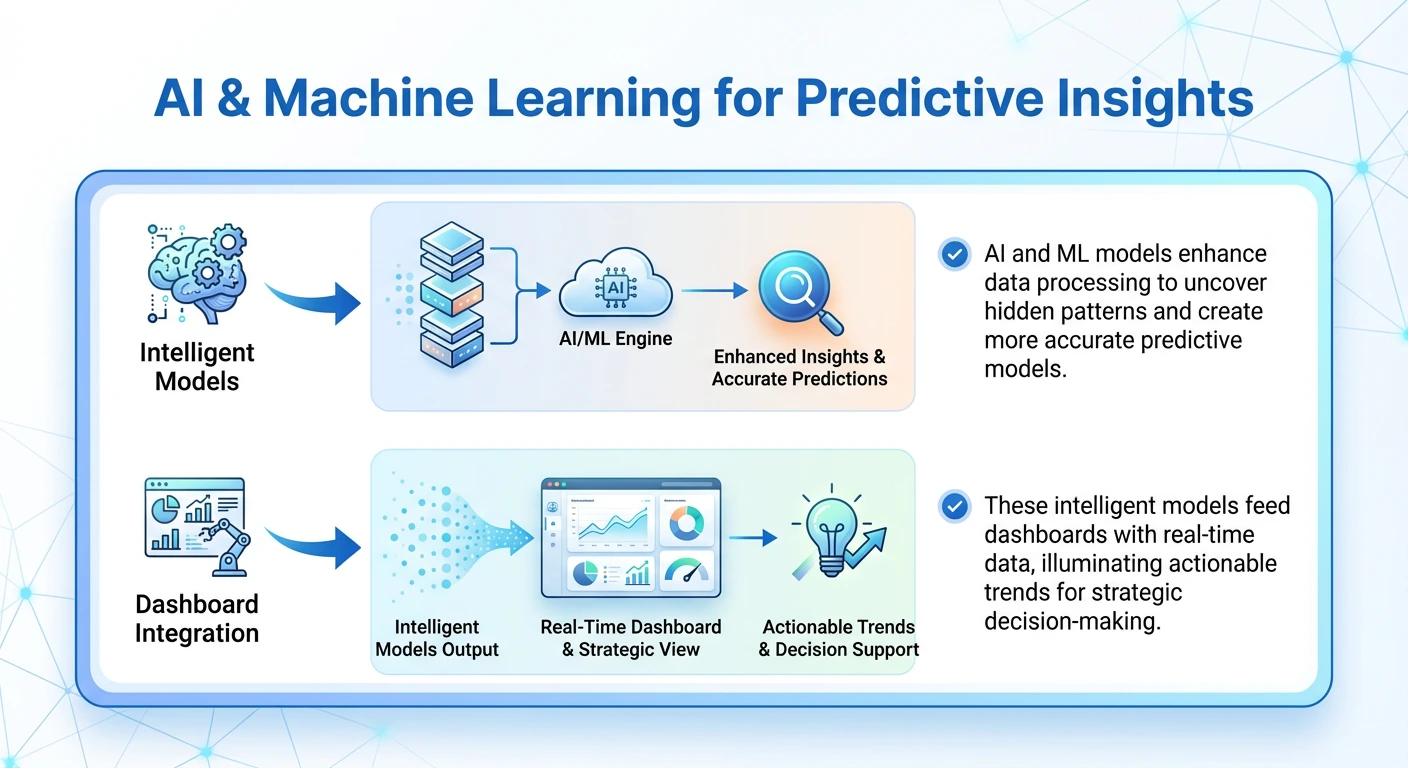
AI & Machine Learning for Predictive Insights
AI and ML models enhance customer understanding by forecasting churn, product propensity, creditworthiness, and fraud likelihood. These intelligent models feed dashboards with real-time predictions, allowing teams to act proactively instead of reactively.
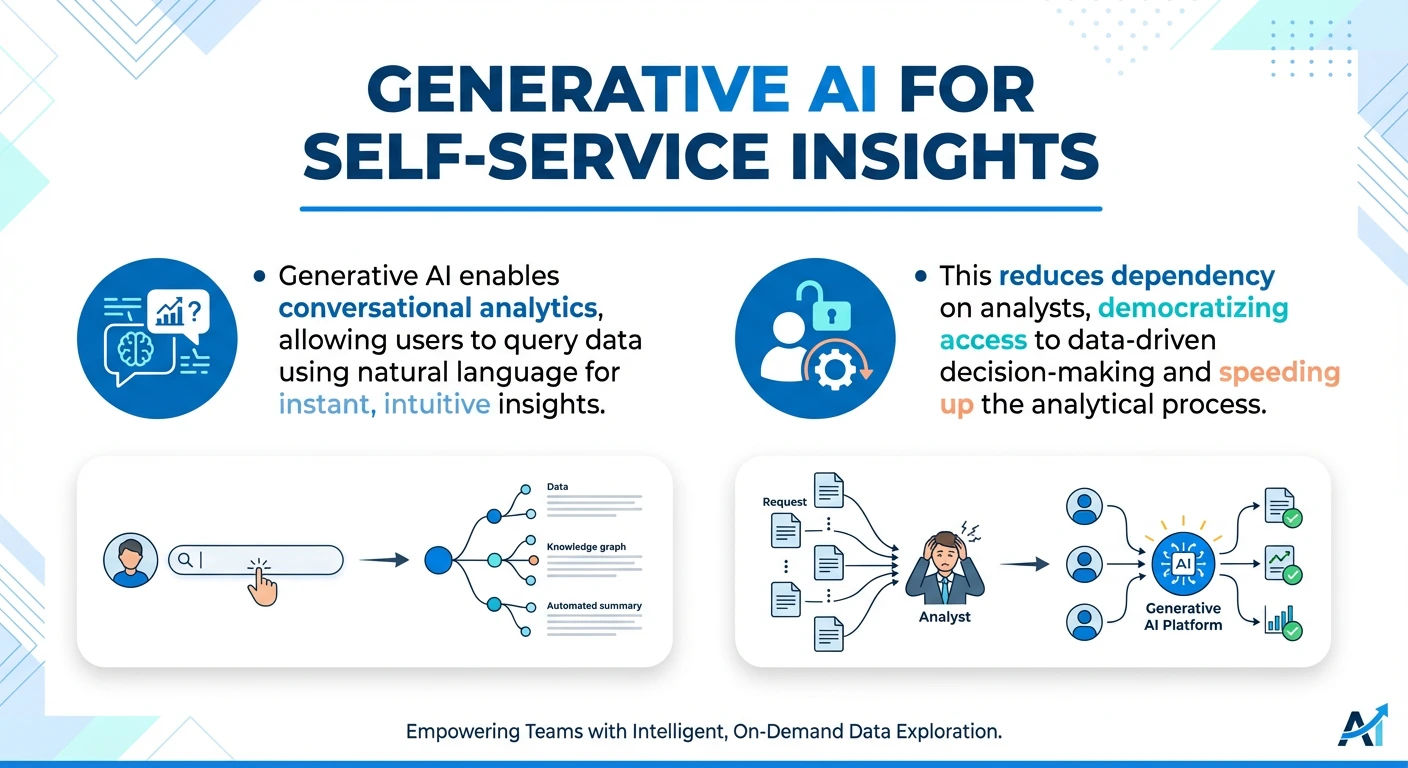
Generative AI for Self-Service Insights
Generative AI enables conversational analytics, allowing users to ask natural-language questions (“Which customers are likely to churn this quarter?”) and receive instant, data-driven answers. This reduces dependency on analysts and accelerates insight discovery.
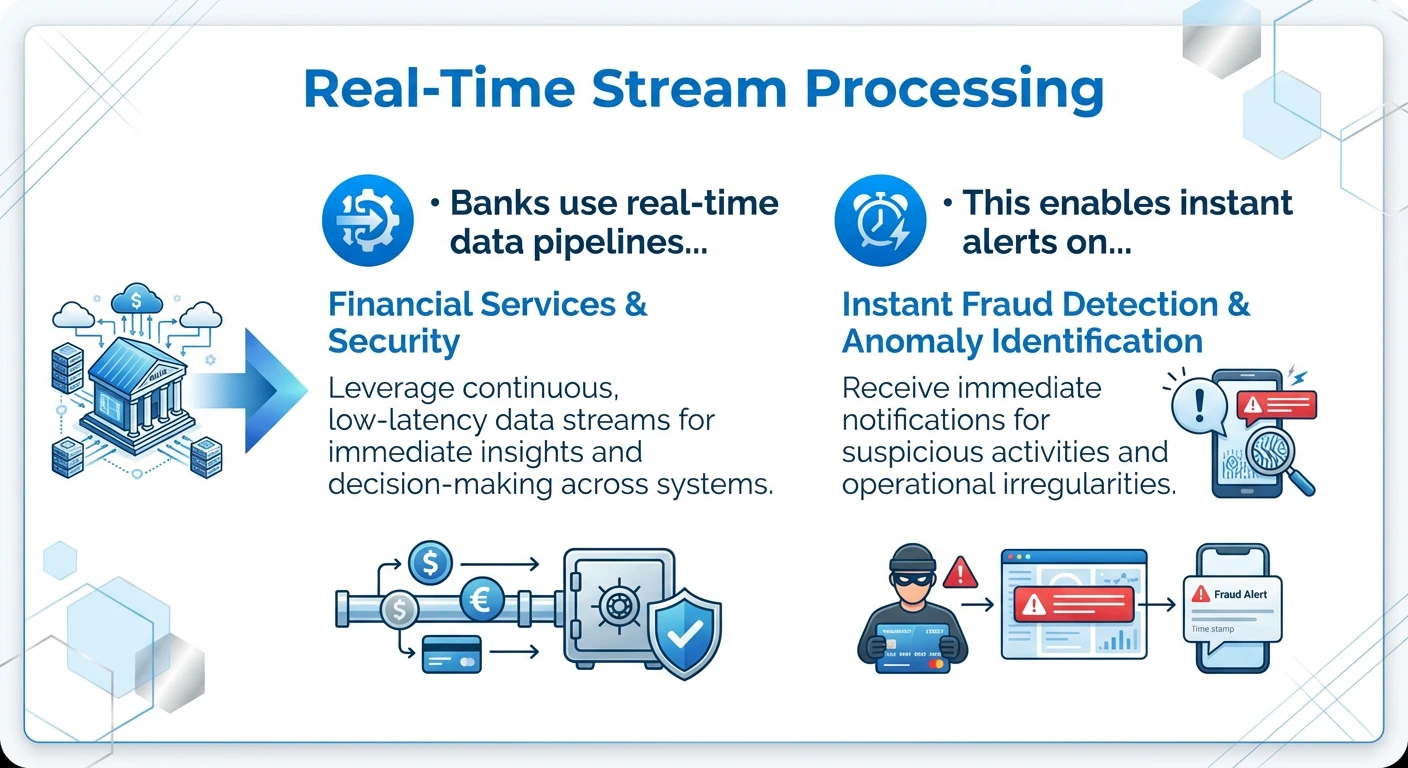
Real-Time Stream Processing
Banks use real-time data pipelines to monitor transactions, digital interactions, fraud signals, and service events as they happen. This enables instant alerts on anomalies, risk spikes, or customer behaviour changes, critical for operational decision-making.
Data Lakehouse Architectures for Scalability
Lakehouse architectures unify both structured and unstructured data, supporting scalable analytics without duplication. They allow banks to centralise customer data across channels, ensuring consistent insights across all business units.
Cloud Analytics Platforms
Platforms like AWS, Azure, and GCP offer secure, compliant infrastructures that support high-performance analytics workloads. Cloud-native dashboards enable faster processing, stronger governance, and easier integration with modern banking systems.
Together, these emerging technologies create the foundation for data-driven banking, enabling institutions to deliver personalised service, reduce risk, and accelerate digital transformation.
ROI Model – Proving the Value of Customer Analytics Dashboards in Banking
Banks do not invest in analytics dashboards for visual appeal; they invest because the financial and operational returns are significant, measurable, and scalable. A well-implemented customer analytics dashboard for banks drives ROI across revenue, cost, efficiency, and customer experience.
Revenue Uplift Through Smarter Targeting
Real-time banking dashboards identify cross-sell and upsell opportunities with higher accuracy. Predictive models surface customers most likely to respond to loans, cards, savings products, or wealth offerings, often resulting in 20–40% higher conversion rates.
Cost Reduction from Process Automation
Banks reduce manual reporting hours, operational inefficiencies, and fraud losses by automating insights and alerts. Teams no longer spend days reconciling data; they act on insights immediately.
Faster Decision Cycles and Operational Efficiency
Customer insights dashboards accelerate decision-making across credit, CX, marketing, and risk. Banks typically see 30–50% faster execution cycles as decisions move from static weekly reports to real-time dashboards.
Improved Customer Satisfaction & Retention
By detecting early churn signals and personalising product offerings, banks can lower churn by up to 15%. Customers receive proactive support, relevant recommendations, and frictionless digital experiences.
Enterprise-Wide Impact
Fewer blind spots
Higher product penetration
Better fraud mitigation
Stronger customer lifetime value
Compliance visibility across journeys
A mature analytics dashboard program ultimately transforms banks into data-driven organisations, where decisions are evidence-based and continuously optimised.
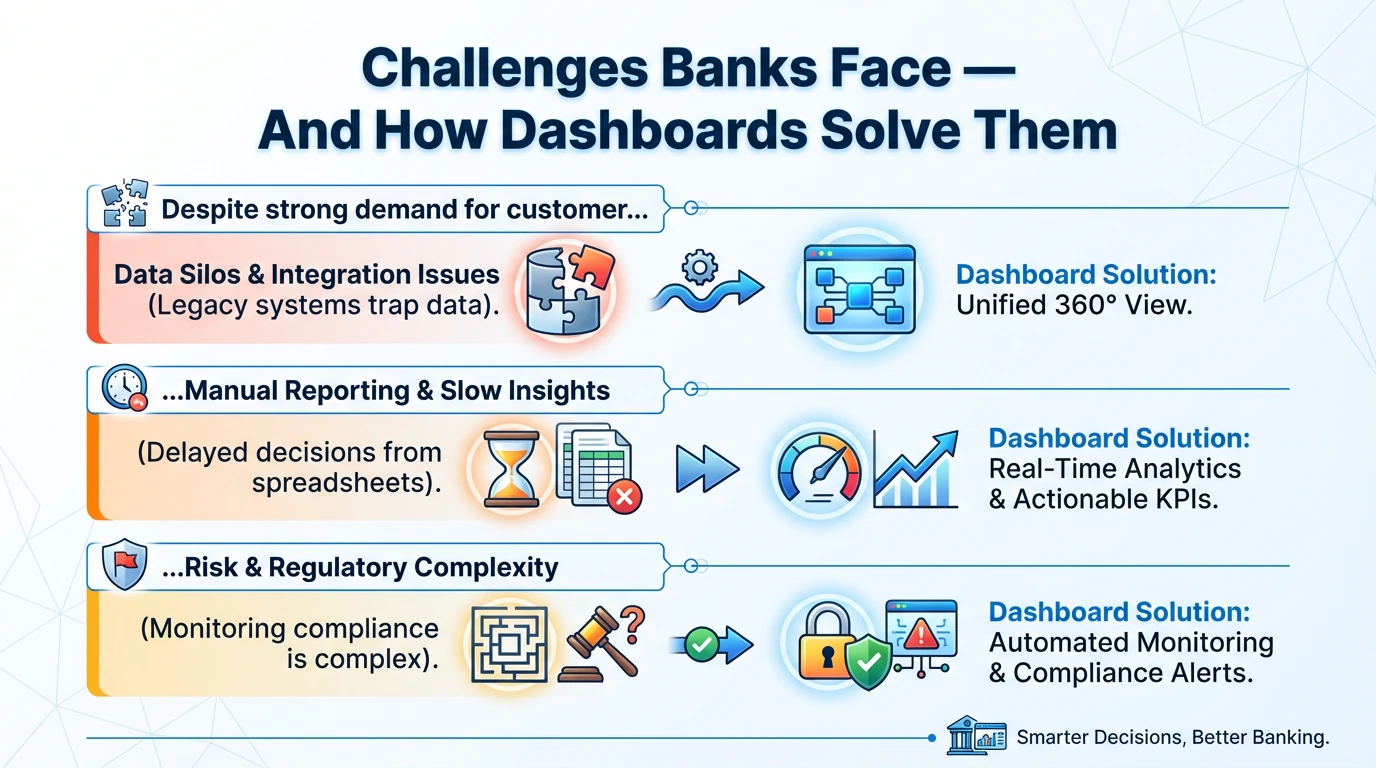
Challenges Banks Face – And How Dashboards Solve Them
Despite rapid digital adoption, many financial institutions still struggle to translate data into timely, accurate, and actionable decisions. Customer analytics dashboards directly address these operational and strategic challenges.
Data Silos Across Channels and Systems
Customer information is often scattered across core banking systems, CRM platforms, digital apps, branch systems, and third-party data providers. How dashboards solve this:
Unify structured and unstructured data
Provide a single customer view.
Improve consistency and accuracy across teams
Delayed and Incomplete Insights
Traditional MIS reports are static, outdated, and manual, delivering insights too late to influence real-time decisions. How dashboards solve this:
Enable real-time visibility
Allow instant trend and anomaly detection on
Reduce dependency on the manual reporting cycle
Data Quality and Format Inconsistencies
Inaccurate, duplicated, or unstandardized data limit analytics reliability and slow decision-making. How dashboards solve this:
Apply automated validations and standardisation
Enforce governance rules and lineage tracking
Improve trust and usability of insights.
Compliance and Security Complexity
Banks must comply with strict regulations (GDPR, FFIEC, PCI-DSS, local data laws) while managing sensitive customer data. How dashboards solve this:
Offer controlled access and audit trails
Maintain secure, encrypted pipelines.
Support regulatory reporting and risk monitoring.
Limited Analytics Skills Within Teams
Not every team has data analysts, causing delays in insight generation. How dashboards solve this:
Provide intuitive, role-based insights
Enable self-service analytics
Empower non-technical users to act on data.
By resolving these challenges, banking analytics dashboards help institutions transition from fragmented, reactive operations to a proactive, insight-led model capable of supporting long-term growth.
Future Trends in Customer Analytics for Banking
As banking becomes increasingly digital, customer analytics is shifting from descriptive reporting to predictive, real-time, and autonomous decision intelligence. Several emerging trends will define how banks leverage data over the next decade.
Hyper-Personalisation at Scale
Banks are moving beyond broad customer segments toward micro-segmentation powered by AI. Personalised product bundles, tailored advice, contextual offers, and dynamic pricing models will become standard across digital channels.
Explainable AI for Regulatory Clarity
Regulators now require transparency in model-driven decisions. Explainable AI (XAI) will help banks interpret why a model flagged a customer for churn, risk, or fraud, ensuring trust, accountability, and audit readiness.
Unified Data Fabrics for Seamless Access
Banks are adopting unified data fabrics to eliminate data silos and simplify access across teams. These architectures allow real-time connectivity between core banking systems, CRM, risk engines, and analytics layers.
Predictive CX Systems for Early Issue Detection
Customer analytics platforms will increasingly predict dissatisfaction, such as friction in onboarding, service delays, or drop-offs in digital journeys, allowing banks to intervene before customers consider switching.
Autonomous Insights & Decisioning
Dashboards will evolve from displaying insights to automatically triggering decision workflows, such as:
Real-time fraud blocking
Instant retention offers
Automated credit line adjustments
Dynamic product recommendations
These trends will redefine customer analytics in banking, enabling institutions to deliver next-level personalisation while strengthening risk accuracy and improving operational efficiency.
CX Measurement Using Analytics Dashboards
In today’s digital-first banking environment, customer experience (CX) is a critical differentiator. Customer analytics dashboards give banks the ability to measure, monitor, and improve CX in real time by consolidating sentiment, behaviour, and service metrics into actionable insights.
NPS & Sentiment Tracking Across Channels
Dashboards aggregate customer sentiment from surveys, feedback forms, call centre transcripts, and digital interactions. Banks can identify drivers of low satisfaction and take corrective action much earlier than traditional reporting cycles allow.
Digital Journey Analytics for Friction Detection
Banks use journey-level insights to pinpoint where customers drop off during onboarding, loan applications, service requests, or payments. This helps reveal:
Slow processes
UI/UX issues
Authentication friction
High-error points
These insights directly inform design, product improvements, and support workflows.
SLA & Service Performance Dashboards
Service teams monitor response times, resolution speed, case ageing, and SLA adherence in real time. This ensures consistent service quality across branches, call centres, and digital channels.
These indicators allow banks to preempt churn with personalised outreach.
Holistic Customer Health Scores
By combining engagement metrics, sentiment, product usage, and financial behaviours, dashboards generate comprehensive customer health scores that help prioritise retention and cross-sell opportunities.
In essence, banking analytics dashboards transform CX from a reactive function into an intelligent, predictive capability, enabling banks to strengthen loyalty, reduce churn, and deliver superior digital experiences.
How Appwrk Helps Banks Become Data-Centric
Banks often have the data required for advanced analytics, but not the infrastructure, dashboards, or unified intelligence layer needed to turn that data into real-time decisions. Appwrk helps financial institutions bridge this gap with secure, scalable, and fully customizable analytics solutions tailored for BFSI environments.
Unified Data Integration Across Banking Systems
Appwrk connects fragmented data sources, including core banking systems, CRM platforms, digital channels, card networks, and third-party data, into one governed ecosystem. This foundation enables accurate customer insights and consistent decision-making across teams.
Custom Banking Dashboards Built for Real Workflows
Instead of one-size-fits-all templates, Appwrk builds role-based customer analytics dashboards for banks covering:
Customer 360 profiles
Churn and retention signals
Loan underwriting insights
Fraud alerts & anomaly detection
Marketing and campaign effectiveness
Dashboards are interactive, real-time, and designed to align with operational needs in retail, commercial, and digital banking.
AI & Predictive Modelling for Intelligent Decisioning
High-propensity cross-sell and upsell opportunities
At-risk customers are likely to churn
Credit risk indicators
Fraud and suspicious patterns
These predictions flow directly into the dashboards, enabling data-driven banking across the organisation.
Enterprise-Grade Compliance & Security
Every solution is designed to meet BFSI standards, including:
Encryption and secure data pipelines
RBAC and audit trails
GDPR, PCI-DSS, FFIEC, SOC2 alignment
High-availability deployments
Banks benefit from insights without compromising governance.
Scalable Architecture for Future Growth
Appwrk solutions support cloud, on-premise, and hybrid environments, and integrate seamlessly with emerging technologies such as real-time streaming, lakehouses, and AI-based decision engines.
Through these capabilities, Appwrk enables banks to operationalise analytics, reducing friction, improving agility, and accelerating digital transformation.
Founder’s Guide – Modernising Customer Analytics in Banking
Modernising customer analytics in banking doesn’t require a full-scale transformation on day one. Instead, banks see the fastest results when they follow a phased, insight-first model that builds strong data foundations and scales predictively.
Start with High-Impact, Low-Complexity Use Cases
Banks should begin with areas that deliver immediate ROI, such as churn prediction, fraud alerts, cross-sell propensity, or customer 360 dashboards. These use cases prove value early and build internal confidence.
Build a Trustworthy Data Foundation
Before deploying AI models or advanced dashboards, banks must ensure clean, governed, unified customer data. This includes consolidating fragmented systems, standardising formats, and establishing quality rules.
Adopt a Customer 360 Mindset
Centralising behavioural signals, account information, digital interactions, and product usage creates a unified understanding of each customer. This becomes the backbone of personalised banking experiences.
Operationalise Dashboards Across Teams
Analytics only drives impact when it’s embedded into workflows. Banks should empower every function, CX, credit, fraud, risk, and marketing, with customer analytics dashboards tailored to their decision requirements.
Measure, Refine, and Scale
Track KPIs like churn rate, NPS, cross-sell uplift, fraud reduction, and operational efficiency. Use these insights to refine models, improve dashboards, and introduce new predictive capabilities over time.
By approaching modernisation incrementally, bank leaders build a sustainable, data-driven culture, one that leverages analytics not just for reporting, but as a strategic advantage across the entire customer lifecycle.
Conclusion — The Future of Data-Driven Banking
A strong customer analytics foundation is now essential for banks aiming to deliver personalised experiences, reduce risk, and make faster, insight-led decisions.
With customer analytics dashboards for banks providing real-time visibility, predictive intelligence, and unified customer insights, financial institutions can transition from reactive service models to proactive, data-driven banking at scale.
Banks that invest in analytics capabilities today build long-term competitive advantage through improved customer satisfaction, higher retention, better risk management, and stronger operational efficiency. With the right technology, governance, and partners, customer analytics becomes the core engine powering sustainable, digital-first banking growth.
Frequently Asked Questions (FAQs)
1. What is customer analytics in banking?
Customer analytics in banking involves collecting and analysing customer data, such as transaction history, digital interactions, demographics, and product usage, to generate insights that improve decision-making across marketing, CX, credit, and risk teams.
2. What types of dashboards do banks typically use?
Banks commonly use:
Customer 360 dashboards
Credit and risk analytics dashboards
Fraud detection dashboards
Marketing and campaign dashboards
Operational performance and SLA dashboards
Real-time transaction monitoring dashboards
3. How do customer analytics dashboards improve decision-making?
They unify fragmented data into a single source of truth and deliver real-time insights that help teams identify customer needs, detect risk early, reduce churn, and target offers more accurately.
4. Which KPIs matter most in customer analytics for banks?
Important KPIs include:
Customer Lifetime Value (CLV)
Churn probability
NPS and sentiment scores
Digital engagement metrics
Cross-sell/upsell conversion rates
Fraud alerts and anomaly counts
5. Can customer analytics help reduce churn?
Yes. Predictive analytics identifies early churn indicators, enabling banks to take proactive action, such as tailored outreach, better offers, or improved service journeys.
6. What data sources feed a customer analytics dashboard for banks?
Common inputs include core banking data, CRM systems, card transactions, loan systems, call centre logs, mobile/web activity, and external data sources like credit bureaus.
7. How do dashboards support real-time decision-making?
Real-time dashboards monitor transactions, behavioural triggers, anomalies, and service journeys as they happen, allowing instant actions across fraud, CX, underwriting, and marketing operations.
8. Are customer analytics dashboards secure for regulated banking environments?
Yes, when built with governance and compliance controls such as encryption, RBAC, audit trails, lineage tracking, and adherence to standards like GDPR, PCI-DSS, FFIEC, and SOC 2.
9. How long does it take for a bank to implement a customer analytics dashboard?
Timelines vary between 6–14 weeks, depending on data complexity, system integrations, the number of dashboards, and whether predictive models are included.
10. Why partner with Appwrk for customer analytics dashboards?
Appwrk builds secure, scalable, and fully customised banking analytics dashboards that unify customer data, deliver real-time insights, and integrate AI-driven models for churn, risk, and personalisation, helping banks accelerate their transition to data-driven decision-making.
→ Speak with Appwrk to modernise your bank’s analytics ecosystem and adopt real-time, predictive customer insights.
Gourav Khanna is the Co-founder and CEO of APPWRK, leading the company’s vision to deliver AI-first, scalable digital solutions for enterprises and high-growth startups. With over 16 years of leadership in technology, he is known for driving digital transformation strategies that connect business ambition with outcome-focused execution across healthcare, retail, logistics, and enterprise operations.
Recognized as a strategic industry voice, Gourav brings deep expertise in product strategy, AI adoption, and platform engineering. Through his insights, he helps decision-makers prioritize market traction, operational efficiency, and long-term ROI while building resilient, user-centric digital systems.
Subscribe to APPWRK Blogs, We'll Do the Rest!
Get Blogs on UI/UX, Mobile Apps, Online Marketing, and Web development technology.
Unlock worthy and priceless suggestions from the masters of mobile and web app development