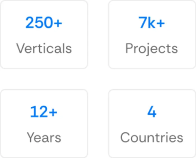
150+ minds across 4 countries. Join a culture of innovation, ownership & growth.
Rewire for AI
From machine learning to deep learning, from classification tools to overall process automation – our AI engineers will help you retool your existing system or enhance your company results.
Ship faster, scale smarter, built for product companies and SaaS teams
Our Latest Work
We strive hard to deliver result-driven digital solutions across the globe. Check out our case studies to get a glimpse of how we ideate, innovate, and create unconventional digital solutions according to the requirements of our clients.
Discover diverse and passionate insights from our tech enthusiasts. We collaborate across various sectors to streamline operations and drive innovation. Explore our rapidly growing collection of articles to see why we’re at the forefront of IT solutions.
The decision to move from Magento to Shopify is one of the most significant replatforming choices an ecommerce business can make. Magento is powerful, but its power comes with...
Accuracy gap is real: Traditional CPG forecasting carries a 25-40% MAPE error rate. AI-powered models bring that down to 8-15%, according to McKinsey research....
Real stories from global leaders who trusted us with their ideas.
Partnering with APPWRK helped us build a compliant and scalable healthcare platform, accelerating our time-to-market by 35%. Their team consistently delivered outstanding work.
Beesers
Digital Healthcare Client
Collaborating with APPWRK, Sportskeeda modernized its platform into a real-time sports engagement ecosystem, enabling seamless content delivery, scalable fan interactions, and high-velocity performance.
Sportskeeda
Sports & Entertainment Partner
Working with APPWRK was effortless. They captured our vision, maintained full compliance, and delivered a digital experience that built trust and elevated how customers interact with our fintech brand.
PayPenny
Fintech Partner
Working with APPWRK gave us confidence in adopting AI responsibly. Their team built a safe, intelligent bot that transformed how we engage with leads and helped us achieve measurable revenue growth.
IFB
AI Transformation Partner
Leveraging APPWRK’s digital expertise, Nemesis launched a scalable, compliant, and safe super app that connects content delivery, real-time communication, and logistics management within a single platform.
The cost to build loan management software can start as low as $8,000 to $12,000 for a basic MVP (Minimum Viable Product) and typically ranges between $15,000 and $60,000 for small to mid-tier builds. Even enterprise-grade solutions rarely need to cross $120,000 when developed with the right loan software development company.
Costs can be optimized through offshore development, modular architecture, and phased rollouts, making advanced digital lending software accessible to startups, credit unions, and SMBs.
Essential features of loan management software like loan origination, loan servicing, repayment tracking, and reporting and dashboards can fit within a lean budget, while advanced modules like AI-powered underwriting, predictive analytics, and blockchain-based compliance automation add incremental costs.
Businesses should account for hidden costs such as regulatory audits, user adoption training, and ongoing security updates, but these can be minimized through early planning, compliance workflows, and automation.
By working with an experienced partner like Appwrk, companies can reduce total cost of ownership (TCO for loan management) by 30–40%, thanks to reusable components, agile methodology in fintech projects, and global delivery models.
The global digital lending market is booming, and investing in an end-to-end lending solution today ensures faster borrower onboarding, reduced risk, and long-term ROI.
This blog is written for CTOs, product managers, founders, and financial leaders who want a clear, realistic breakdown of loan software development cost, including timelines, hidden expenses, and cost optimization strategies.
A loan management software (LMS) or loan management system is a digital platform that automates and centralizes the entire lending cycle, from loan origination system, borrower credit checks, and compliance to repayment tracking, digital report generation, and regulatory compliance.
Instead of relying on spreadsheets or fragmented legacy systems, financial institutions use lending management software to streamline operations, improve operational efficiency, and deliver a transparent, faster customer experience.
In today’s competitive fintech landscape, manual loan processing stages are no longer scalable. Whether you’re a bank, credit union, NBFC, microfinance institution, or fintech startup, a cloud-based loan management software ensures compliance, efficiency, and borrower retention.
Core Functional Features of Loan Management Software
To To understand why businesses, from consumer lending software providers to SME loan software vendors, are rapidly adopting loan automation platforms, here are the must-have features that form its backbone:
Loan Servicing
Covers repayment scheduling, automated reminders, and penalty tracking, ensuring smooth repayment cycles and fewer missed payments.
Debt Collection & Reporting
Handles recovery processes with built-in compliance-ready reporting, making collections faster, more transparent, and regulator-friendly.
Comprehensive Loan Tracking and Monitoring
Provides complete visibility into the entire lending cycle which involves loan applications, disbursements, credit score checks, repayments, and defaults. By centralizing portfolio management, lenders reduce errors and strengthen risk controls.
Unified Dashboard for Portfolio Analysis
Offers a single dashboard that combines real-time reporting, credit decisioning, and predictive insights. This helps lenders identify borrower trends, assess compliance risks, and track overall portfolio performance.
Streamlined Loan Origination and Approval
Automates online loan applications, KYC/AML checks, borrower onboarding, and approval workflows. This cuts delays, eases compliance checks, and speeds up disbursals.
Automated Payment Processing and Reminders
Simplifies EMI collections with repayment schedules, automated reminders, and secure integrations with payment providers. Ensures compliance with GDPR, CCPA, PCI DSS, while reducing fraud and defaults.
User-Friendly Interface
A simple, intuitive interface ensures that both borrowers and staff can navigate easily, reducing the need for extensive training and improving adoption rates.
Centralized Database
Maintains accurate borrower records and compliance logs, enabling seamless loan lifecycle management across all departments.
Automated Workflow
Automates critical steps such as origination, approvals, and repayment, minimizing manual intervention and reducing errors.
Integration Capabilities
Connects effortlessly with CRMs, payment gateways, and credit bureaus, ensuring smooth data flow and eliminating operational silos.
Real-Time Analytics
Delivers instant insights on loan performance, borrower risk, and portfolio health, enabling lenders to act quickly and make smarter decisions.
Why It Matters: The Business Case for Loan Management Software
Today’s lending businesses require much more than simply disbursing loans. They require scalability, digital transformation in lending, and superior customer journey in lending software.
Reduced dependency on manual back-office systems and legacy software.
Faster borrower approvals and digital onboarding for loans.
Stronger regulatory compliance with built-in checks and compliance automation.
Easy scaling through cloud deployment, microservices, and API integration best practices.
Options between custom-built lending solutions and ready-made loan management software.
Now that we’ve defined loan management software and its essential features, the natural next question for most business leaders is:
“How much does it actually cost to build a loan management software that fits my business needs?”
Loan Management Software Development Cost Breakdown (With Stage-Wise Pricing)
The cost to build loan management software typically starts at $8,000 for a basic MVP (Minimum Viable Product). At this stage, businesses get the essentials in place such as loan origination, simple repayment tracking, and compliance-ready workflows.
For companies that want to go further with advanced features like AI-powered underwriting, predictive analytics, and compliance automation, the loan software development cost usually ranges between $60,000 and $90,000.
Even at this level, it is still more affordable than traditional enterprise solutions that often exceed six figures. With a modern approach, businesses gain the flexibility of custom loan management software and the scalability of cloud-based software for loan management at a fraction of the price.
By applying modular architecture, choosing offshore development, and setting up streamlined QA practices, organizations can keep budgets in check while building a system that is scalable, secure, and compliant with industry regulations.
Quick Cost Snapshot for Loan Management Software
Type of Loan Management Software
Cost Range
Best Suited For
Basic MVP (Minimal Features)
$8,000 – $15,000
Startups testing the lending market
SMB-Focused Build
$15,000 – $35,000
Small-to-mid lenders, credit unions
Feature-Rich Mid-Tier
$35,000 – $60,000
Growing fintechs, regional banks
Enterprise-Grade Build
$60,000 – $90,000
Large banks, global lending institutions
Regional Cost Variations
The loan software development cost can look very different depending on where you build. In India, an MVP (Minimum Viable Product) for a loan management software can start as low as $8,000–$12,000. The same build in the United States usually falls in the $25,000–$40,000 range because of higher developer rates and stricter compliance requirements.
In the UK, compliance adds another layer of expense. Meeting GDPR rules and integrating with Open Banking APIs often pushes the overall budget to $35,000–$75,000.
Southeast Asia has become an attractive middle ground. Developer costs are lower than Western markets, and fintech expertise is rapidly growing. For many startups, this region offers the right mix of affordability and quality.
The table below outlines how expenses are allocated across the various stages of development:
Development Stage of the loan management software
Task
Details
Cost of developing loan management software
Research & Analysis
Scope & Complexity
Assessing required features, compliance, and integrations
$500 – $1,500
Target Market Research
Understanding the customer base and lending regulations
$400 – $1,200
UI/UX Design
User Interface Design
Creating an intuitive loan dashboard & workflows
$1,000 – $4,000
User Experience Optimization
Streamlined borrower & admin journeys
$800 – $3,000
Front-End Development
Responsive Front-End
Mobile/web interface adaptable across devices
$1,500 – $6,000
Back-End Development
Database & Server-Side Logic
Secure borrower data storage & repayment tracking
$2,000 – $8,000
API Integrations
Connecting with payment gateways, credit bureaus, and CRMs
$1,000 – $5,000
Core Features
Loan Origination
Automating application, approval, and disbursement
$1,200 – $6,000
Loan Servicing & Processing
Repayment schedules, interest calculation, and reminders
$1,500 – $7,000
Debt Collection & Reporting
Automated workflows + regulatory compliance
$1,200 – $5,500
Testing & QA
Unit + Integration Testing
Ensuring bug-free loan workflows
$800 – $3,000
User Acceptance Testing (UAT)
Validating with real borrowers & admins
$1,000 – $2,500
Deployment & Maintenance
Launch & Ongoing Support
Post-launch upgrades, compliance audits
$1,000 – $4,000
Total Cost Estimate:$8,000 – $60,000+, depending on complexity.
How Appwrk Streamlined Finance Management for Mesha with a Cost-Efficient App Build
The Pain Points Before Appwrk’s Intervention
Mesha, a finance management platform, faced challenges with disjointed systems and limited scalability before approaching Appwrk.
Complex manual workflows for expense tracking and investment management
Lack of real-time insights, making financial planning less effective
Difficulty in integrating multiple financial data sources into a single dashboard
Rising vendor estimates that exceeded $120,000 for a custom-built finance management solution
Appwrk’s Cost-Optimized Transformation
Appwrk adopted a modular development approach with cloud-native architecture and API-first design to deliver a scalable yet cost-efficient solution. Key improvements included:
Unified Finance Dashboard that consolidated investments, budgets, and expenses into one interface
Automated Transaction Tracking using API integrations with banks, wallets, and investment platforms
AI-Driven Insights to help users optimize savings and predict spending trends
Seamless Multi-Platform Experience with mobile-first design and cross-device synchronization
Compliance-Ready Build aligned with GDPR and data security standards
Key Features Delivered at Lower Cost
Smart Expense Categorization → 85% reduction in manual logging
Automated Budget Tracking → Users receive alerts when nearing limits
AI-Powered Financial Insights → Improved investment planning with predictive models
Multi-Source Data Integration → Real-time sync across banks, wallets, and exchanges
Security & Compliance → End-to-end encryption and automated reporting for GDPR/PCI
Measurable Business Impact: Developing a Unified Finance Platform
The final solution helped Mesha achieve measurable improvements in both cost and performance:
30% lower development cost (final build optimized to $84,000 from $120,000+ quoted)
4x faster expense tracking with automation (manual logging dropped from hours to minutes)
22% increase in user retention within the first six months due to improved UX
Operational efficiency gains of 28% from automated compliance and reporting workflows
Real-time insights adoption led to better financial planning for 70% of active users
Within the first year, Mesha not only cut costs but also positioned itself as a scalable, AI-powered finance management platform ready to serve thousands of users without infrastructure bottlenecks. This case proves that custom finance apps can be built faster, cheaper, and smarter with the right partner.
How Much Does It Cost to Build Loan Management Software in Different Regions? (India, US, UK, MENA, SEA)
Geography plays a decisive role in loan software development cost. Factors such as hourly developer rates, compliance requirements, and infrastructure maturity all impact the final budget.
Loan Management Software Cost in India:
India offers one of the best cost-to-quality ratios. A custom loan management software build can start at around $10,000. Offshore hubs in Bengaluru and Hyderabad give NBFC software solutions and fintech startups access to skilled developers specializing in fintech software development services at competitive rates.
Loan Management Software Cost in the US:
In the US, builds typically range from $25,000 to $60,000. The higher cost comes from embedding compliance with CFPB standards, PCI DSS, and advanced QA. Many loan software development companies also bundle digital lending software with stricter security certifications, which adds to the budget.
Loan Management Software Cost in the UK & EU:
While UK and EU development costs can be slightly lower than the US, compliance is the real challenge. GDPR, open banking integration, and digital customer verification make builds more complex. Costs often fall in the $35,000–$75,000 range depending on integrations like API integration best practices and consent management.
Loan Management Software Cost in MENA:
The Middle East is seeing rising demand but also tighter controls. Saudi Arabia and the UAE require compliance with SAMA or UAE Central Bank regulations. Builds here are more expensive as regulatory standards demand data residency and robust cloud security for fintech.
Loan Management Software Cost in Southeast Asia:
SEA has quickly become a preferred choice for startups. Developer rates are more affordable than Western markets, and fintech expertise is expanding fast. Many SME loan software providers and consumer lending software firms use this region to strike the right balance between cost optimization and quality.
Region
Average Cost Range
Key Factors
United States
$8,000 – $35,000
High developer rates, strong compliance needs
United Kingdom
$35,000 – $75,000
Heavy regulation, slightly lower than the US
Western Europe
$30,000 – $65,000
Solid fintech expertise, moderate compliance
Eastern Europe
$20,000 – $50,000
Outsourcing hub, strong technical skills
India
$10,000 – $30,000
Best cost-to-quality ratio, fast delivery
Southeast Asia
$12,000 – $35,000
Growing fintech talent, cost-effective
MENA Region
$18,000 – $45,000
Local compliance & data residency laws
For businesses seeking cost-efficient, scalable, and compliant loan management software, India and Southeast Asia provide the best ROI, while US/UK builds remain premium for enterprise-grade clients.
Loan Management Software Development Cost by Industry
The cost of building a loan management system varies widely across industries. Each sector has its own compliance needs, loan structures, and borrower expectations. While banks focus on enterprise-grade solutions with complex risk management, microfinance institutions usually look for affordability and mobile-first lending. Here’s how the loan software development cost differs across key industries.
Cost for Banks & Financial Institutions
Banks typically require enterprise-grade LMS platforms with advanced security, multi-currency processing, regulatory compliance, and fraud prevention. Budgets usually start at $50,000 and can extend to $90,000 when integrating with credit bureaus, loan origination systems, KYC/AML automation, and AI-powered underwriting.
Best loan management software like Temenos, Finastra, and Mambu are often used by large banks because of their compliance-ready modules and scalable loan servicing platforms.
Cost for Microfinance & NBFCs
Microfinance lending companies and NBFC software solutions providers in India and Southeast Asia usually operate with leaner budgets. An MVP can cost $8,000–$15,000, while mid-tier builds average $20,000–$35,000.
These systems emphasize digital onboarding for loans, borrower’s portal software, and mobile loan application software tailored for small-ticket lending. The priority is on being flexible, cost-effective, and quick to deploy rather than focusing on complicated integrations. Cost for P2P Lending Platforms
Peer-to-peer platforms need to balance compliance and borrower–lender engagement. Typical builds range from $25,000 to $45,000. Key cost drivers include:
KYC/AML procedures and digital customer verification
Escrow account integrations
Risk scoring engines powered by credit decisioning and credit evaluation tools
Some providers also integrate automated debt collection and digital collection management to reduce credit risks.
Cost for SMB & Startup-Focused Loan Systems
Startups and SME loan software providers need lightweight yet scalable builds. MVPs cost $8,000–$20,000 and usually include:
Loan origination
Repayment tracking with automated reminders
Reporting and analytics dashboards
As borrower volumes grow, scaling requires predictive analytics, AI/ML-based credit models, and integrations with custom lending CRM integration tools, pushing costs higher.
What Key Factors Affect the Cost of Loan Management Software Development?
The final development cost of a loan management software (LMS) is shaped by more than just coding. Business goals, compliance needs, features, and architecture all influence budgets. Here are the factors that matter most.
1. Project Scope & Feature Complexity
The larger the scope, the higher the cost. Advanced modules like AI-driven underwriting, predictive analytics, and fraud detection increase effort and timelines.
MVP with essentials like origination, repayment tracking, and reporting: $8,000–$15,000
Enterprise-grade solution with dynamic pricing, digital lending software, and advanced analytics: $60,000–$90,000
Why it matters: A vague scope leads to scope creep, delays, and overspending. Defining core vs. optional features upfront helps anchor costs.
2. Regulatory Compliance & Audit Readiness
Different geographies impose different standards:
Europe: GDPR compliance, open banking integration, consent management
US: CFPB reporting and PCI DSS checks
MENA: Country-specific regulatory standards
Each requirement demands extra layers like audit trails, encryption protocols, and compliance workflows, raising costs.
3. Integrations with Third-Party Systems
A lending management software must connect with external systems for smooth operations:
Credit bureaus for credit history check and scoring
Payment providers for collections and disbursements
The cost of each integration ranges from $1,000 to $5,000, based on API complexity.
4. Scalability & Customization
Expecting growth from 100 to 10,000+ borrowers? Then architecture must include:
Cloud-native architecture and microservices
Modular systems with APIs
Auto-scaling infrastructure
These cost more upfront but prevent future technical debt and re-architecture costs.
5. User Experience & Custom Interface Design
Designing a customer portal with mobile-first UX, intuitive dashboards, and admin platform controls improves adoption but increases scope. While UI/UX design adds to the initial expense, it cuts down on training time and improves efficiency in the long run. 6. Development Resourcing Strategy
Your team setup directly impacts cost:
In-house (US/UK): highest cost but control
Offshore (India/SEA): 50–60% cheaper with faster cycles
Hybrid: compliance oversight plus cost optimization
Many startups mix in-house compliance-sensitive tasks with offshore automated lending software modules.
7. Testing, QA, and Project Management
Robust QA is non-negotiable. Integration tests, UAT, and regression checks take 20–25% of total costs. Strong project management avoids delays and reduces vendor downtime.
8. Post-Launch Support, Maintenance & Updates
Annual costs often include:
Bug fixes and post-launch support
Security patches and compliance updates
Adding new modules like AI/ML or dynamic pricing
Expect 15–20% of initial cost per year.
9. Time Pressure & Accelerated Delivery Timelines
Tighter deadlines increase costs by requiring parallel developers, overtime, and sprint compression. Faster time to market is possible, but often at a premium.
Hidden Loan Management Software Costs (Compliance, APIs, Training & Maintenance)
Upfront loan software development cost only shows part of the picture. The real investment in a loan management system comes from hidden expenses that emerge after launch. These often include compliance renewals, API licensing, infrastructure scaling, and staff training. Failing to plan for these costs upfront can weaken ROI and expose the business to operational risks.
1. Compliance and Regulatory Risks
Financial institutions work in highly regulated environments. A loan management software (LMS) must embed AML checks, An LMS must integrate AML checks, automate KYC/AML processes, ensure GDPR compliance in Europe, and support CFPB reporting in the US.
Example: A European fintech startup underestimated GDPR’s data portability rules. Six months later, they had to spend $15,000 on encryption and anonymization upgrades.
Appwrk’s Approach: By embedding compliance early through automation frameworks, we avoid rework and unexpected expenses on retrofitting later.
2. Post-Launch Maintenance and Support
Deployment is not the finish line. Regular bug fixes, security patches, and continuous support are essential to keep loan management systems stable. Skipping maintenance can lead to downtime, repayment failures, and regulatory penalties.
Example: A microfinance firm in Africa launched a basic lending management software without a support plan. Within three months, downtime during collections caused failed repayments and significant losses in customer trust.
Appwrk’s Approach: Modular support plans include predictive monitoring, compliance updates, and user-driven improvements, at far lower cost than emergency repairs.
3. Third-Party Integration Complexity
Modern digital lending software rarely works in isolation. It must integrate with:
Credit bureaus for credit reporting and borrower scoring
Payment providers for automated disbursements and collections
Loan accounting integration for reconciliation
Regulatory Tech (RegTech) systems for ongoing monitoring
Hidden costs often come from API licensing, per-transaction usage fees, and upgrades when vendors update protocols.
Example: A US-based credit union budgeted for integration but not transaction-based fees. They ended up paying $12,000 annually in unplanned API costs.
Appwrk’s Approach: Early vendor negotiation and lightweight API integration best practices keep costs predictable.
4. Data Security and Infrastructure Costs
As borrowers grow, so do infrastructure demands. Hosting a cloud-based loan management software on AWS or Azure means paying for storage, bandwidth, encryption, and firewalls. Cutting corners here increases fraud risks.
Example: A Southeast Asian lending platform development project used basic hosting to save money. As loan volumes grew, server crashes hit repayments. Migrating to AWS with auto-scaling added $4,000 per month in unexpected costs.
Appwrk’s Approach: Our cloud-native architecture uses predictive scaling so clients only pay for resources actually used, balancing performance and cost.
5. Training and Change Management
Even the most advanced custom loan management software fails without user adoption. Loan officers, compliance teams, and back-office staff all need onboarding, retraining, and playbooks. Ignoring this results in slow adoption and wasted investment.
Example: A European real estate lender spent $20,000 on automation features but skipped training. Because staff continued using spreadsheets, the ROI was delayed by six months.
Appwrk’s Approach: We provide role-specific training and adoption guides to reduce resistance and ensure faster ROI.
Cyberthreat Challenges
Lending platforms store and process highly sensitive borrower information, making them lucrative targets for cybercriminals. Hidden risks often arise from:
Ransomware attacks that lock lenders out of borrower data.
Data breaches exposing customer identities and financial records.
Phishing scams & insider threats leading to unauthorized access.
Regulatory fines when breaches occur without proper safeguards.
Example: A European digital lender suffered a data breach that compromised over 50,000 borrower records. The incident resulted in $3.5M in penalties under GDPR and significant reputational damage.
Appwrk’s Approach: We implement end-to-end security with AES-256 encryption, biometric authentication, real-time intrusion detection, and AI-powered anomaly monitoring—helping clients reduce intrusion attempts by up to 65% in the first six months.
Development Steps for a Loan Management Software
A loan management system is not just about loan origination or repayment tracking. To truly deliver efficiency, security, and compliance, modern LMS platforms are built around a series of critical steps. These steps guide lenders from borrower onboarding all the way to collections, ensuring that loans are managed seamlessly while maintaining transparency, reducing risks, and creating a better borrower experience.
Define Requirements and Objectives
The process starts by clearly mapping out what the system needs to achieve. This includes loan origination, processing, servicing, portfolio tracking, and compliance goals. A strong foundation here ensures the platform is aligned with both business needs and regulatory demands.
Risk Assessment and Mitigation
Robust risk models, credit scoring, and fraud detection tools are built in to identify high-risk borrowers early and reduce chances of default. Proactive monitoring makes the lending process more secure and reliable.
Interest Calculation and Amortization
Automated scheduling handles principal and interest calculations for different loan products. The system easily manages variations such as prepayments, interest changes, or restructuring, saving time and minimizing errors.
Collateral Management
For loans backed by assets like property or vehicles, the platform tracks and manages collateral value, documentation, and compliance, ensuring lenders are always protected and records remain audit-ready.
Loan Portfolio Management
The system provides real-time insights into loan performance, from delinquencies to prepayments. These analytics help lenders spot trends early and take corrective measures to strengthen portfolio health.
Integration with Credit Bureaus
Direct links with credit bureaus fetch and update borrower credit reports instantly. This enables sharper risk assessments and speeds up loan approval decisions.
Integration with Payment Gateways
Seamless payment gateway integration enables secure disbursements, smooth repayment collection, and quick reconciliation of failed or delayed transactions. Borrowers benefit from convenience, while lenders maintain control over cash flows.
Document Management
All critical records, contracts, KYC documents, and borrower files, are digitized and stored securely. This not only streamlines compliance but also makes retrieval fast and error-free.
Real-World Use Cases of Loan Management Software
Unlike generic tools, loan automation software/platforms transform industries by reducing risks, automating approvals, and improving borrower experiences. Below are industries where lending management software adoption is accelerating.
1. Banking & Financial Institutions
Banks manage large multi-geography loan books and need robust compliance.
Appwrk’s Value Add:
Automated loan origination software with real-time credit scoring
Unified reporting and analytics dashboard for portfolio visibility
Business Benefits of Loan Management Software (ROI, Compliance & Customer Experience)
Loan management software (LMS) is more than just a digital tool. For financial institutions, credit unions, microfinance institutions, and even fintech startups, it’s a growth driver. By automating workflows, cutting costs, and embedding compliance, it helps lenders stay ahead in a digital-first economy.
Here’s a breakdown of how an LMS delivers value across customer experience, operational efficiency, and compliance.
Customer Experience Enhancements
Borrowers expect personalized, fast, and paperless loan experiences. Modern digital lending software and loan automation platforms make this possible with real-time decisioning and automated workflows.
Tailored Loan Structures and Terms
A modern loan management system allows lenders to design repayment schedules, adjust tenures, and create flexible pricing based on borrower credit score or risk profiles.
For example, education lenders can offer extended grace periods, while auto lenders provide balloon payments.
Impact: Tailored structures drive up to 20% higher borrower satisfaction and 15% stronger loan renewals.
Dynamic Pricing and Rate Adjustments
With AI/ML-driven underwriting, lenders can adapt pricing in real time. Risk-based pricing models replace flat rates, rewarding timely borrowers with lower fees and strengthening portfolio returns.
Impact: Dynamic pricing improves lender profitability by 10–18%.
Seamless Application and Onboarding Experience
An LMS streamlines the online loan application system, digital KYC, and instant approvals. Borrowers track applications in real time with borrower’s portal software or mobile loan application software, cutting manual delays.
This is critical for NBFC software solutions and microfinance lending, where speed drives adoption.
Impact: Seamless onboarding reduces disbursal time by 35–40%, boosting trust and accessibility.
Personalized Customer Support and Communication
With AI chatbots, multilingual UI, and SMS/Email systems, lenders can deliver tailored communication, repayment reminders, and financial literacy tips.
Impact: Personalized communication reduces defaults by up to 40% and improves retention by 25%.
Operational Efficiency with Automated lending software
Manual loan servicing drains resources. Automated lending software improves scalability, reduces errors, and supports faster growth for SMBs and large lenders alike.
Reduced Manual Work and Administrative Costs
By automating loan origination software, repayment tracking, and compliance reporting, institutions cut paperwork and double or triple application throughput.
Impact: Operational savings of 15–25% across teams.
Optimized Resource Allocation and Utilization
Automation frees loan officers to focus on growth strategies instead of paperwork. Intelligent workflows allocate tasks based on borrower risk and loan cycle stage.
Impact: Productivity improvements of 20–30%.
Comprehensive Loan Tracking and Monitoring
Centralized dashboards deliver end-to-end visibility on disbursements, repayments, defaults, and compliance. Borrowers also get transparent access via customer portals.
Impact: Better oversight reduces delinquency rates by 12% in early adoption.
Unified Dashboard for Portfolio Analysis
An LMS equips you with reporting and analytics to measure portfolio KPIs, evaluate repayment performance, and gain clarity on profitability.
Impact: Decision-making improves by 25%, while recovery rates increase by 15%.
Compliance and Risk Management Advantages
Financial regulations are tightening worldwide. Custom loan management software with built-in compliance workflows lowers risks and reduces audit costs.
Real-time Risk Assessment and Analysis
Predictive analytics and credit checking and evaluation tools assess borrower creditworthiness instantly, updating risk models dynamically as markets shift.
Impact: Default rates drop 10–15% in retail lending portfolios.
Compliance Monitoring and Reporting Features
An LMS streamlines audit-ready reporting across GDPR, CCPA, PCI DSS, AML, and lending compliance standards.
Impact: Compliance automation cuts audit preparation costs by up to 40%.
Robust Encryption and Data Security Measures
Modern cloud-based loan management software uses encryption protocols, multi-factor authentication, and intrusion detection for secure financial transactions.
Impact: 70% fewer data breach incidents compared to legacy systems.
Compliance with Industry Standards and Regulations
From mortgage management software in the US to open banking integration in Europe, global lenders need regulatory adaptability. An LMS updates workflows in line with changing standards, reducing the need for costly manual interventions.
Impact: Faster market entry and lower compliance bottlenecks.
Challenges in Loan Management Software Development & Their Solutions
Building loan management software (LMS) is not just a coding exercise. It’s about navigating regulations, safeguarding data, scaling without outages, and making sure borrowers and staff actually adopt the system. Overlooking these can mean delayed launches, compliance fines, higher defaults, and wasted budgets.
Here are the biggest challenges lenders face, and the practical solutions to fix them.
Real-Time Risk Assessment and Analysis Challenges
Legacy systems rely on static borrower data, missing early warning signs that lead to defaults.
Solution: AI/ML-powered loan automation software integrates predictive models to track repayment trends, borrower behavior, and macroeconomic shifts in real time.
Appwrk Example: A microfinance client cut defaults by 12% in year one after implementing predictive dashboards.
Across markets, lenders using predictive risk models reduce NPLs by 10–15%. In Southeast Asia, this has allowed microfinance institutions to expand borrower bases without amplifying risk.
Compliance Monitoring and Reporting Challenges
Tracking compliance manually often leads to errors and delays, increasing the risk of fines for AML, GDPR, or PCI DSS violations.
Appwrk Example: An EU lender cut compliance reporting time by 40% after adopting Appwrk’s workflows.
Data Security and Encryption Challenges
The high volume of sensitive borrower data makes loan systems a top target for fraud and cyber threats.
Solution: Cloud security for fintech systems with AES-256 encryption, tokenization, biometric authentication, and real-time intrusion detection.
Appwrk Example: An African fintech reduced fraud cases by 70% after Appwrk deployed encryption and AI-driven monitoring.
Compliance with Multi-Jurisdictional Lending Regulations
From CFPB rules in the US to GDPR mandates in Europe, global lenders must manage a complex regulatory landscape.
Solution: Custom loan management software built with modular compliance frameworks adapts dynamically to local, regional, and international rules.
Appwrk Example: A Middle East lender expanded into the EU and reduced adaptation costs by 30% using Appwrk’s compliance-ready architecture.
Integration with External Systems and Third-Party Systems
From ERP to CRM solutions, lenders need clean API-driven integrations. Without it, they face middleware costs and manual reconciliation.
Solution: API-first designs streamline API integration best practices with credit bureaus, payment providers, and accounting systems.
Appwrk Example: A US auto-financing firm lowered overhead by 25% after adopting bureau-ready APIs.
Scaling and Performance Under High Transaction Loads
Legacy LMS platforms are prone to crashing during seasonal peaks or campaign-driven traffic surges.
Solution: Cloud-native architecture with microservices ensures dynamic scaling, uninterrupted performance, and reduced downtime.
Appwrk Example: A Southeast Asian startup hit 99.98% uptime after loan data migration with Appwrk’s microservices model.
Change Management and Training Barriers
Employees often resist new systems. Poor training creates bottlenecks and missed ROI.
Solution: Role-specific dashboards, structured onboarding, and digital onboarding for loans help staff adapt quickly.
Hidden Costs of Post-Launch Maintenance
Upgrades, regulatory updates, and new modules often balloon costs.
Solution: A transparent total cost of ownership (TCO for loan management) model that includes post-launch support, feature rollouts, and compliance updates.
Appwrk Example: An Indian client saved 20% in maintenance using Appwrk’s modular upgrade model.
User Experience and Adoption Challenges
Poorly designed systems discourage use, both for borrowers and employees.
Solution: Strong UI/UX design, mobile-first borrower portals, and intuitive dashboards.
How Long Does It Take to Build a Loan Management Software?
Building a quick MVP usually takes around 3 to 5 months, whereas a full enterprise-level LMS can take anywhere between 9 and 14 months.Complexity, compliance, and third-party integrations shape delivery. Opting the right build route early prevents overruns and scope creep.
An MVP helps startups test their business model, draw investor interest, and launch lending operations faster. An enterprise-grade solution is designed for scaling, global compliance, and long-term growth.
Timeline for MVP Loan Management Software
An MVP includes essentials without advanced customization.
AI underwriting, predictive analytics, compliance automation, multi-currency support, integrations with credit bureaus & payment gateways
9–14 months
$45,000 – $90,000
Banks, NBFCs, global lenders, P2P lending platforms
Factors That Can Speed Up Development of the Loan Management System
Not every loan management software development project drags on for months. With the right approach, timelines can shrink significantly. Here’s what accelerates delivery:
Agile Development Methodology: Short sprint cycles with Agile methodology in fintech projects enable faster iterations and continuous delivery.
Pre-Built Modules: Plug-and-play modules for loan origination, repayment tracking, reporting, and compliance shorten coding time.
Cloud-based loan management software: A cloud-based loan management software build removes hardware procurement delays and allows instant scaling.
Dedicated Offshore Teams: Partnering with an experienced loan software development company or offshore team trims development time and costs by 20–30% without sacrificing quality.
Should You Choose Custom Loan Management Software or Ready-Made Solutions?
When businesses evaluate digital lending software, one of the first big decisions is whether to go with a ready-made platform or invest in a custom loan management software build. The choice directly impacts cost, scalability, compliance flexibility, and long-term ROI.
Ready-Made Loan Management Software
Off-the-shelf lending management software is usually offered via SaaS subscriptions or licenses. These are standardized, built for quick adoption, and come with core modules.
Advantages of Ready-Made Software:
Rapid Deployment: Go live in weeks with pre-built loan automation software workflows.
Lower Upfront Costs: Affordable subscription pricing suits SMBs and cooperatives.
Standard Features: Basic borrower’s portal software, loan origination, repayment tracking, and compliance templates.
Limitations of Ready-Made Software:
Minimal Customization: Rarely accommodates unique industry workflows or local lending compliance management.
Scalability Issues: Performance and third-party integration challenges surface as volumes grow.
Vendor Dependency: You’re locked into vendor updates and compliance schedules.
Example: A cooperative in Africa digitized loan servicing with an off-the-shelf SaaS lending platform at $15,000 annually. It worked initially but lacked credit evaluation tools for local bureaus, forcing manual workarounds.
Custom Loan Management Software
Custom builds focus on long-term scalability and adaptability. They are designed around the lender’s workflows, products, and regional compliance needs.
Advantages of Custom Development:
Tailored to Needs: Every workflow, from digital credit management process and borrower onboarding to collections, matches the business model.
Scalable for Growth: Handles diverse loan types (unsecured/secured loan software, mortgage LOS systems, SME loan software) and multi-geo expansion.
Flexible Integrations: Custom lending CRM integration, API integration best practices with CRMs, ERPs, and payment gateways.
Future-Ready Architecture: Ready for AI/ML-driven underwriting, lending workflow automation, predictive analytics, and even blockchain.
Regulatory Adaptability: Built to evolve with shifting compliance rules and compliance workflows.
Limitations of Custom Development:
Higher Investment: Starting at $25,000 and scaling up with project scope.
Longer Timelines: 9–14 months for enterprise-grade builds.
Example: A European NBFC deployed a custom LMS for multi-currency lending, EU regulatory compliance, and predictive lending analytics dashboards. Approval times dropped 45%, and reporting accuracy improved 40%.
Pre-built platforms offer faster entry and lower costs, but come with restricted flexibility.
Custom platforms = higher initial spend, but future-proof for expansion, digital transformation in lending, and advanced compliance.
Smart lenders map operational bottlenecks, regulatory risks, and future growth plans before choosing. High-growth institutions should lean toward custom-built lending solutions for long-term adaptability.
Why Loan Management Software Is Critical for Businesses?
Today, loan management systems are not optional, they’re core infrastructure. Banks, credit unions, microfinance institutions, fintech startups, and even real estate lenders rely on them to compete.
The global digital lending platform market size is projected to hit around USD 13.8 billion by 2025, and is anticipated to reach around USD 114.72 billion by 2034. The market is expanding at a solid CAGR of 26.53% over the forecast period 2025 to 2034. Drivers include embedded finance, digital onboarding for loans, and AI-powered underwriting.
ROI and Cost Efficiency
Developing a modern lending platform enables automated origination, servicing, compliance, and paperless loan management, lowering back-office expenses by up to 40%.
Elimination of Human Error
Manual lending is burdened with paperwork, prone to errors, and slows decision-making, often resulting in lost opportunities and higher costs. A digital LMS automates these workflows, streamlining origination, repayment, and compliance while reducing back-office costs by as much as 40%.
Competitive Advantage/Competitive Business Edge
Faster loan cycles with real-time analytics, credit decision engines, and automated reminders help lenders outperform traditional rivals.
Customer Trust and Retention
Modern borrowers demand mobile-first experiences, e-signature loans, digital verification, and transparent loan portfolio management. Without these, lenders risk churn.
Compliance and Risk Mitigation:
Embedded RegTech features like GDPR, AML/KYC automation, and data encryption reduce audit risks and regulatory penalties.
Future-Readiness:
With fintech moving toward machine learning & AI services, white-label loan platforms, and open banking integration, a flexible LMS ensures lower costs for future upgrades.
Time Optimisation:
Traditional lending cycles often take weeks for approval and disbursement. With automated workflows, lenders can approve, process, and disburse loans within hours or days, accelerating customer service and improving borrower satisfaction.
Digital Report Generation:
Manually generating compliance and financial reports is tedious and error-prone. A modern loan management system delivers real-time digital reports, offering instant insights into loan performance, repayment patterns, and portfolio health
In short, loan management software is not just about managing lending activities, it’s about powering growth, compliance, and sustainability in a digital-first ecosystem.
Step-by-Step Guide: How to Build a Loan Management Software from Scratch
Building a loan management software (LMS) isn’t just about writing code. It’s about designing a system that balances compliance, borrower experience, automation, and scalability. A structured roadmap helps avoid costly rework, accelerates time-to-market, and ensures long-term adaptability.
Step 1: Define Business Objectives and Compliance Requirements
Loan types to support (personal, SME, mortgage, unsecured/secured loan software, P2P, etc.)
Geographies and relevant regulatory compliance standards (GDPR, CCPA, AML/KYC)
Core loan management processes (loan origination, servicing, collections, and repayment tracking) to be automated
Step 2: Conduct Market and User Research
Understanding borrower expectations ensures the system isn’t just technically sound but user-centric. This includes validating workflows through borrower interviews, competitive analysis, and UX testing. Many fintech startups now differentiate through features like predictive analytics and AI-powered underwriting.
Step 3: Finalize Feature Selection
Core features usually include:
Loan Origination Software: Automating application intake, document validation, digital onboarding for loans, and approval workflows
The lending industry is undergoing a shift driven by disruptive technologies. Businesses that adapt early can minimize risks and secure a competitive advantage.
Artificial Intelligence and Machine Learning in Lending
AI-powered underwriting leverages credit history, credit scores, and alternative data to speed up approvals.
AI chatbots and digital customer verification tools improve borrower onboarding.
Impact: McKinsey reports NPL ratios cut by up to 20%.
Blockchain for Transparency and Security
Digital lending software with blockchain enables smart contracts and immutable histories.
Reduces fraud, strengthens compliance checks, and improves borrower trust.
Simplifies document management and loan document software validation.
Embedded Finance and API-Driven Ecosystems Enables Lending platform development
APIs enable lending platform development inside e-commerce, SaaS, or ERP and CRM solutions.
End-to-end lending solutions integrate credit seamlessly into digital workflows.
SMEs gain instant access to working capital loans from within their accounting systems.
Mobile-First and User-Centric Experiences
Borrower convenience is enhanced through mobile dashboards, e-signature software, and biometric security.
Expands access in emerging markets where Money Lending Apps dominate.
Hybrid Approaches: Custom + Ready-Made Modules
Off-the-shelf modules for basics (repayment tracking, reporting and analytics).
Custom add-ons can cover advanced compliance, AI/ML risk analysis, or tailored features for specific industries.
Delivers lower loan software development cost without sacrificing scalability.
Latest Technologies in Loan Management Software (AI, Blockchain, Mobile, VR)
Technology is reshaping lending at record speed. Modern loan management software (LMS) is no longer just about storing borrower data and tracking repayments, it’s about creating a secure, scalable, and intuitive lending experience. Here are the innovations shaping the next wave of growth.
Artificial Intelligence-Powered Underwriting
AI automates credit evaluation, removes bias, and shortens loan approval timelines. Instead of relying on outdated scoring models, AI-driven underwriting pulls in thousands of borrower signals, including credit history check, credit score, and alternative data points such as utility payments. This makes credit decisions faster and more accurate while reducing default risks.
Predictive Analytics
Predictive analytics enables lenders to forecast repayment patterns, analyze portfolio performance, and identify potential borrower churn. Advanced models recommend restructuring loans before they default, directly lowering NPL ratios. For microfinance institutions and SME loan software users, this translates into more stable and sustainable lending cycles.
Mobile Optimization
Borrowers today expect loan apps to run entirely on their phones. A mobile-first loan management system supports:
Online loan application system
Digital onboarding for loans
Mobile loan application software with biometric logins
Real-time repayment tracking via Money Lending Apps
This shift is critical for Gen Z borrowers and emerging markets where digital banking and mobile-first access dominate.
Blockchain Integration
Blockchain builds trust through tamper-proof records, automated smart contracts, and transparent loan processing. For lenders, this results in reduced disputes and quicker compliance verification. Use cases: Loan document software, digital collection management, and open banking integration for audit-ready transparency.
Gamification
By introducing milestones, badges, and repayment rewards, gamification makes lending engaging. It’s particularly effective in consumer lending software and microfinance, boosting repayment rates while increasing customer loyalty.
Voice Recognition
Natural language voice-enabled verification helps borrowers check loan balances, authenticate themselves, and even initiate applications. It enhances accessibility while adding another security layer to borrower onboarding.
Virtual Reality Training
VR is emerging as a niche but valuable training tool for financial institutions. Staff can be trained on loan origination systems, regulatory workflows, or complex repayment scenarios without real-world risks. For borrowers, VR can also support education programs around responsible credit use.
Robotic Process Automation (RPA)
RPA streamlines repetitive tasks like data entry, document verification, and loan application processing. Example: Wells Fargo used RPA to reduce loan origination processing time by 70%, lowering costs and increasing accuracy.
Chatbots and Virtual Assistants
AI-powered chatbots deliver 24/7 assistance for borrowers, from answering loan queries to sending EMI reminders and tracking application status.
Example: Bank of America’s chatbot “Erica” helps customers manage accounts, pay bills, and access financial advice, boosting customer satisfaction.
Edge Computing
Edge computing enables real-time data analysis from IoT devices and borrower activity, detecting anomalies and fraud quickly. Example: Capital One uses edge computing to analyze IoT-enabled branch data, reducing fraud losses through instant anomaly detection.
Loan Management Software Revenue Models: How LMS Companies Make Money
Loan management system providers operate with diverse business models. Understanding these helps lenders evaluate vendor costs and long-term sustainability before choosing between custom-built lending solutions and ready-made loan management software.
1. Licensing Fees and One-Time Fees
Some vendors still offer perpetual licenses, letting institutions own the system outright. While rare in cloud-native markets, this suits large banks that want to control hosting and data security directly.
2. SaaS Subscriptions
The dominant model today. SaaS lending platforms charge per user, loan volume, or feature tier. A credit union may start small and scale up gradually. Predictable costs make this attractive for SMBs and startups.
3. Transaction Fees
Some vendors charge per-loan fees or a percentage of disbursed amounts. This aligns vendor incentives with lender growth. It’s especially popular with P2P lending platforms and microfinance lending.
A growing number of providers now offer white-label loan platforms. Institutions rebrand them and launch quickly. Similarly, API integration best practices enable end-to-end lending solutions inside ERP, SaaS, or consumer lending software.
6. Data Analytics and Consulting Services
Many loan software development companies monetize through analytics dashboards and consulting, providing lenders with analytical insights into default risk, repayment trends, and borrower engagement.
Why This Matters for Businesses Evaluating LMS
Understanding vendor models prevents cost shocks. SaaS may seem cost-effective initially, but expenses can escalate as operations scale. On the other hand, building a custom loan management software offers higher upfront costs but lower total cost of ownership (TCO) over time.
How Appwrk Can Help in Loan Management Software Development
Appwrk, a loan software development company develops custom-built lending solutions that balance affordability with innovation. Unlike generic SaaS products, Appwrk’s approach tailors every system to the lender’s workflows, compliance needs, and borrower expectations.
Proven Track Record
Delivered projects across fintech startups, banks, microfinance institutions, and real estate lenders.
Reduced loan software development cost by 30–40% using hybrid offshore + onshore teams.
Compliance aligned with GDPR, PCI DSS, and local regulatory standards.
Key Value Additions by Appwrk
Domain expertise in lending management systems and digital lending operations.
Modular architecture for scalability into new geographies.
AI/ML features for underwriting and default prediction.
30% lower development costs through offshore optimization
95% client retention across fintech app development projects
40% operational efficiency improvements for lenders
Strategic Outcome for Businesses
Partnering with Appwrk gives businesses an edge in future-proofing their lending operations. Whether you’re scaling a microfinance startup, modernizing a traditional bank, or launching a new fintech platform, Appwrk ensures your loan management software (LMS) is built for long-term impact. The focus stays on delivering ROI-driven, compliant, and user-friendly solutions that not only work today but also adapt to tomorrow’s lending challenges.
What is the average time to develop loan management software?
A basic MVP typically requires 3–4 months to build, whereas a full-scale loan management system with advanced compliance and integrations can take 8–12 months.
What features are included in loan management software?
Core features include loan origination, borrower onboarding, repayment scheduling, debt collection automation, dashboards, and compliance monitoring. Advanced builds can integrate AI, blockchain, predictive analytics, and API-driven ecosystems.
Is it cheaper to buy or build a loan management system?
Purchasing an off-the-shelf LMS might be cheaper initially, but recurring SaaS fees and limited scalability often make it more expensive over time. Building a custom loan management solution requires higher initial investment but ensures long-term savings, full control, and scalability.
What technologies are best for developing loan management software?
Modern LMS development typically uses cloud-native architectures, AI, predictive analytics, blockchain integration, and mobile-first interfaces, ensuring compliance and scalability.
Can small businesses afford custom loan management software?
Yes. Thanks to modular builds and offshore development options, small businesses can launch MVP loan platforms starting at $8,000, making custom LMS both affordable and scalable.
How secure is a loan management software system?
Security is a priority. Features include end-to-end encryption, compliance with PCI-DSS and GDPR, multi-factor authentication, and real-time risk monitoring to protect borrower data and transactions.
What are examples of loan management software?
Popular platforms include Finastra Fusion Loan IQ, FIS Loan Management System, and Temenos Infinity. Many businesses also choose custom LMS solutions from firms like Appwrk tailored to their lending model.
How can you choose a reliable development firm for your LMS?
Pick a partner with fintech expertise, proven compliance knowledge, cost-optimized delivery, and a strong track record. Look for client case studies, domain-specific experience, and retention metrics to ensure reliability.
Gourav Khanna is the Co-founder and CEO of APPWRK, leading the company’s vision to deliver AI-first, scalable digital solutions for enterprises and high-growth startups. With over 16 years of leadership in technology, he is known for driving digital transformation strategies that connect business ambition with outcome-focused execution across healthcare, retail, logistics, and enterprise operations.
Recognized as a strategic industry voice, Gourav brings deep expertise in product strategy, AI adoption, and platform engineering. Through his insights, he helps decision-makers prioritize market traction, operational efficiency, and long-term ROI while building resilient, user-centric digital systems.
Subscribe to APPWRK Blogs, We'll Do the Rest!
Get Blogs on UI/UX, Mobile Apps, Online Marketing, and Web development technology.
Unlock worthy and priceless suggestions from the masters of mobile and web app development