150+ minds across 4 countries. Join a culture of innovation, ownership & growth.
Rewire for AI
From machine learning to deep learning, from classification tools to overall process automation – our AI engineers will help you retool your existing system or enhance your company results.
Ship faster, scale smarter, built for product companies and SaaS teams
Our Latest Work
We strive hard to deliver result-driven digital solutions across the globe. Check out our case studies to get a glimpse of how we ideate, innovate, and create unconventional digital solutions according to the requirements of our clients.
Discover diverse and passionate insights from our tech enthusiasts. We collaborate across various sectors to streamline operations and drive innovation. Explore our rapidly growing collection of articles to see why we’re at the forefront of IT solutions.
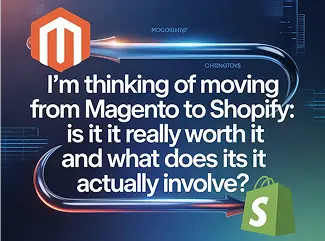
The decision to move from Magento to Shopify is one of the most significant replatforming choices an ecommerce business can make. Magento is powerful, but its power comes with...
Accuracy gap is real: Traditional CPG forecasting carries a 25-40% MAPE error rate. AI-powered models bring that down to 8-15%, according to McKinsey research....
Real stories from global leaders who trusted us with their ideas.
Partnering with APPWRK helped us build a compliant and scalable healthcare platform, accelerating our time-to-market by 35%. Their team consistently delivered outstanding work.
Beesers
Digital Healthcare Client
Collaborating with APPWRK, Sportskeeda modernized its platform into a real-time sports engagement ecosystem, enabling seamless content delivery, scalable fan interactions, and high-velocity performance.
Sportskeeda
Sports & Entertainment Partner
Working with APPWRK was effortless. They captured our vision, maintained full compliance, and delivered a digital experience that built trust and elevated how customers interact with our fintech brand.
PayPenny
Fintech Partner
Working with APPWRK gave us confidence in adopting AI responsibly. Their team built a safe, intelligent bot that transformed how we engage with leads and helped us achieve measurable revenue growth.
IFB
AI Transformation Partner
Leveraging APPWRK’s digital expertise, Nemesis launched a scalable, compliant, and safe super app that connects content delivery, real-time communication, and logistics management within a single platform.
Nemesis
Super App Partner
Looking to hire right developers for your project?
Our experts can guide you on skills, cost, and team fit, so you hire with confidence.
What it really is An integrated community engagement platform connects mobile apps, resident portals, and property management software into one system, streamlining communication, service requests, feedback, and payments across all touchpoints.
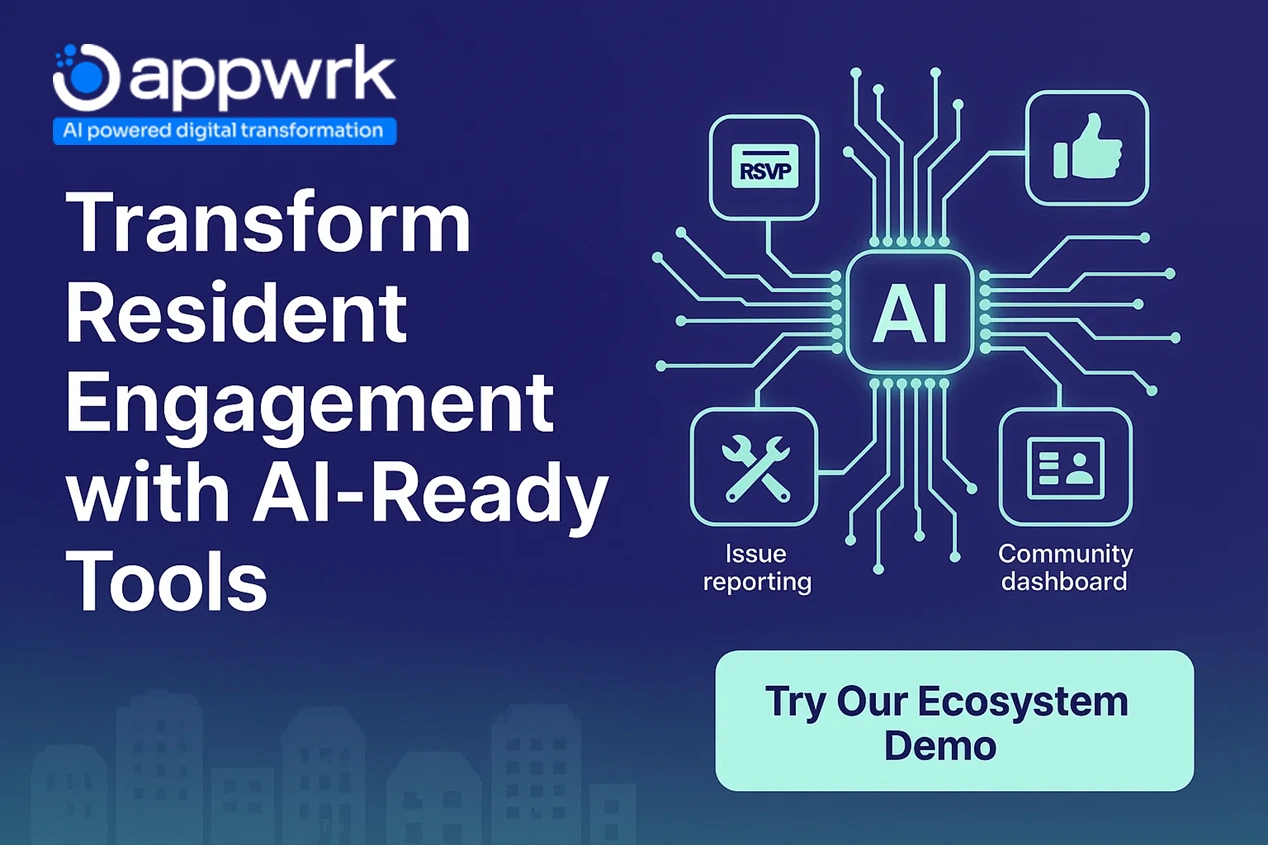
How it changes operations With unified workflows and workflow automation, staff gain real-time visibility into service requests and issue reporting, amenity bookings, and event RSVPs, reducing manual effort and improving maintenance efficiency.
What success looks like Expect better app adoption, faster response times, and actionable engagement analytics. Integrated resident feedback systems and digital surveys reveal community sentiment, boosting overall resident wellbeing and satisfaction.
Who it helps From social landlords and housing associations to multifamily operators, this model supports digital transformation, operational transparency, and long-term community wellbeing, building connected, sustainable communities where every voice counts.
Introduction – Redefining Community Connection in the Digital Era
In today’s residential landscape, a truly integrated resident communication platform is no longer optional; it’s mission-critical. Modern communities expect a seamless digital experience where mobile apps, resident portals, and property management systems operate as one. When your resident engagement software connects communication, service requests, workflows, and insights, you unlock a frictionless, trust-driven experience for every tenant.
The data makes this clear: multifamily operators now report a 63% resident retention rate, the highest since tracking began, yet 66% of property managers struggle to anticipate resident needs. When residents feel informed, empowered, and included through timely alerts, self-service tools, and meaningful community interaction, tenant engagement rises and churn drops.
This transformation relies on deep resident app integration, where mobile channels speak seamlessly to CMS dashboards, analytics engines, and legacy property management software via API-first design, middleware solutions, and smart integration points. This shift moves you from siloed tools to a connected community engagement platform rooted in digital transparency, operational efficiency, and community wellbeing.
This blog breaks down the full structure of a modern resident experience platform, from core modules to integration methodology, workflow automation, and ROI measurement. You’ll learn how to build a scalable, accessible ecosystem that enhances resident participation, reduces friction, and strengthens community trust across multifamily housing, social landlords, housing associations, and civic engagement programs.
Understanding the Core Structure of a Resident Engagement Ecosystem
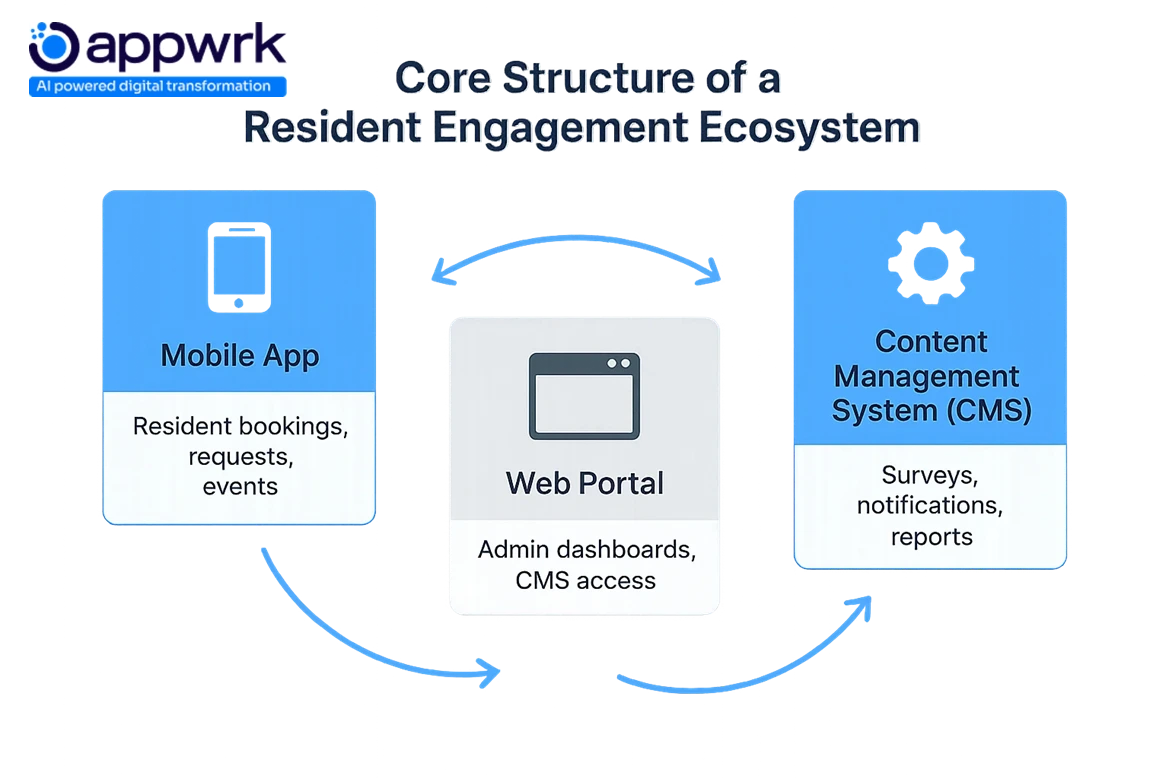
A powerful, integrated ecosystem is built on three digital layers that connect residents, staff, and backend systems into one fluid experience. Together, they define the foundation of any modern community platform.
Mobile App (iOS & Android)
The primary touchpoint for daily engagement is where the resident experience lives. Key actions supported:
Amenity bookings, event RSVPs, and community calendar access
Service requests and issue reporting with real-time updates
Digital forms, surveys, and e-signatures
Community news, alerts, and resource access
Payment processing (rent, fees, deposits)
Why it matters: Mobile usage drives higher resident participation and improves community insights through quick interactions.
Web Portal
A fully accessible, browser-friendly community portal that mirrors mobile features while supporting broader desktop usage. Supports:
Authentication, resident profiles, and role-based access
Staff workflows, notices, and content updates
Operational transparency via dashboards
Residents who prefer desktop access (especially in senior living or public housing)
Why it matters: Ensures digital access inclusion for every tenant demographic.
Content Management System (CMS)
The operational engine powering the entire ecosystem. Capabilities include:
Multi-channel announcements (push, SMS, email)
Survey creation and resident feedback system management
Engagement analytics and usage reporting
Compliance logs, audit trails, and data privacy controls
Together, these components create a unified resident engagement software environment that supports community wellbeing, real-time communication, and sustainable communities through connected digital transformation.
Feature Deep Dive: Core Functional Modules for Modern Engagement
Every effective engagement app relies on modules that make life easier for residents while simplifying staff operations. These features are essential to a scalable community engagement strategy.
Functional Area
What It Does
Resident Profiles & Authentication
Secure login, identity verification, and role-based permissions for staff, tenants, and vendors
Digital Intake & E-Signatures
Paperless onboarding, lease addenda, compliance forms, and automated data mapping
Announcements & Community Board
Multi-format communication via push, SMS, and email; supports community insights and civic engagement
Event Calendar & RSVPs
Event scheduling, reminders, attendance tracking, and community resource hub integration
Surveys, Polls & Feedback
Collect community feedback, identify anti-social behaviour trends, and improve tenant wellbeing
Rewards & Incentives
Boost participation through points, badges, referrals, and gamified engagement
Resource Directory & Referrals
Central community resource library with social value services, local support, and referral tracking
Analytics Dashboard
Engagement analytics, satisfaction metrics, Quality of Life framework indicators, and ROI measurement
These modules power a fully connected resident experience platform, one that improves service delivery, encourages resident participation, and supports a long-term community engagement platform strategy rooted in transparency and sustainable relationships.
Marketing, Lead Management, and Reputation Tools
A modern resident engagement platform doesn’t stop at communication or service workflows; it strengthens marketing, lead nurturing, and online reputation as part of a unified community engagement strategy. By combining resident communication platform capabilities with smart marketing automation, property teams can guide prospects from inquiry to signed lease while deepening trust with existing tenants.
Integrated resident app integration modules automate the lead funnel, trigger personalised communication sequences, and streamline leasing workflows directly inside the resident portal. Staff can broadcast targeted community-wide announcements, promote events, and publish content tiles through efficient templates, improving tenant engagement and cross-channel visibility.
Performance dashboards connect marketing data with engagement analytics, helping teams measure reputation scores, track online reviews, and monitor conversion performance. Together, these tools strengthen brand perception, improve occupancy, and reinforce community trust across every digital touchpoint in your community platform.
Example Tools That Strengthen Resident Marketing & Reputation Management
HubSpot CRM Integration – Automated lead nurturing, follow-ups, and ROI measurement across the leasing journey.
Salesforce Marketing Cloud – Personalised digital campaigns, segmentation, and targeted notifications.
Yardi RENTCafé – Digital leasing, online reviews, and resident reputation dashboards for multifamily portfolios.
AppFolio Property Manager – Centralised lead management, email marketing, and prospect tracking built into property management software.
Podium – Review collection and response tools to boost online reputation and operational transparency.
ActiveCampaign – Automated workflows for announcements, engagement messaging, and event RSVPs.
Zego Engage – Marketing tools blended with community event promotion for stronger resident participation.
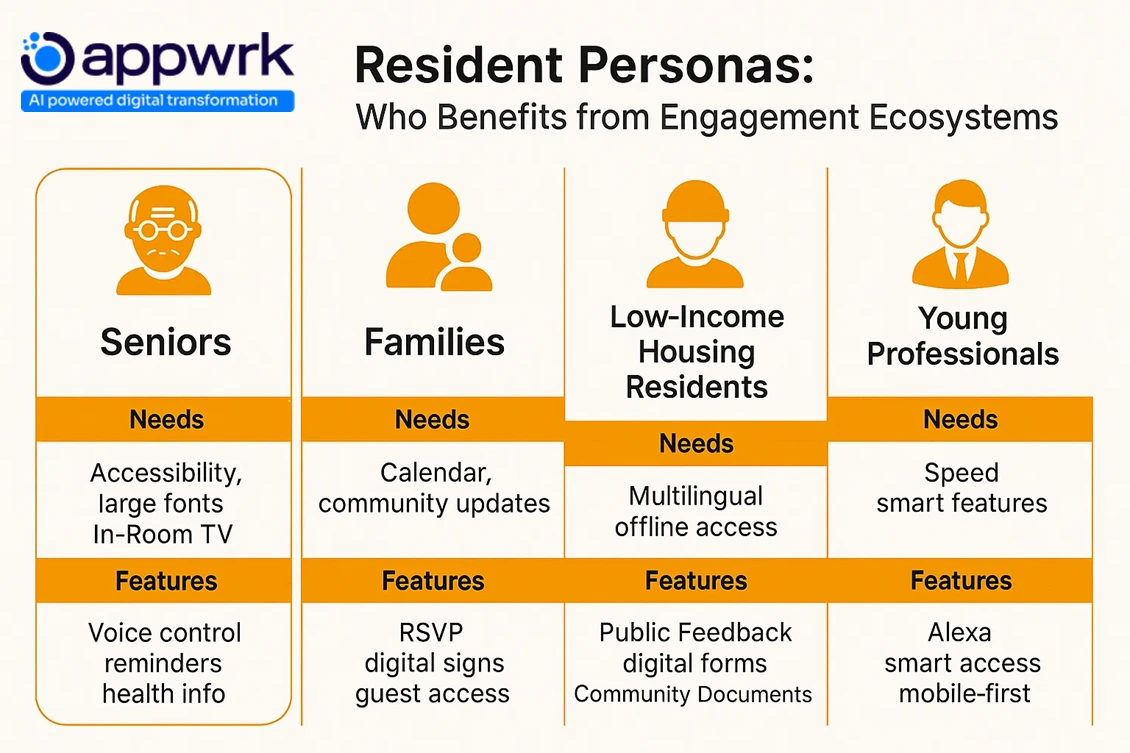
Resident Personas: Who Benefits Most from Engagement Ecosystems?
A powerful resident engagement software succeeds when it supports real people and their everyday needs. Designing around resident personas ensures the resident experience platform aligns with behaviour, accessibility needs, and community expectations.
Seniors in Assisted or Independent Living
Prefer simplified UI, large fonts, voice commands, and digital access inclusion features.
Benefit from health content, care coordination, and In-Room TV integrations.
Supports tenant wellbeing and community wellbeing through predictable routines.
Young Families in Multifamily Housing
Rely on school updates, amenity bookings, event RSVPs, and real-time alerts.
Value features like Guest Registration, package notifications, and family-oriented events.
Engagement tools help build sustainable communities.
Affordable Housing & Government Residents
Require accessibility, multilingual options, offline modes, and community consultation tools.
Supported by public feedback modules and social value resources.
Aligned with housing associations, social landlords, and the social housing white paper compliance.
Urban Professionals & Students
Expect automation, fast mobile experiences, self-service workflows, and smart home integrations.
Value event discovery, digital signage, keyless entry, and integration with campus or community services.
Building around personas ensures tools reflect resident wellbeing, not just operational goals.
Case-in-Point: How Public Housing & Government Programs Use Engagement Tech
Around the world, public housing authorities are leveraging resident communication platforms to modernise services, increase transparency, and support civic engagement.
U.S. Public Housing Authorities
Use platforms like Go Vocal and PublicInput to:
Collect community feedback
Issue safety alerts and notifications
Improve operational transparency
Meet HUD performance standards tied to community insights.
UK Housing Trusts
Use digital surveys, resource hubs, and service alerts to strengthen cohesion and reduce anti-social behaviour.
India’s Smart City Missions
Adopt mobile-first tools, local language portals, digital mapping, and community resource hub systems to support digital transformation in underserved communities.
Senior Living Facilities (Canada & Scandinavia)
Use EHR integrations, virtual care, and accessibility tools focused on wellness and Quality of Life framework metrics.
Together, these examples show how the right community engagement platform becomes essential civic infrastructure.
Integration Architecture & Data Flow Management
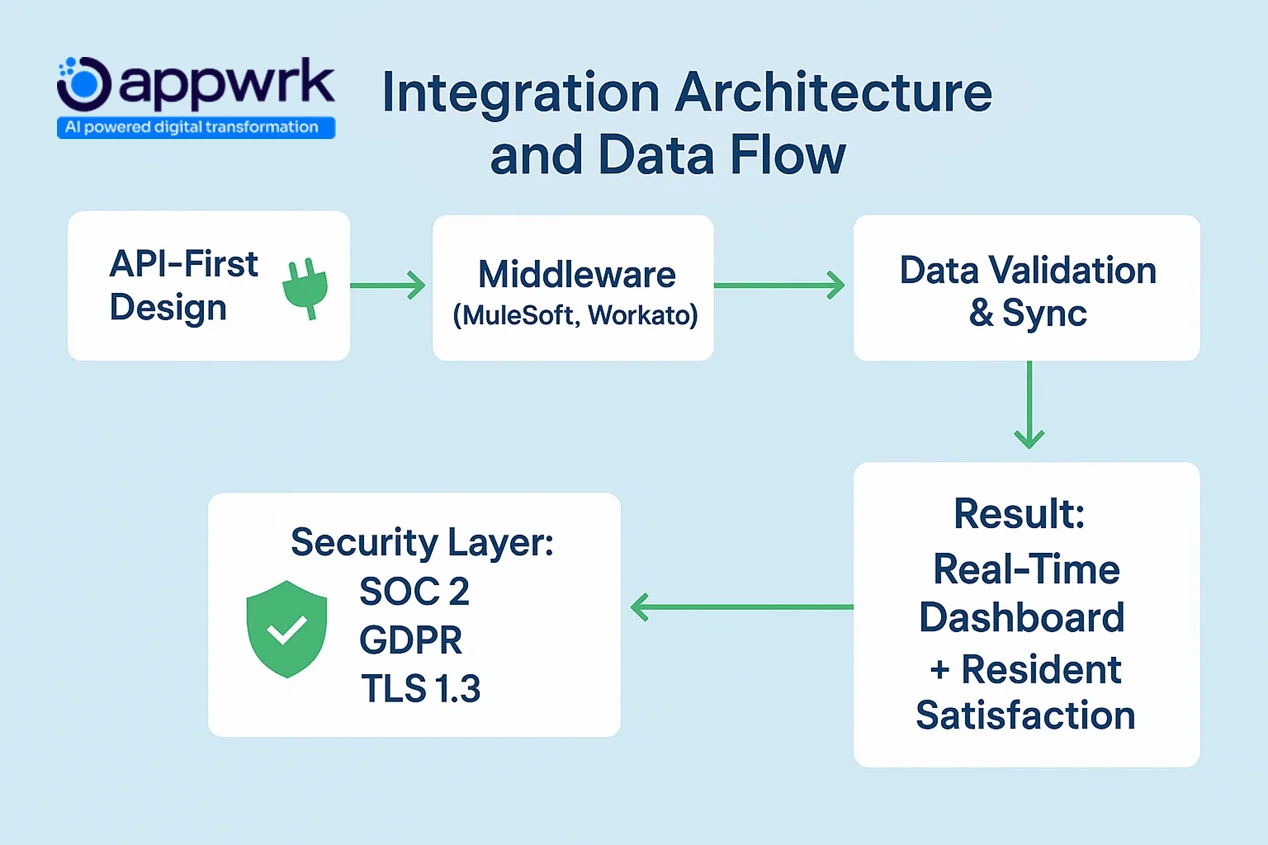
Every seamless resident portal runs on a robust integration backbone. API-first structures, middleware solutions, and secure data flows keep apps, databases, CRMs, and property management systems connected.
API-First Design
Enables flexible integration points across CRM, payments, IoT, and PM systems
Risk alerts tied to balances, payment failures, or chargeback trends
Unified payments improve operational efficiency, strengthen trust, and create a transparent financial experience inside the community portal.
Technical and Functional Requirements Framework
A reliable resident engagement ecosystem requires a strong technical foundation, not just feature depth. The framework below outlines what matters most in a scalable resident communication platform or community engagement platform.
Requirement Area
Key Considerations
Technology Stack
Flutter or React Native for mobile, Node.js or .NET Core for backend, cloud-based CMS for flexibility and API-first design
A successful resident experience platform feels intuitive from the first tap. Good UX removes friction, improves resident participation, and supports inclusive digital access.
Resident-Centric Journeys
Clear labels, simple flows, and minimal steps
Fast access to service requests, payments, and announcements
Designed around everyday tasks, not internal workflows
Accessibility for Every User
WCAG 2.1 alignment
Readable fonts, high contrast, voiceover support
Multilingual layouts for community wellbeing
Tap-friendly actions for seniors or low-dexterity users
Inclusive Visual Design
Mobile-first layouts that scale to the web
Icons and visual cues for low-literacy users
Draft-saving for weak connectivity or offline communities
Consistent Branding & UI Systems
Modular components for fast scaling
Community imagery to reinforce identity
Clear, predictable design patterns to support staff adoption
Community Resource and Learning Hub
The community resource library is the information anchor of a modern community portal. It centralises documents, guides, policies, and educational content in a secure, searchable hub.
Key elements:
Multilingual support and simple reading levels
Training content for digital literacy and resident onboarding
Resource tagging for faster navigation
A structured repository that strengthens operational transparency and long-term resident trust
This hub becomes a reliable community resource hub for everything from policy updates to well-being programs.
Implementation Lifecycle & Governance for an Integrated Resident Engagement Ecosystem
Launching a connected resident engagement software ecosystem requires structured planning. Below is a practical implementation model used across multifamily, senior living, and housing associations.
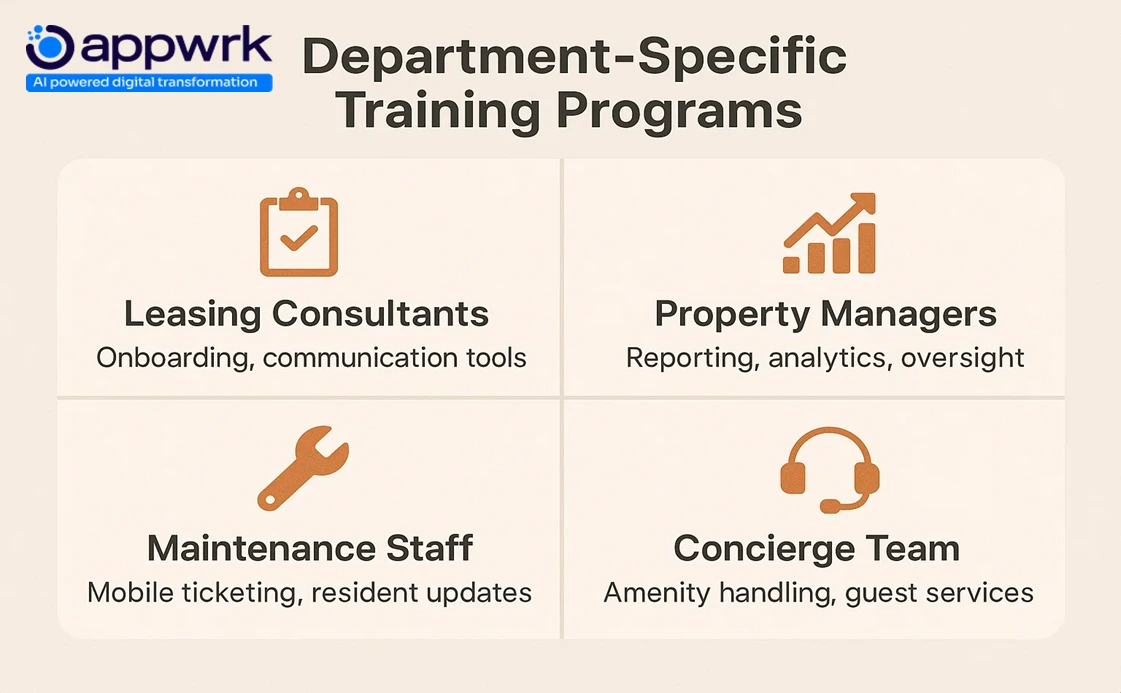
Targeted role-based modules support adoption and minimise workflow disruption.
Governance Essentials
Weekly sprint reviews
Milestone-based signoffs
Real-time progress dashboards
Risk escalation paths
Why this matters: Strong governance prevents scope creep and ensures successful vendor implementation, data migration, and long-term platform stability.
Deliverables and Documentation Standards
Clear documentation ensures continuity across teams and future-proof scaling of the resident portal and community platform.
Technical Deliverables
Source Code Ownership across mobile, backend, CMS
API Specifications for endpoints, payloads, and authentication
Architecture Diagrams covering integrations, data flows, and scalability
Reduction in communication delays and manual tasks
Usage of resource libraries, digital signs, and self-service tools
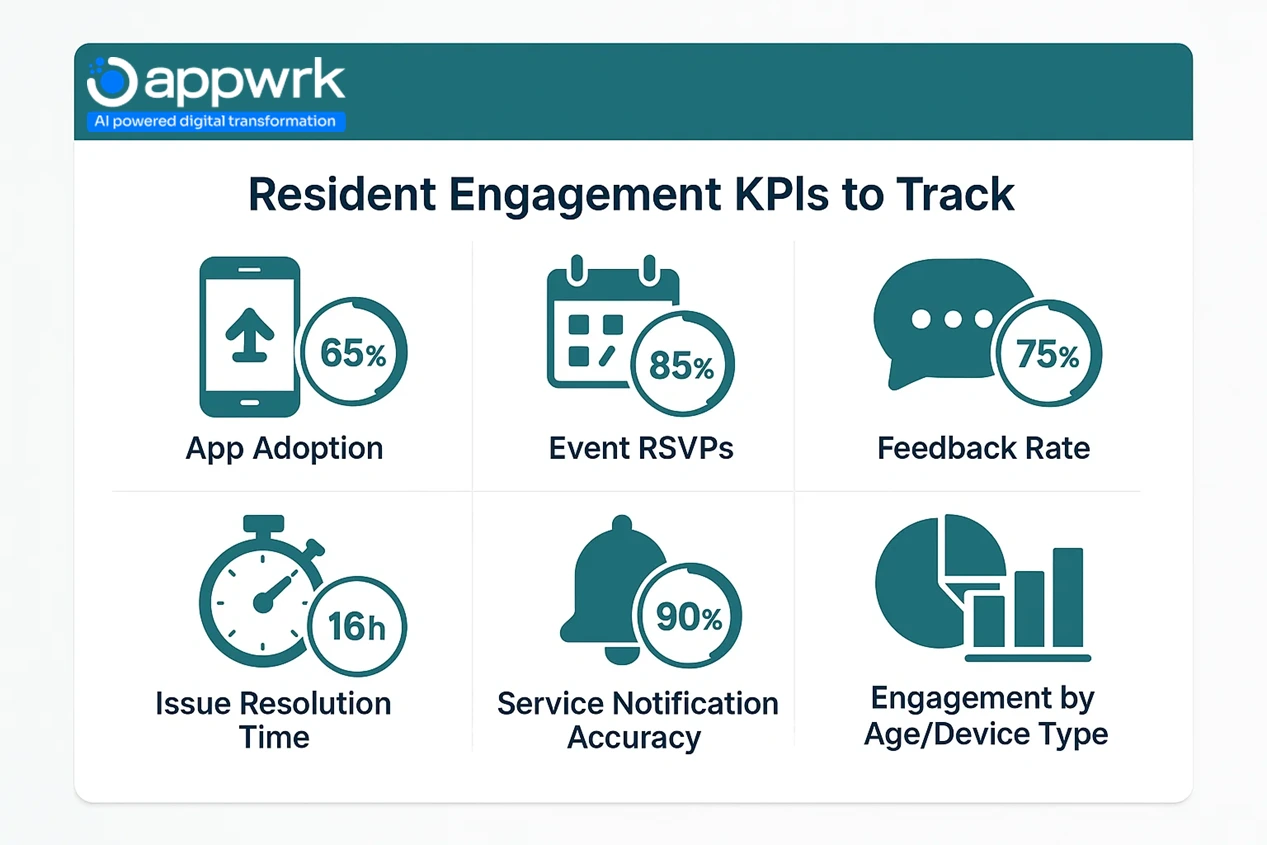
Platforms like Livly, Go Vocal, and Dyverse use these KPIs to connect community engagement strategy to real operational results.
Continuous Engagement and Feedback Analytics
Sustained engagement depends on the ecosystem’s ability to continuously capture, analyse, and respond to community feedback. Built-in engagement analytics track workflow performance, surface operational bottlenecks, and highlight evolving community insights across the entire resident communication ecosystem.
Real-time dashboards, surveys, and sentiment tools help teams understand resident behaviour, preferences, and participation trends. These insights create ongoing feedback loops, connecting communication, action, and improvement. By converting interaction data into measurable KPIs, operators ensure engagement remains transparent, adaptable, and aligned with changing resident needs.
Regional Insights: Global Adoption of Resident Engagement Ecosystems
Resident engagement varies across regions depending on policy environments, digital maturity, and community expectations. Adoption patterns reflect how governments, social landlords, and private operators approach community engagement platforms.
High standards for data privacy, GDPR compliance, automated workflows, and digital signage solutions in government-supported and housing association environments.
MENA & APAC
Mobile-first adoption with focus on safety notifications, digital entry, and digital transformation within smart city infrastructure.
India
Rapid expansion of affordable engagement apps for NGO-backed and public housing. High demand for multilingual UX, community consultations, and public feedback systems.
This diversity reinforces the need for adaptable platforms with secure APIs, multilingual UX, and scalable integration approaches that respect local regulations and community culture.
Social Value and Public Housing Impact
In public and affordable housing, engagement ecosystems strengthen community wellbeing, support tenant wellbeing, and drive social value. For social landlords and housing authorities, these platforms enable transparency, improved service delivery, and inclusive access to community information.
Digital ecosystems help address anti-social behaviour, increase civic engagement, and support neighbourhood cohesion. Frameworks like the Quality of Life framework and social housing white paper principles guide how digital tools contribute to safer, more sustainable communities, ensuring redevelopment projects and community programmes remain resident-centred and evidence-based.
Ongoing Support and Continuous Improvement While Launching a Resident Engagement Ecosystem
Launching a resident engagement software platform is only the first step. Long-term value comes from ongoing maintenance, innovation, and alignment with real resident behaviour.
Tiered Maintenance and Support
24/7 monitoring with L1–L3 support tiers
SLA-driven response times for service notifications and downtime
Alerts across CMS, digital signs, and workflow dashboards
Continuous Product Evolution
Feature releases based on usage, community insights, and public feedback
Future-ready engagement apps extend beyond mobile experiences. They incorporate interactive infrastructure that brings information into shared spaces.
Digital Signage and Community Displays
Lobby screens and elevator panels share real-time updates, improving visibility without requiring phone access.
Amazon Alexa & In-Room TV
Voice-based and screen-based interfaces allow residents to book amenities, RSVP to events, or access the community portal, ideal for seniors and accessibility-focused communities.
Spatial Data & Interactive Mapping
Dynamic, map-based navigation helps residents locate amenities, EV stations, and emergency exits, strengthening operational transparency.
Streaming Integrations
Future models may allow residents to join HOA meetings, fitness classes, or community events through livestreams.
Together, these elements transform traditional portals into omnichannel resident experience platforms.
How Appwrk Enables Integrated Resident Engagement Ecosystems
Appwrk builds secure, scalable, and API-first Resident engagement ecosystems designed for multifamily operators, public housing bodies, and mission-driven developers. Our platforms unify mobile, web, CRM integration, and automation into one connected ecosystem.
Full-Stack Engineering Custom builds using React Native, Node.js, cloud-native infrastructure, and integrations with smart home and connected living technologies.
API Orchestration & CRM Integration Deep connectivity with Salesforce, Yardi, Twilio, PublicInput, and other systems using secure, documented APIs and audit-ready protocols.
Managed Hosting & Continuous Delivery Secure deployments on AWS/Azure, CI/CD pipelines, uptime monitoring, and SLA-backed support.
Appwrk’s experience with Livly, Go Vocal, Dyverse, and government-led digital initiatives ensures every build balances innovation with compliance, scalability, and community trust.
Founder’s Guide: Building a Resident Engagement Ecosystem
Founders and decision-makers should focus on scalability, inclusivity, and governance when planning a resident engagement ecosystem.
What to Prioritise
Build modularly with API-first design for CRM, payment processing, and communication tools. Prioritise accessibility for seniors, first-time users, and multilingual communities.
Ensure full source code, documentation, and IP ownership.
Track early KPIs: engagement rates, workflow sentiment, event RSVPs, and resource hub usage.
Recommended Team
Product Owner, UI/UX Lead, Full-Stack Developer, QA Engineer, Integration Specialist, and DevOps Engineer. This structure supports integrations, data migration, continuous delivery, and stable long-term growth.
With the right foundation, you’re not launching an app; you’re building a sustainable digital infrastructure for resident participation, community wellbeing, and long-term retention.
Conclusion: The Future of Integrated Living Experiences
As expectations rise, communities need more than a standalone tool; they need a connected resident communication platform that integrates mobile experiences, CRM workflows, analytics, and automation into one unified resident experience platform.
An integrated ecosystem doesn’t just digitise tasks. It reshapes how communities communicate, participate, and collaborate. With streamlined property management software, real-time resident feedback system insights, and secure data flows, operators gain the transparency and intelligence needed to strengthen trust and operational transparency across every touchpoint.
Whether supporting multifamily portfolios, social landlords, or government-backed housing initiatives, this approach delivers sustainable community value, enhancing resident wellbeing, reducing anti-social behaviour, and strengthening civic engagement. Tools like digital signage, payment processing, community consultations, and community resource hub integrations turn everyday interactions into seamless experiences.
When organisations build intentionally, with modular architecture, inclusive design, and analytics-driven decision-making, they unlock more than convenience. They enable measurable social value, community wellbeing, and resilient, future-ready neighbourhoods. This is the new standard for connected, sustainable communities.
FAQs
Q1: What differentiates a resident engagement ecosystem from a standard app?
A standard app handles isolated features, but a resident engagement ecosystem connects mobile, web, and a central resident portal into one unified community engagement platform. It synchronises communication, workflows, CRM data, and property management system tools through API-first design, making it a complete, scalable digital framework, not just an app.
Q2: How does CMS integration improve efficiency?
A CMS centralises notifications, digital signage, service requests, issue reporting, surveys, amenity bookings, and event RSVPs. This reduces manual admin, improves staff workflow impact, and supports workflow automation across multiple departments.
Q3: Can these platforms connect with systems like Salesforce or Yardi?
Yes. Through open APIs, middleware solutions, and custom connectors, ecosystems integrate seamlessly with Salesforce, Yardi, Twilio, payment gateways, and other property management software tools, ensuring consistent data mapping, data cleansing, and cross-platform synchronisation.
Q4: What are the most important success metrics to track?
Key KPIs include app adoption, resident participation, maintenance efficiency, engagement in events and surveys, tenant engagement, feedback sentiment, and overall resident experience scores. Platforms with strong engagement analytics make ROI measurement easier and more transparent.
Q5: What is the typical implementation timeline?
Most ecosystems follow a 3–4 month phased implementation cycle: discovery, design, development, testing, and go-live, extended slightly for complex integrations or change management strategy requirements.
Q6: How do platforms ensure data privacy across multiple communities?
Through encryption, MFA, audit logs, role-based access, compliance with GDPR, CCPA, and HOA governance rules, plus strict policies around data privacy compliance and retention.
Q7: What’s the best hosting option for reliability?
Enterprise-grade cloud providers like AWS and Azure ensure scalability, uptime, and secure resident app integration. Their infrastructures support continuous delivery, versioning, and system-wide monitoring.
Q8: Can gamification or rewards increase user retention?
Yes. Loyalty programs, recognition badges, event RSVPs, amenity competitions, and wellness incentives drive higher tenant engagement and motivate consistent use of the engagement app.
Q9: How do modular platforms support scalability?
Modular ecosystems allow operators to plug in new tools, digital signage, community resource library, payment processing, community portal enhancements, without rebuilding the core system. This ensures long-term growth and healthy change management framework adoption.
Q10: What trends are shaping resident engagement in 2025?
AI-assisted feedback tools, voice integrations (Amazon Alexa), streaming-enabled community meetings, smart access, and community engagement strategy tools will define next-gen solutions, especially in public housing, where housing associations, social landlords, and smart-city programs are prioritising community insights, wellbeing, and civic engagement.
Gourav Khanna is the Co-founder and CEO of APPWRK, leading the company’s vision to deliver AI-first, scalable digital solutions for enterprises and high-growth startups. With over 16 years of leadership in technology, he is known for driving digital transformation strategies that connect business ambition with outcome-focused execution across healthcare, retail, logistics, and enterprise operations.
Recognized as a strategic industry voice, Gourav brings deep expertise in product strategy, AI adoption, and platform engineering. Through his insights, he helps decision-makers prioritize market traction, operational efficiency, and long-term ROI while building resilient, user-centric digital systems.
Subscribe to APPWRK Blogs, We'll Do the Rest!
Get Blogs on UI/UX, Mobile Apps, Online Marketing, and Web development technology.
Unlock worthy and priceless suggestions from the masters of mobile and web app development