150+ minds across 4 countries. Join a culture of innovation, ownership & growth.
Rewire for AI
From machine learning to deep learning, from classification tools to overall process automation – our AI engineers will help you retool your existing system or enhance your company results.
Ship faster, scale smarter, built for product companies and SaaS teams
Our Latest Work
We strive hard to deliver result-driven digital solutions across the globe. Check out our case studies to get a glimpse of how we ideate, innovate, and create unconventional digital solutions according to the requirements of our clients.
Discover diverse and passionate insights from our tech enthusiasts. We collaborate across various sectors to streamline operations and drive innovation. Explore our rapidly growing collection of articles to see why we’re at the forefront of IT solutions.
The decision to move from Magento to Shopify is one of the most significant replatforming choices an ecommerce business can make. Magento is powerful, but its power comes with...
Accuracy gap is real: Traditional CPG forecasting carries a 25-40% MAPE error rate. AI-powered models bring that down to 8-15%, according to McKinsey research....
Real stories from global leaders who trusted us with their ideas.
Partnering with APPWRK helped us build a compliant and scalable healthcare platform, accelerating our time-to-market by 35%. Their team consistently delivered outstanding work.
Beesers
Digital Healthcare Client
Collaborating with APPWRK, Sportskeeda modernized its platform into a real-time sports engagement ecosystem, enabling seamless content delivery, scalable fan interactions, and high-velocity performance.
Sportskeeda
Sports & Entertainment Partner
Working with APPWRK was effortless. They captured our vision, maintained full compliance, and delivered a digital experience that built trust and elevated how customers interact with our fintech brand.
PayPenny
Fintech Partner
Working with APPWRK gave us confidence in adopting AI responsibly. Their team built a safe, intelligent bot that transformed how we engage with leads and helped us achieve measurable revenue growth.
IFB
AI Transformation Partner
Leveraging APPWRK’s digital expertise, Nemesis launched a scalable, compliant, and safe super app that connects content delivery, real-time communication, and logistics management within a single platform.
AI is driving end-to-end transformation in biotechFrom drug discovery to global commercialization, AI accelerates timelines, reduces R&D costs by over 40%, and creates data-driven value chains across the life sciences industry.
AI is optimizing clinical trial design and patient recruitmentTrial matching engines, adaptive protocols, and EHR-based eligibility models are cutting trial failure rates and supporting better patient risk management by minimizing dropout and adverse events.
Precision medicine is becoming the new standard of careAI integrates genomics, clinical data, and real-time patient feedback to deliver personalized treatment plans, improving therapy response and reducing adverse reactions across high-risk segments.
Manufacturing and quality control are becoming predictive and compliantAI-powered digital twins and quality models help prevent batch failures, improve yield, and align processes with regulatory compliance standards like QbD, HIPAA, and GxP.
This blog is crafted for biotech innovators, pharma R&D leads, and life sciences CXOs aiming to scale AI-driven platforms in 2025. Whether you're advancing clinical trial optimization, accelerating drug discovery, or enhancing patient risk management, this guide equips you with strategic insights into AI use cases, regulatory-ready tech stacks, and real-world deployments transforming the life sciences industry.
Why AI Adoption in Life Sciences Is Accelerating
There’s no denying that artificial intelligence has moved from the periphery to the core of life sciences. It is now the backbone of how biotech companies innovate, scale, and compete. From accelerating drug discovery to optimizing clinical trials, AI is embedded across every stage of the R&D pipeline. In 2024 alone, more than 350 AI-assisted drug candidates entered development, with several advancing into early clinical phases.
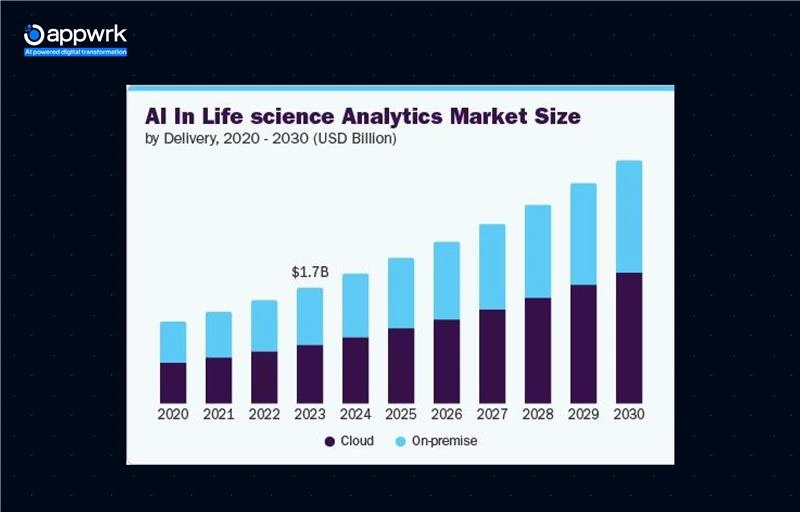
According to Precedence Research, the global AI in life sciences market was valued at USD 2.28 billion in 2024 and is projected to reach USD 13.89 billion by 2034, growing at a compound annual growth rate (CAGR) of 19.8% from 2025 to 2034.
“The industry is crossing from automation to intelligence—where AI suggests, adapts, and drives the next scientific move.” — Daphne Koller, CEO, insitro
Three Forces Driving AI’s Momentum
Unprecedented Data Scale Biotech companies are now working with petabytes of data, ranging from genomic sequences and clinical records to imaging and real-world sensor inputs. Traditional analytics can’t keep up, making AI essential for turning this vast data into actionable insights.
Regulatory Compliance Pressure With stricter mandates from the FDA, EMA, HIPAA, and GDPR, AI systems must be fully transparent, traceable, and explainable. Every decision made by a model must be audit-ready, forcing life sciences firms to bake compliance into their AI pipelines from day one.
Investor-Driven ROI Expectations Venture and institutional investors are prioritizing AI-driven platforms for their potential to cut R&D timelines, increase trial success rates, and speed up approvals. AI is no longer a competitive edge; it’s a requirement for delivering measurable returns.
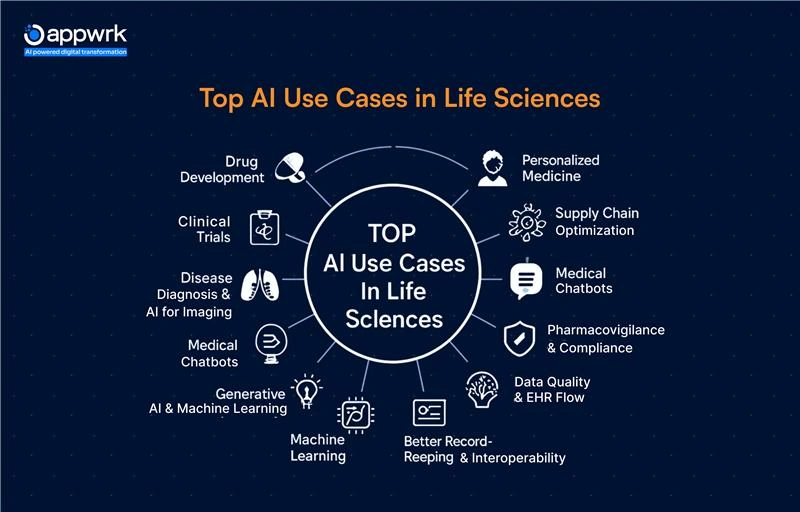
AI is transforming every stage of the life sciences value chain, from accelerating drug discovery to automating compliance and enhancing patient outcomes. The following high-impact use-cases reflect where the industry is actively investing and seeing measurable returns.
Drug Development
AI is transforming the earliest stages of drug development with capabilities like predictive modeling, in silico compound screening, and drug repurposing. These tools reduce the time and cost of identifying viable therapeutic candidates, bringing more treatments into the pipeline faster.
Use-Case:Insilico Medicine’s end-to-end platform helped identify a novel fibrosis compound in under 18 months. The team used generative AI for molecular design, drastically reducing the hit-to-lead timeframe and minimizing animal testing by validating predicted efficacy in silico.
Clinical Trials
AI optimizes trial operations through intelligent patient recruitment, predictive modeling for dropout risk, and the use of synthetic control arms. These tools reduce trial duration, improve patient diversity, and increase regulatory success rates.
Use-Case:Curebase and BEKHealth implemented AI-powered recruitment tools that identified and enrolled eligible patients 2 times faster than traditional methods, significantly lowering trial costs and expanding access to underrepresented populations.
Personalized Medicine
AI enables the fusion of genomic, clinical, and behavioral data to tailor treatments to individuals. This precision targeting improves outcomes and reduces trial-and-error prescribing.
Use-Case:Tempus’ AI platform integrates clinical and molecular data to deliver actionable treatment recommendations for oncology patients, improving response rates and minimizing toxicity.
Supply Chain Optimization
AI enhances visibility across the life sciences logistics network, predicting delivery delays, monitoring temperature-sensitive shipments, and modeling shelf life.
Use-Case: Moderna uses AI-driven logistics modeling to ensure mRNA vaccine batches are routed through optimized, compliant cold-chain channels globally, reducing waste and delays.
Disease Diagnosis & AI for Imaging
AI enhances diagnostic accuracy by analyzing medical images with a level of speed and precision that often surpasses human capabilities. From radiology to pathology, these models detect subtle patterns and early indicators of disease, often before symptoms appear, empowering faster, more accurate intervention.
Use-Case:Google Health’s deep learning model for diabetic retinopathy diagnosis demonstrated diagnostic accuracy on par with human specialists and enabled scalable screening programs in resource-limited regions.
Patient Monitoring
AI systems process biosignals from wearable devices and hospital monitors to detect signs of patient deterioration, generating early alerts and enabling rapid response.
Use-Case:Current Health’s platform uses machine learning to interpret vitals from wearable sensors, identifying early signs of sepsis or cardiac decline and triggering nurse intervention.
Medical Chatbots
AI-driven conversational agents assist with patient onboarding, symptom triage, and mental health support. They improve access and reduce clinical burden.
Use-Case:Woebot Health offers a clinically validated mental health chatbot that uses cognitive-behavioral therapy principles to support patients with anxiety and depression.
Pharmacovigilance & Compliance
NLP and machine learning detect adverse event signals across global languages and automate safety report generation for regulatory submission.
Use-Case: A top-5 pharmaceutical company used SHAP-based explainability dashboards in its AI pharmacovigilance platform to meet FDA audit requirements and ensure transparent safety signal interpretation.
Data Quality & EHR Flow
AI cleans, de-duplicates, and enriches data from disparate EHR systems, enabling better analytics and reducing clinician data entry burden.
Use-Case:Flatiron Health employs AI pipelines to structure unstructured oncology records, improving data usability and supporting real-world evidence submissions.
Generative AI & Machine Learning
Advanced models like BioGPT, GatorTron, and AlphaFold enable simulation, molecular design, and natural language understanding at scale.
Use-Case:DeepMind’s AlphaFold predicted protein structures for nearly every known human protein, accelerating biological discovery and enabling drug design for previously undruggable targets.
Better Record-Keeping & Interoperability
AI and blockchain technologies facilitate interoperable, secure record-sharing while protecting patient privacy.
Use-Case:BurstIQ’s blockchain-based health data platform ensures the secure sharing of longitudinal patient records while integrating AI de-identification to maintain HIPAA compliance.
Robotic & Remote Systems
AI-enabled robots and remote diagnostic tools support minimally invasive surgery, remote imaging, and delivery of biological samples in hard-to-reach areas.
Use-Case:Zipline drones, guided by AI logistics systems, deliver medical supplies and diagnostic samples across rural Africa, slashing delivery times and improving access to lab testing.
How AI Is Transforming the Bioscience Value Chain
AI is no longer siloed within R&D labs. It has become the connective tissue linking scientific innovation with commercial execution. From startup biotechs to multinational pharma giants, companies are embedding intelligence into every layer of operations. AI is not just a supportive tool; it’s now a decision-making engine that influences R&D priorities, manufacturing tolerances, supply chain agility, and pricing models. This evolution marks a shift from functional optimization to enterprise-wide transformation.
Leading life sciences firms now deploy intelligence across the entire pharmaceutical value chain, from molecular design to global commercialization, embedding AI at every stage to accelerate development, ensure compliance, and drive market success.
Research and Development
LLMs like AlphaFold3 and BioNeMo are driving next-gen protein folding predictions in under 48 hours, enabling rapid target validation.
AI-powered virtual screening shortlists high-affinity compounds from billions of candidates, reducing drug discovery costs by over 40%.
AI’s presence across the value chain isn’t just improving speed; it’s rewriting the operational DNA of how life sciences operate at scale.
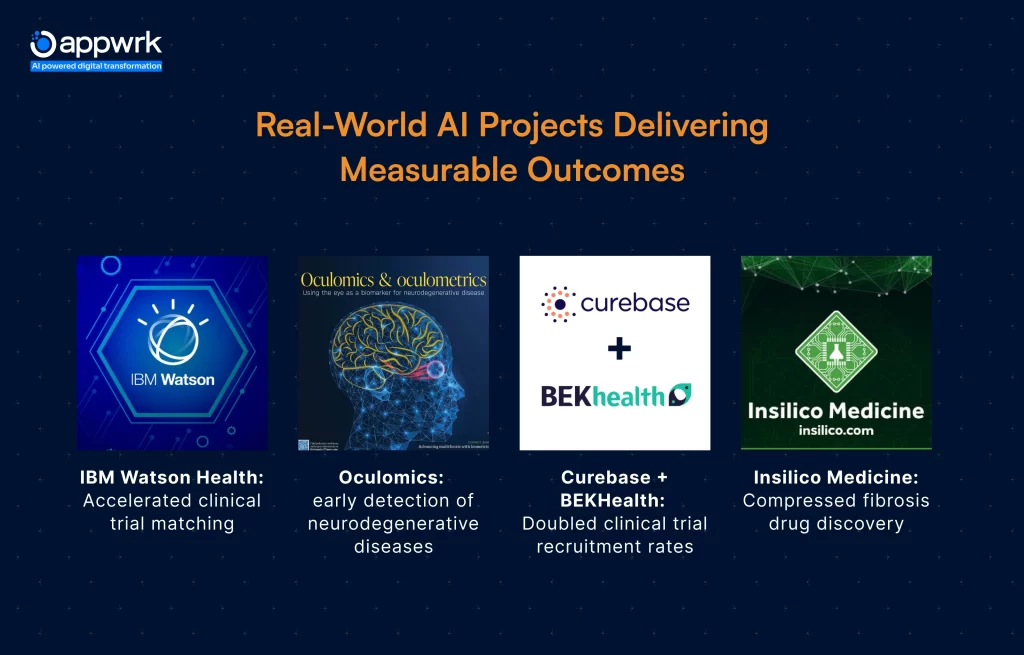
Real-World AI Projects Delivering Measurable Outcomes
AI in life sciences is moving beyond proof-of-concept into full-scale deployment. From clinical trial acceleration to diagnostic precision, top biotech and pharma players are leveraging AI to drive tangible improvements across the product lifecycle. These aren’t just pilots; they’re high-impact initiatives delivering quantifiable value.
IBM Watson Health: By integrating natural language processing into clinical workflows, Watson significantly shortened trial-matching timelines by 40%, making it easier to align the right patients with the right studies.
Oculomics: Their AI models analyze retinal scans to detect subtle biomarkers of neurodegenerative diseases like Alzheimer’s long before symptoms appear, unlocking new frontiers in preventive care.
Curebase + BEKHealth: These companies applied AI to the decentralized clinical trial model, doubling recruitment rates and reducing dropout risks across underrepresented populations.
Insilico Medicine: With its AI-powered platform, Insilico designed and validated a novel fibrosis drug in just 18 months, cutting years off traditional discovery timelines and moving to Phase I faster than many industry norms.
These success stories underscore a central theme: AI in life sciences isn’t just a promise; it’s a proven accelerator for innovation, precision, and measurable impact.
How Strategic Fundings Are Accelerating AI Adoption in Biotech
AI-driven biotech is entering a phase where funding is outcome‑oriented rather than speculative. Investors are backing platforms that transform complex biology into programmable solutions, accelerate time‑to‑discovery, and de‑risk clinical pipelines. With the global AI in biotechnology market projected to grow at a robust CAGR of 19.1 % between 2024 and 2029, capital is increasingly concentrated in companies aligning AI innovation with regulatory readiness and commercial impact.
LogicFlo AI
Raised $2.7 million in seed funding, led by Lightspeed Ventures. The startup focuses on autonomous AI agents for pharmacovigilance, regulatory document preparation, and compliance monitoring, reshaping critical aspects of biotech operations.
Isomorphic Labs
Backed by Alphabet, this DeepMind spin-off secured $600 million in Q1 2025 to expand its AI-first drug discovery operations. The company leverages AlphaFold’s latest models to shorten the path from molecular structure to IND filings.
Portal Biotech
Supported by the NATO Innovation Fund, Portal closed a $35 million Series A round. It aims to build defense-grade protein sequence prediction tools for biodefense and pharmaceutical use-cases, signaling a pivot toward AI’s strategic role in biosecurity.
AI Infrastructure: Tech Stack Powering Life Sciences Innovation
Behind the front-end breakthroughs in AI applications lies a sophisticated and scalable tech infrastructure. Understanding these foundational layers provides strategic clarity into what truly powers innovation in life sciences.
LLMs in Biotech
AlphaFold is revolutionizing protein structure prediction, enabling faster target identification for novel therapeutics.
BioGPT brings domain-specific language understanding to biomedical literature and EHR mining.
GatorTron, trained on millions of clinical notes, streamlines patient cohort segmentation and eligibility analysis.
Cloud + Edge Deployments
Cloud-native platforms support real-time collaboration in trial design, regulatory prep, and multi-site data integration.
Edge AI systems are deployed in remote diagnostic labs, enabling low-latency image analysis and localized decision-making without requiring continuous cloud access.
Explainability Modules (XAI)
Regulatory-grade explainability is vital for AI acceptance in regulated environments. Tools like SHAP and LIME help interpret predictions made by deep models.
Audit trails and logic chains allow life sciences firms to meet FDA, EMA, and PMDA submission standards, especially in pharmacovigilance and diagnostics.
How AI is Advancing Disease Prediction and Precision Medicine
Artificial intelligence is unlocking population-scale precision by bridging complex genetic, phenotypic, and behavioral data. This paradigm is redefining how diseases are diagnosed, monitored, and treated, tailoring solutions at the level of individual patients.
Genetic Data Analysis
AI identifies pathogenic variants and links them to specific disease risks in oncology, cardiology, and neurology.
Genomic annotation tools accelerate the identification of rare disease patterns and enable candidate selection for gene therapy trials.
Disease Progression Prediction
Predictive algorithms forecast clinical trajectories in chronic and neurodegenerative diseases (e.g., ALS, Alzheimer’s, MS), empowering proactive care decisions.
Integration with real-time EHRs and wearable data enables dynamic, individualized treatment adjustment.
This capability is no longer theoretical. Platforms like Tempus, Deep Genomics, and Freenome are actively validating it within clinical workflows. Precision medicine is moving beyond trial environments and emerging as the new standard of care, powered by real-world AI integration.
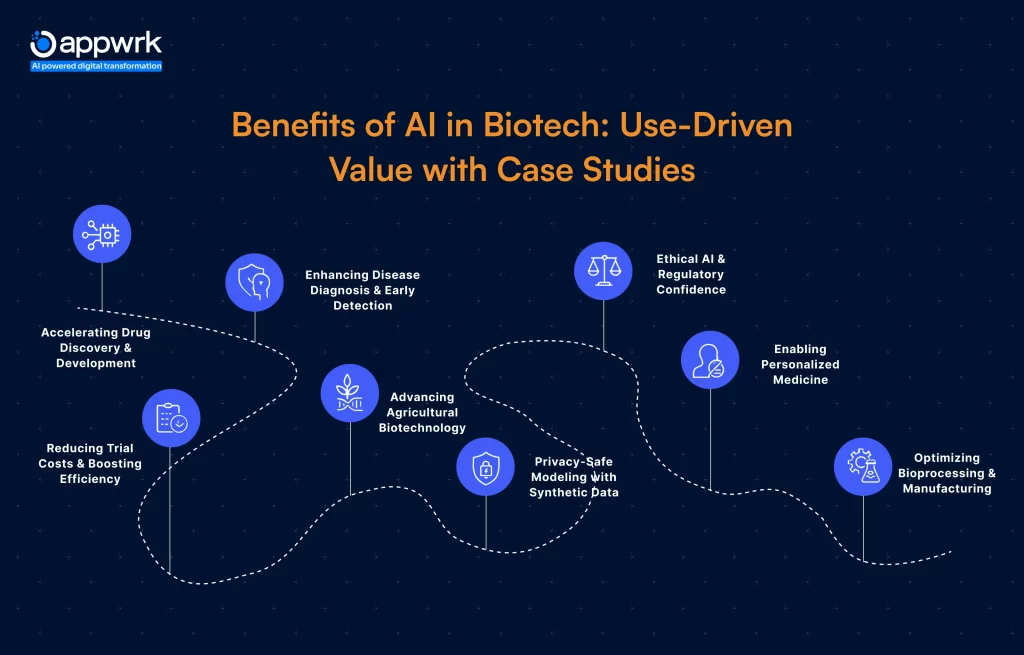
Benefits of AI in Biotech: Use-Driven Value with Case Studies
Artificial intelligence in biotech delivers measurable value across scientific innovation, operations, and patient impact, building a big impact in patient risk management. Below are the key benefits, each grounded in real-world results.
Accelerating Drug Discovery & Development
AI in drug discovery and development shortens the molecule-to-trial journey from 4-7 years down to 18-24 months by using deep generative models, virtual screening, and binding affinity prediction. This transforms early R&D from sequential and costly to simultaneous and predictive.
Case Study
Insilico Medicine’s fibrosis drug reached IND readiness in under 18 months using an end-to-end AI platform that integrated target identification, compound generation, and predictive toxicity screening. By leveraging generative chemistry models and reinforcement learning, Insilico reduced preclinical experimentation cycles while maintaining high confidence in the efficacy and safety parameters.
Enabling Personalized Medicine
AI enables biomarker-driven personalization of treatments, improving therapy match rates and reducing adverse effects. Studies show a 22-35% increase in patient response when using AI-augmented protocols.
Case Study
Tempus uses AI to analyze clinical and genomic data in real-time, delivering precision oncology reports that uplift treatment efficacy. Its platform applies machine learning to identify actionable mutations, predict therapy response, and recommend evidence-based interventions—helping oncologists tailor treatment regimens for individual patients with greater confidence.
Enhancing Disease Diagnosis & Early Detection
AI-powered image recognition, pathology analysis, and biosignal modeling allow for an earlier and more accurate diagnosis, sometimes years ahead of traditional symptom onset.
Case Study
Google’s deep learning system for mammography reduced false positives by 11% and false negatives by 5% in breast cancer screening. The model was trained on over 90,000 mammograms and demonstrated superior diagnostic accuracy compared to radiologists across datasets from both the US and the UK, signaling its potential to augment clinicians and reduce diagnostic delays.
Optimizing Bioprocessing & Manufacturing
AI models predict equipment failure, control bioreactor conditions, and detect quality issues in real-time. This ensures consistency in yield and regulatory compliance without human error.
Case Study
Amgen used predictive analytics in its manufacturing systems, improving batch quality and reducing error rates by 25%. Their implementation involved real-time data acquisition from sensors within bioreactors, which were fed into machine-learning models to detect deviations in chemical composition and growth conditions. This approach not only stabilized yields but also helped meet FDA quality standards with reduced manual interventions.
Advancing Agricultural Biotechnology
AI accelerates trait prediction, genetic mapping, and environmental stress modeling in seed engineering, improving resistance and yield under climate stress.
Case Study
Benson Hill developed AI-optimized crops with improved drought tolerance and protein density, shortening development timelines. The company’s platform applies machine learning to multi-omic data, combining genetic, environmental, and phenotypic information to rapidly identify superior crop traits. This enables faster trait discovery, predictive breeding, and the creation of more resilient and sustainable crop varieties.
Reducing Trial Costs & Boosting Efficiency
Trial optimization platforms use AI to automate eligibility checks, monitor adherence, and reduce manual oversight, slashing operational costs and timelines.
Case Study
BEKHealth + Curebase used AI in decentralized trials, reducing per-patient recruitment costs by up to $9K. Their platforms integrate with electronic health records and use natural language processing to identify trial-eligible patients automatically. Combined with real-time monitoring tools and remote data capture, the system accelerates enrollment, reduces reliance on brick-and-mortar sites, and enables broader geographic access to clinical studies.
Privacy-Safe Modeling with Synthetic Data
AI-generated synthetic datasets allow R&D teams to train on high-fidelity but privacy-free health records, accelerating model testing while meeting HIPAA/GDPR.
Case Study
Synthea produced synthetic Electronic health record (EHRs) used for training hospital AI models with 0% PII (Personally Identifiable Information) exposure. These datasets simulate real-world patient records while excluding any personally identifiable information, enabling teams to develop, test, and validate algorithms without risking data privacy violations. The synthetic data preserves clinical realism, helping models generalize better and pass early regulatory checks.
Ethical AI and Regulatory Compliance in Life Sciences
AI in life sciences faces a unique convergence of ethical scrutiny, legal governance, and international standards enforcement. The potential for harm from opaque or biased systems is significant, particularly in domains like clinical trial eligibility, diagnostics, and treatment recommendations. Organizations must ensure that every AI decision is auditable, justified, and aligned with human oversight.
Algorithmic Bias
AI models trained on unbalanced datasets can over-represent certain ethnic or age groups, skewing trial inclusion or predictive outcomes. Ensuring demographic fairness through bias testing is now a regulatory expectation.
Informed Consent
Authorities such as the FDA and EMA now mandate that trial participants be explicitly informed of AI’s role in diagnostics or treatment, requiring intelligible model explanations.
Data Privacy
AI systems must comply with privacy regulations like GDPR (EU), HIPAA (US), and GxP (global life sciences), with an emphasis on de-identification, encryption, and role-based access.
Audit Trails
Regulatory compliance demands explainability in model development, training, and inference. Each AI prediction must be traceable back to data inputs and parameter logic.
Biopharma leaders are embedding explainability frameworks such as SHAP and LIME into every AI model. Synthetic data generators like Synthea allow compliance-safe model training. Documentation pipelines are version-controlled to meet stringent GxP guidelines, while audit logs and real-time dashboards enable readiness for FDA inspections.
What’s Next for AI in Life Sciences?
According to MarketsandMarkets, the global AI in biotechnology market is projected to grow at a CAGR of 19.1% from 2024 to 2029, underlining the momentum behind AI adoption across life sciences.
The next frontier in AI for life sciences isn’t just better models; it’s a systemic transformation of how research, trials, and approvals function. Between 2025 and 2030, the focus will move beyond use-cases to platform ecosystems, combining clinical depth with cross-modal intelligence.
Self-adjusting Protocols
AI will optimize clinical trial protocols in real-time by integrating telemetry from wearable devices, lab reports, and patient-reported outcomes, cutting down protocol amendments and enhancing safety oversight.
Multimodal Models
The fusion of imaging, genomics, EHR, and text inputs will empower AI systems to mimic holistic physician assessments, delivering unprecedented precision.
Synthetic Cohort Simulations: Digital twin populations will allow biotech companies to simulate trial arms or predict therapeutic outcomes, reducing patient risk and accelerating timelines.
Regulatory Intelligence: Predictive AI will analyze prior submission outcomes across jurisdictions (FDA, EMA, PMDA), helping drug developers craft compliant documentation and avoid pitfalls.
How APPWRK Can Help with AI in Life Sciences
The transformative use-cases of AI in biotech demand more than tech; they require domain expertise, regulatory fluency, and scalable execution. At APPWRK, we specialize in crafting intelligent biotech platforms tailored to your compliance, scientific, and commercial objectives.
What are the real-world use-cases of AI in life sciences? AI is being applied in drug discovery, clinical trials, disease diagnosis, personalized medicine, pharmacovigilance, and operational optimization. Real examples include Tempus (precision oncology), Insilico Medicine (drug discovery), and BEKHealth (trial automation).
How is AI improving drug discovery in biotech? AI accelerates target identification, compound generation, and toxicity prediction. Generative models simulate molecule behavior, significantly cutting R&D time and cost. Insilico’s fibrosis candidate is one such success.
Which companies are using AI in pharmaceutical R&D? Leaders include Tempus, Insilico Medicine, Atomwise, Ginkgo Bioworks, and Isomorphic Labs. These firms leverage AI across everything from preclinical modeling to regulatory workflows.
What are ethical challenges in AI life sciences? Ethical issues include algorithmic bias, data privacy, informed consent, and lack of explainability. Regulators now require auditable AI pipelines and demographic fairness.
How does AI help with clinical trial optimization? AI streamlines patient recruitment, predicts dropout risk, and enables adaptive trial designs. Stanford’s Trial Pathfinder and BEKHealth’s platform both demonstrate this impact.
What role does NLP play in pharma compliance? NLP automates the extraction of adverse event reports, aligns submissions with FDA guidelines, and supports global pharmacovigilance. LogicFlo AI is a prime example.
Can AI accurately analyze medical images? Yes. AI has surpassed radiologists in some imaging tasks. Google’s mammography model reduced false positives by 11% and false negatives by 5%, demonstrating superior diagnostic precision.
What is the future of AI in genomics? Future trends include multimodal AI, real-time diagnostics, and genome-wide prediction tools. Models will personalize care down to individual SNP variation, accelerating rare disease therapies.
How is AI used in pharmacovigilance? AI scans global literature and EHRs for adverse event signals, translates reports, and populates regulatory forms. It improves safety monitoring while reducing manual workload.
Gourav Khanna is the Co-founder and CEO of APPWRK, leading the company’s vision to deliver AI-first, scalable digital solutions for enterprises and high-growth startups. With over 16 years of leadership in technology, he is known for driving digital transformation strategies that connect business ambition with outcome-focused execution across healthcare, retail, logistics, and enterprise operations.
Recognized as a strategic industry voice, Gourav brings deep expertise in product strategy, AI adoption, and platform engineering. Through his insights, he helps decision-makers prioritize market traction, operational efficiency, and long-term ROI while building resilient, user-centric digital systems.
Subscribe to APPWRK Blogs, We'll Do the Rest!
Get Blogs on UI/UX, Mobile Apps, Online Marketing, and Web development technology.
Unlock worthy and priceless suggestions from the masters of mobile and web app development