150+ minds across 4 countries. Join a culture of innovation, ownership & growth.
Rewire for AI
From machine learning to deep learning, from classification tools to overall process automation – our AI engineers will help you retool your existing system or enhance your company results.
Ship faster, scale smarter, built for product companies and SaaS teams
Our Latest Work
We strive hard to deliver result-driven digital solutions across the globe. Check out our case studies to get a glimpse of how we ideate, innovate, and create unconventional digital solutions according to the requirements of our clients.
Discover diverse and passionate insights from our tech enthusiasts. We collaborate across various sectors to streamline operations and drive innovation. Explore our rapidly growing collection of articles to see why we’re at the forefront of IT solutions.
The decision to move from Magento to Shopify is one of the most significant replatforming choices an ecommerce business can make. Magento is powerful, but its power comes with...
Accuracy gap is real: Traditional CPG forecasting carries a 25-40% MAPE error rate. AI-powered models bring that down to 8-15%, according to McKinsey research....
Real stories from global leaders who trusted us with their ideas.
Partnering with APPWRK helped us build a compliant and scalable healthcare platform, accelerating our time-to-market by 35%. Their team consistently delivered outstanding work.
Beesers
Digital Healthcare Client
Collaborating with APPWRK, Sportskeeda modernized its platform into a real-time sports engagement ecosystem, enabling seamless content delivery, scalable fan interactions, and high-velocity performance.
Sportskeeda
Sports & Entertainment Partner
Working with APPWRK was effortless. They captured our vision, maintained full compliance, and delivered a digital experience that built trust and elevated how customers interact with our fintech brand.
PayPenny
Fintech Partner
Working with APPWRK gave us confidence in adopting AI responsibly. Their team built a safe, intelligent bot that transformed how we engage with leads and helped us achieve measurable revenue growth.
IFB
AI Transformation Partner
Leveraging APPWRK’s digital expertise, Nemesis launched a scalable, compliant, and safe super app that connects content delivery, real-time communication, and logistics management within a single platform.
The cost to develop a lottery application like Jackpocket starts at $8,000 and ranges to $15,000 for a basic MVP with secure login, ticket scanning, and result notifications.
Mid-tier builds with multi-state integration, payment compliance, and geo-restriction features range between $25,000 and $40,000.
Advanced lottery platforms with multi-currency support, anti-money laundering modules, and blockchain-based ticket verification can go up to $65,000.
Hidden costs in lottery app development in 2025 include cloud hosting, compliance approvals, and post-launch support & maintenance, adding 15 to 20% annually.
Success Stories
Spinola Gaming – Delivered a compliance-first lottery and gaming platform with secure ticketing, real-time tracking, and player protection at scale.
Nemesis Super App – Architected a multi-service super app integrating payments, entertainment, and lifestyle features, designed to scale for millions of users.
What You’ll Learn
How the real cost of lottery app development depends on app type, features, regulations, and compliance.
How to reduce costs by using modular platforms, pre-built APIs for ticket purchase and confirmation, and outsourcing frontend development and integrations.
Proven monetisation strategies, from subscription plans and affiliate marketing to referral codes and service fees, following Jackpocket’s model.
With Appwrk, scalability, compliance, and ROI are built into every lottery courier and digital lottery experience project.
What Is the Jackpocket Lottery App and Why Is It Growing So Fast?
Jackpocket is a state-licensed lottery courier app that lets users order official lottery tickets such as Powerball and Mega Millions directly from their phones. Unlike some lottery platforms that run their own draws, Jackpocket works as a third-party lottery courier app, fulfilling ticket purchases through authorised retailers and delivering a secure digital copy to the player.
The appeal lies in its digital lottery experience: simple, compliant, and mobile-first. In fact, a Jackpocket user in Arizona recently won a $112 million Mega Millions jackpot using the app, the platform’s largest payout to date.
Even more important is who Jackpocket is targeting. The app appeals to digitally fluent players aged 25 to 44 who want frictionless mobile experiences. With the rise of state-regulated real-money lottery apps and greater trust in lottery betting platforms, this audience segment is fueling demand. It’s no surprise that lottery apps in 2025 are one of the fastest-growing categories in the U.S.
Jackpocket Reviews, Adoption Trends, and Jackpocket App Downloads
Ranked #128 in the U.S. App Store (Entertainment category)
Runs a top-performing affiliate program in the lottery space
Users consistently highlight the app’s secure login, ticket purchase, and confirmation process, and real-time notifications as key benefits. The one limitation? Jackpocket only operates in states that have approved lottery courier regulations, which means coverage is not yet nationwide. This is a critical factor for startups aiming to build a lottery app with a broader reach.
What is the Cost to Build a Lottery App Like Jackpocket?
The cost to build a lottery application similar to Jackpocket can start as low as $8,000 for a basic MVP and scale up to $65,000 for an advanced version with multi-currency support and blockchain features. The actual cost depends on the feature set, tech stack, compliance requirements (such as GDPR and CCPA), and the location of your development team.
MVP Build: $8,000 to $15,000
Includes core features like secure login, ticket purchase and confirmation, player protection, and basic notifications.
Enables multi-currency support, anti-money laundering modules, subscription plans, affiliate marketing programs, and blockchain-based lottery apps features for maximum scalability and security.
To stay competitive, many businesses also plan for frontend development in React Native, ensuring cross-platform delivery, plus post-launch support and maintenance, which often adds another 15 to 20% annually.
Development stages and cost breakdown of the app like Jackpocket
Here’s how your cost is typically split across the development lifecycle:
Development stages for the lottery app
Scope
Estimated Cost of developing a lottery app like Jackpocket (USD)
Jackpocket App Development Pricing by Functionality
Each feature directly impacts your cost. Here’s what common modules typically add:
Feature / Module of the Jackpocket-like App
Jackpocket App Development Pricing by Functionality (USD)
Player registration + KYC
$800 to $1,500
Lottery draw and game listing
$500 to $1,000
Ticket ordering + digital confirmation
$1,000 to $2,500
Real-time draw result updates
$800 to $1,500
Wallet + payment integration
$1,200 to $3,000
Ticket scanning & storage
$1,000 to $2,000
Referral + promo code logic
$800 to $1,800
Admin panel + analytics
$1,000 to $2,000
Notifications + geofencing
$700 to $1,500
Adding advanced features like predictive analytics, crypto payments, or AI-based fraud detection can increase the total cost but also improve retention and trust.
Case Study Spotlight: Building Scalable Lottery Features with Appwrk
Client: US-Based client Partners with Appwrk to Develop Scalable Lottery-Ready Mobile App named Nemesis Super App Scope: Multi-service mobile platform with lottery-like features
When Nemesis approached Appwrk, their goal was to build a multi-feature super app, integrating secure transactions, ticket ordering, real-time updates, and location-based services.
Leveraging our experience in regulated app environments, we implemented modular components similar to those in lottery apps like Jackpocket, including user KYC, ticket validation logic, result alerts, and an intuitive wallet system.
Outcome: A scalable app architecture that supports high-volume user actions, real-time notifications, and compliance-ready backend logic, all delivered under budget.
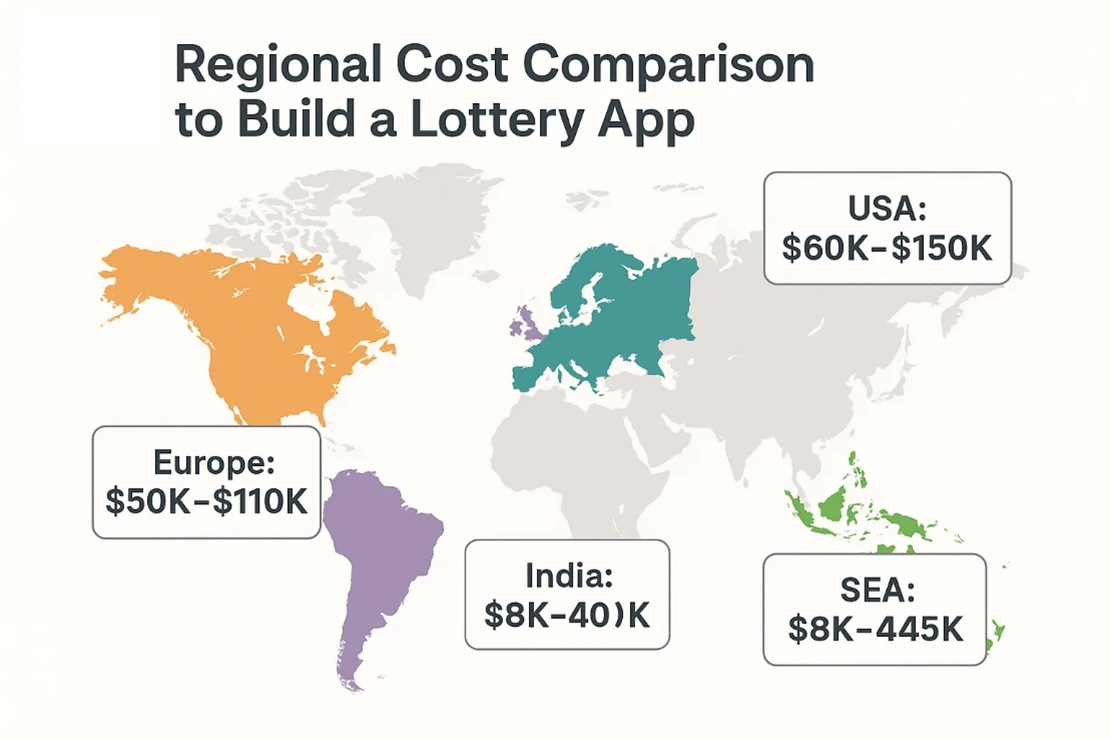
Regional cost differences & developer rates for Jackpocket-like app development
Your developer’s location can dramatically affect the cost per hour.
Region to outsource for Lottery app development
Avg Hourly Rate for Jackpocket-like lottery app development
Projected App Cost for Jackpocket-like app lottery app development
North America
$70 to $150/hr
$60,000 to $150,000+
Western Europe
$60 to $120/hr
$50,000 to $110,000
Eastern Europe
$30 to $60/hr
$25,000 to $70,000
Southeast Asia
$20 to $35/hr
$8,000 to $45,000
India
$18 to $30/hr
$8,000 to $40,000
You can reduce costs significantly by choosing offshore teams without compromising quality, especially for backend, QA, and non-regulatory tasks.
Which features should you prioritise in a Jackpocket-style lottery app?
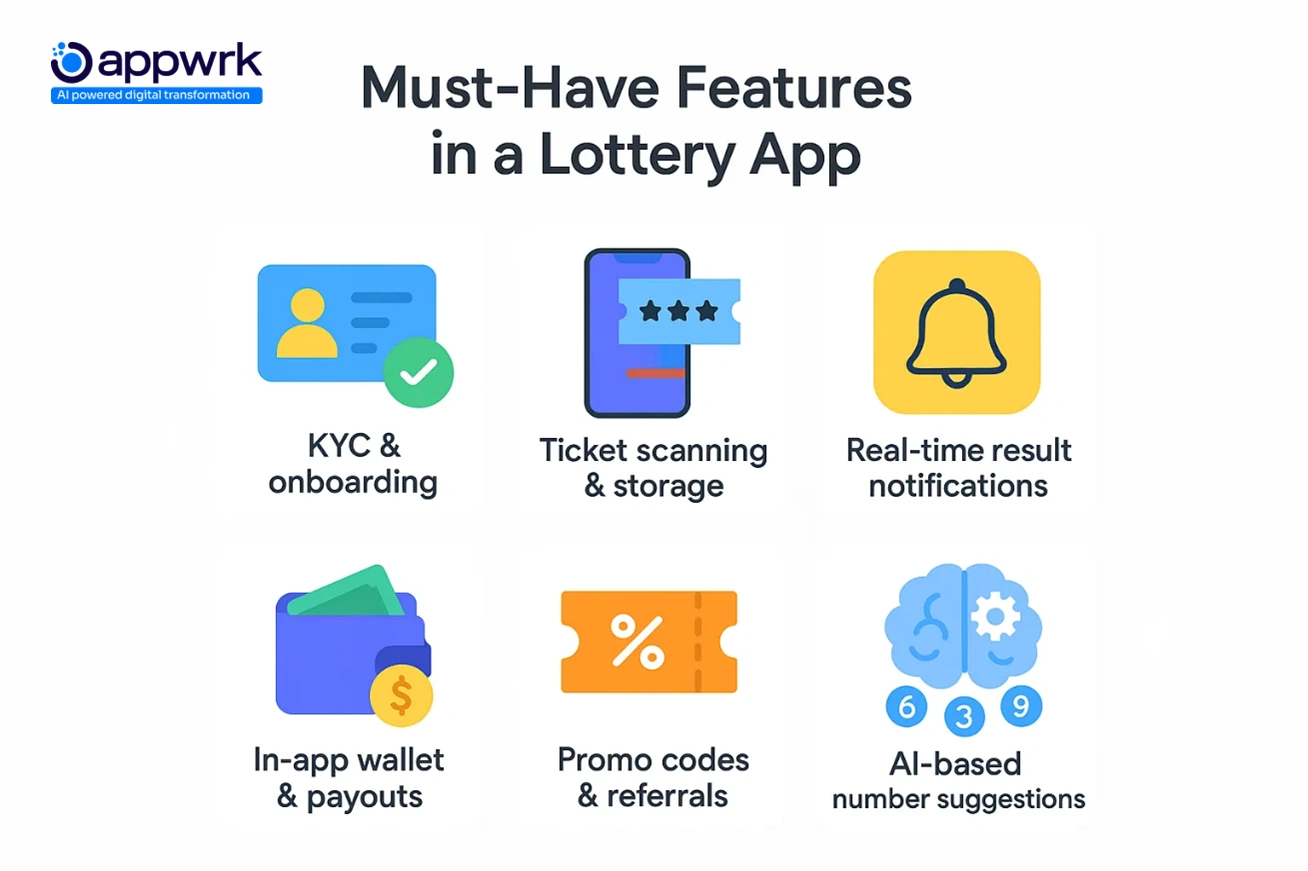
Building a lottery app like Jackpocket means replicating a trusted real-money model, with all the features that ensure legality, usability, and scale. Below are the essential modules every lottery app must include, based on what Jackpocket and top apps currently offer.
User Registration and Authentication
Users must be able to register quickly and securely using:
Phone, email, or social sign-up
Age verification and ID upload for KYC compliance
Multi-factor authentication for login
Secure account management interface
Why it matters: It’s the legal entry point for every user. Without authentication + KYC, you can’t operate a compliant lottery platform.
Lottery Ticket Purchase
Allow users to browse, select, and purchase tickets for state lotteries:
Mega Millions, Powerball, and local draws
Ticket bundles or single entries
Quick Pick (auto-selection of numbers)
Saved numbers and recurring purchase options
Why it matters: This is the core of your business model; ticket ordering is what drives real-money interaction.
Ticket Scanning and Storage
Provide a digital vault for tickets:
Scan physical tickets into the user’s account
Display ticket details and numbers
Store purchase proof and claim status
Enable easy access to past draws
Why it matters: Jackpocket builds user trust by handling tickets securely; your app should do the same.
Notification System
Enable real-time updates for:
Ticket purchase confirmations
Upcoming draw reminders
Draw results and win notifications.
Geofencing-based alerts
Why it matters: Push notifications and email alerts ensure users stay engaged and updated, without needing to recheck the app manually.
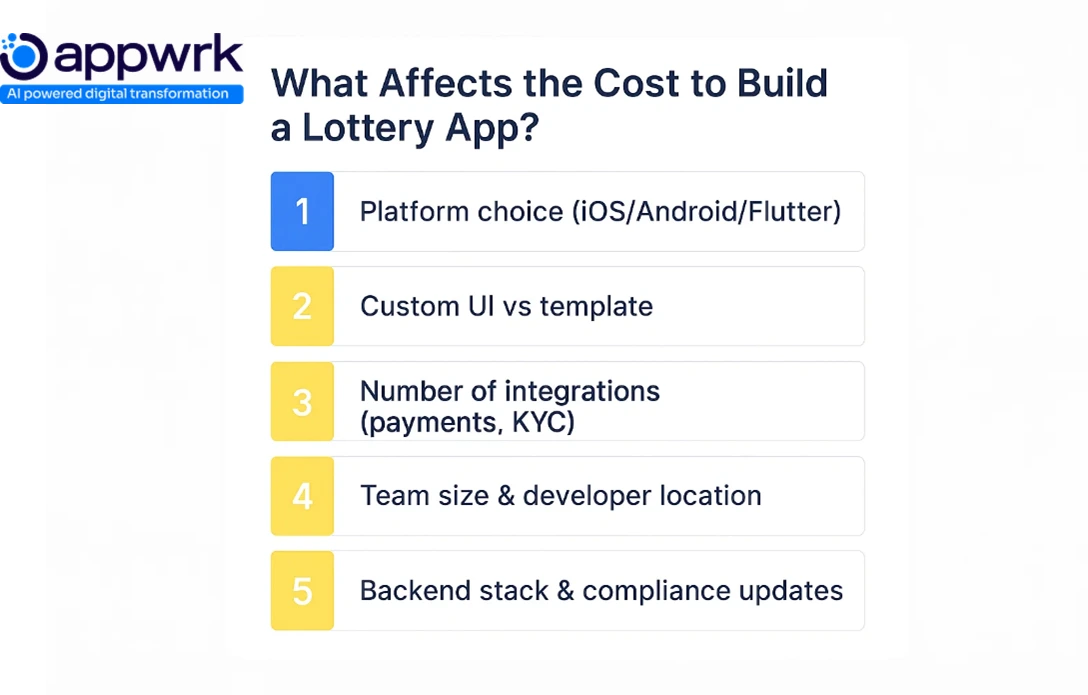
Your choice between iOS, Android, or cross-platform impacts cost significantly. Native apps tend to be more expensive than cross-platform solutions like Flutter or React Native.
Also, the number of third-party APIs(KYC, payment gateways, draw result feeds) you need to integrate will push development time and cost upward.
Key takeaway: The more platforms and integrations, the higher the cost.
Custom UI/UX vs templates
Using pre-designed templates can save money in the early stage, but limits personalisation and user engagement. On the other hand, custom UI/UX delivers a branded, smoother experience but requires more design hours.
Key takeaway: Custom design improves retention but adds to the upfront budget.
Team size and location
Where your development team is based makes a massive difference in cost: a larger team also means faster delivery, but higher parallel costs.
Key takeaway: Smaller offshore teams can build high-quality apps at a fraction of U.S. rates.
Hosting Infrastructure and Backend Stack
If your lottery application is built for scale, a strong backend stack is non-negotiable. Key elements include:
Real-time ticket purchase and confirmation systems
Geo-based lottery logic for geo-restriction
Encrypted data pipelines for player protection
All of this must be architected, tested, and optimised for uptime and compliance.
Key takeaway: Strong infrastructure adds long-term value, but it comes with higher initial setup and ongoing costs.
Maintenance and Compliance Updates
Launching is only the beginning. Post-launch support and maintenance typically consume 10 to 20% of your initial dev cost annually. This covers:
Regular bug fixes and OS updates
Feature upgrades and UI refinements
Adjustments to state-level lottery regulations (e.g., new compliance mandates)
Annual security audits to satisfy GDPR, CCPA, and anti-money laundering checks
Key takeaway: Maintenance and compliance are recurring investments. Plan them up front or risk legal exposure and downtime.
How Does AI Improve Lottery App Performance?
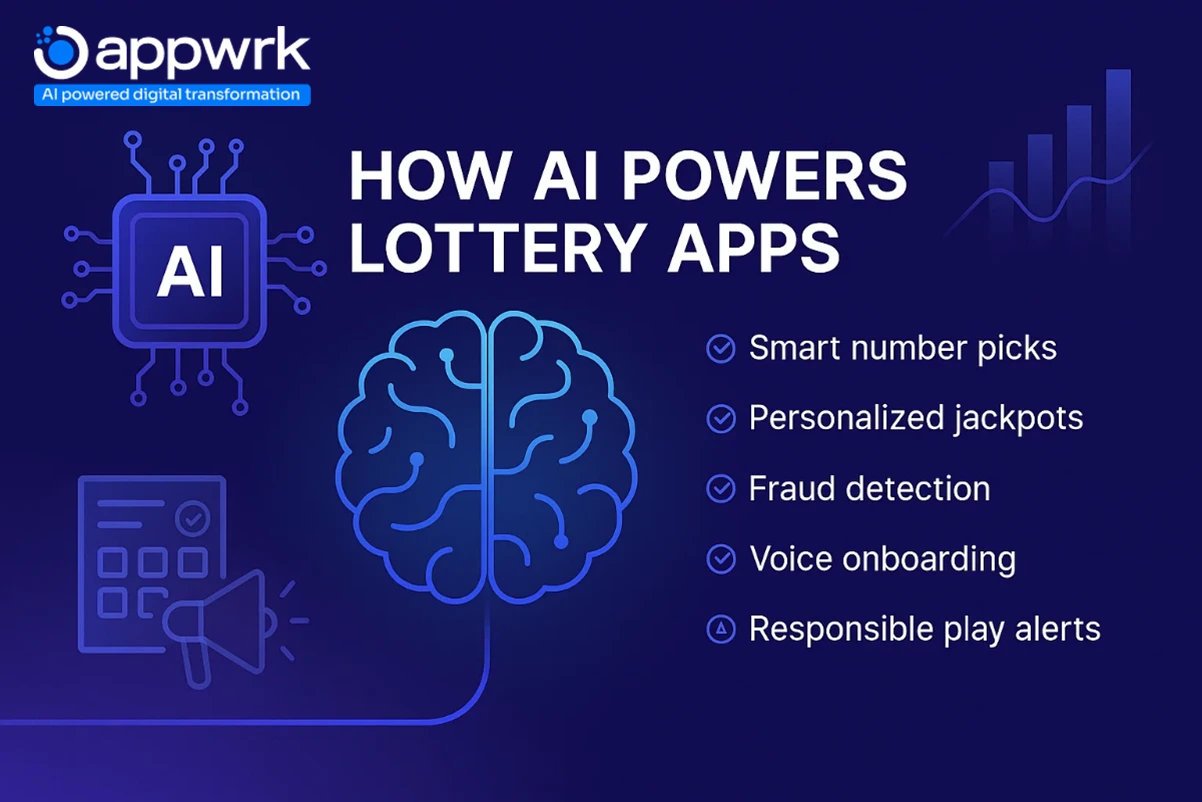
As users increasingly demand 24/7 support and real-time updates, chatbots have become a critical component of lottery app ecosystems. Whether it’s guiding new users through ticket purchases, updating players about results, or handling basic support queries, AI-powered chatbots enhance user experience and reduce operational load, all while keeping interactions seamless and scalable.
Why it matters: With AI, lottery platforms like Jackpocket are evolving from static ticket stores into adaptive, intelligent ecosystems.
What Are the Hidden and Ongoing Costs After Launch?
Once your lottery app in 2025 goes live, ongoing costs kick in, especially in regulated markets like New Jersey or Texas. Major hidden costs include:
Change requests & scope creep: User-driven updates to jackpots, ticket flows, or promotions can expand dev hours unexpectedly.
Integration with regulatory systems: Some states mandate integrations with platforms like SweepX or Lottery Now, plus legal review of every system update.
Licensing fees and renewals: Annual charges for operating as a legal third-party lottery courier app or offering related features (like sports bettingmodules).
Marketing and acquisition: Paid campaigns around peak drawing days (Tuesdays, Fridays) plus referral bonuses and affiliate programs.
Legal and compliance consulting: Adapting to new lottery laws, claim procedures, or responsible gaming mandates requires continuous oversight.
How Long Does It Take to Build a Lottery App Like Jackpocket?
Timelines vary, but most projects take 14 to 22 weeks, depending on features and compliance approvals.
Planning & research: 1 to 2 weeks
UI/UX design & wireframing: 2 to 3 weeks
Core frontend development & backend integration: 6 to 10 weeks
If you’re targeting regulated zones like the Texas Lottery Commission or planning hybrid features (courier services plus lottery betting modules), add extra approval time.
What Are the Best Lottery Apps and How Much Did They Cost to Develop?
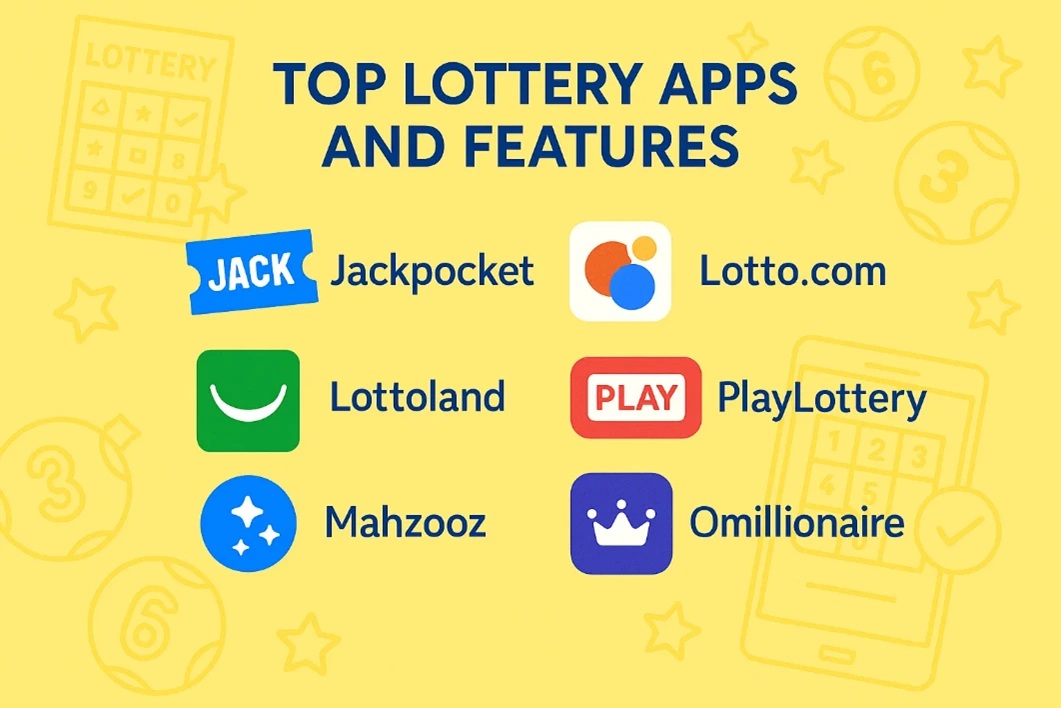
Top lottery applications show how diverse the market has become. Each balances compliance, user experience, and cost differently. Below are the leading lottery platforms, their estimated development budgets, and core features.
Lotto.com
Estimated Cost: $90,000 to $125,000
Timeline: 16 to 20 weeks
Standout Features: Mobile-first design, recurring ticket purchases, push alerts, and secure ticket storage. Known as a third-party lottery courier app, it has gained traction after regulatory changes.
theLotter
Estimated Cost: $80,000 to $120,000
Timeline: 14 to 20 weeks
Standout Features: Multi-lottery support, including Massachusetts Lottery games like MassCash, Megabucks Doubler, and The Numbers Game. Strong on wide coverage and advanced claim flows.
Project by Appwrk: Spinola Gaming partnered with Appwrk to build a compliance-first lottery system tailored for multiple jurisdictions.
Scenario: The client required a digital lottery infrastructure with secure ticketing, real-time result tracking, and claim processing, all under strict regulatory frameworks.
Value Delivered: Appwrk developed a robust platform offering:
Encrypted digital ticket purchases and storage
Instant draw result notifications
Player protection and responsible gaming tools
Compliance Highlights:
The system complies with multi-jurisdictional licensing, claim form regulations, and age-restricted access, enabling secure lottery operations at scale.
3. Team Lottery Pool for Office Syndicates
User: James, HR lead in Dallas
Scenario: Runs a Powerball pool for his team.
Value: Digital contributions, shared ticket visibility, and real-time notifications.
Highlight: Promotes responsible gaming while simplifying group play.
4. Recurring Buys for Older Players
User: A retired couple in New Jersey
Scenario: Automates weekly MassCash and Lucky for Life purchases.
Value: Recurring buys save effort, while player protection tools ensure spending limits.
Compliance: Results sync with the official New Jersey Lottery.
5. Out-of-State Purchase While Travelling
User: Nick, freelancer visiting Florida
Scenario: Attempts to buy Texas Lottery tickets remotely.
Scenario: Unsure about choosing numbers for The Numbers Game.
Feature: AI suggests combinations using past trends and odds.
Result: Builds confidence and boosts engagement.
How Do Lottery Apps Like Jackpocket Make Money?
Most modern lottery applications rely on multiple revenue streams. The goal is to stay compliant while unlocking sustainable growth.
1. Service Fees on Ticket Purchases
Users pay a small convenience fee per order when using a third-party lottery courier app. This fee is baked into the checkout process without altering the odds or ticket price.
2. Partnered Lottery Commissions
State-approved platforms (e.g., under the Texas Lottery Commission or Massachusetts Lottery) earn fixed commissions per sale or courier service margins. This model is common among lottery platforms like Jackpocket and Lotto.com.
3. Premium Features & Subscriptions
Apps monetise advanced tools through subscription plans or paywalls. Examples include:
Recurring ticket buys
Saved numbers & auto-picks
AI-based jackpot predictions
This model mirrors how Omillionaire and Lottoland upsell engagement-driven features.
4. Referral Bonuses & Affiliate Marketing
Promos like Jackpocket promo codes reduce acquisition costs. In parallel, affiliate networks (StatsDrone ranks Jackpocket top in lottery affiliates) drive long-term ticket volume through affiliate marketing partnerships.
5. Integrated Sports Betting Tie-ins
With real-money apps evolving, crossover modules like lottery betting or NCAA-style brackets blend sports and lottery play. This expands monetisation into new verticals while retaining compliance.
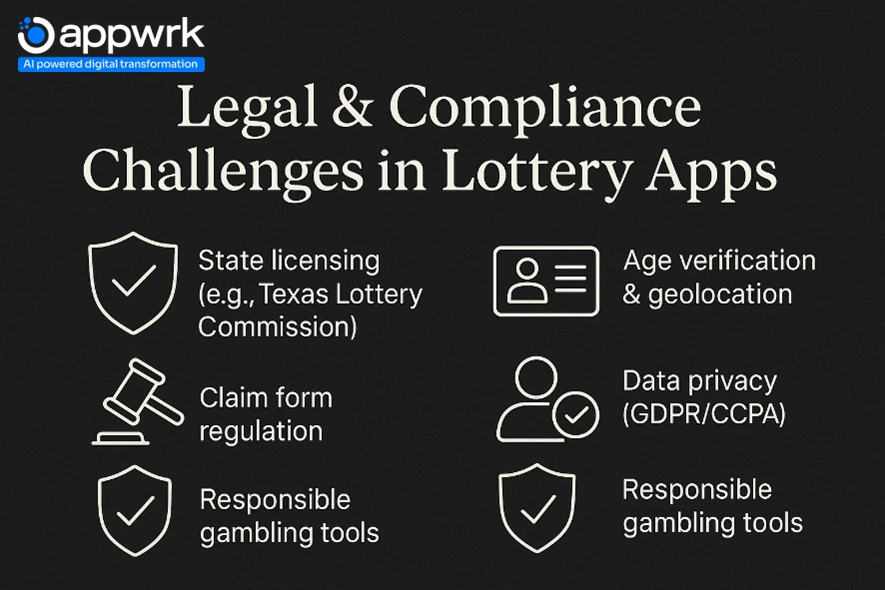
Legal, Compliance & Security Challenges in Lottery App Development
Launching a lottery app in 2025 isn’t just about features; compliance defines your success.
Jurisdictional Restrictions: Each state has unique rules. In Texas, developers must align with bills like HB 389, SB 28, and SB 79.
Licensing Frameworks: Approval from regulators like TELC or the Texas Lottery Commission is mandatory. Most apps must register as certified lottery couriers.
User Verification & KYC: Mandatory age checks, ID uploads, and claim form validation safeguard users and meet state compliance.
Geolocation Tools:Geo-restriction ensures players can only buy tickets where legally permitted. Paired with responsible gaming alerts, this protects both users and operators.
Payment & Data Security: Strong encryption, anti-money laundering controls, and compliance with GDPR/CCPA are critical for ticket transactions and data protection.
Key takeaway: Ignore compliance, and your digital lottery experience risks being shut down before it scales.
Texas Spotlight: Why the Texas Lottery Commission Matters
Texas is the most-watched market for lottery platforms in the U.S. Here’s why:
Over 20+ mentions in search queries highlight its dominance.
Bills like HB 389, SB 28, and SB 79 raise questions around:
Courier restrictions
The role of third-party apps
Licensing under TELC
New entrants like Lottery Now and SweepX
The Abbott administration has pushed for strict responsible gaming resources, claim form transparency, and betting integrity.
For developers: Understanding Texas frameworks early prevents delays, compliance rework, and wasted investment.
What Are Lottery Courier Services?
Lottery courier services act as third-party intermediaries that purchase official lottery tickets on behalf of users. Instead of running a lottery themselves, apps like Jackpocket operate under this courier model wherin users place an order through the app, and the service buys the ticket from a licensed retailer, scans it, and securely stores it for verification.
This model enables compliance in states where direct online lottery sales are restricted. However, courier services must adhere to strict state regulations (e.g., licensing in New York and New Jersey) and face legal challenges in regions like Texas.
Why it matters: Choosing a courier-based model affects your app’s cost, logistics, and legal scope, from KYC, geolocation, and ticket storage to regulatory approvals.
Benefits of Building a Lottery App Like Jackpocket
Done right, a Jackpocket-style model unlocks value for both founders and users.
For Founders & Operators
Build a legally compliant lottery application using the courier model.
Diversify revenue with service fees, commissions, and subscription plans.
Leverage compliance-first innovation to gain trust in emerging regulated states.
Scale with features like recurring buys, secure claim forms, and multi-lottery support.
For Users & Players
Safe, contactless access to official tickets.
A transparent, secure login experience backed by player protection tools.
AI-powered number suggestions and instant draw updates.
Built-in responsible gaming features like spend limits and geofencing for safer play.
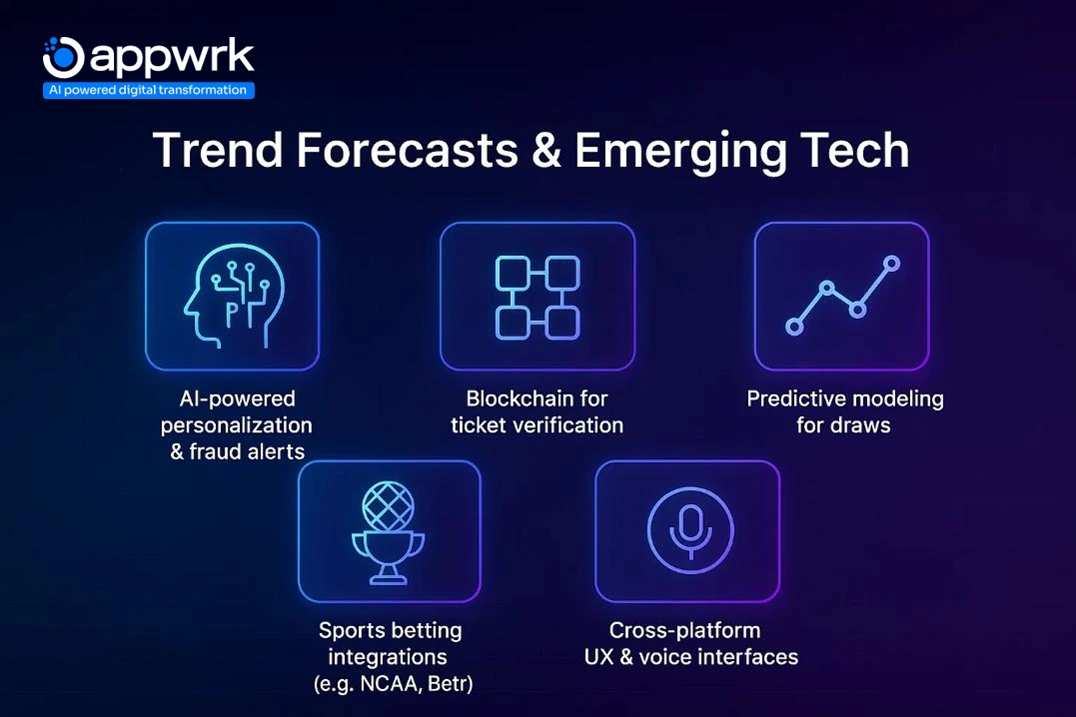
Trend Forecasts & Emerging Tech: What’s Next for Lottery Apps?
The next wave of lottery apps in 2025 is about more than digital ticket sales. They’re evolving into intelligent, multi-vertical platforms powered by emerging tech.
AI Integration
Expect smarter apps that:
Deliver real-time drawing predictions and AI-based number suggestions.
Personalise the digital lottery experience with tailored offers and reminders.
Detect fraud patterns automatically, boosting player protection.
Use tools like OpticOdds to improve odds visibility in games like Keno, Lucky for Life, or The Numbers Game.
Secure digital identities and encrypted payment flows.
Higher trust in regulated markets like those under the Texas Lottery Commission or the Massachusetts Lottery.
Cross-Integration with Sports Betting
Apps are beginning to merge lottery draws with sports betting ecosystems. Platforms like Betr already showcase how NCAA brackets and betting integrity tools can overlap with lottery features, opening new monetizable layers.
Voice & Human-Centred AI
Voice assistants and chatbots will soon guide:
Onboarding and KYC flows.
Claim form submissions.
In-app support to cut wait times.
Key takeaway: Tomorrow’s apps won’t just sell tickets; they’ll deliver intelligent, compliant, and human-centred lottery platforms.
How Appwrk Can Help in Jackpocket-Style Lottery App Development
At Appwrk, we build more than apps; we build compliant, scalable lottery platforms ready for regulated markets.
Why Partner with Us
Domain Expertise: We understand licensing, claim form workflows, and responsible gaming resources in markets like Texas, New Jersey, and Massachusetts.
Tech & Scalability: From geofencing to AI-powered personalisation, our stack (React Native, Flutter, AWS, Firebase) keeps building lean, starting at just $8,000.
Support & Growth: Continuous post-launch support ensures your app adapts to new regulations, features, and monetisation models.
Already planning a lottery platform or MVP? Let’s connectand map out a compliance-first roadmap tailored to your growth.
FAQs
How much does it cost to develop a lottery app?
A basic lottery app MVP costs $8,000 to $25,000 for login, ticket orders, and result updates. Adding courier services, wallets, and compliance tools (KYC, geofencing) can raise costs to $50,000+.
How much does it cost to build a mobile app?
General mobile app development costs start at $8,000 to $15,000 for simple apps. Complex builds like iLottery platforms or hybrid gambling apps may reach $50,000 to $100,000, depending on compliance and integrations.
Is Jackpocket legit?
Yes. Jackpocket is a licensed lottery courier service operating in states like Texas and New Jersey. It complies with the Texas Lottery Commission, the New Jersey Lottery, and other state regulators.
Can I build a Jackpocket-style app legally?
Yes, but compliance is key. You’ll need state licensing, age verification, geo-restriction tools, and partnerships with official lotteries. Without these, your app won’t be approved.
What’s the minimum budget for a Jackpocket-style app?
At least $8,000 for an MVP. A courier-ready app with secure wallets and player protection features will require a larger budget.
What features are must-haves?
Core modules include registration, ticket ordering, scanning, result tracking, claim forms, payouts, and responsible gaming tools. Advanced apps add AI predictions, recurring buys, and sports betting modules.
No. It’s approved only in select states (Texas, New Jersey, Colorado, Minnesota, etc.) where lottery courier apps are legal.
What’s the post-launch maintenance cost?
Expect $2,000 to $10,000/year for updates, compliance patches, hosting, and security. Apps working across regulated zones like TELC or under laws like SB 28 or HB 389 will incur higher costs. If you’re exploring your own lottery app development, Appwrk can help you scope cost, compliance, and monetisation strategies with a free consultation.
How much does it cost to develop a lottery app in India? Lottery app development in India starts at $8,000 and can go up to $40,000 based on features and compliance needs.
How much does it cost to build a lottery app iOS? Building a lottery app for iOS typically ranges from $12,000 to $50,000, depending on native development and App Store guidelines.
Is Jackpocket a free app? Yes, Jackpocket is free to download, but users pay a service fee per lottery ticket ordered.
How much does it cost to build an app? App development costs start at $8,000 for basic apps and can exceed $100,000 for complex platforms with integrations.
How much will it cost to build an app in India? In India, app development typically costs between $8,000 and $35,000 depending on complexity and technology stack.
Gourav Khanna is the Co-founder and CEO of APPWRK, leading the company’s vision to deliver AI-first, scalable digital solutions for enterprises and high-growth startups. With over 16 years of leadership in technology, he is known for driving digital transformation strategies that connect business ambition with outcome-focused execution across healthcare, retail, logistics, and enterprise operations.
Recognized as a strategic industry voice, Gourav brings deep expertise in product strategy, AI adoption, and platform engineering. Through his insights, he helps decision-makers prioritize market traction, operational efficiency, and long-term ROI while building resilient, user-centric digital systems.
Subscribe to APPWRK Blogs, We'll Do the Rest!
Get Blogs on UI/UX, Mobile Apps, Online Marketing, and Web development technology.
Unlock worthy and priceless suggestions from the masters of mobile and web app development