150+ minds across 4 countries. Join a culture of innovation, ownership & growth.
Rewire for AI
From machine learning to deep learning, from classification tools to overall process automation – our AI engineers will help you retool your existing system or enhance your company results.
Ship faster, scale smarter, built for product companies and SaaS teams
Our Latest Work
We strive hard to deliver result-driven digital solutions across the globe. Check out our case studies to get a glimpse of how we ideate, innovate, and create unconventional digital solutions according to the requirements of our clients.
Discover diverse and passionate insights from our tech enthusiasts. We collaborate across various sectors to streamline operations and drive innovation. Explore our rapidly growing collection of articles to see why we’re at the forefront of IT solutions.
The decision to move from Magento to Shopify is one of the most significant replatforming choices an ecommerce business can make. Magento is powerful, but its power comes with...
Accuracy gap is real: Traditional CPG forecasting carries a 25-40% MAPE error rate. AI-powered models bring that down to 8-15%, according to McKinsey research....
Real stories from global leaders who trusted us with their ideas.
Partnering with APPWRK helped us build a compliant and scalable healthcare platform, accelerating our time-to-market by 35%. Their team consistently delivered outstanding work.
Beesers
Digital Healthcare Client
Collaborating with APPWRK, Sportskeeda modernized its platform into a real-time sports engagement ecosystem, enabling seamless content delivery, scalable fan interactions, and high-velocity performance.
Sportskeeda
Sports & Entertainment Partner
Working with APPWRK was effortless. They captured our vision, maintained full compliance, and delivered a digital experience that built trust and elevated how customers interact with our fintech brand.
PayPenny
Fintech Partner
Working with APPWRK gave us confidence in adopting AI responsibly. Their team built a safe, intelligent bot that transformed how we engage with leads and helped us achieve measurable revenue growth.
IFB
AI Transformation Partner
Leveraging APPWRK’s digital expertise, Nemesis launched a scalable, compliant, and safe super app that connects content delivery, real-time communication, and logistics management within a single platform.
The cost to build a transportation management system (TMS)starts around $5,000 for a basic MVP and can cross $800,000 for full-scale enterprise builds. Pricing depends on feature depth, integration capabilities, regulatory compliance, and your development model, with hourly rates ranging from $18 to $70.
TMS software development isn’t one-size-fits-all. While SaaS models are quick to deploy, they often lead to higher long-term ownership costs. A custom or hybrid implementation gives you better control over automation, freight settlement, and real-time shipping monitoring.
Choosing the right build depends on your logistics domain, whether you’re a 3PL, carrier, retailer, or manufacturer. Each requires different workflows for dispatch management, load assignment, and compliance.
Cloud-based systems appear cheaper upfront, but add ongoing subscription fees and scaling costs. Custom TMS builds often prove more cost-effective over time through modular expansion and data-driven decisions.
If your operations face manual routing, low visibility, or delay penalties, investing in a transportation management application can improve efficiency, reduce costs, and enhance KPI monitoring.
This guide breaks down transportation management system development cost, integration strategies, and ROI insights to help you decide whether to build, buy, or outsource, and how to future-proof your investment through secure, scalable, and compliant architecture.
What Is a Transportation Management System and Why Is It Essential Today?
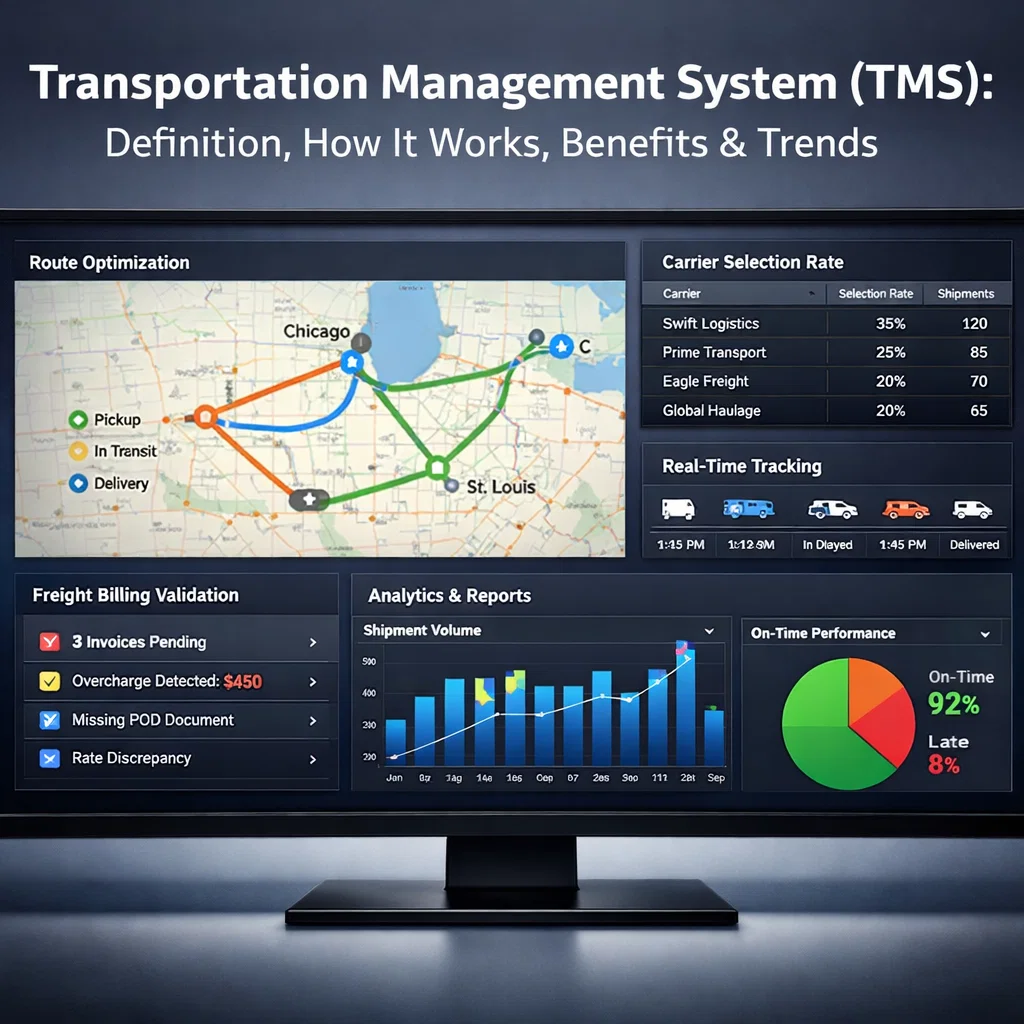
Modern logistics is no longer about just moving freight from point A to point B. It’s about orchestrating orders, carriers, warehouses, compliance, and customer expectations, all in real time. At the centre of that coordination sits the Transportation Management System (TMS).
A transportation management system is a software platform that helps organisations plan, execute, and optimise freight transportation across supply chains. It connects to other enterprise systems like ERP software, warehouse management systems (WMS), Customer Relationship Management (CRM), and transportation telematics systems, creating a unified logistics technology ecosystem that enables smarter, faster, and more compliant operations.
Why TMS Is Non-Negotiable Today?
Supply chains have become volatile, complex, and customer-driven. Companies now face constant pressure to deliver faster, cheaper, and with greater transparency. A TMS provides that backbone by helping businesses:
Cut freight costs through intelligent routing and load consolidation
Improve visibility across carriers, shippers, and customers.
Automate dispatch management, load assignment, and freight settlement
Ensure regulatory compliance across borders and shipping zones.
As Gartner’s Bart De Muynck said, “The companies that treat transportation as a strategic advantage, not a costcentrer, will lead the next supply chain wave.”
The global TMS market proves this shift. Valued at $18.5 billion in 2025, it’s projected to reach $37.04 billion by 2030, growing at a CAGR of 14.9%, driven by AI-powered optimisation, eCommerce demand, and multi-modal logistics expansion.
Cost to Build a Transportation Management System
The transportation management system development cost starts around $5,000 for a lightweight SaaS connector and can exceed $800,000 for a fully custom, enterprise-grade platform. The gap exists because TMS software development depends on feature depth, integration capabilities, tech stack, and delivery model, not just company size.
Build Type of the transportation management system
Description
Estimated Cost to build a transportation management system
TMS development cost is driven by complexity, not scale. A smaller company managing multi-country shipments and regulatory compliance may invest more than a large domestic carrier. Advanced analytics and reporting, AI-driven route optimisation, and freight settlement automation increase upfront cost but unlock long-term savings and visibility.
Integration also plays a big part. The deeper your transportation management system integration, connecting ERP, CRM, and real-time shipping monitoring, the more development effort and customisation you’ll need.
The next section breaks down how prices shift by region, deployment model, and outsourcing destinations, so you can make smarter budgeting decisions.
TMS Development Cost by Region
Your outsourcing destination has one of the biggest impacts on cost. A TMS that costs $80,000 in the U.S. can be developed for under $25,000 in India with comparable quality, provided you work with the right offshore partner.
Region of TMS development
Avg Project Cost of TMS development
Hourly Rate for TMS development
Why It Matters
How much does it cost to build a TMS in the USA?
$60,000 to $800,000+
$60 to $120/hr
Premium developers, compliance-ready builds
What is the TMS development cost in India?
$5,000 to $70,000
$18 to $45/hr
Cost-effective, experienced offshore teams
How much does TMS software cost to build in Eastern Europe?
What is the cost of a transport management system in Western Europe?
$40,000 to $200,000
$50 to $100/hr
Compliance-focused delivery, mid-scale builds
India offers the lowest entry point for transportation management application development, ideal for MVPs and hybrid implementation builds.
Eastern Europe strikes a balance, experienced in freight tech and logistics domain projects, with competitive pricing.
For global logistics enterprises, a hybrid outsourcing model, pairing Indian or Eastern European engineers with North American product leads, can reduce total cost by up to 45% without compromising quality or compliance.
How Do Cloud and On-Premise Transportation Management Systems Compare on Cost?
Transportation management systems are typically deployed as either cloud-hosted (SaaS) or on-premise solutions. The right choice depends on your budget, scalability needs, regulatory compliance, and internal IT capabilities.
Cloud-based TMS offers lower upfront investment but includes ongoing subscription fees that scale with usage or users. It’s a smart fit for startups or mid-sized teams with evolving logistics needs and short-term visibility goals.
On-premise TMS demands a higher upfront investment in hardware, software licenses, and dedicated IT support, but delivers stronger data control, better cybersecurity, and compliance with region-specific transport regulations.
Meanwhile, a custom-built TMS (cloud-hosted) provides the best of both worlds. This hybrid implementation eliminates vendor lock-ins, offers modular scalability, and reduces the long-term cost of ownership. Although the upfront cost is higher than plug-and-play SaaS, businesses typically break even within two to three years thanks to flexibility and data-driven decision-making.
Today, many mid-size and enterprise logistics teams prefer custom cloud builds, they retain scalability while controlling their own product roadmap and integration stack.
Looking for a lean, scalable, custom TMS build? Appwrk’s logistics experts can help you map, scope, and estimate your ideal model, no license bloat, no lock-in.
Is There a Difference Between Transportation Management Software and Application Development?
Many businesses use transportation management software and transportation management application development interchangeably. While closely related, they serve different scopes and objectives.
Transportation Management Software (TMS)
Refers to the complete system that manages, automates, and tracks logistics operations end-to-end. It includes backend logic, admin dashboards, carrier integration, analytics and reporting, and transportation management system integration with ERP, WMS, or accounting platforms.
Built for: Large enterprises managing multi-carrier networks, compliance-heavy logistics, and real-time shipping monitoring.
Transportation Management System Integration
A TMS only performs as well as the systems it connects to. The real advantage lies in seamless transportation management system integration, which synchronises every layer of logistics, from shipment planning to delivery tracking.
Integrate GPS, IoT sensors, and telematics devices to enable real-time shipping monitoring and predictive ETA updates.
Link CRM and billing systems for smoother freight settlement, contract management, and invoicing automation
Sync data with BI dashboards for analytics and reporting on KPIs like on-time delivery, route performance, and cost per shipment
Strengthen cybersecurity and regulatory compliance by ensuring secure data transfer and immutable record logs.
When implemented correctly, a well-integrated TMS becomes the transportation control tower of your supply chain, enabling data-driven decisions, optimised routing and scheduling, and end-to-end visibility across all freight movements.
Transportation Management Application
Refers to a specific interface or module, such as a mobile app for drivers, a dispatch dashboard, or a live-tracking view for customers. It’s part of the overall system but focuses on user experience, device accessibility, and streamlined operations.
Built for: Targeted workflows like dispatch management, load assignment, or customer order tracking.
If you’re building the full system logic, integration capabilities, and analytics dashboards, you’re investing in TMS software development. If you’re building a front-facing tool or workflow module, that’s transportation management application development.
Understanding this distinction prevents confusion when budgeting, setting timelines, or defining project scope with your dev partner.
Run carrier selection and assign the lowest-cost, SLA-compliant freight vendors.
Automate load planning based on truck capacity and optimised routing.
Trigger real-time shipping monitoring and dispatch documentation.n
Sync data back into client systems for billing and performance analytics
Use Case: A UAE-based 3PL managing cross-border FMCG shipments deployed a custom transportation management software with automated dispatch rules. Within six months, it cut missed SLAs by 11% and improved vehicle utilisation by 22%.
2. How Does a Transport Management System Work For Retailers
TMS consolidates loads using optimisation algorithms
Matches carrier availability with the most cost-efficient routes
Notifies warehouses and drivers via mobile apps
Tracks vehicles using IoT sensors and sends route deviation alerts.
Use Case: A US apparel retailer integrated a cloud-based transport management system for unified warehouse and transport operations. Result: 30% fewer shipping delays and better customer satisfaction during peak season.
3. How Does a Transport Management System Work For Manufacturers
System shares shipment details (weight, size, timelines)
Carrier management rules assign routes and load
Auto-generates invoices, bills of lading, and customs documents
Logs proof of delivery into the enterprise service architecture
Use Case: A German auto parts manufacturer replaced email-based dispatching with a TMS-powered freight transportation platform. They reduced fuel costs by 18% and achieved full export regulatory compliance.
4. How Does a Transport Management System Work For Shippers (Freight Teams)
Flow:
Receive delivery or purchase instructions
Create shipment records with timelines and commodities.
Match available fleet capacity via fleet management software
Log final-mile metrics like on-time %, damage reports, and SLA performance.e
Use Case: A Canadian cold chain operator using AI + IoT-enabled TMS cut spoilage by 14% through real-time shipping monitoring and dynamic rerouting.
In every case, TMS goes beyond visibility. It powers proactive transportation planning, risk prediction, and end-to-end automation, turning logistics into a measurable competitive advantage.
What Are the Must-Have Features of a Transportation Management System?
The right transportation management software delivers more than automation; it improves profitability, customer experience, and scalability across your logistics system. Every core module falls under one of three layers: Planning, Execution, or Administration.
Planning Features
Order Management: Captures all shipment details in one place for easy dispatch prioritisation.
Tendering & Carrier Selection: Automates vendor bidding and carrier assignment for faster, cost-effective shipments.
Shipment Rate Management: Applies rate structures by zone, weight, or urgency for pricing consistency.
Load Planning: Uses vehicle capacity and cargo type to automate load assignment and optimise utilisation.
Route Planning: Leverages 3D route optimisation, live traffic, and toll data for smarter, faster deliveries.
Document Management: Centralises bills of lading, invoices, and freight documents, vital for regulatory compliance and audits.
Execution Features
Fleet Management: Tracks assets and fuel via IoT-powered transportation telematics systems integrated with fleet platforms.
Dock Scheduling: Automates slot assignments and cuts loading delays.
Real-Time Tracking: Offers GPS-based real-time shipping monitoring, enabling fast response to delays or diversions.
Multi-Stakeholder Communication: Keeps drivers, dispatchers, and customers connected on one interface.
Customer Access Panels: Give clients direct order visibility and invoice access for transparency.
Administrative Features
Invoice Management: Syncs with ERP and CRM systems for freight settlement and automated billing.
Claims Management: Simplifies handling of damaged or delayed freight with documented evidence workflows.
Reports & Analytics: Tracks KPIs such as on-time delivery, driver performance, and cost per shipment. Integrated analytics and reporting drive smarter planning and long-term financial performance.
Factors Influencing the Cost of Transport Management System Development
The transportation management system development cost isn’t defined by feature count alone; it’s driven by your business scale, logistics domain, integrations, and roadmap for automation. Here’s a closer look at what truly shapes your investment:
Scope of Features
Basic TMS setups include route planning, carrier selection, order tracking, and reporting dashboards. Adding layers like AI-powered route optimisation, 3D route modelling, or freight settlement automation increases cost, but also delivers measurable ROI through reduced miles, improved resource allocation, and better financial performance.
Development Team Structure
A standard team includes frontend/backend developers, QA engineers, UI/UX designers, and integration specialists. Complex builds often add data architects or system integrators, especially when linking legacy systems. The average TMS project team ranges from five to twelve full-time equivalent resources, depending on feature scope and data flow complexity.
Technology Stack
Modern builds rely on microservices, cloud infrastructure, and API-based architecture for scalability and modularity. Integrating IoT sensors, AI/ML analytics, and transportation telematics systems adds both cost and value, improving automation, visibility, and planning-first shipping optimisation.
Functional Module Complexity
A TMS that handles multi-modal freight transportation needs more than just route mapping. It requires transportation execution modules, automated validation, load optimisation engines, and RFx or contract management, competing directly with enterprise-grade systems like Blue Yonder TMS.
Integration Depth
Deeper transportation management system integration with ERP, CRM, and carrier management tools means higher complexity but much stronger ROI. These integrations create a transportation control tower effect, enabling real-time shipping monitoring, KPI tracking, and proactive exception handling.
Data Migration and Volume
Transferring years of shipment and carrier data isn’t plug-and-play. Clean migration ensures accuracy in analytics and reporting, forecasting, and compliance logs. This step directly impacts KPI monitoring, routing models, and training needs during rollout.
Platform Types and Accessibility
Adding mobile-first features for drivers or warehouse staff adds cost, especially when combined with GPS, barcode scanning, or multilingual support. Building both cloud-based and on-premise versions doubles QA and deployment efforts, affecting total cost.
In short, TMS software development is a balance between vision and viability. The best builds focus on your ROI targets, integration depth, and scalability goals, not just feature lists.
What Are the Benefits of Transportation Management Systems?
The true value of transportation management systems lies in the compounding efficiency they bring to freight, finance, planning, and service operations. A modern TMS doesn’t just manage shipments; it transforms how your entire logistics domain operates.
Lower Operational Costs
By automating route optimisation, load assignment, and carrier selection, TMS platforms can reduce delivery expenses by 10 to 30%. These cost savings multiply over time through smarter data-driven decisions and optimised routing. Biggest impact: Freight teams and operations managers.
Improved Customer Satisfaction
Real-time shipping monitoring, proactive updates, and accurate delivery windows build trust and reliability. With fewer delivery errors, customers experience faster service and fewer support calls. Biggest impact: Customer success and service teams.
Faster Decision-Making
A TMS centralises carrier rates, route data, and exception alerts in one interface. Teams can take action instantly instead of reacting after delays occur. Biggest impact: Dispatch and logistics coordinators.
Better Supply Chain Visibility
From sourcing raw materials to final-mile delivery, a TMS acts as a transportation control tower, giving organisations full clarity into their logistics technology and movement data. Biggest impact: Supply chain heads and procurement planners.
By tracking performance metrics and automating regulatory compliance, a TMS ensures every shipment meets contractual service levels, reducing penalties and improving customer trust. Biggest impact: Contract and compliance leads.
Scalable Growth Infrastructure
Modern TMS software development supports hybrid implementation, modular scaling, and integration capabilities with ERP and WMS systems. It adapts as your freight network grows. Biggest impact: CTOs and transformation teams focused on scalability.
These benefits compound year over year, making even mid-sized custom transportation management software projects worth the upfront investment for long-term efficiency and ROI.
What Are the Key Use Cases for Transportation Management Systems?
A transportation management system is not a single-function platform; it’s an operational engine that addresses multiple pain points across logistics workflows. From freight transportation to last-mile delivery, TMS software enables scalable, efficient, and compliant operations across industries.
Multi-Carrier Freight Scheduling
Compare carrier rates, lead times, and capacities automatically. The system selects the most cost-efficient, contract-compliant option for each lane. Used by: Retail chains and 3PLs managing 100+ daily shipments.
Automated Load Planning and Optimisation
Consolidate orders by vehicle type, weight, and route to minimise empty miles and fuel consumption. Used by: FMCG distributors and manufacturers, optimising logistics costs.
Real-Time Tracking and Exception Alerts
Deliver end-to-end visibility through GPS and IoT sensors. Instant alerts for route deviations or delays reduce missed SLAs. Used by: B2C and eCommerce brands focused on customer satisfaction.
Last-Mile Visibility for Urban Delivery
Integrate driver apps and mapping APIs to handle live rerouting during traffic congestion. Used by: Food delivery services, pharmacy chains, and urban logistics providers.
Cold Chain Compliance Monitoring
Monitor temperature, humidity, and transit duration using IoT and transportation telematics systems. Used by: Pharmaceutical and perishable goods supply chains.
Cross-Border Freight Documentation and Tax Handling
Simplify customs paperwork, multi-currency handling, and regulatory compliance for global operations. Used by: Freight forwarders and global exporters.
Freight Cost Analysis and Profitability Tracking
Measure cost per lane, customer, or shipment using built-in analytics and reporting dashboards. Helps leadership teams make data-driven pricing and financial performance decisions. Used by: Logistics companies, brokers, and 3PLs analysing cost efficiency.
A TMS doesn’t just move goods, it builds intelligence into your logistics technology, transforming operations from reactive to predictive. It’s the core of a planning-first shipping optimisation strategy and the foundation of a scalable, future-ready supply chain.
Real-Time Success Stories From the Transportation Industry Using TMS
Transportation management systems aren’t just theoretical tools; they’re proven enablers of data-driven decisions, operational agility, and measurable ROI. From retail to manufacturing, leading enterprises have modernised their freight operations through TMS software and smart integration.
1. PepsiCo
Challenge: Fragmented shipment planning and inconsistent fleet visibility across North America. Solution: Deployed an enterprise-wide transportation management software to centralise shipment execution and automate dispatch management. Result:
Improved real-time visibility between plants and distribution hubs
2. Nestlé USA
Challenge: Managing temperature-sensitive shipments within a complex multi-carrier environment.
Solution: Integrated a TMS with SAP ERP for automated carrier tendering and freight settlement with compliance-ready documentation.
Result:
Automated carrier rate management
Reduced detention costs and improved service levels
Gained analytics and reporting insights for smarter carrier negotiations
3. Home Depot
Challenge: Aligning in-store inventory with last-mile customer deliveries. Solution: Implemented a cloud-based TMS integrated with POS and warehouse systems to synchronise load assignment, routing, and real-time shipping monitoring.
Result:
Reduced late deliveries by 20%
Improved appointment scheduling accuracy
Unified in-store and online order fulfilment logistics
When implemented strategically, a TMS becomes more than a transport system; it’s a control tower for logistics technology, driving precision, transparency, and profitability. From global supply chains to regional 3PLs, the results are consistent: fewer delays, faster delivery cycles, and stronger customer satisfaction across the board.
What ROI Can You Expect From a Transportation Management System?
A well-implemented transportation management system delivers ROI through cost savings, operational efficiency, and improved customer satisfaction. Most companies see results in 6 to 12 months, especially with deep TMS integration and automation.
Common ROI Drivers
Fuel Efficiency: Smart routing and optimised scheduling
Labour Savings: Automation in dispatch and billing
88% of TMS users reduced freight costs by 8% annually – ARC Advisory Group
12–15% KPI improvement with TMS analytics – Gartner
TMS ROI Example for Founders
If your business spends $100,000/month on freight:
Expected savings: $8,000/month
Annual savings: ~$96,000
Break-even for a custom build: ~9–11 months
TMS software development isn’t just a tech upgrade, but it’s a logistics profit engine. From fuel savings to fleet optimisation, the ROI compounds with scale.
Top Transportation Management Systems in the Market Today
Not all transportation management systems fit every operation. Some are built for freight brokers and 3PLs, while others support global multi-modal logistics. Here’s a quick overview of leading options across the industry:
SAP Transportation Management
Fully integrated with SAP ERP, offering advanced freight billing and compliance management. Best for: Large manufacturers and global enterprises needing tight ERP synchronisation.
Oracle Transportation Management (OTM)
Handles high-volume freight with embedded analytics and regulatory compliance features. Best for: Enterprise logistics teams with global shipping networks.
Blue Yonder TMS
Combines demand forecasting, route learning, and AI-driven optimisation for flexible logistics planning. Best for: Retail and CPG firms managing seasonal or high-volume networks.
A cloud-native, modular TMS with flexible subscription fees and integration capabilities. Best for: Agile 3PLs and freight brokers looking for scalable builds.
FreightPOP
Simplified cloud TMS with carrier connectivity and rate management tools. Best for: eCommerce businesses seeking fast deployment and easy onboarding.
Appwrk’s Custom TMS, Built for Scale, Flexibility, and ROI
Unlike off-the-shelf tools, Appwrk’s transportation management system integration approach ensures every build matches your specific logistics flow, carrier network, and compliance needs, with no rigid templates or locked pricing models.
Case Study: Kargo, A Complete Freight Booking & Management Platform
Client:Kargo, a digital freight booking startup Challenge: Build a scalable logistics management platform with:
Multi-party role management
Real-time shipping monitoring and compliance checks
Dynamic pricing and wallet-based settlements
Transportation network design and cross-border functionality
Solution: Appwrk designed a custom logistics system with:
Location-based carrier matching
Driver sync and automated route assignment
Real-time dashboards for shippers and drivers
Secure wallet integration with compliance-ready payments
Outcome:
30% faster delivery scheduling
40% faster onboarding of fleet operators
600+ active bookings per month in the first quarter
What Are the Common Compliance and Regulatory Considerations for TMS Software?
In modern logistics, compliance is non-negotiable. When your TMS handles cross-border freight, financial data, and carrier contracts, compliance lapses can mean costly penalties or shipment holds. Whether you’re deploying cloud-native or on-premise systems, your transportation management software must be built with regulatory frameworks at its core.
Data Protection: Ensure regional compliance with GDPR, SOC 2, or HIPAA, depending on the nature of your freight and customer data. Cloud-based TMS platforms should also include cybersecurity audits and data encryption at every access point.
Freight Documentation: Automate the generation of bills of lading, HS codes, customs forms, and tariffs for border clearance, ensuring every shipment maintains an immutable record for compliance.
Driver and Carrier Licenses: Integrate with national or regional transport databases to verify carrier certifications, permits, and vehicle fitness before dispatch.
Audit Trail: Every change in routing, pricing, or load assignment should be logged automatically. This ensures audit-ready reporting and legal defensibility for enterprise freight operations.
Environmental Regulations: Track carbon emissions, route efficiency, and mileage reports to comply with green logistics mandates and ESG goals.
A strong transportation management system integration strategy ensures compliance isn’t a manual checklist, it’s embedded into workflows. This is particularly crucial for industries like pharma, defence, and food logistics, where audits, data-driven decisions, and shipment traceability are daily realities.
What Are the Most Critical Integrations in a Transport Management System?
Even the most powerful transportation management system achieves real value only when it integrates across teams, tools, and the entire supply chain network. These integrations unlock automation, reduce silos, and build a real-time visibility system for decision-making.
ERP Platforms:
Sync orders, invoices, vendor records, and payment terms to create a unified logistics and finance flow.
Power predictive analytics, demand forecasting, and KPI monitoring to drive data-driven decisions.
Compliance Engines:
Stay updated on regulatory compliance changes, cross-border tax laws, and license renewals.
E-Commerce Platforms:
For high-volume shippers, integrate with Shopify, WooCommerce, or Magento for synchronised fulfilment and returns.
Why Integrations Matter More Tomorrow
The logistics stack is becoming smarter, and integrations are what will separate efficient TMS builds from outdated systems. Connected platforms will soon:
Auto-adjust pricing based on live freight markets
Dynamically reroute fleets during traffic or weather disruptions
Trigger SLA alerts when contract terms are at risk.k
Power global dashboards for multi-region logistics performance
These integration capabilities are the backbone of the next generation of freight tech, turning TMS from a transport tool into a transportation control tower for the entire business.
TMS Consulting Services: When and Why to Bring in Experts
Bringing in TMS consulting experts is essential when logistics operations face system complexity, compliance requirements, or technology decisions like custom build vs. off-the-shelf deployment.
Struggling with budgeting for consulting hours, tools, or licensing
Needing stakeholder alignment before Agile rollouts
Why it matters: A seasoned TMS consultant helps reduce cost overruns, prevent mismatched tech stacks, and ensure scalable decisions from day one.
How Appwrk Adds Value to Your TMS Strategy
Appwrk’s logistics consultants don’t just recommend tools, but we build clear, executable roadmaps. From idea to implementation, we optimise for cost efficiency, scalability, and real-world ROI.
Regulatory-first approach to documentation and workflows
If you’re planning transportation management software development, Appwrk helps structure the business case before you spend a dime on dev hours.
Founders’ Guide to Build TMS Software That Scales, Not Stalls
If you’re a founder, you don’t need off-the-shelf bloat; you need a custom, growth-ready transportation management system. Appwrk helps you build exactly that.
Scalable modules: dispatch, billing, analytics, mobile access
Built-in compliance and security, market-ready from day one
You’re not just building logistics software. You’re building a logistics product. Let’s map your idea to a working MVP.
Book your TMS roadmap call with Appwrk
FAQs:
1. What is the average cost of developing a transportation management system? It ranges from $5,000 to over $800,000, depending on complexity, modules, integrations, and team structure. Most mid-size companies spend $30K–$150K for full implementation.
2. Is it better to buy a Broker TMS or build a custom platform? Broker TMS tools work for simple operations. But growing freight organisations outgrow them fast. If you need multi-party workflows, carrier integrations, or tailored pricing logic, custom is smarter.
3. What affects the user licensing cost in off-the-shelf TMS tools? Licensing costs depend on users, features, and transaction volume. Cloud-based solutions usually charge monthly; on-premise systems use annual subscription fees per license.
4. How long does it take to implement a transportation management system? Basic plug-ins take 3–6 weeks; custom builds average 3–6 months, depending on integrations, cybersecurity, and regulatory compliance needs.
5. Can a TMS integrate with our ERP or WMS? Yes. A well-designed transportation management system integration connects seamlessly with ERP, WMS, accounting, and fleet management software.
6. What are the hidden costs of building a TMS? Expect additional costs for integration setup, user training, software upgrades, and post-launch maintenance. Always budget for configuration and support hours.
7. How can a TMS improve customer satisfaction? Through real-time shipping monitoring, accurate ETAs, automated notifications, and proactive communication, cutting delivery errors and delays.
8. Is cloud-based TMS cheaper than on-premise long term? Short term, yes. Long-term, recurring license and subscription fees can exceed the one-time upfront investment of on-premise builds.
9. What’s the best way to evaluate TMS pricing models? Compare cost per user, per shipment, and per module. Assess your freight volume, feature depth, and long-term cost of ownership before finalising.
10. Does Appwrk offer TMS consulting before building? Yes. Our consultants help define scope, evaluate outsourcing destinations, estimate transportation management system development cost, and design your tech stack.
11. How do TMS tools handle international freight operations? Through built-in customs, tax logic, and cross-border workflows, ensure regulatory compliance and region-specific documentation.
12. Can I scale my TMS across multiple freight organisations? Yes. Modern systems support multi-tenant architecture, ideal for 3PLs, brokers, and large logistics groups managing multiple brands or regions.
Gourav Khanna is the Co-founder and CEO of APPWRK, leading the company’s vision to deliver AI-first, scalable digital solutions for enterprises and high-growth startups. With over 16 years of leadership in technology, he is known for driving digital transformation strategies that connect business ambition with outcome-focused execution across healthcare, retail, logistics, and enterprise operations.
Recognized as a strategic industry voice, Gourav brings deep expertise in product strategy, AI adoption, and platform engineering. Through his insights, he helps decision-makers prioritize market traction, operational efficiency, and long-term ROI while building resilient, user-centric digital systems.
Subscribe to APPWRK Blogs, We'll Do the Rest!
Get Blogs on UI/UX, Mobile Apps, Online Marketing, and Web development technology.
Unlock worthy and priceless suggestions from the masters of mobile and web app development