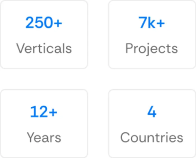
150+ minds across 4 countries. Join a culture of innovation, ownership & growth.
Rewire for AI
From machine learning to deep learning, from classification tools to overall process automation – our AI engineers will help you retool your existing system or enhance your company results.
Ship faster, scale smarter, built for product companies and SaaS teams
Our Latest Work
We strive hard to deliver result-driven digital solutions across the globe. Check out our case studies to get a glimpse of how we ideate, innovate, and create unconventional digital solutions according to the requirements of our clients.
Discover diverse and passionate insights from our tech enthusiasts. We collaborate across various sectors to streamline operations and drive innovation. Explore our rapidly growing collection of articles to see why we’re at the forefront of IT solutions.
The decision to move from Magento to Shopify is one of the most significant replatforming choices an ecommerce business can make. Magento is powerful, but its power comes with...
Accuracy gap is real: Traditional CPG forecasting carries a 25-40% MAPE error rate. AI-powered models bring that down to 8-15%, according to McKinsey research....
Real stories from global leaders who trusted us with their ideas.
Partnering with APPWRK helped us build a compliant and scalable healthcare platform, accelerating our time-to-market by 35%. Their team consistently delivered outstanding work.
Beesers
Digital Healthcare Client
Collaborating with APPWRK, Sportskeeda modernized its platform into a real-time sports engagement ecosystem, enabling seamless content delivery, scalable fan interactions, and high-velocity performance.
Sportskeeda
Sports & Entertainment Partner
Working with APPWRK was effortless. They captured our vision, maintained full compliance, and delivered a digital experience that built trust and elevated how customers interact with our fintech brand.
PayPenny
Fintech Partner
Working with APPWRK gave us confidence in adopting AI responsibly. Their team built a safe, intelligent bot that transformed how we engage with leads and helped us achieve measurable revenue growth.
IFB
AI Transformation Partner
Leveraging APPWRK’s digital expertise, Nemesis launched a scalable, compliant, and safe super app that connects content delivery, real-time communication, and logistics management within a single platform.
What Is Supply Chain Management Software and How Does It Work in Real Operations?
Supply chain management software (SCM) is the digital backbone of your logistics ecosystem. It connects suppliers, warehouses, manufacturers, transporters, and customers into one automated network, giving every stakeholder a centralised view of operations.
Instead of juggling disconnected systems, a custom SCM solution enables seamless data flow, automation, and analytics across your entire supply chain, from procurement to delivery.
How does Supply Chain Management Software Work in Real Operations
A purchase order is created and instantly shared with approved vendors.
Inventory tracking updates automatically as goods are received or dispatched.
IoT integration sends alerts when delivery routes change or delays occur.
AI forecasting adjusts restocking plans based on historical data and demand trends.
Reporting dashboards visualise performance, cost variances, and supplier reliability in real time.
And this goes beyond logistics; it’s about decision intelligence. With real-time analytical systems, managers can pinpoint inefficiencies, manage compliance, and make faster, data-backed calls.
According to Invesp, 79% of companies with high-performing supply chains see above-average revenue growth. That’s not a coincidence; it’s the result of digitisation, automation, and predictive planning working together.
Cost to Build a Supply Chain Management Software
The cost to build a supply chain software depends on your project’s size, integrations, and industry complexity. A basic supply chain software development cost starts around $9,000 for an MVP, while advanced enterprise software development can exceed $200,000. Here’s how the pricing typically breaks down.
1. Entry-Level (MVP) Supply Chain Software – $9,000 to $30,000
Best for: Startups or small businesses validating a supply chain workflow. Cost Range: $9,000 to $30,000
Your supply chain software cost depends on which modules you include, the technology stack, and how scalable your infrastructure needs to be.
What Factors Influence the Cost of Supply Chain Management Software?
The cost of supply chain management software depends on more than just how many features you build. These key cost drivers shape your budget and delivery timeline:
1. Feature Complexity & Customization
More complex modules (like real-time tracking or AI-powered planning) require advanced logic and custom workflows, directly increasing the software development cost.
2. Tech Stack & Architecture
Using modular SOA, cloud-native stacks, and reusable components can reduce rework and lower total SCM software cost. Frontend/backend framework choice also affects performance and scalability.
3. Scalability Requirements
Systems that need to scale across geographies, users, or partners will cost more upfront but deliver stronger long-term ROI.
4. Security & Compliance
Custom SCM software handling sensitive data must include security layers, compliance protocols, and regular audits, all of which add to your total cost estimation.
5. Data Migration & Integration
Migrating from legacy tools and syncing with ERP, CRM, or BI systems adds complexity. APIs, workflows, and compatibility checks impact time and cost.
6. Post-Launch Support
Ongoing maintenance, updates, and post-launch support typically add 15–25% yearly to your budget, depending on module scope and cloud infrastructure.
Why Is Supply Chain Management Software Crucial for Growing Businesses Today?
Global supply chains have never been this unpredictable, or this full of opportunity. Between eCommerce growth, raw material shortages, and constant logistics disruptions, businesses are realising that supply chain software isn’t just a support tool anymore, it’s a growth engine.
Software investments that enable supply chain leaders to transition from their traditional operations role to a strategic role will result in a five-year CAGR of 16.3%. Annual SCM software spend will reach $62 billion in 2028, up from $29 billion in 2023.
Forecast Assumptions:
Committed spend on multiyear SCM modernization programs will account for slightly more than 50% of the forecast growth, or $17 billion, through 2024 to 2028.
Manual management causes stockouts, overstocking, and delivery errors that directly hit revenue.
Complex supplier ecosystems now require real-time visibility and automation.
Rising labour and logistics costs demand predictive analytics and automated workflows.
Without data integration, supply chain teams operate in silos, slowing down decisions and inflating operational costs.
If you’re a founder, operations head, or logistics manager, you’re not just shipping goods anymore; you’re running a data-driven ecosystem that needs to be connected, automated, and scalable to compete.
What Are the Business Benefits of Supply Chain Management Software Across Industries?
Implementing custom SCM software isn’t only about lowering costs; it’s about clarity, control, and speed. Whether you’re in manufacturing, retail, healthcare, or logistics, the right supply chain management software transforms how you manage information, assets, and relationships across every stage of operation.
1. Real-Time Visibility from Warehouse to Last Mile
Monitor inventory, shipments, and supplier activity on one centralised dashboard. No more scattered spreadsheets or endless update calls, just clear visibility across the entire chain.
2. Predictive Demand Planning
Use AI analytics and forecasting algorithms to predict demand spikes, reduce excess inventory, and align production planning with real-time market trends.
3. Faster Order Processing & Fulfilment
Automation workflows reduce order-to-shipment time by up to 50%, improving delivery accuracy and customer experience.
4. Lower Operational Costs
Integrated SCM modules eliminate redundant effort across procurement, warehouse management, and order management systems, driving measurable cost savings.
5. Stronger Supplier & Vendor Relationships
Collaborative supplier management software with performance dashboards, alerts, and communication portals ensures transparency and timely issue resolution.
Bottom Line: Supply chain software isn’t replacing people; it’s freeing them to focus on what actually drives growth.
Does It Cost More to Build Supply Chain Software In-House or Outsource It?
A major factor in your supply chain software development cost is who builds it. The choice between in-house development and outsourced software development services can change your timeline, flexibility, and final cost by tens of thousands of dollars.
In-House Development Cost to Build Supply Chain Software
Average Cost: $100,000+ (plus salaries, benefits, and infrastructure)
Pros:
Direct control over every sprint and milestone
Strong domain knowledge retention
Easier communication between business and tech teams
Cons:
Longer development cycles
Higher upfront investment
Additional costs for recruitment and onboarding
Best for: Large enterprises developing proprietary IP or long-term supply chain planning software for internal use.
Outsourced Development of Supply Chain Management Software
Average Cost: $9,000 to $90,000 (based on complexity and region)
Pros:
Faster launch with flexible staffing
Access to niche SCM and logistics tech experts
Cost-effective for MVPs and modular rollouts
Cons:
Requires strong documentation and clear vendor management
Time zone differences can affect coordination.
Best for: Startups and mid-size companies looking for custom supply chain software at optimised costs.
Outsourcing to skilled offshore teams can lower your SCM software cost by up to 40% while improving speed-to-market, especially when leveraging open-source libraries, microservices, and cloud-native architectures.
What Is the Regional Cost Variation to Build Supply Chain Management Software Globally?
The cost to develop supply chain management software depends heavily on where your development team is located. Regional labour rates, infrastructure maturity, and project management styles can shift your total investment by 30 to 60%.
Region
Avg Hourly Rate to Build Supply Chain Management Software
Typical Cost Range to Build Supply Chain Management Software
North America
$80 to $150
$30,000 to $70,000
Western Europe
$70 to $120
$70,000 to $130,000+
Eastern Europe
$40 to $70
$35,000 to $85,000
South Asia (India)
$25 to $50
$9,000 to $45,000
LATAM
$35 to $60
$30,000 to $55,000
Building your custom SCM software with teams in India or Eastern Europe offers the best balance between affordability and engineering depth. These regions have strong expertise in modular architecture, cloud computing, and outsourced software development services, helping you cut costs without compromising scalability or security.
What Are the Different Types of Supply Chain Management Software You Can Build or Buy?
Not every business needs a full-scale SCM suite. Depending on your size, goals, and risk profile, you can choose from multiple types of supply chain software, from inventory management systems to AI-powered control towers.
Here’s a breakdown of the most common options, with their average supply chain software cost, features, and timelines:
1. Inventory Management Software
Functionality: Stock control, barcode scanning, and inventory optimisation. Cost: $9,000 to $40,000 Timeline: 4 to 8 weeks Examples: Zoho Inventory, Cin7, NetSuite SCM
2. Order Management Software
Functionality: Order routing, status updates, and multi-channel syncing. Cost: $12,000 to $45,000 Timeline: 5 to 9 weeks Examples: Brightpearl, Skubana
3. Warehouse Management Systems (WMS)
Functionality: Slotting, workflow automation, AR-assisted picking, and inventory counting. Cost: $20,000 to $70,000 Timeline: 6 to 10 weeks Examples: Oracle WMS, Manhattan WMS, Akanea XTENT
4. Transportation Management Software (TMS)
Functionality: Route optimisation, load planning, proof of delivery, and customs clearance. Cost: $15,000 to $50,000 Timeline: 5 to 8 weeks Examples: MercuryGate, Project44, Descartes
5. Procurement Software
Functionality: Vendor scoring, PO automation, and compliance tracking. Cost: $10,000 to $40,000 Timeline: 4 to 6 weeks Examples: GEP SMART, SAP Ariba
6. Supply Chain Planning Software
Functionality: Demand forecasting, scenario modelling, and AI-driven analytics. Cost: $30,000 to $90,000 Timeline: 8 to 12 weeks Examples: Kinaxis RapidResponse, Ganacos Planning
7. Manufacturing Inventory Software
Functionality: Batch tracking, quality control, and production planning. Cost: $15,000 to $60,000 Timeline: 5 to 10 weeks Examples: Fishbowl, Katana MRP, MRPeasy
8. Supply Chain Control Tower Software
Functionality: Real-time alerts, IoT data sync, and exception management. Cost: $50,000 to $150,000 Timeline: 10 to 16 weeks Examples: Logility Voyager, Winddle
9. Reverse Logistics Software
Functionality: Return handling, refurbishment tracking, and RMA automation. Cost: $10,000 to $30,000 Timeline: 3 to 6 weeks Examples: Optoro, ReverseLogix
10. Blockchain-Based Supply Chain Software
Functionality: Tamper-proof records, traceability, and cross-border verification. Cost: $40,000 to $120,000 Timeline: 12 to 18 weeks Examples: IBM Food Trust, VeChain, ShipChain
The right choice depends on your budget, scalability goals, and workflow complexity. Smaller businesses may start with a $30,000 to $50,000 custom SCM software, while enterprises often invest in modular, multi-integration SCM systems that evolve.
5 Best Supply Chain Management Software Solutions (With Features & Use Cases)
What Are the Must-Have Features to Build the Supply Chain Management Software?
If your goal is to make your supply chain faster, smarter, and more predictable, your supply chain management software must excel in four operational layers. These aren’t “nice-to-have” add-ons; they’re mission-critical modules that directly determine your cost efficiency, scalability, and business ROI.
1. Inventory Control Layer
This layer handles everything inside your warehouse: what’s in stock, what’s running low, and what’s on the way.
Inventory Management System (IMS)
Tracks every SKU, batch, and lot in real time. Features like reorder points, warehouse visibility, and barcode tracking make it the foundation of basic SCM software.
From checkout to delivery, this layer manages the flow of orders, invoicing, and fulfilment.
Order Management System (OMS)
Syncs orders from multiple sales channels, automates updates, and prevents duplication. Essential for modern eCommerce and retail SCM modules.
Shipping & Logistics Integration
Connects your system with 3PLs, freight carriers, and tracking APIs for accurate ETAs and real-time notifications. It’s the backbone of efficient order management systems.
3. Supplier Coordination Layer
This layer ensures your procurement, sourcing, and vendor management stay aligned.
Supplier & Vendor Management
Handles onboarding, documentation, and performance tracking for suppliers and partners.
Integrations (ERP, CRM, Accounting)
Maintains data consistency across finance, sales, and procurement through API integration, a must for any scalable enterprise software development project.
Where your supply chain shifts from reactive to predictive.
Real-Time Tracking (IoT Integration)
Monitor shipments, cold chain compliance, and fleet activity with IoT devices and GPS sync.
Demand Forecasting (AI/ML)
Predict future inventory needs using AI analyticsand predictive analytics for smarter sourcing and reduced wastage.
Reporting & Analytics Dashboard
Visualize performance KPIs, lead times, and cost breakdowns through intuitive dashboards.
User Authentication & Roles
Control data access and permissions for managers, vendors, and operators.
Each feature influences your supply chain software development cost, depending on its level of customisation, integrations, and tech stack complexity.
What Advanced Technologies Are Shaping the Future of Supply Chain Software?
Emerging innovations are redefining what businesses expect from supply chain software. With rising SCM software costs and evolving global risks, businesses are prioritizing scalability, real-time visibility, and AI-powered automation.
AI-Powered Supply Chain Software
AI and GenAI models are helping companies forecast demand, reduce software cost, and automate workflows using predictive planning engines. These tools can also create dynamic reordering strategies.
Businesses now simulate and test supply strategies in real time, reducing disruptions and improving production planning.
Blockchain-Driven Compliance
As supplier sourcing and traceability become more complex, blockchain ensures tamper-proof transparency.
Cloud-Native Modular SOA
A flexible tech stack using open-source services, frameworks, and libraries simplifies upgrades, enhances customization, and accelerates MVP delivery.
These advanced technologies allow enterprises to build custom SCM software that’s resilient, modular, and aligned with changing regulations and customer expectations.
What Are the Ongoing Costs of Maintaining SCM Software Post-Launch?
Once your supply chain management platform is live, it requires continuous optimisation, updates, and monitoring. These recurring costs usually add 15 to 25% to your yearly operating budget but are vital for reliability and compliance.
1. Maintenance & Bug Fixes
Regular performance checks, QA & testing, and optimisation to ensure uptime and prevent failures.
Upgrades to maintain regulatory compliance requirements like GDPR, FDA, or ISO standards, including data encryption and custom security layers.
4. Cloud Hosting & Infrastructure
Ongoing costs for servers, cloud services, and API usage. These depend on your data storage volume, real-time analytics, and deployment model (cloud vs on-premise).
5. User Training & Support
Post-launch support, user onboarding, and helpdesk services to ensure smooth adoption of procurement, inventory, and forecasting modules.
A well-planned maintenance and post-launch support strategy keeps your system efficient, future-ready, and compliant with industry standards.
How to Reduce the Cost of Developing Supply Chain Management Software Without Compromising on Quality
Reducing your supply chain software development cost isn’t about cutting features; it’s about cutting inefficiencies. The right approach can lower expenses by up to 40% while improving scalability, security, and long-term ROI.
Here’s how to build custom SCM software that delivers quality without overspending.
1. Start With an MVP
Begin with an MVP focused only on essential SCM modules, inventory management, procurement, and basic supply chain planning. Skip advanced analytics or integrations for the first phase. Once workflows are validated, expand to transportation management or supplier portals. This approach keeps your software costs lean and development time short.
2. Choose Cloud-Native Stacks
Cloud computing reduces upfront infrastructure costs and ensures smooth scaling. A cloud-based SCM platform eliminates server setup, simplifies deployment, and allows automatic updates, ideal for growing businesses with distributed teams.
3. Go Modular
A modular architecture (SOA or microservices) lets you build one supply chain software module at a time. Add-ons like TMS (Transportation Management System), WMS (Warehouse Management System), or supplier dashboards can be plugged in later. This modular approach reduces rework and aligns your investment with actual business growth.
4. Outsource to Specialised Teams
Hiring outsourced software development services that specialise in logistics or enterprise software development can save months of setup time. Experienced vendors often reuse proven UI components, frameworks, and workflows, cutting engineering overhead and reducing risk.
5. Leverage Open APIs
Use open-source services, API integrations, and prebuilt connectors for ERP systems, third-party logistics (3PL), or CRM tools. This approach avoids unnecessary custom coding and ensures your supply chain management software connects seamlessly with your existing stack.
Smart budgeting isn’t about spending less; it’s about spending right. A well-structured MVP, modular tech stack, and the right outsourcing strategy can make your custom SCM software both affordable and future-ready.
Why Eco-Friendly SCM Software Is No Longer Optional
Sustainability is becoming a non-negotiable requirement for modern enterprise software development. Regulatory pressures and conscious customers are pushing companies to adopt green supply chain software that tracks emissions, optimizes energy use, and enables circular logistics.
71 % of companies in Central & Eastern Europe said they are addressing sustainability in their supply‑chains.
Fleet Tracking & Management
Emissions monitoring modules help reduce carbon output in delivery chains.
Return Management & Recycling
Reverse logistics tools now support eco-friendly return workflows.
Smart Distribution Planning
Using real-time analytical systems to lower route miles, idle times, and energy use.
Dashboards & Reports & Analytics
Centralised reporting tools offer visibility into ESG metrics across every SCM module.
If your team is planning steps to develop a supply chain management software, sustainability should be a core factor in cost estimation and feature complexity. In fact, green SCM systems are often tied to investor KPIs and procurement evaluations.
Incorporating green design principles during the design and development stage helps lower total SCM software cost over time and strengthens long-term ROI.
What Are the Integration Paths for SCM Software With Existing ERP, CRM & BI Tools?
Modern supply chain software can’t function in isolation. To deliver true efficiency, it must connect with your existing ERP, CRM, and BI tools. Without proper integration, you risk data silos, process duplication, and escalating maintenance costs.
Here’s how integration typically works:
1. ERP Integration (SAP, Oracle, NetSuite)
Connect your procurement, finance, and production planning workflows into one synchronised system.
Sync purchase orders, invoices, and bills of material in real time.
Add generative AI tools to enhance forecasting, automate communication, and simulate disruptions.
Summarise supplier risks and performance.
Automate SOPs, documentation, and communication flows.
Tools: Azure OpenAI, GPT-4 API, Google Gemini, Cohere.
When combined with IoT integration and real-time analytics, AI creates a centralised view of your supply chain, making decisions faster, smarter, and more predictive.
How to Plan the Supply Chain Management Software Rollout in Phases
Building a complete supply chain management software in one go is risky and expensive. The most successful teams follow a phased rollout plan, ensuring each stage delivers measurable ROI before scaling further.
Phase 1: MVP with Core Functional Modules
Start with must-have features, inventory management, order fulfilment, and procurement.
Focus on reliability and usability first; integrate with warehouse management systems later.
Test internal workflows and UI/UX for accuracy and adoption before adding complexity.
Phase 2: ERP & External System Integration
Integrate with ERP systems, finance stacks, and CRM tools to unify data flow.
Add features like supplier portals, shipment tracking, and role-based permissions.
Ensure smooth API integration, security layers, and controlled access for external users.
Rolling out your supply chain software in phases allows continuous improvement, lower deployment costs, and better alignment with real-world feedback, ensuring your investment pays off long-term.
How Appwrk Can Help in Supply Chain Management Software Development
At Appwrk, we blend domain depth with agile execution to help companies build custom supply chain software that actually works for their business, not against it. Whether you’re scaling a logistics network or managing complex supplier ecosystems, we design systems that adapt, integrate, and deliver measurable impact.
What We Deliver
Domain-First Build Strategy Before a single line of code, our team maps your supply chain workflows, compliance layers, and integration requirements. This ensures your build aligns perfectly with real-world operations, not generic templates.
Modular Architecture We develop your SCM software in phases, launch fast with essential modules like inventory or procurement, then scale into multi-echelon planning, AI analytics, or blockchain-based workflows as your business grows.
Flexible Development Teams Our delivery model is built for flexibility. Scale up or down based on project needs while keeping costs predictable, quality consistent, and timelines tight.
Over the years, we’ve helped 50+ startups and enterprises modernise their supply chain systems through automation, visibility, and smart integration. If you’re planning your next move in digital supply chain transformation, Appwrk can get you there faster.
Founder’s Guide: What Every Non-Technical Buyer Should Know Before Investing in SCM Software
If you’re a founder, COO, or procurement head evaluating supply chain management software, here are four essential truths that will save you both time and money.
1. Build vs. Buy Is About Fit, Not Just Cost
Buying off-the-shelf tools might be faster, but they rarely fit your specific workflows. A custom SCM software solution offers flexibility, long-term ROI, and seamless scalability, especially if your operations evolve rapidly.
2. Start With Problems, Not Features
Don’t fall for shiny dashboards. Start with your real challenges, order delays, inaccurate forecasts, or supplier bottlenecks. The best supply chain software development services solve business pain points, not just check boxes.
3. Use an MVP to Validate Your Assumptions
Start with an MVP that includes only core modules like inventory management, supplier portals, and basic analytics. Add complex automation and integrations later, once you’ve validated ROI and user adoption.
4. Always Plan for Integration and Scalability
Your SCM system should grow with your business. Prioritise cloud-based SCM software with API-ready architecture and built-in compatibility for ERP, CRM, and finance tools. This ensures your platform stays relevant, not restrictive.
A founder’s job is to simplify complexity, not add to it. Smart planning early on prevents expensive rebuilds later.
FAQs
1. How much does supply chain management software cost? The cost to develop a supply chain software typically starts around $9,000 for MVP builds and goes up to $150,000+ for enterprise-grade systems, depending on features, hosting, and integration depth. Contact Appwrk to get you custom quote now.
2. How much does it cost to build supply chain software from scratch? A custom-built SCM software costs between $30,000 and $150,000, depending on modules like inventory tracking, real-time analytics, and AI forecasting.
3. What is the fee for supply chain management platforms? Subscription-based SCM software plans usually range from $50 to $500/month per user, while custom builds involve one-time development costs plus maintenance and post-launch support.
5. What are the modules included in supply chain management software? Common modules include inventory management, order fulfillment, warehouse management (WMS), transportation management (TMS), and supplier relationship management.
6. What drives the cost of SCM software? Key factors include feature complexity, customisationtech stack, third-party integrations, and compliance requirements.
7. What is the difference between off-the-shelf and custom SCM solutions? Off-the-shelf systems offer speed but limited flexibility. Custom SCM software is tailored for your processes, integrates with existing tools, and scales seamlessly as operations expand.
8. Is cloud-based SCM software more affordable than on-premise? Yes. Cloud-native SCM software can reduce infrastructure and maintenance costs by 25 to 40% while improving accessibility, scalability, and update speed.
Gourav Khanna is the Co-founder and CEO of APPWRK, leading the company’s vision to deliver AI-first, scalable digital solutions for enterprises and high-growth startups. With over 16 years of leadership in technology, he is known for driving digital transformation strategies that connect business ambition with outcome-focused execution across healthcare, retail, logistics, and enterprise operations.
Recognized as a strategic industry voice, Gourav brings deep expertise in product strategy, AI adoption, and platform engineering. Through his insights, he helps decision-makers prioritize market traction, operational efficiency, and long-term ROI while building resilient, user-centric digital systems.
Subscribe to APPWRK Blogs, We'll Do the Rest!
Get Blogs on UI/UX, Mobile Apps, Online Marketing, and Web development technology.
Unlock worthy and priceless suggestions from the masters of mobile and web app development