150+ minds across 4 countries. Join a culture of innovation, ownership & growth.
Rewire for AI
From machine learning to deep learning, from classification tools to overall process automation – our AI engineers will help you retool your existing system or enhance your company results.
Ship faster, scale smarter, built for product companies and SaaS teams
Our Latest Work
We strive hard to deliver result-driven digital solutions across the globe. Check out our case studies to get a glimpse of how we ideate, innovate, and create unconventional digital solutions according to the requirements of our clients.
Discover diverse and passionate insights from our tech enthusiasts. We collaborate across various sectors to streamline operations and drive innovation. Explore our rapidly growing collection of articles to see why we’re at the forefront of IT solutions.
The decision to move from Magento to Shopify is one of the most significant replatforming choices an ecommerce business can make. Magento is powerful, but its power comes with...
Accuracy gap is real: Traditional CPG forecasting carries a 25-40% MAPE error rate. AI-powered models bring that down to 8-15%, according to McKinsey research....
Real stories from global leaders who trusted us with their ideas.
Partnering with APPWRK helped us build a compliant and scalable healthcare platform, accelerating our time-to-market by 35%. Their team consistently delivered outstanding work.
Beesers
Digital Healthcare Client
Collaborating with APPWRK, Sportskeeda modernized its platform into a real-time sports engagement ecosystem, enabling seamless content delivery, scalable fan interactions, and high-velocity performance.
Sportskeeda
Sports & Entertainment Partner
Working with APPWRK was effortless. They captured our vision, maintained full compliance, and delivered a digital experience that built trust and elevated how customers interact with our fintech brand.
PayPenny
Fintech Partner
Working with APPWRK gave us confidence in adopting AI responsibly. Their team built a safe, intelligent bot that transformed how we engage with leads and helped us achieve measurable revenue growth.
IFB
AI Transformation Partner
Leveraging APPWRK’s digital expertise, Nemesis launched a scalable, compliant, and safe super app that connects content delivery, real-time communication, and logistics management within a single platform.
Nemesis
Super App Partner
Partner with Us for Smarter Vendor Management
Transform your vendor ecosystem with tailored, AI-powered solutions built for scale.
Building a Vendor Management System (VMS) starts at $10,000, with hourly rates ranging from $18 to $40/hour, depending on your development partner’s region and the complexity of features.
This cost guide is crafted specifically for CIOs, procurement heads, founders, and digital transformation leads who want to streamline vendor operations without overspending.
A VMS helps enterprises track vendors, manage contracts, automate compliance, and reduce manual workflows, making it a high-ROI investment for procurement-intensive industries like manufacturing, IT outsourcing, and healthcare.
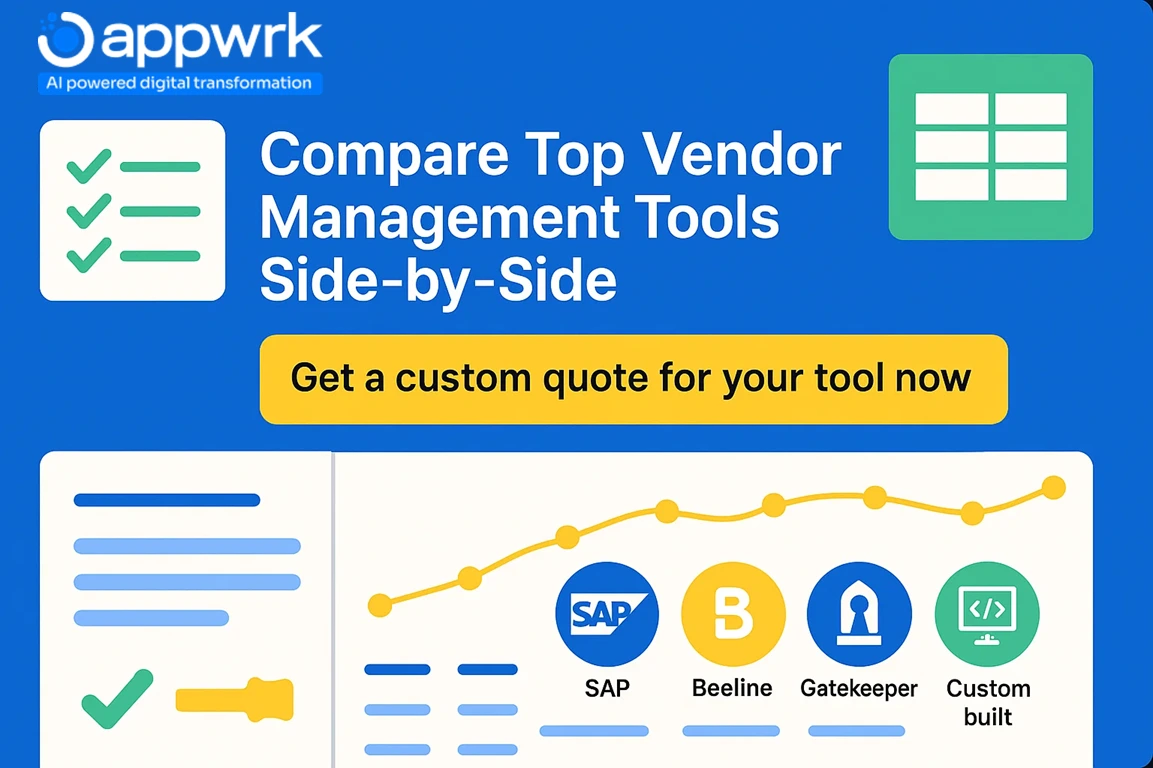
The blog explores the exact cost breakdowns, from discovery to deployment, and shows why custom systems often outperform off-the-shelf platforms like SAP Fieldglass or Beeline in long-term flexibility.
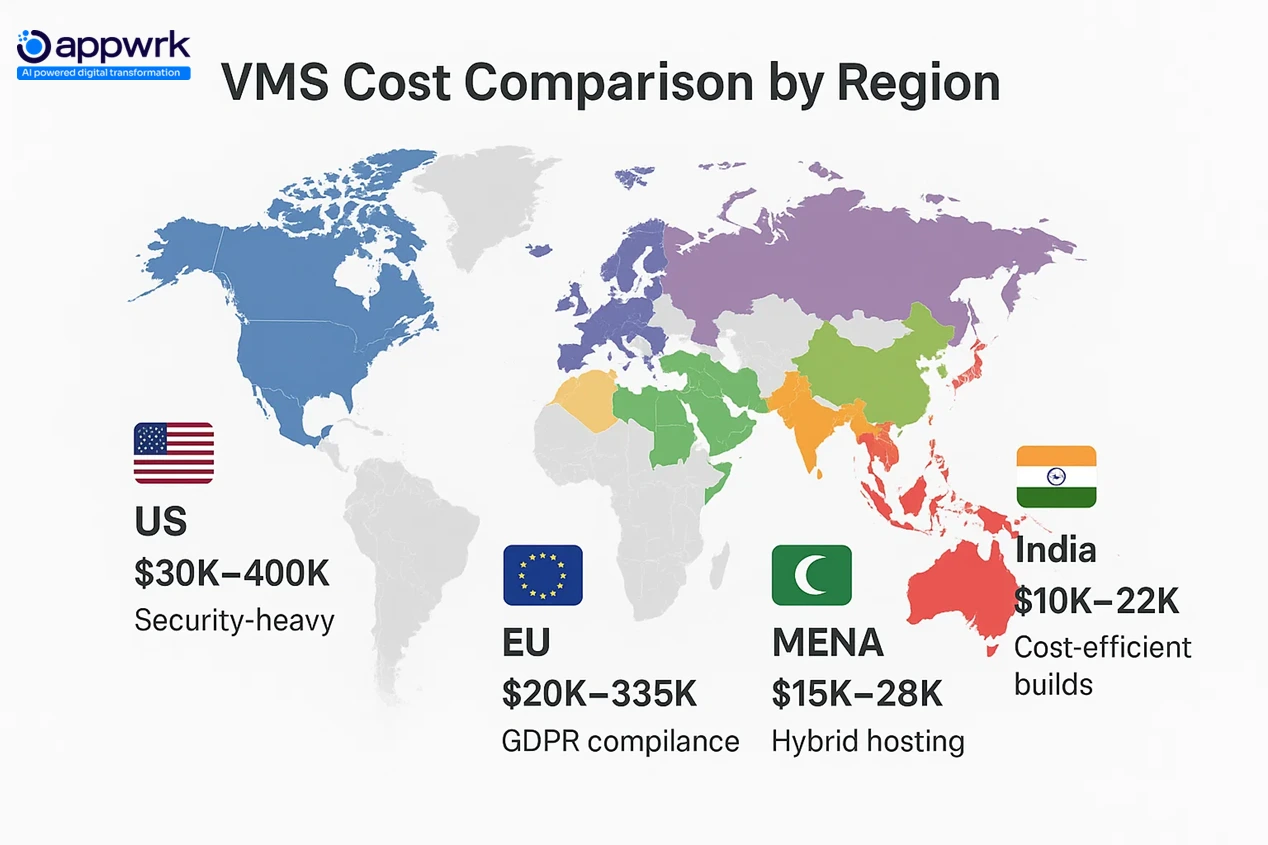
You’ll also get clarity on the key cost drivers, such as feature complexity, ERP integrations, and deployment model (cloud vs on-premise), and see how regional pricing (India, US, EU) compares in real-world builds.
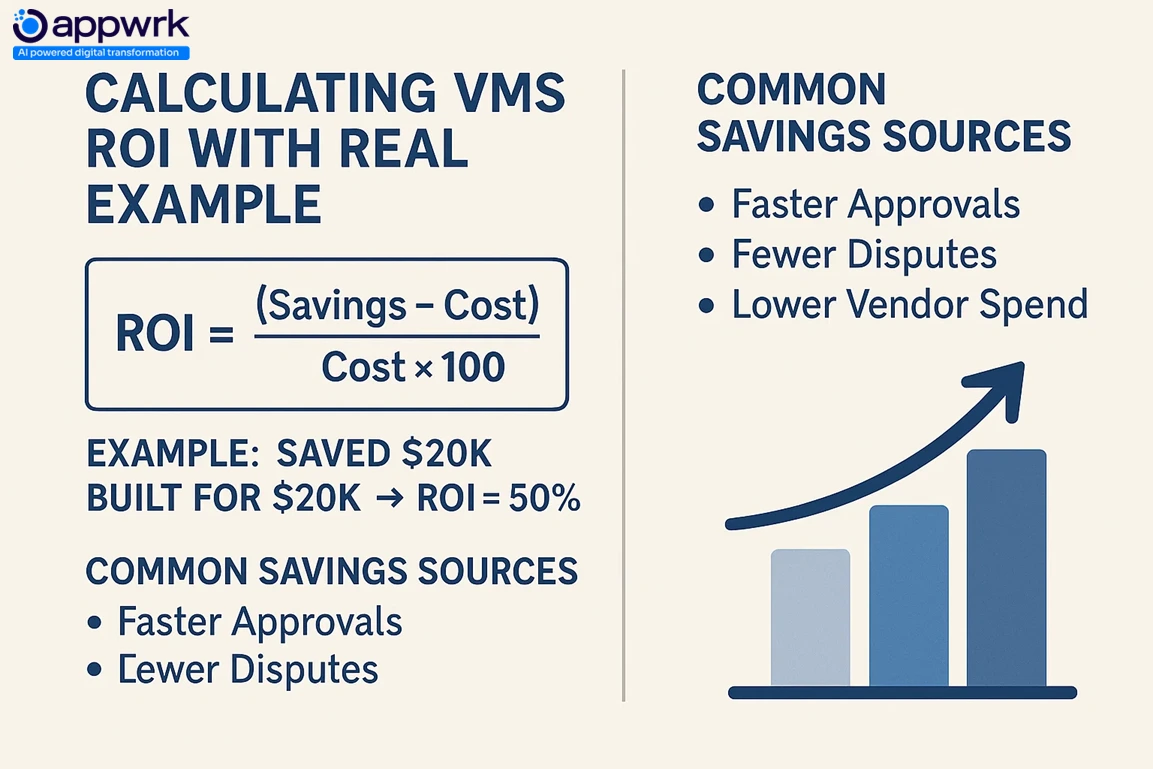
For decision-makers evaluating ROI, we’ve included a formula-driven approach to measure cost savings, vendor performance, and automation impact, plus a real case study showing 30% faster vendor approvals and 20% fewer disputes.
Lastly, we cover future trends like AI-powered onboarding, blockchain-enabled vendor contracts, and predictive analytics, so you can future-proof your system from day one.
Introduction: Why Vendor Management Systems Are Strategic Investments
Enterprises no longer view vendor management as a back-office task; it has evolved into a strategic function that drives procurement efficiency and operational excellence.
A Vendor Management System (VMS) centralises vendor data, automates onboarding, tracks compliance, and streamlines collaboration across teams. Whether managing ten or a thousand vendors, the cost to build a VMS today is tied not only to features but also to the return on investment (ROI) it delivers.
With VMS development costs starting around $10,000, businesses can now deploy tailored platforms that reduce administrative overhead, lower compliance risks, and accelerate vendor-driven growth.
This guide unpacks the real cost structure, ROI model, integration requirements, and implementation roadmap that matter most for decision-makers planning to adopt a VMS.
Understanding Vendor Management Systems (VMS): Definition, Scope & Industry Relevance
A Vendor Management System (VMS) is a centralised software solution that helps enterprises manage vendor relationships, track performance, maintain compliance, and automate procurement workflows. It minimises manual processes, enhances vendor accountability, and supports the scalability of multi-vendor networks.
The global vendor management software market is projected to grow from USD 17.19 billion in 2024 to over USD 55.17 billion by 2035, driven by increasing adoption in healthcare, manufacturing, and IT services. Interestingly, about 75% of VMS platforms now follow a vendor-funded model, with 20% using annual licenses and 5% supporting contingent workforce tracking, highlighting a shift toward usage-based value frameworks.
Organisations today rely on vendor management software and VMS tools to simplify procurement in complex ecosystems like healthcare, IT outsourcing, and global supply chains. As enterprise vendor data continues to expand, adopting a Vendor Management System has become a strategic necessity rather than just an operational improvement.
How Much Does It Cost to Build a Vendor Management System (VMS)?
The vendor management system development cost starts as low as $10,000 for a basic MVP. Depending on the scope, automation level, and integration requirements, the total investment can reach up to $40,000 for an enterprise-grade solution.
Whether you’re a startup looking for lean vendor tracking or an enterprise aiming for deep ERP integrations, here’s a clear cost breakdown:
Risk monitoring, performance dashboards, and integrations
$15,000 to $25,000
Enterprise-Grade
Large-scale vendor ecosystems
AI scoring, ERP sync, advanced compliance & automation
$25,000 to $40,000
Custom-built systems offer greater flexibility, scalability, and ownership, while off-the-shelf vendor management platforms like Beeline or SAP Fieldglass prioritise faster deployment but with limited customisation.
Factors Influencing Vendor Management System Development Cost
The vendor management system development cost depends on far more than just features. Scalability, integrations, hosting, and compliance all shape your total investment. Here’s what drives the price:
Platform Complexity: More workflows, modules, and dashboards increase development effort.
ERP & HRMS Integrations: Syncing with enterprise tools like SAP or Oracle adds setup and API costs.
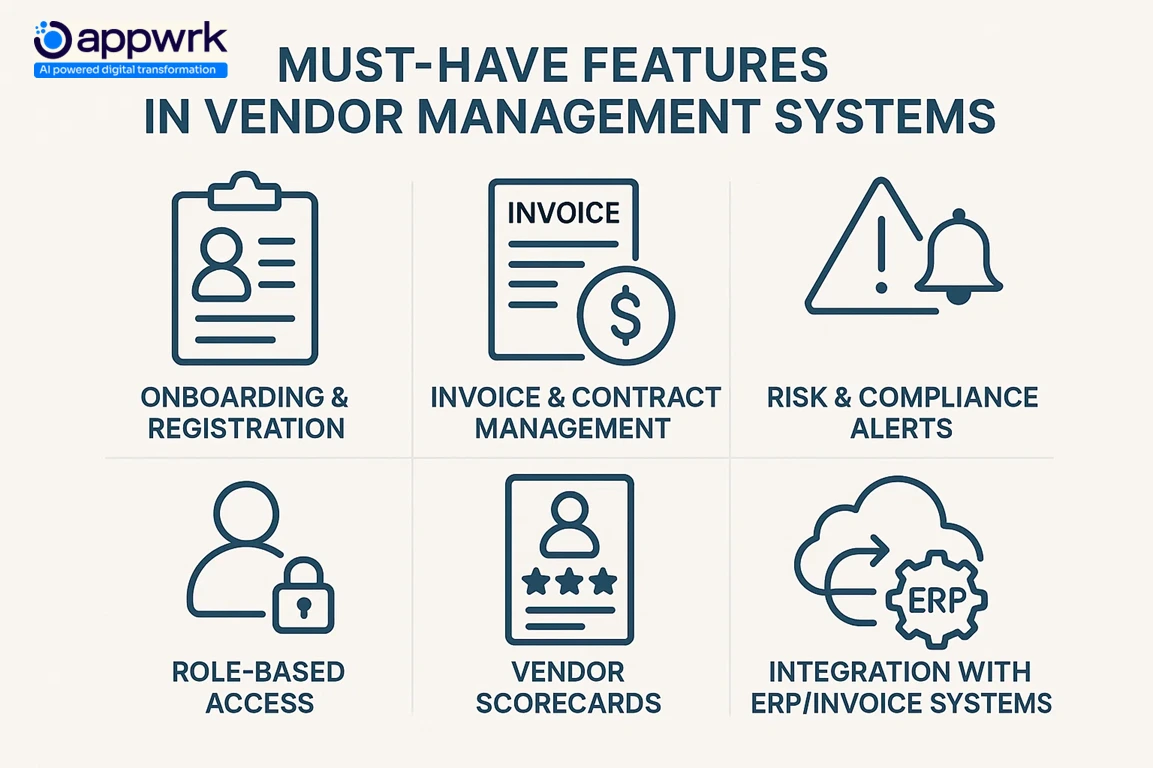
Security & Compliance: Role-based access, GDPR compliance, and encryption raise costs but ensure safety.
Maintenance & Upgrades: Continuous updates, uptime monitoring, and version control affect long-term spend.
Understanding these variables early helps estimate a realistic vendor management system cost aligned with your operational and compliance goals.
Vendor Management Platforms vs. Vendor Management Software: What’s the Difference?
While they’re often used interchangeably, vendor management software and vendor management platforms serve different purposes.
Vendor Management Software: Standalone vendor management tools focused on onboarding, compliance, or invoice tracking. Usually modular and integrated into ERP or CRM systems.
Vendor Management Platforms: End-to-end ecosystems that combine procurement management software, vendor risk scoring, supplier management system modules, and analytics dashboards.
In short:
Software = functional toolset
Platform = connected ecosystem
For organisations handling hundreds of vendors, a vendor management platform offers unified data, scalability, and stronger ROI.
Detailed Cost Breakdown by Stage of VMS Development
Each stage of vendor management software development adds unique value. Here’s how a typical custom VMS budget is distributed:
Predictive insights for smarter procurement decisions
Sustainable vendor relationships built on transparency and accountability
Streamlined ESG metrics and supplier collaboration
Long-term cost efficiency and ROI growth
The result? A unified vendor relationship management system that enhances control, governance, and performance across every vendor partnership.
Vendor Management System Integrations:
ERP, HR, and Procurement Ecosystem
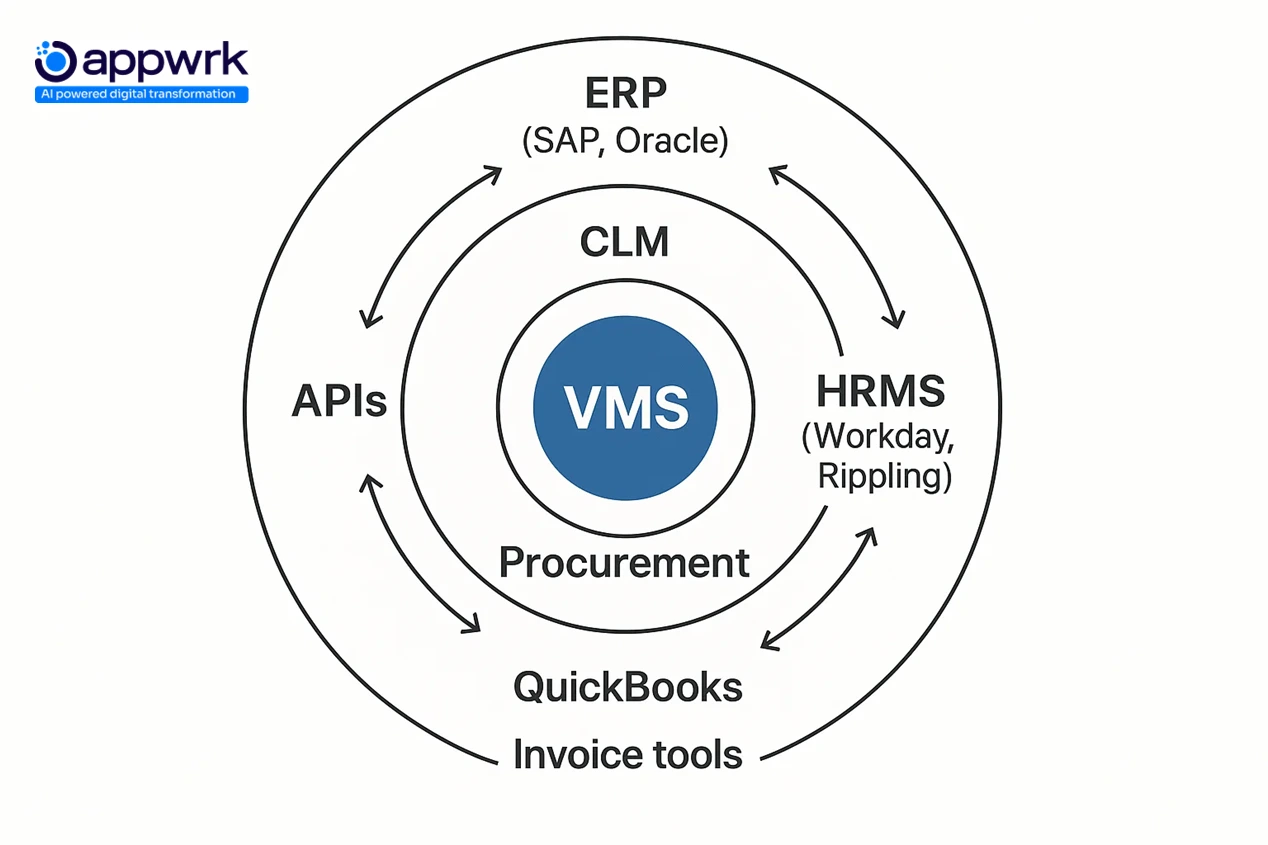
The real value of a vendor management platform multiplies when it integrates across your enterprise ecosystem. With open API and real-time sync, data moves seamlessly between systems, cutting redundancies and driving smarter decisions.
Common Integrations:
ERP Systems: SAP, Oracle, NetSuite, Microsoft Dynamics
Workforce Management Software: Kronos, Rippling, Zoho People
Procurement Tools: Coupa, Jaggaer, Ariba
Key Benefits:
End-to-end procurement visibility
Unified vendor scoring, budgeting, and spend analysis
Reduced reconciliation errors and improved data privacy compliance
How VMS Platforms Integrate with CLM Software (Contract Lifecycle Management)
A connected VMS to CLM ecosystem improves vendor accountability, risk control, and compliance documentation from onboarding to renewal.
Core Integration Points:
Clause Library Sync: Standardise legal terms and streamline approvals.
Milestone & Renewal Tracking: Automate payment triggers and compliance checks.
Negotiation History: Maintain audit trails of every change.
Renewal Alerts: Avoid contract lapses with real-time notifications.
By integrating vendor management software with CLM tools, businesses strengthen vendor governance, ensure transparency, and minimise contract risk.
Vendor Management System Development Timeline & Team Composition
The average vendor management software development project takes 4to6 months. Agile execution ensures fast delivery without compromising quality or compliance.
Custom Builds: Offer tailored workflows, flexible integrations with ERP, CRM, and procurement management software, and full ownership. Perfect for enterprises seeking compliance control, predictive insights, and long-term ROI.
Pre-Built SaaS: Platforms like SAP Fieldglass, Beeline, or Gatekeeper enable faster deployment with subscription models, but may limit customisation and create vendor lock-in.
Vendor-Funded: Vendor contributes a fee (common in staffing ecosystems).
Transaction-Based: Charged per vendor onboarded or invoice processed.
Understanding vendor management system pricing models helps align spend with your procurement strategy and risk tolerance.
ROI of a Vendor Management System (VMS): Quantifying the Payoff
A well-built vendor management systemdirectly improves profitability by cutting manual effort, streamlining procurement, and enforcing vendor accountability. In short, it turns fragmented processes into measurable value.
Where ROI Comes From:
Procurement Cost Reduction: Automation of RFQs, onboarding, and invoice reconciliation reduces time and resource costs.
ROI = ((60,000 to 30,000) to 20,000) / 20,000 × 100 = 50% in Year 1 With better analytics, automation features, and predictive insights, the return compounds every year.
Modern vendor management tools let you visualise this ROI through dashboards, performance analytics, and spend analysis, making impact measurement effortless.
Challenges & Risk Factors in Vendor Management System Development
Even as the vendor management system development cost becomes more accessible, several challenges can derail implementation if ignored early.
Legacy System Integration: Older ERP or HR tools without open APIs require extra architecture effort.
Vendor Onboarding Delays: Vendors may resist adopting new systems without a clear value exchange.
Change Management: Teams may resist process restructuring; proactive training is essential.
Data Privacy & Compliance Risks: Poor data governance can lead to audits and penalties under GDPR compliance or HIPAA.
Early risk mitigation, structured change management, and integration testing ensure smoother deployment and stronger buy-in.
Compliance, Data Privacy & Risk Management in Vendor Management Systems
Every vendor management platform today must be compliance-ready by design. Non-compliance isn’t just risky, it’s expensive.
Key Compliance Standards:
GDPR: Required for any EU-linked vendor or database.
SOC 2 & ISO 27001: Critical for enterprise-grade data privacy compliance.
Vendor Data Controls: Role-based access, encryption in transit and at rest.
Compliance Audit & Documentation: Maintain complete traceability through audit trails.
Risk Mitigation Features:
Vendor risk profiling and continuous monitoring.
Tiered alerts for compliance breaches.
Secure vendor database and document versioning.
Embedding these early ensures regulatory alignment, transparency, and vendor governance at scale.
Predictive Simulation Tools: Forecast performance and vendor risk to guide procurement decisions.
Autonomous Vendor Workflows: Multi-agent systems automating renewals and scorecards.
IoT & Edge Integration: Real-time tracking in manufacturing and logistics ecosystems.
Outcome-Based Pricing Models: Shift from licenses to value-linked, subscription model billing.
Global Governance Frameworks: Multi-currency, region-specific compliance layers for cross-border vendors.
The future of vendor management software development is clear, smarter, faster, and built around cost efficiency, vendor innovation, and measurable outcomes.
AI in Vendor Management Systems: From Risk Detection to Smart Approvals
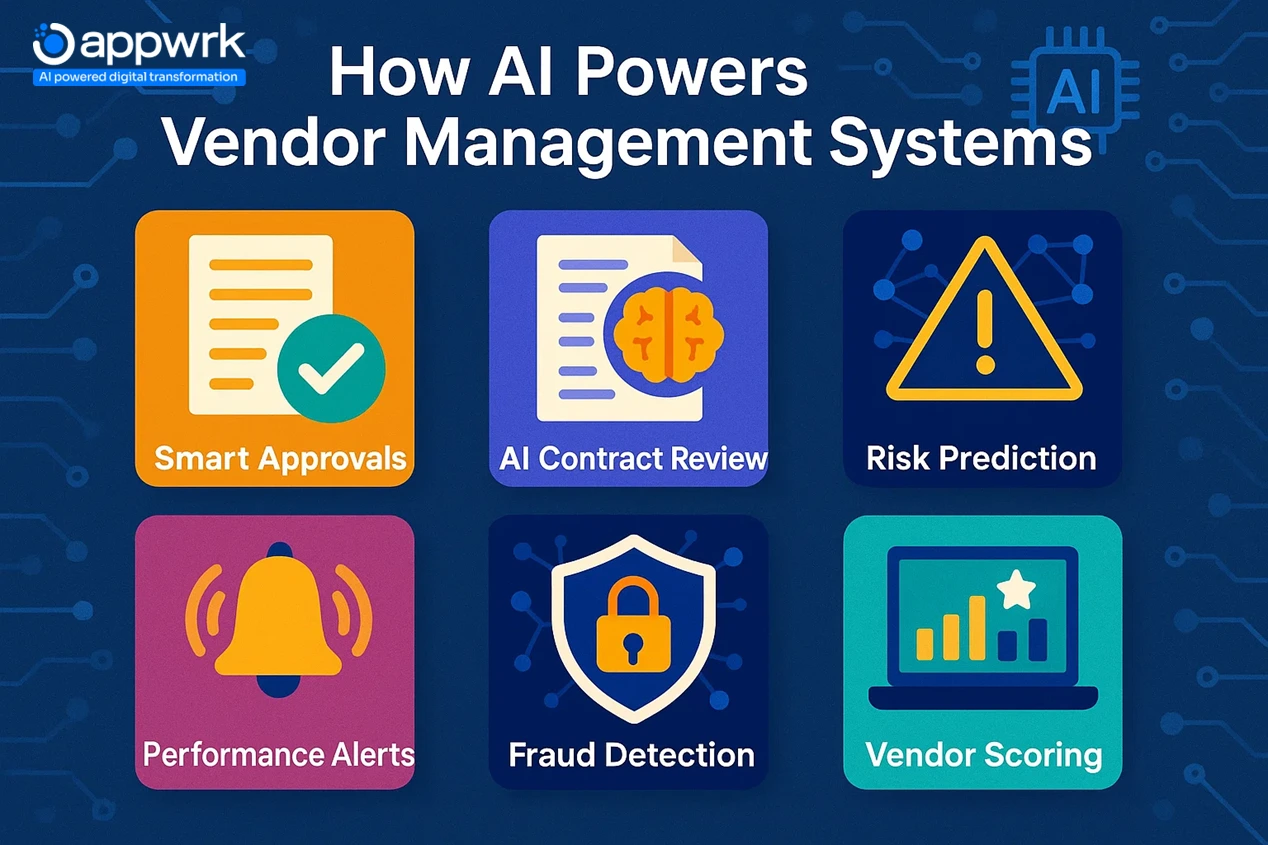
AI is reshaping how modern vendor management systems function, turning them from passive tracking tools into proactive engines for vendor governance and operational control.
Key Use Cases in AI-Driven Vendor Management Solutions:
AI Contract Review: Automatically extract clauses, flag anomalies, and match contracts to internal policies using NLP and ML algorithms.
Performance Anomaly Detection: Spot deviations in pricing, delivery timelines, or SLAs using real-time data and predictive analytics.
Vendor Risk Scoring: Machine learning models assess supplier risk through past performance, compliance issues, and external data feeds.
By embedding AI directly into vendor management tools, enterprises achieve continuous monitoring, faster decisions, and smarter procurement management software outcomes, with measurable ROI and reduced compliance risk.
Choosing the Right Vendor Management System Vendor or Development Partner
Selecting a vendor management software company is a strategic decision, not just a tech purchase. The right partner ensures your system scales, integrates seamlessly, and delivers cost efficiency over time.
Pro Tip: Go for a partner that adapts both platform and pricing to your procurement model. Hybrid builds often balance flexibility with vendor relationship management control.
How Appwrk Helps Enterprises Build Vendor Management Systems
At Appwrk, we help enterprises and startups design and implement cloud-based vendor management systems that blend scalability, automation, and transparency.
Our Core Strengths:
Strategic Consulting & Vendor Governance: We collaborate with founders, CTOs, and procurement heads to architect workflows and define compliance frameworks that align with business goals.
ERP, CRM & Payment Integrations: From SAP and Oracle to workforce management platforms and payment gateways, our systems connect your entire ecosystem.
AI-First, Secure Architecture: Every build includes AI-powered scoring, compliance audits, and smart contract automation, ensuring data privacy compliance and risk mitigation.
Transparent Pricing & Ongoing Support: Our milestone-based vendor management system pricing ensures clarity from start to scale.
Whether you’re building from scratch or modernizing legacy systems, Appwrk delivers vendor management services designed for global growth and sustainable performance.
Founder’s Guide: Building a Scalable Vendor Management Platform
If you’re scaling across regions or verticals, your vendor management platform should do more than automate; it should enable digital transformation and governance at scale.
Core Principles:
Business-Aligned Architecture: Map your vendor workflows to procurement goals, compliance structure, and risk appetite.
Modular, Multi-Region Deployment: One build that adapts to regional data laws, currencies, and ESG reporting needs.
Vendor Performance KPIs: Track metrics like Vendor Risk Index, Compliance Score, and Cost-to-Serve, turning data into actionable strategy.
When executed well, your VMS becomes the backbone of vendor partnerships, supplier collaboration, and long-term operational efficiency.
FAQs
Q1. What’s the average cost to build a Vendor Management System? Basic builds start at $10,000, while enterprise-grade systems range from $25,000 to $40,000, depending on scope, integrations, and compliance needs.
Q2. How long does vendor management software development take? On average, 4–6 months, including discovery, build, and testing.
Q3. Can a custom VMS integrate with SAP Fieldglass or Beeline? Yes, most SaaS-based solutions support open API integration with platforms like SAP Fieldglass, Beeline, Gatekeeper, and Zycus.
Q4. What’s the difference between a VMS and an Execution Management System? VMS manages vendors, contracts, and compliance. Execution systems handle transactional workflows like order fulfillment.
Q5. How can workforce management vendors enhance VMS outcomes? Connecting vendor data with staffing analytics, it enables full-cycle visibility from onboarding to invoice.
Q6. What features should healthcare vendor management systems include? HIPAA compliance, credential tracking, and detailed audit trails.
Q8. Who are the top vendor management system companies? SAP Fieldglass, Beeline, Gatekeeper, Coupa, Zycus, and Appwrk lead the market for supplier management software and custom VMS builds.
Q9. How do I calculate VMS ROI? Use: ROI = (Savings – Cost) / Cost × 100. Track gains in vendor compliance, reduced disputes, and time saved.
Q10. Why choose Appwrk for vendor management software development? Because we combine strategic consulting, agile builds, AI-driven vendor management solutions, and clear cost models, we help businesses achieve scale, visibility, and sustained ROI.
Gourav Khanna is the Co-founder and CEO of APPWRK, leading the company’s vision to deliver AI-first, scalable digital solutions for enterprises and high-growth startups. With over 16 years of leadership in technology, he is known for driving digital transformation strategies that connect business ambition with outcome-focused execution across healthcare, retail, logistics, and enterprise operations.
Recognized as a strategic industry voice, Gourav brings deep expertise in product strategy, AI adoption, and platform engineering. Through his insights, he helps decision-makers prioritize market traction, operational efficiency, and long-term ROI while building resilient, user-centric digital systems.
Subscribe to APPWRK Blogs, We'll Do the Rest!
Get Blogs on UI/UX, Mobile Apps, Online Marketing, and Web development technology.
Unlock worthy and priceless suggestions from the masters of mobile and web app development