






5.0

"APPWRK IT Solutions Private Limited has demonstrated high confidence in their commitment..."





Human Capital Management
Python Django, React.js (TypeScript), OpenAI, Groq LLM (Llama3-70B)
The modern engineering talent ecosystem is undergoing a fundamental shift. As organizations compete for highly skilled technical professionals, hiring teams are expected to evaluate candidates with greater depth, speed, and accuracy than ever before. Yet the traditional interview model, dependent on manual judgement, static question banks, and disconnected coding assessments, remains difficult to scale and often fails to capture true technical capability.
These limitations become even more pronounced as enterprises expand their digital footprints and diversify their technology stacks. Screening processes struggle to keep pace with evolving skill demands, while inconsistencies in interviewer-led evaluations create gaps in fairness, objectivity, and decision reliability. At scale, this translates into slower hiring cycles, higher operational overhead, and reduced confidence in candidate fit.
To address this need, APPWRK built an AI-Powered Interview Intelligence & Assessment Engine that integrates resume understanding, adaptive interview generation, and real-time coding evaluation into a single workflow. Leveraging advanced NLP and high-performance LLM inference, the platform replaces manual fragmentation with a unified, intelligent assessment layer, enabling organizations to execute precise, scalable, and technically consistent hiring decisions.
Reliance on individual judgment and static questioning created uneven assessment depth, limited repeatability, and significant variability across engineering roles, making it difficult to maintain consistent evaluation standards at scale.
Conversational Q&A and coding evaluations operated in isolated workflows, introducing operational friction, elongating decision cycles, and preventing hiring teams from forming a unified, end-to-end perspective of candidate capability.
Diverse technical domains, spanning Python, ML, Full-Stack, QA, and DevOps, made it challenging to uphold standardized evaluation frameworks. Assessment quality often fluctuated based on the interviewer’s expertise and availability.
Traditional screening models emphasized correctness over depth, providing minimal visibility into reasoning, code architecture, efficiency, and contextual problem-solving, critical signals required for accurate competency assessment.
Growing candidate pipelines intensified pressure on interview teams. Manual evaluations, iterative clarifications, and code reviews created throughput bottlenecks that slowed hiring velocity and impeded organizational agility.
APPWRK designed an NLP-powered ingestion engine capable of transforming uploaded resumes into structured competency profiles. By extracting skills, project contexts, domain experience, and role alignment, the system builds an intelligence baseline that guides the interview flow for each candidate.
Leveraging advanced LLM inference, the platform generates adaptive, contextually aware interview questions in real time. Each response influences the next prompt, enabling a natural conversation flow that mirrors a human-led technical interview while maintaining consistency, depth, and role relevance across engineering domains.
To unify technical assessment within a single workflow, the engine includes a built-in coding interface coupled with LLM-driven code analysis. Beyond correctness, the evaluation examines code structure, efficiency, readability, and reasoning, providing a more holistic view of candidate capability than traditional coding tests.
All conversational and coding signals feed into an integrated scoring model that synthesizes relevance, competency, problem-solving aptitude, and code quality. Recruiters receive an automatically generated summary that provides clear, objective insights to support faster, data-backed decisions.
The architecture supports Python, machine learning, QA, full-stack, and other engineering tracks without requiring separate interviewer expertise. This ensures repeatable, standardized evaluations at scale while reducing dependency on subject matter availability during early screening stages.
Streamlines first-round evaluation across diverse engineering roles, ensuring uniform assessment quality while reducing interviewer intervention at scale.
Tailors questions and coding tasks to match the unique depth, difficulty, and expectations of each technical domain, enabling precision-aligned evaluation.
Supports large candidate pipelines through parallel, automated interviews, allowing organizations to maintain throughput during rapid hiring cycles.
Integrates conversational and technical evaluation within a single workflow, eliminating fragmentation and strengthening decision coherence.
AI-orchestrated assessments deliver uniform depth, calibrated scoring, and reduced evaluator variance, strengthening governance, fairness, and decision integrity across technical hiring workflows.
Automated screening eliminates manual interview cycles, streamlines evaluator bandwidth, and enhances process throughput, allowing talent teams to focus on strategic selection and workforce planning.
A unified Q&A and coding framework compresses assessment timelines, elevates recruitment agility, and improves conversion across high-demand engineering roles in competitive talent markets.
LLM-driven analysis generates multidimensional insight into reasoning, code quality, and domain proficiency, enabling data-rich decision-making and more accurate role-fit evaluation.
A modular, domain-agnostic design supports multi-role expansion, high-volume processing, and rapid capability extension, establishing a durable foundation for enterprise talent transformation.

 April 14, 2026
A unified SaaS insurance platform that centralizes claims, policy management, and analytics to streamline end-to-end insurance operations.
 January 7, 2026
A centralized digital platform enabling Unilever to standardize frontline training, certification, and compliance across global manufacturing operations.
 January 7, 2026
A unified logistics, supply chain, and transportation management platform built to power enterprise-scale freight operations across multiple brands and partners.
 January 6, 2026
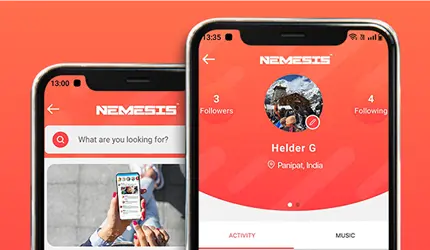
A scalable dual-panel social commerce super app that unifies content discovery, marketplace transactions, payments, and logistics into a single platform.
 December 29, 2025
Built a scalable cloud-based file upload, processing, and delivery platform to improve reliability, performance, and operational resilience for high-volume application workloads.
 June 14, 2026
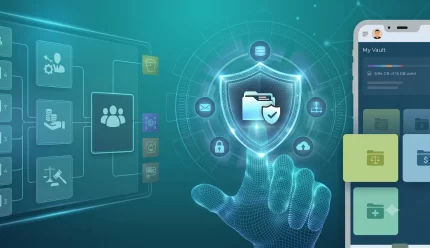
DocuGuardian extended its secure document platform so organizations can onboard and manage their own clients on a hardened AWS foundation.
 April 22, 2026
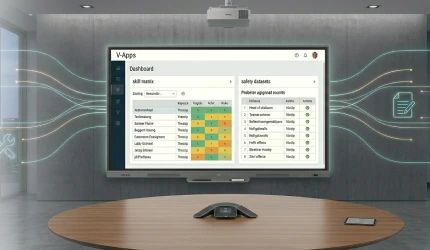
A multi-tenant SaaS platform centralizing workforce, resource, and cross-organization operations with governed access control and lifecycle management.
 April 22, 2026
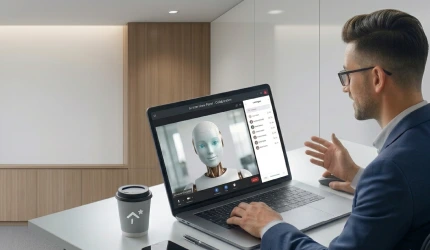
An AI-powered career enablement platform delivering ATS-optimized resumes, personalized job discovery, and skill gap insights within a unified candidate experience.
 April 17, 2026
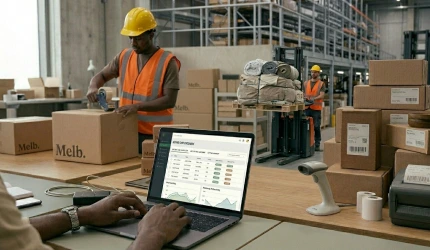
A fully integrated Inventory Management System that consolidated all channel operations into a single centrally governed platform.
 April 15, 2026
A fully integrated, scalable commerce platform enabling dynamic product content, subscription revenue and seamless wholesale operations for a growing D2C health brand.
 January 5, 2026
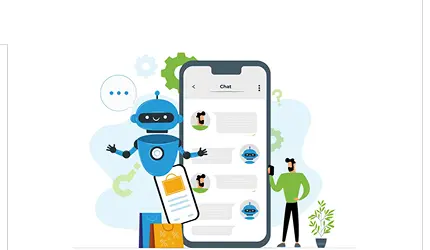
AI-powered, multi-modal conversational sales assistant transforming digital product discovery and assisted selling for a leading consumer appliance brand.
 December 31, 2025
Engineering an enterprise-grade, developer-first charting and data visualization SDK used to embed high-performance interactive charts across products and applications.

 December 25, 2025
An AI-powered trading platform enabling intelligent strategy creation, automated execution, and real-time performance insights for modern digital traders.
 December 23, 2025
A unified enterprise analytics platform that consolidates operational data across systems into real-time, role-based dashboards, enabling faster decision-making and consistent performance visibility across locations.
 December 11, 2025
A scalable digital experience platform enabling Sportskeeda to deliver high-performance content, real-time engagement, and seamless user journeys across global audiences.
 December 10, 2025
An AI-powered conversational agent that enables intelligent, context-aware customer interactions through natural language understanding, real-time responses, and seamless multi-channel integration.

Odds and Ends Supply LLC
Appwrk delivered exactly what we needed a custom Shopify app built with speed, precision, and deep expertise. As a non-technical founder, I especially appreciated how their team guided me through every step and handled all complexities seamlessly. Highly responsive, reliable, and great to work with. I’d strongly recommend them for any Shopify development needs.

ICT Specialist
The communication with the web development team has been great. They respond quickly.

Founder & CEO, Nemesis
The team is very good, very efficient, and they leave me good review videos of the work they’ve done, and they help out a whole lot.
Director, PlusDigital
The product is still under development, but the client has been pleased with APPWRK IT Solutions’ efforts. The team communicates daily and responds quickly via Skype or email. Their high level of professionalism allows them to produce quality work. They’ve also impressed with their coding skills.
Owner, ECONESS Store
APPWRK IT Solutions Private Limited consistently delivers work on time and promptly addresses concerns, requests, and feedback.
Kargo
The company is satisfied with APPWRK IT Solutions Private Limited’s provided engineers. Most of the team was highly communicative and helpful throughout the partnership. Overall, their ability to supply developers across South East Asia stands out.

"APPWRK IT Solutions Private Limited has demonstrated high confidence in their commitment..."
"The team at APPWRK was proactive, transparent, and truly professional."
"They exceeded our expectations — on time, on budget, and with creativity!"
No empty sales pitches, just practical solutions
tailored to your business.
Let us know so we can improve the quality of the content on our pages