150+ minds across 4 countries. Join a culture of innovation, ownership & growth.
Rewire for AI
From machine learning to deep learning, from classification tools to overall process automation – our AI engineers will help you retool your existing system or enhance your company results.
Ship faster, scale smarter, built for product companies and SaaS teams
Our Latest Work
We strive hard to deliver result-driven digital solutions across the globe. Check out our case studies to get a glimpse of how we ideate, innovate, and create unconventional digital solutions according to the requirements of our clients.
Discover diverse and passionate insights from our tech enthusiasts. We collaborate across various sectors to streamline operations and drive innovation. Explore our rapidly growing collection of articles to see why we’re at the forefront of IT solutions.
The decision to move from Magento to Shopify is one of the most significant replatforming choices an ecommerce business can make. Magento is powerful, but its power comes with...
Accuracy gap is real: Traditional CPG forecasting carries a 25-40% MAPE error rate. AI-powered models bring that down to 8-15%, according to McKinsey research....
Real stories from global leaders who trusted us with their ideas.
Partnering with APPWRK helped us build a compliant and scalable healthcare platform, accelerating our time-to-market by 35%. Their team consistently delivered outstanding work.
Beesers
Digital Healthcare Client
Collaborating with APPWRK, Sportskeeda modernized its platform into a real-time sports engagement ecosystem, enabling seamless content delivery, scalable fan interactions, and high-velocity performance.
Sportskeeda
Sports & Entertainment Partner
Working with APPWRK was effortless. They captured our vision, maintained full compliance, and delivered a digital experience that built trust and elevated how customers interact with our fintech brand.
PayPenny
Fintech Partner
Working with APPWRK gave us confidence in adopting AI responsibly. Their team built a safe, intelligent bot that transformed how we engage with leads and helped us achieve measurable revenue growth.
IFB
AI Transformation Partner
Leveraging APPWRK’s digital expertise, Nemesis launched a scalable, compliant, and safe super app that connects content delivery, real-time communication, and logistics management within a single platform.
Nemesis
Super App Partner
Partner for Smarter Recruitment Systems
Transform your hiring strategy with AI-powered automation that improves quality, reduces costs, and scales with your business.
Organizations using AI RecruitmentPlatforms can reduce hiring costs by automating manual resume screening, interview coordination, and candidate pipeline management, cutting vacancy tax, shortening time-to-hire, and protecting revenue from unfilled positions.
AI recruiting platforms lower total recruitment costs by reducing recruiter time, external recruiting costs, advertising fees, and dependency on agencies while optimizing internal recruiting costs and ATS subscriptions through smarter automation.
Compared with traditional hiring, AI vs traditional recruitment cost comparisons show that recruiting software powered by machine learning and predictive analytics improves hiring quality, maintains candidate quality standards, and supports data-driven hiring decisions using real-time data metrics and analytics insights.
Modern platforms combine conversational AI, generative AI, and intelligent applicant tracking system workflows to enable personalized communications, optimize job board postings, and streamline candidate engagement at scale.
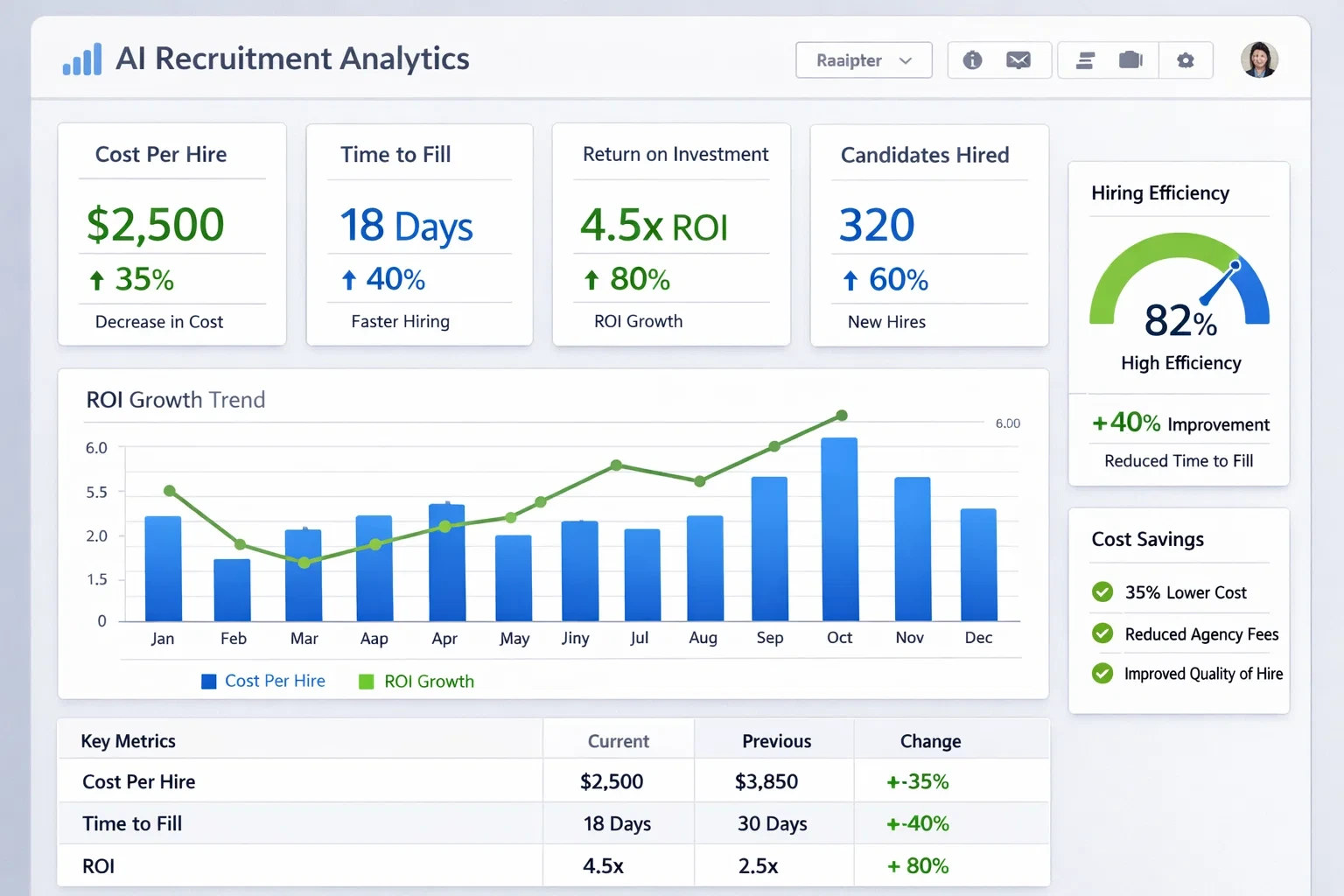
Companies tracking cost-per-hire and hiring efficiency before and after AI adoption consistently see measurable ROI improvements, stronger retention outcomes, and faster recruitment cycles, proving that AI recruiting boosts retention & ROI across enterprise and high-volume hiring environments.
This guide explains how AI recruiting platforms reduce recruitment costs, optimize candidate pipelines, improve hiring quality, and transform recruiting software performance across startups, enterprises, and agencies. It focuses on practical cost impacts, measurable efficiency gains, and the strategic role of AI in modern talent acquisition.
Understanding AI for Hiring: How AI Recruitment Platforms Are Cutting Hiring Costs
What is AI in Recruitment?
AI in talent acquisition refers to the use of artificial intelligence technologies such as machine learning, predictive analytics, and natural language processing to automate and enhance hiring workflows.
Instead of relying solely on manual screening and recruiter judgment, AI recruiting platforms analyze structured candidate data, optimize sourcing channels, and improve decision accuracy. This allows organizations to reduce time-to-hire, lower cost-per-hire, and improve hiring quality through data-driven processes.
AI in Recruitment has moved from simple automation to a core driver of efficient hiring. As cost-per-hire and time-to-hire rise, organizations are adopting recruiting software to streamline processes, strengthen hiring quality, and reduce the hidden cost of open roles & bad hires in 2026.
Recent LinkedIn research shows companies using AI tools hire faster, improve recruiter productivity, and maintain candidate quality in competitive markets.
AI recruitment platforms reduce recruitment costs by:
Automating manual resume screening and lowering recruiter time
Improving candidate matching accuracy
Speeding interview scheduling with personalized communications
Providing data metrics and analytics insights for data-driven hiring decisions
This shift helps businesses improve efficiency while proving that AI recruiting boosts retention & ROI across different hiring environments.
Why Are Hiring Costs Rising Across Enterprises, Startups, and Recruitment Agencies?
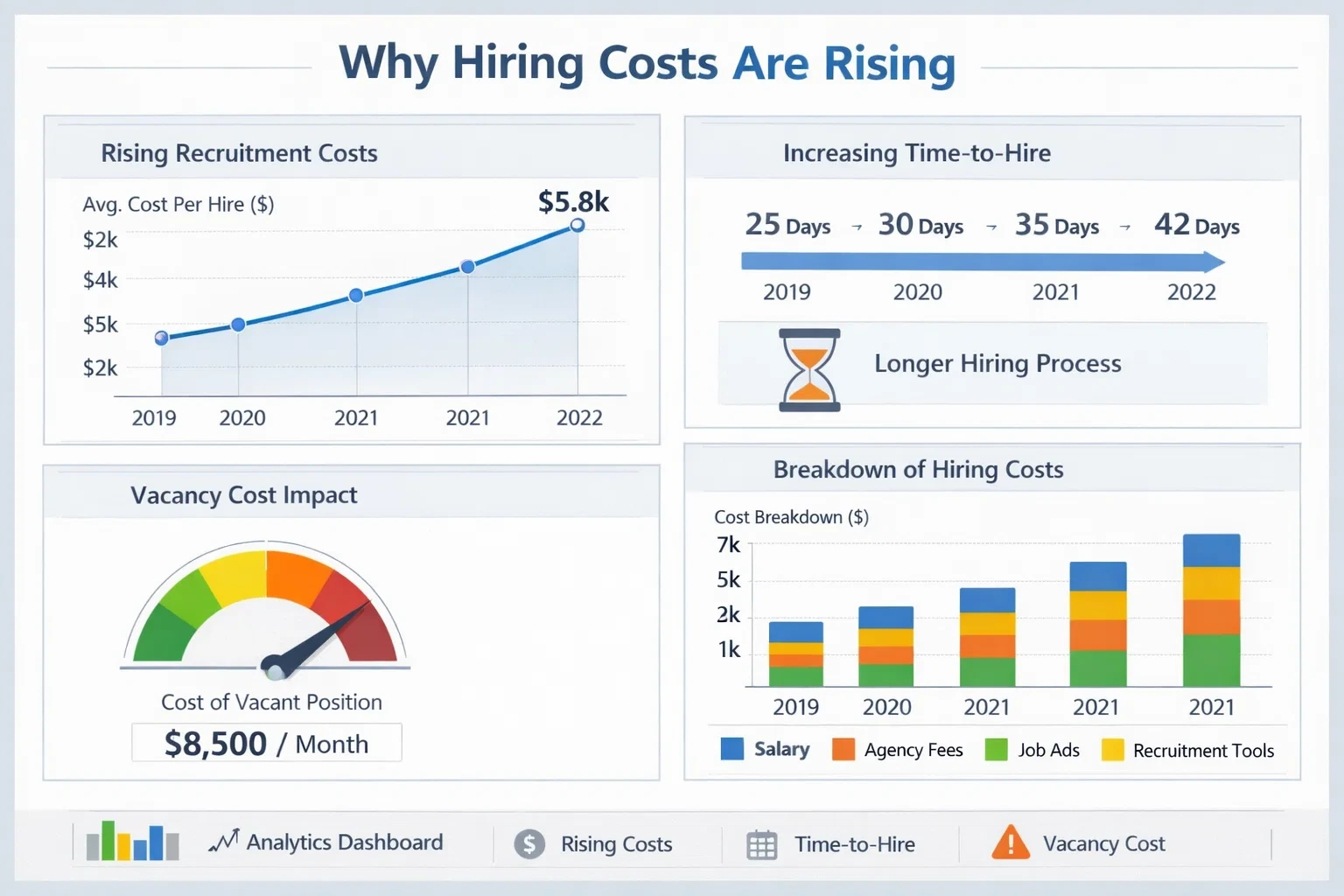
Hiring is becoming expensive because traditional recruitment models are inefficient. Longer hiring cycles, fragmented tools, and talent competition are increasing recruitment costs across industries, making modern recruiting technology a competitive necessity.
Rising Hiring Costs Across Markets
Cost-per-hire often exceeds expectations once hidden costs of recruitment are included, such as:
recruiter salaries
internal recruiting costs
external recruiting costs
advertising fees
ATS subscriptions
These factors together can represent the largest portion of your recruitment budget, especially for scaling organizations.
Increasing Time-to-Hire and Time-to-Fill
Longer hiring timelines increase vacancy costs and reduce productivity. Each extra week a role stays open adds a compounding vacancy tax on operations, output, and team performance.
The Financial Impact of Vacancy Costs
Unfilled roles slow projects, increase workload on teams, and reduce revenue potential. Companies that track candidate pipeline data metrics and analytics insights gain better control over hiring speed and cost efficiency.
The Hidden Cost of a Bad Hire
Poor hiring decisions increase rehiring, retraining, and productivity loss. Without structured evaluation systems, hiring quality declines and costs rise.
AI platforms reduce this risk by analyzing candidate data inside an applicant tracking system, improving decision accuracy and strengthening long-term hiring outcomes.
How Businesses Use AI in Recruitment to Improve Hiring Efficiency and Reduce Costs?
AI in Recruitment enables companies to reduce hiring friction by combining automation, machine learning, and real-time analytics insights across sourcing, screening, and selection. Instead of relying solely on human effort, organizations integrate recruiting software into an applicant tracking system to improve efficiency while maintaining hiring quality.
Automated Candidate Screening and Resume Parsing
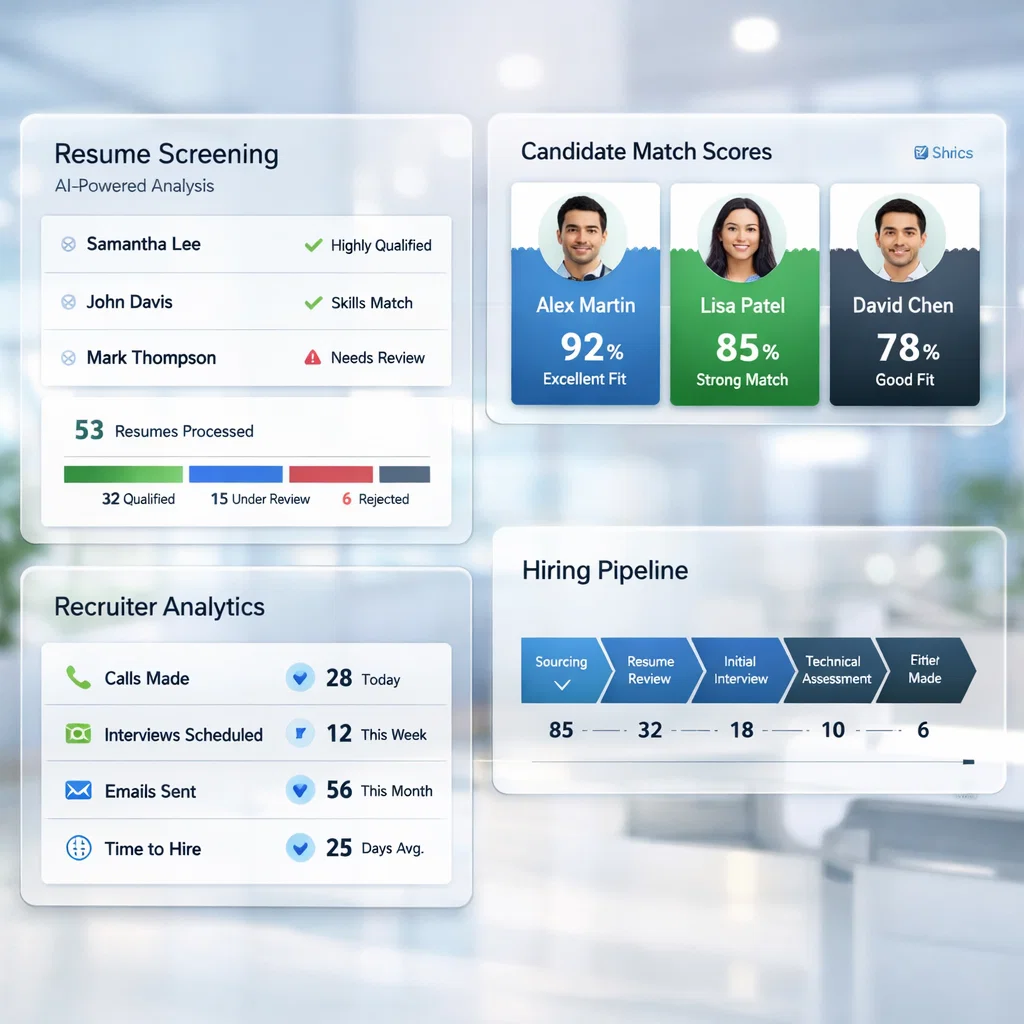
AI platforms reduce recruiter time by automating manual resume screening and parsing applications against job board postings and role requirements. Algorithms compare candidates to historical success data metrics, allowing teams to prioritize high-fit applicants faster.
This reduces internal recruiting costs, recruiter salaries tied to repetitive tasks, and delays that increase recruitment costs. Recruiters can focus on candidate engagement and personalized communications rather than manual filtering.
Intelligent Candidate Matching and Targeting
Advanced AI matching analyzes candidate pipeline data using predictive models and behavioral signals. This improves candidate targeting across global hiring goals and ensures teams maintain candidate quality while scaling recruitment volumes.
Stronger matching reduces bad hires, improves hiring quality, and minimizes attrition risk, helping organizations reduce the hidden cost of open roles & bad hires in 2026.
Conversational AI, Chatbots, and Faster Response Cycles
Chatbots streamline early-stage candidate communication by answering questions, scheduling interviews, and sending updates. Faster response times improve candidate experience and prevent drop-offs caused by delays.
Automated communication also lowers external recruiting costs by reducing reliance on agencies and manual coordination.
For example, businesses can apply similar talent-focused automation principles when evaluating interview readiness and developer skills, as seen in this mobile developer interview questions insights guide
Data-Driven Recruitment Metrics and Real-Time Insights
Modern AI platforms track cost of recruitment, time-to-hire, engagement, and pipeline velocity through structured analytics insights. These data-driven hiring decisions help teams optimize sourcing channels before delays create vacancy tax pressure on business operations.
Organizations using structured models can split hiring tasks into automation, human judgment, and hybrid workflows, improving efficiency while preserving decision quality.
Reducing Dependency on External Agencies and Controlling Recruitment Industry Costs
AI adoption reduces spending on agency commissions, advertising fees, and fragmented ATS subscriptions. This is especially valuable when these expenses represent the largest portion of your recruitment budget.
As hiring complexity increases, automation becomes a competitive necessity for organizations that want scalable recruitment without rising overhead.
By integrating AI recruiting tools into hiring workflows, businesses reduce hidden costs of recruitment, accelerate hiring speed, and improve long-term retention outcomes. The result is measurable savings, stronger candidate fit, and a structured hiring system where AI recruiting boosts retention & ROI.
AI Use Cases Across the Recruitment Lifecycle
AI in Recruitment supports every stage of the hiring journey, from workforce planning to final hiring decisions. Instead of focusing only on automation, modern recruiting software enhances strategy, accuracy, and candidate experience throughout the entire lifecycle.
1. Workforce Planning & Demand Forecasting
Predictive analytics and data metrics help organizations forecast hiring needs based on growth trends, attrition patterns, and recruitment volumes. This improves planning accuracy and reduces reactive hiring.
2. Candidate Sourcing & Talent Discovery
AI-powered sourcing tools analyze candidate pipeline data, optimize job board postings, and identify high-fit candidates faster. This improves reach while maintaining candidate quality.
3. Resume Screening & Shortlisting
Machine learning and resume parsing automate manual resume screening inside the applicant tracking system. This reduces recruiter time while improving hiring quality through structured evaluation.
4. Candidate Engagement & Communication
Conversational AI and personalized communications streamline interview scheduling, answer candidate queries, and reduce drop-offs. Faster response cycles improve candidate experience and time-to-hire.
5. Interview & Decision Support
Analytics insights and structured scoring frameworks support data-driven hiring decisions. This reduces bias, improves consistency, and strengthens hiring quality across teams.
6. Post-Hire Analysis & Continuous Improvement
AI platforms track cost-per-hire, recruitment costs, and performance outcomes. These insights help organizations refine hiring strategies and maintain long-term efficiency.
Integration with existing Applicant Tracking Systems ensured seamless adoption.
Business Use Cases
Enterprises managing large recruitment volumes.
Companies are facing a high attrition rate or repeated bad hires.
Recruitment agencies are optimizing candidate sourcing efficiency.
This implementation demonstrates how AI recruiting tools and recruitment automation reduce time-to-hire, lower cost-per-hire, and control the hidden cost of open roles without disrupting internal operations.
Amazon has reported how artificial intelligence improves efficiency across operations. Similar automation principles applied to hiring reduce recruiter time, streamline candidate sourcing, and lower recruitment costs across large-scale hiring environments.
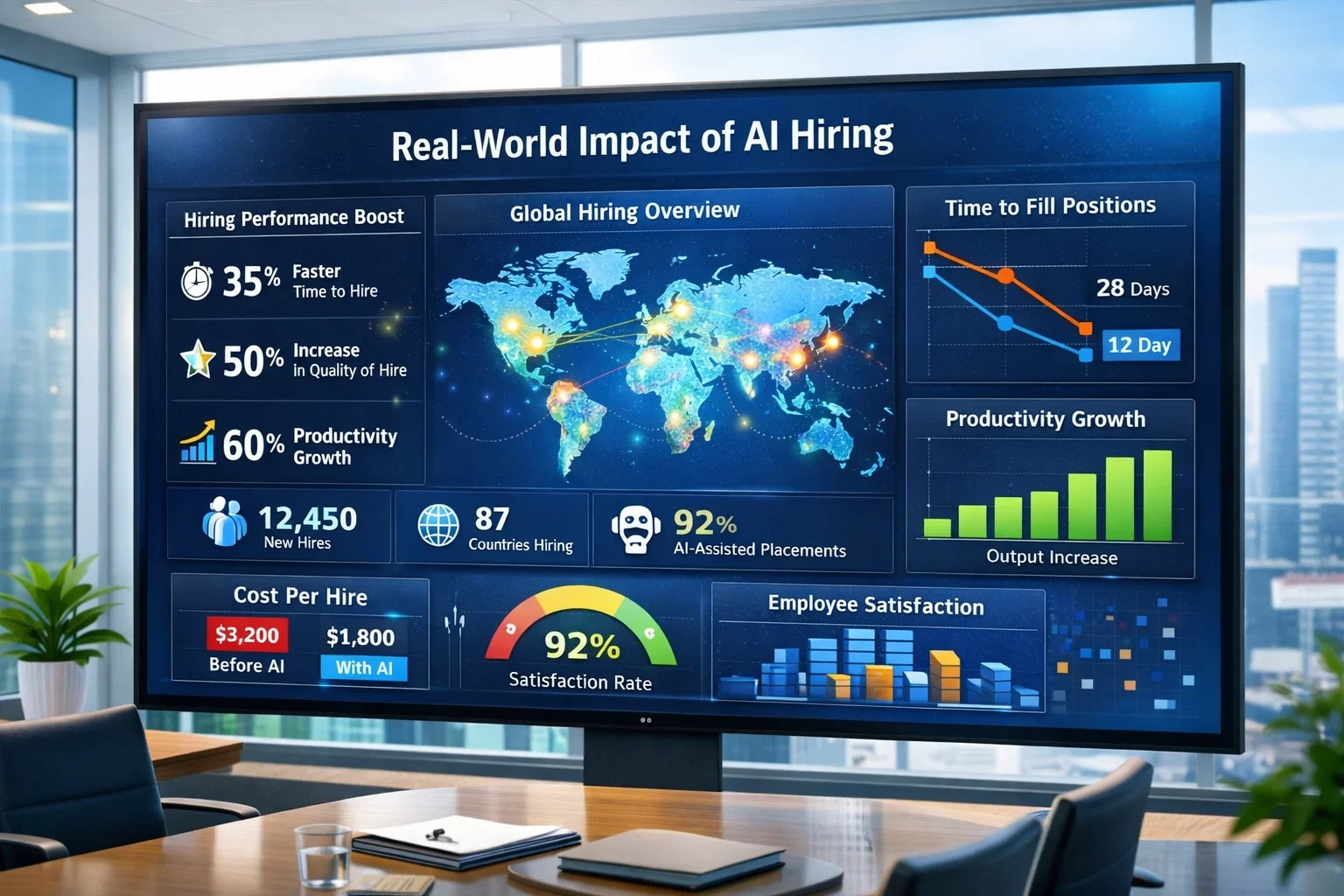
Industry reports, including LinkedIn research and workforce studies, show that organizations adopting AI platforms experience faster hiring cycles, stronger candidate engagement, and improved hiring quality. AI tools also help companies manage internal recruiting costs, ATS subscriptions, and sourcing spend more efficiently.
These real-world examples highlight how AI recruiting tools and structured analytics are transforming hiring into a measurable, scalable system that improves outcomes while controlling costs.
AI Recruitment vs Traditional Hiring: Cost, Efficiency & ROI Comparison
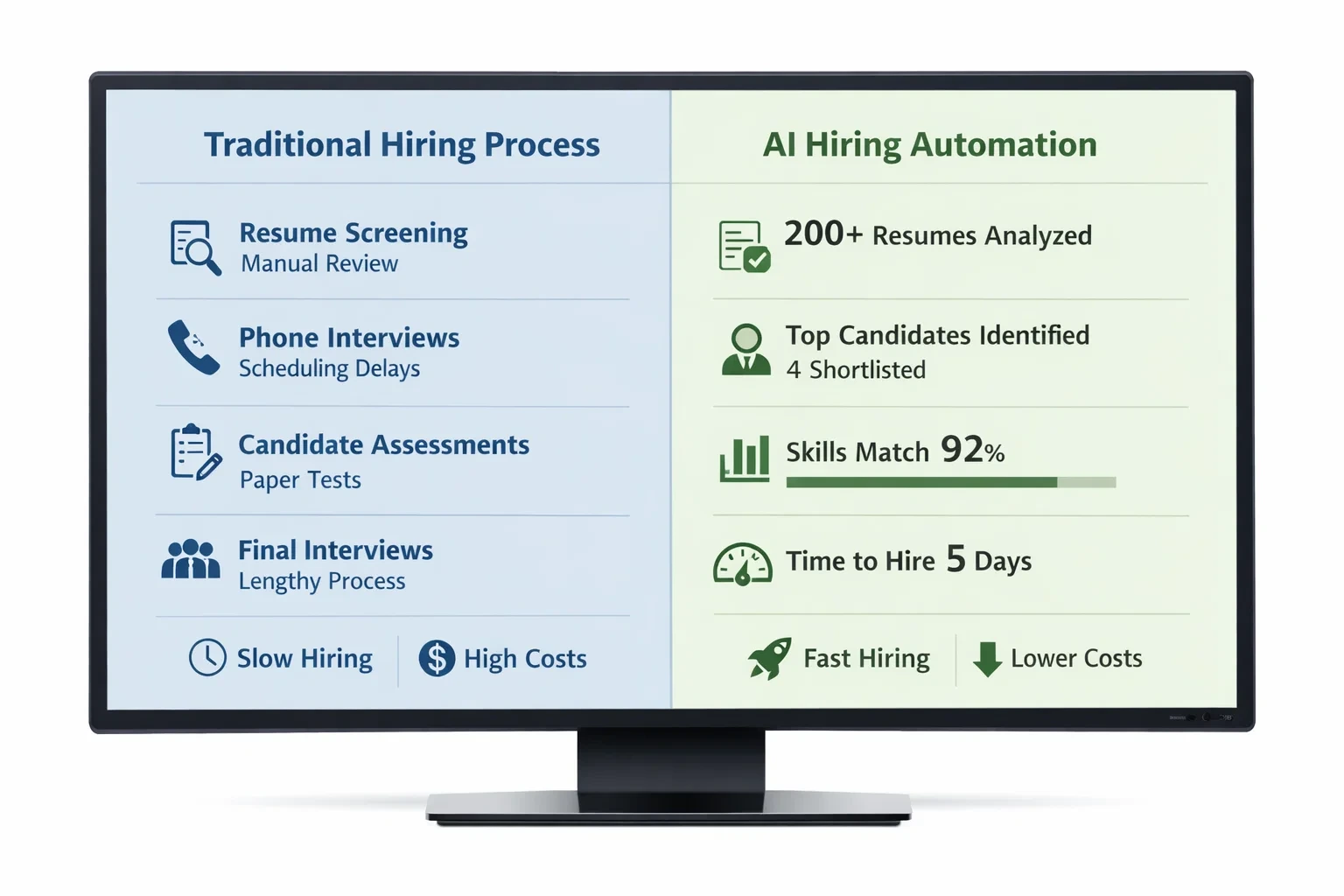
Artificial intelligence is transforming hiring by replacing manual processes with automation, analytics, and structured decision frameworks. Traditional recruitment relies heavily on manual effort and agency support, which increases recruitment costs and slows hiring.
Factor
Traditional Recruitment
AI Recruitment Platforms
Candidate Sourcing
Manual sourcing + job board postings
Automated sourcing via recruiting software
Candidate Screening
Manual resume screening
Machine-learning screening
Time-to-Hire
Slow coordination
Automated scheduling
Cost-Per-Hire
Higher internal recruiting costs
Reduced through automation
Recruitment Volumes
Hard to scale
Easily scalable
Hiring Quality
Inconsistent
Data-validated matching
Metrics
Limited visibility
Real-time analytics insights
AI platforms reduce cost-per-hire faster because they optimize the entire recruitment workflow rather than individual tasks. This improves hiring quality, lowers operational costs, and strengthens workforce planning.
How Much Does AI Recruiting Cost and What ROI Can Businesses Expect?
Competitor benchmarks and LinkedIn research show AI platforms typically cost less than traditional hiring models when factoring in agency fees, labor, and delays.
AI Recruitment Platform Pricing Models
Pricing Model
Typical Structure
Cost Range
Subscription SaaS
Monthly per recruiter
$49–$199
Usage-Based
Per hire
$500–$2,000
Enterprise
Custom integrations
Custom
Compared to traditional models, AI reduces recruitment costs by automating screening, optimizing sourcing, and improving decision accuracy.
Cost-Per-Hire Before and After AI
Metric
Traditional
With AI
Cost-Per-Hire
High
Lower
Time-to-Hire
Slow
Faster
Labor Costs
High recruiter time
Automated
Visibility
Fragmented
Centralized
When Does AI Deliver Positive ROI?
AI delivers strong ROI when:
Recruitment volumes are high
Vacancy costs affect revenue
Agency reliance is significant
Recruiters spend excessive time on repetitive tasks
Hiring decisions lack structured data
When these conditions exist, AI reduces recruitment costs, accelerates hiring cycles, and improves workforce outcomes.
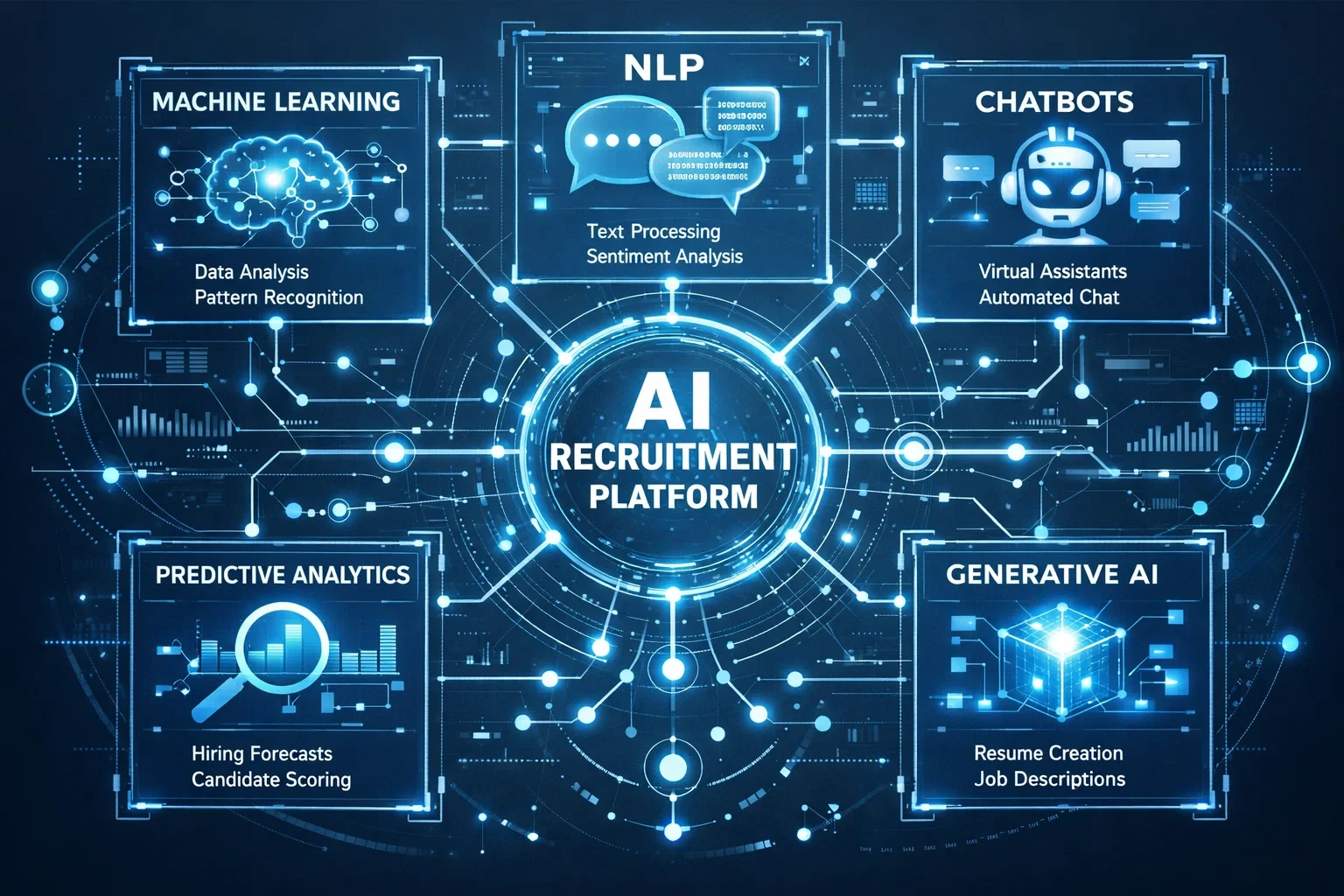
Key AI Technologies Powering Modern AI Recruitment Platforms
Most modern platforms rely on core AI technologies that streamline hiring, improve hiring quality, and reduce recruitment costs. These tools work together inside recruiting software ecosystems to automate tasks, strengthen decision accuracy, and reduce the hidden costs of recruitment.
Machine Learning for Candidate Screening
Machine learning improves candidate screening by analyzing large applicant datasets and learning from past hiring outcomes. This reduces manual resume screening, saves recruiter time, and lowers internal recruiting costs while improving hiring quality and candidate fit.
Natural Language Processing for Resume Parsing
Natural language processing extracts skills, experience, and qualifications from resumes and applications. This automation reduces recruiter salaries spent on repetitive tasks and ensures structured data metrics for faster evaluation.
Conversational AI and Chatbots
Chatbots automate early communication, interview scheduling, and personalized communications with candidates. This shortens time-to-hire, improves candidate experience, and reduces external recruiting costs tied to coordination delays.
Predictive Analytics and Real-Time Insights
AI recruiting platforms use analytics insights and candidate pipeline tracking to evaluate sourcing channels, recruitment volumes, and engagement levels. These data-driven hiring decisions help organizations control recruitment costs before delays create vacancy tax pressure.
Generative AI for Job Postings and Outreach
Generative AI optimizes job board postings, improves candidate targeting, and strengthens outreach campaigns. This increases response quality while maintaining candidate quality and reducing advertising fees across hiring campaigns.
Together, these technologies demonstrate how AI in Recruitment functions as a competitive necessity for companies aiming to reduce the hidden cost of open roles & bad hires in 2026 while improving efficiency and ROI.
Challenges Associated with Using AI in Recruitment
While AI platforms improve efficiency and reduce cost-per-hire, organizations must address certain challenges to maximize results and maintain compliance.
Integration Complexity
AI systems must integrate with existing applicant tracking system platforms and enterprise tools. Poor integration can increase operational friction and delay adoption of recruiting software.
Machine learning models trained on historical hiring data may replicate past patterns. Structured validation and monitoring frameworks help maintain fairness and hiring quality.
High Initial Costs
Some organizations hesitate due to upfront investment. However, AI often replaces expenses that represent the largest portion of your recruitment budget, such as agency commissions and manual screening labor.
Resistance to Change
Recruiters may resist automation if they fear job displacement. Clear communication that AI supports rather than replaces human decision-making helps adoption.
Addressing these challenges ensures AI strengthens recruitment outcomes without compromising compliance, performance, or operational stability.
How APPWRK Can Help in AI Recruitment Platform Development
APPWRK helps organizations build scalable platforms powered by AI in Recruitment to reduce recruitment costs, shorten hiring cycles, and improve hiring quality without disrupting existing workflows.
By combining Artificial intelligence, recruitment automation, and machine learning, APPWRK optimizes the full hiring lifecycle, from candidate sourcing to data-driven hiring decisions, while minimizing the hidden costs of recruitment.
Our approach includes:
Seamless integration with existing applicant tracking system platforms and enterprise applications
Automated candidate screening and resume parsing that reduces manual resume screening and recruiter time
Bias monitoring frameworks that support structured and fair hiring
By optimizing internal recruiting costs, external recruiting costs, ATS subscriptions, recruiter salaries, and advertising fees, APPWRK enables enterprises, startups, and recruitment agencies to build recruiting software that scales efficiently.
The result is a platform designed to reduce the hidden cost of open roles & bad hires in 2026, strengthen talent management, and deliver measurable business impact.
Future of AI in Recruitment: What to Expect
The future of recruitment will be defined by deeper automation, predictive intelligence, and integrated hiring ecosystems. AI adoption is quickly shifting from optional innovation to a competitive necessity for organizations competing for talent.
Generative AI in Hiring
Generative AI will improve job board postings, candidate targeting, and personalized communications. This increases engagement, strengthens candidate experience, and improves hiring quality while reducing time-to-hire.
Predictive Analytics and Workforce Planning
Machine learning and Big Data will deliver real-time analytics insights into recruitment volumes, attrition patterns, and long-term workforce needs. This helps organizations manage recruitment costs and optimize budget allocation across hiring functions.
AI-Only Tasks and Human-Only Tasks
Structured hiring models will increasingly separate automated workflows from human decision stages. This approach improves recruiter productivity while preserving strategic oversight and relationship-driven decision-making.
Enterprise Integration and Scalability
Next-generation platforms will connect more deeply with recruiting software ecosystems, enterprise tools, and global hiring systems to optimize candidate pipeline visibility and reduce operational delays.
FAQs
What is AI in recruitment?
AI in recruitment refers to the use of artificial intelligence technologies such as machine learning, natural language processing, and predictive analytics to automate and optimize talent acquisition processes, including screening, matching, scheduling, and hiring decisions.
How does AI recruiting work?
AI recruiting works by analyzing structured and unstructured candidate data, identifying patterns in successful hires, automating resume screening, improving candidate matching accuracy, and providing real-time analytics insights to support data-driven hiring decisions.
What are the benefits of AI in talent acquisition?
The benefits of AI in talent acquisition include reduced time-to-hire, lower cost-per-hire, improved hiring quality, structured evaluation processes, reduced bias, and enhanced candidate experience through automated communication and faster response cycles.
Is AI recruitment software worth the investment?
AI recruitment software becomes financially valuable when organizations face high recruitment volumes, long time-to-fill cycles, high agency dependency, or recurring bad hires. When these conditions exist, AI reduces recruitment costs and improves hiring efficiency, delivering measurable ROI.
What industries benefit most from AI recruiting platforms?
Industries with high-volume hiring needs, global workforce operations, and revenue-sensitive roles such as technology, healthcare, retail, and enterprise services benefit significantly from AI recruitment platforms.
How can AI be used to reduce hiring costs?
AI reduces recruitment costs by automating screening, matching, scheduling, and sourcing. This lowers recruiter time, minimizes manual tasks, reduces agency dependency, and improves hiring accuracy through structured analytics.
How much does AI recruiting cost?
Costs vary based on platform features, integrations, and recruitment volumes. In most cases, AI platforms cost significantly less than agency commissions or prolonged vacancy periods, which often represent the largest portion of your recruitment budget.
Does AI recruitment really improve the quality of hire?
Yes. AI systems analyze candidate data, experience patterns, and performance indicators to improve hiring quality and reduce mismatches. Structured validation also helps maintain candidate quality throughout the hiring process.
Can AI replace recruiters?
No. AI supports recruiters by automating repetitive tasks such as screening and scheduling, allowing recruiters to focus on strategic activities like interviewing and decision-making.
What metrics should be tracked to measure ROI?
Key metrics include cost-per-hire, time-to-hire, candidate pipeline health, interview success rates, hiring quality, and candidate engagement. Tracking these data metrics ensures measurable performance improvements.
Is AI recruitment suitable for startups and SMBs?
Yes. Startups benefit from reduced internal recruiting costs and faster hiring cycles, while enterprises gain scalability across global hiring operations. To implement a tailored solution built for measurable hiring efficiency, businesses can partner with APPWRK for custom AI recruitment platform development aligned to their growth stage.
How can businesses get started with AI recruitment?
Start by identifying high-cost stages such as manual screening, slow response times, or heavy reliance on agencies. Then implement AI tools within the existing applicant tracking system infrastructure to streamline workflows.
Gourav Khanna is the Co-founder and CEO of APPWRK, leading the company’s vision to deliver AI-first, scalable digital solutions for enterprises and high-growth startups. With over 16 years of leadership in technology, he is known for driving digital transformation strategies that connect business ambition with outcome-focused execution across healthcare, retail, logistics, and enterprise operations.
Recognized as a strategic industry voice, Gourav brings deep expertise in product strategy, AI adoption, and platform engineering. Through his insights, he helps decision-makers prioritize market traction, operational efficiency, and long-term ROI while building resilient, user-centric digital systems.
Subscribe to APPWRK Blogs, We'll Do the Rest!
Get Blogs on UI/UX, Mobile Apps, Online Marketing, and Web development technology.
Unlock worthy and priceless suggestions from the masters of mobile and web app development