150+ minds across 4 countries. Join a culture of innovation, ownership & growth.
Rewire for AI
From machine learning to deep learning, from classification tools to overall process automation – our AI engineers will help you retool your existing system or enhance your company results.
Ship faster, scale smarter, built for product companies and SaaS teams
Our Latest Work
We strive hard to deliver result-driven digital solutions across the globe. Check out our case studies to get a glimpse of how we ideate, innovate, and create unconventional digital solutions according to the requirements of our clients.
Discover diverse and passionate insights from our tech enthusiasts. We collaborate across various sectors to streamline operations and drive innovation. Explore our rapidly growing collection of articles to see why we’re at the forefront of IT solutions.
The decision to move from Magento to Shopify is one of the most significant replatforming choices an ecommerce business can make. Magento is powerful, but its power comes with...
Accuracy gap is real: Traditional CPG forecasting carries a 25-40% MAPE error rate. AI-powered models bring that down to 8-15%, according to McKinsey research....
Real stories from global leaders who trusted us with their ideas.
Partnering with APPWRK helped us build a compliant and scalable healthcare platform, accelerating our time-to-market by 35%. Their team consistently delivered outstanding work.
Beesers
Digital Healthcare Client
Collaborating with APPWRK, Sportskeeda modernized its platform into a real-time sports engagement ecosystem, enabling seamless content delivery, scalable fan interactions, and high-velocity performance.
Sportskeeda
Sports & Entertainment Partner
Working with APPWRK was effortless. They captured our vision, maintained full compliance, and delivered a digital experience that built trust and elevated how customers interact with our fintech brand.
PayPenny
Fintech Partner
Working with APPWRK gave us confidence in adopting AI responsibly. Their team built a safe, intelligent bot that transformed how we engage with leads and helped us achieve measurable revenue growth.
IFB
AI Transformation Partner
Leveraging APPWRK’s digital expertise, Nemesis launched a scalable, compliant, and safe super app that connects content delivery, real-time communication, and logistics management within a single platform.
Nemesis
Super App Partner
Partner with Us to Transform Restaurant Ordering
Unlock 24/7 voice AI solutions that scale with your business—boost revenue, cut costs, and delight customers.
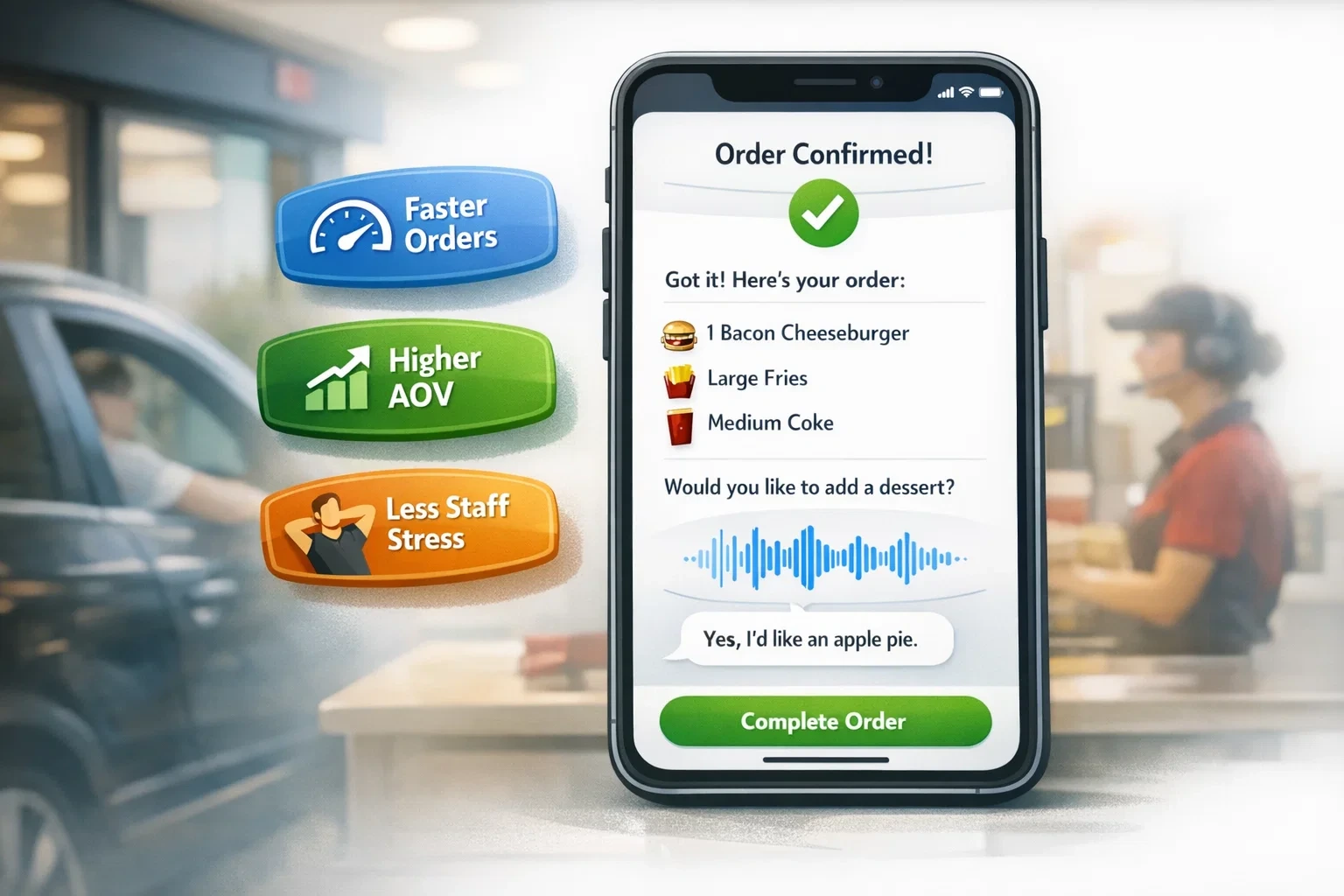
AI voice ordering systems are reshaping how restaurants process orders across drive-thrus, kiosks, apps, and phone lines, using speech recognition, natural language processing (NLP), and machine learning to reduce errors, increase speed, and improve customer satisfaction.
These systems go beyond static IVRs by offering real-time processing, intent recognition, order confirmation, and smart upselling, improving operational efficiency and average ticket size while syncing with POS systems, payment gateways, and loyalty programs.
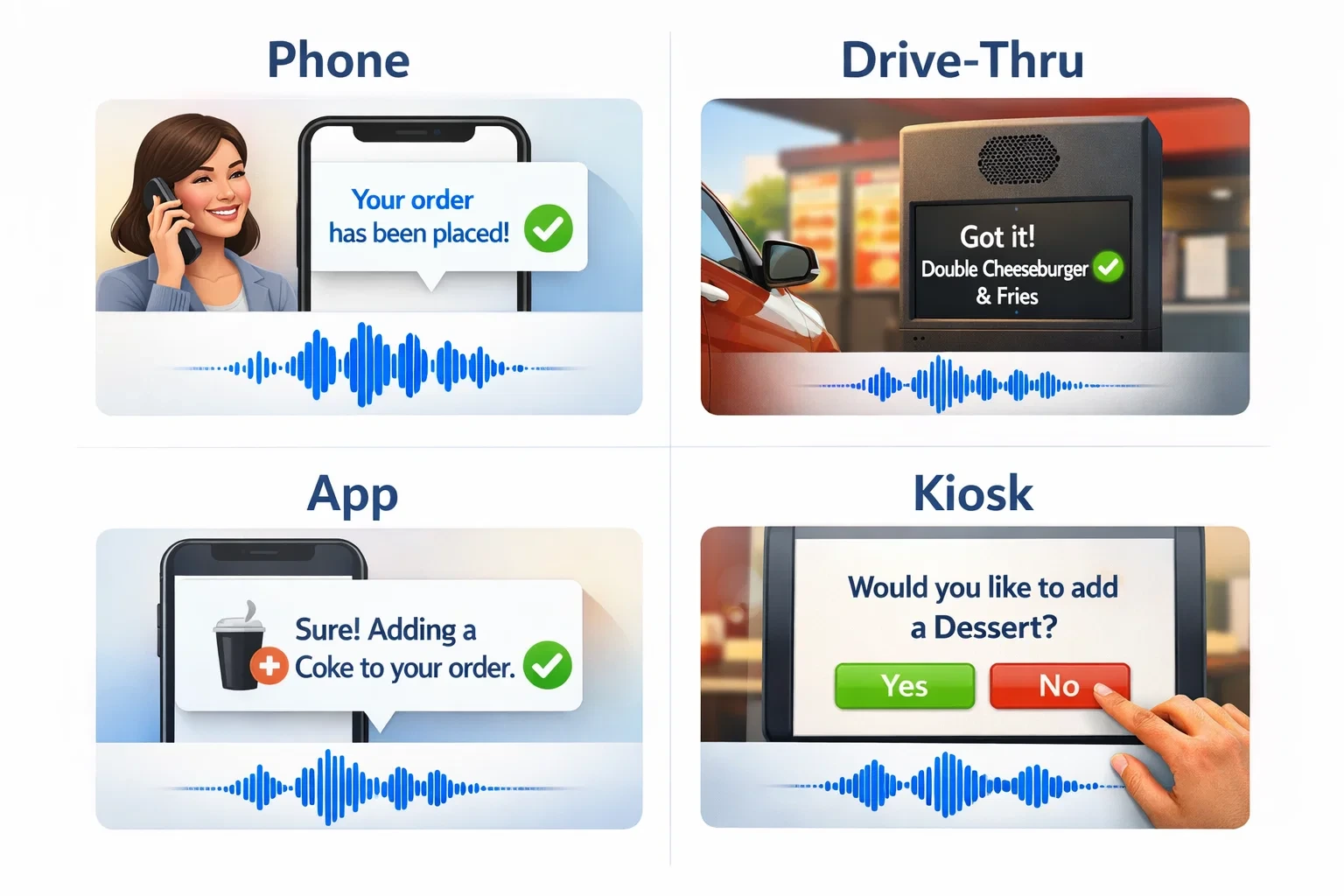
Top platforms now support drive-thru voice AI, mobile app voice ordering, and voice-activated ordering, enhancing the user experience across all channels and ensuring consistent, hands-free customer interactions.
By handling repetitive ordering tasks, AI voice ordering systems reduce staffing challenges, lower operational costs, and support 24/7 availability, especially in high-volume or multi-location operations.
This guide helps operators and digital product teams evaluate voice ordering solutions based on use case complexity, system integration, ROI potential, and long-term scalability, making it easier to align with business goals, user stories, and core KPIs.
Introduction: Why Restaurant Voice Ordering Is Under Pressure
In 2026, restaurant operations are strained by persistent staffing challenges, rising costs, and the demand for faster, contactless customer experiences. Traditional phone-based ordering is breaking down, especially during peak hours.
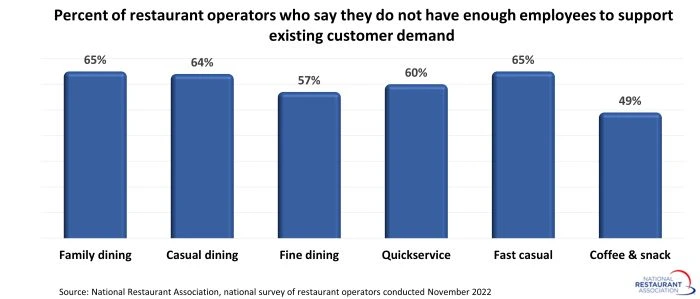
According to the National Restaurant Association, 62% of restaurants report ongoing hiring difficulties. Yet expectations for natural, conversational interactions, real-time service, and order accuracy continue to rise.
This is where AI voice ordering systems step in. Whether through drive-thru voice AI, mobile app voice ordering, or voice-enabled kiosks, restaurants are adopting voice ordering solutions to streamline operations, lower costs, and boost customer satisfaction.
Unlike legacy IVR systems, modern AI ordering systems use speech recognition, natural language processing (NLP), and real-time POS system integration to create seamless, multilingual, and efficient voice UX, improving service across all channels.
Why Do Restaurants Miss So Many Phone Orders During Peak Hours?
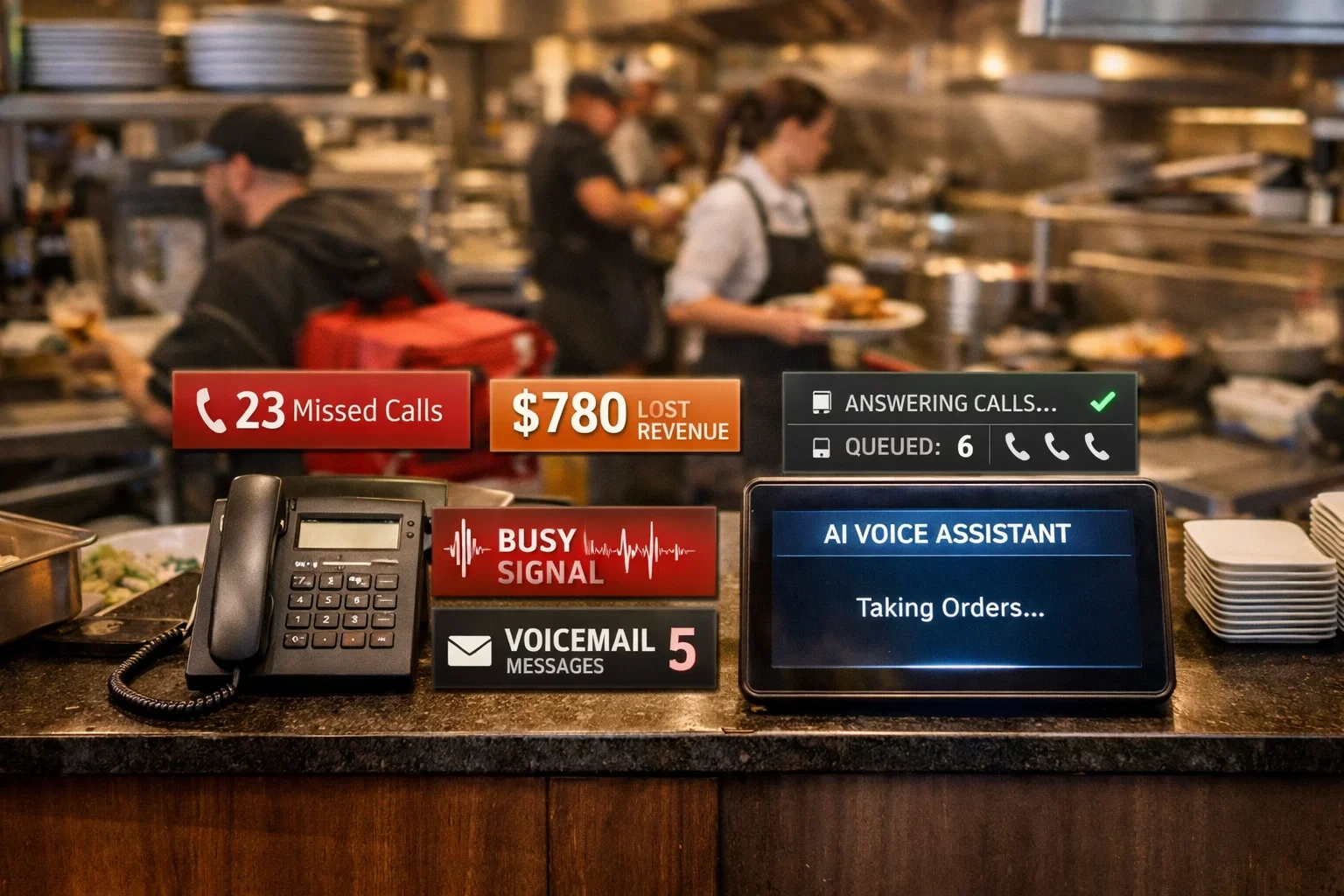
Missed calls mean missed revenue. But most restaurants aren’t dropping orders because of a lack of demand; they’re dropping them because of broken systems.
1. Limited Staff Bandwidth
Teams are overwhelmed during rush hours. Without a voice assistant for restaurants or automation, phone calls get deprioritised, costing $15–$40 per missed interaction.
2. Channel Overload
From in-store guests to app orders to deliveries, staff can’t manage every customer interaction at once. Phone ordering, without automation, is the first to break under pressure.
3. No Smart Queue or Fallback
Unlike AI-powered ordering systems, analogue phone lines have no queue logic, fallback triggers, or recovery actions. A single busy tone or voicemail can result in a lost transaction and a lost customer.
How Much Revenue Do Restaurants Actually Lose from Unanswered Calls?
Missed phone orders are more than just a customer experience problem; they’re a direct operational cost. For QSRs, pizza chains, and high-volume restaurants, unanswered calls translate into measurable revenue losses every week.
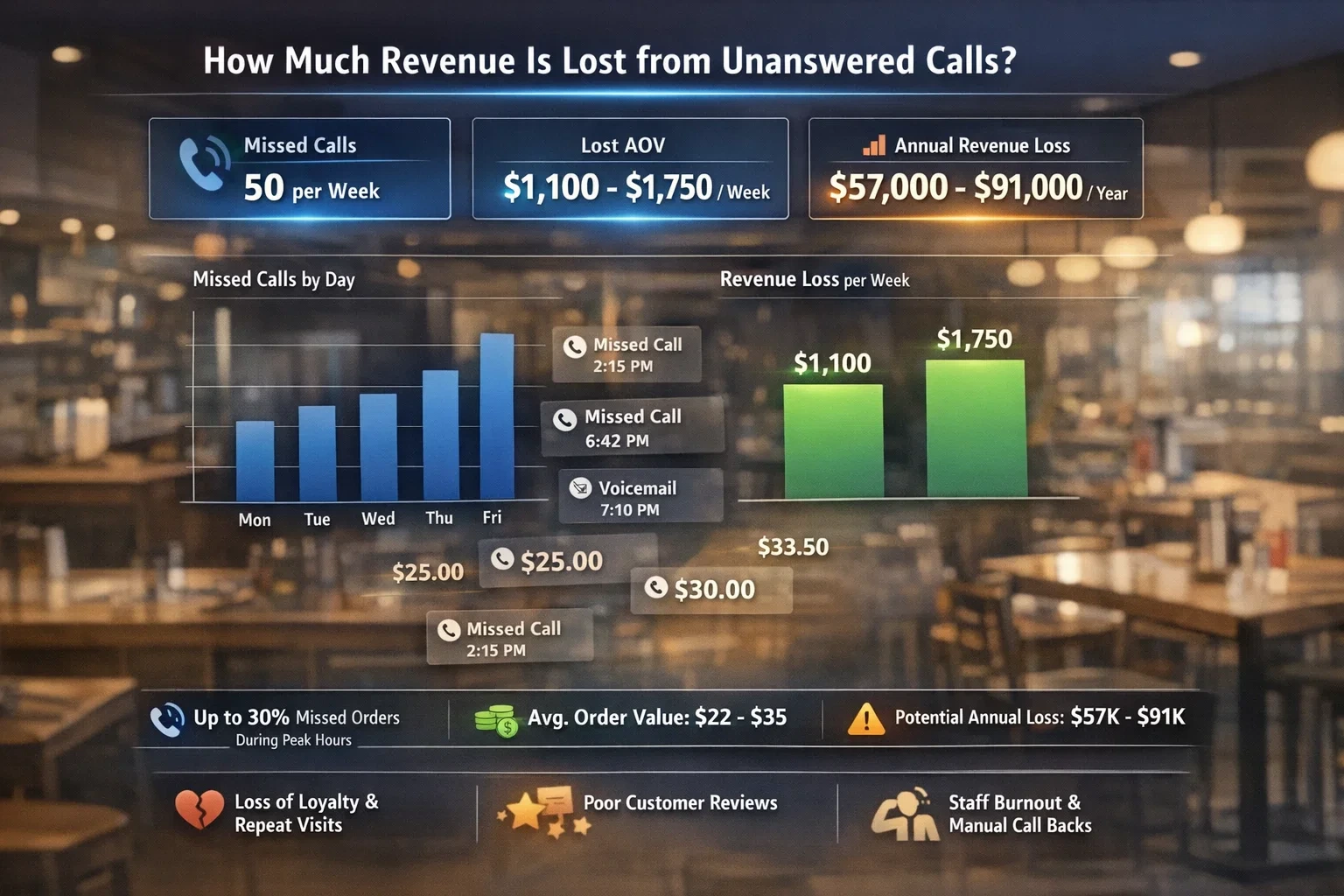
Restaurants miss up to 30% of phone orders during peak hours
Average order value (AOV): $22–$35
That’s $1,100–$1,750 lost per week for just 50 missed calls.
Yearly? $57,000–$91,000 in revenue leakage per location
And that’s before accounting for:
Loss of loyalty and repeat visits
Poor reviews from frustrated customers
Staff burnout from trying to call customers back manually
Now multiply this across 5 or 50 locations, and you’re into six-figure losses annually.
How High-Volume Restaurants Handle Phone Orders During Rush
Quick-service restaurants (QSRs), pizza chains, and fast-casual brands handle intense surges in customer orders. Their phone ordering system is often the weakest link in operations. Here’s how they try to cope, and where AI voice ordering systems are now taking over:
1. Dedicated Phone Staff
Assigning a team member to answer calls offers control, but it’s expensive, hard to scale, and vulnerable to staffing challenges.
2. Call Centres or Shared Hubs
Centralised ordering adds coverage but often reduces customer interaction quality and requires extra training resources.
3. IVR & Voicemail Systems
These legacy tools can’t manage real-time processing, modifiers, or upsells, and most customers won’t leave a message.
4. Outsourced Order Takers
Third-party agents still rely on humans, meaning high error rates, slow response times, and inconsistent user experience.
5. AI Voice Ordering Systems (Emerging Standard)
High-volume restaurants are increasingly adopting AI-powered voice assistants for restaurants because they:
Capture 100% of incoming calls
Use natural language processing (NLP) and automatic speech recognition (ASR) to handle real orders.
Integrate directly with POS systems and payment workflow.
Suggest upsells automatically and consistently.
Reduce staff load while increasing order accuracy and customer satisfaction.
Core Capabilities of AI Voice Ordering for Restaurants
Today’s AI ordering systems are far beyond basic speech-to-text tools. They’re engineered for noisy, high-volume environments, adapting in real time to the user’s voice, behaviour, and restaurant infrastructure.
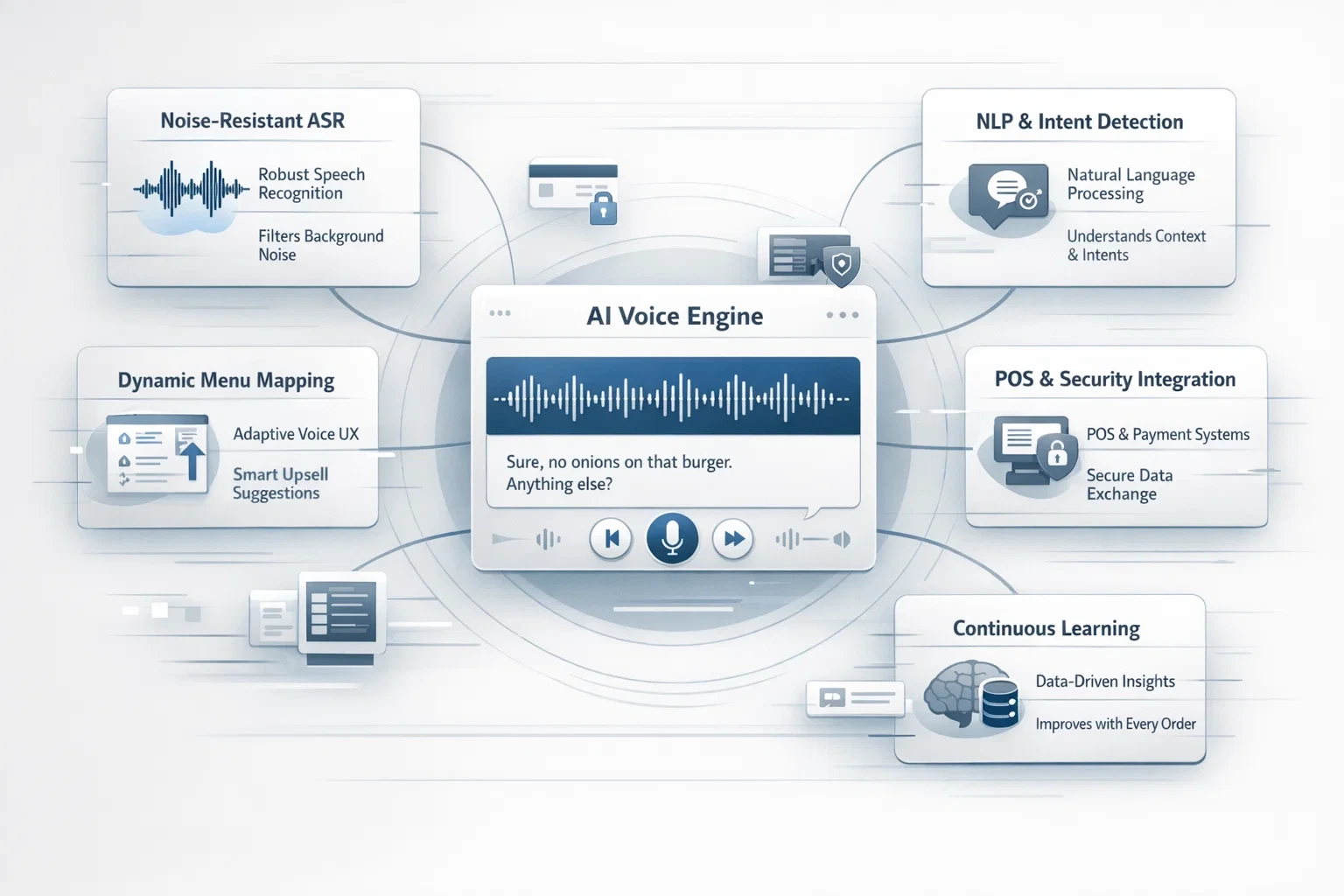
1. Noise-Resistant Speech Recognition
Advanced ASR tech filters ambient sounds, essential for drive-thru voice AI, kitchens, and busy storefronts.
2. NLP and Intent Detection
Built-in natural language processing helps AI understand real phrases like “no onions,” even across different accents and dialects.
3. Dynamic Menu Mapping & Voice UX
Systems adapt menus on the fly, recommend upsell items, and confirm orders through structured voice UX.
4. End-to-End Integrations
Seamless syncing with POS systems, inventory management, loyalty programs, and CRM software ensures smooth transactions and data consistency.
Integrations should include a security service layer as part of the overall security solution, especially when routing data to external entities like payment processors and POS partners.
5. Learning from Every Interaction
Each voice order becomes a data point. AI learns modifiers, frequent preferences, and error patterns, driving order accuracy, faster customer journeys, and improved KPIs.
Why AI Voice Agents Outperform Call Centres in 2026
Factor
AI Voice Ordering Systems
Call Centres
Scalability
Handle 10–100+ calls simultaneously
Limited by staffing capacity
Cost
Low OPEX after deployment
High recurring salary/training costs
Order Accuracy
AI-driven logic reduces mistakes
Human fatigue increases the error rate
Personalization
CRM-linked recommendations
Manual, inconsistent responses
Analytics
Real-time customer data & KPIs
Often missing or delayed
Modern voice assistants offer 24/7 availability, seamless POS system integration, and consistent upselling, ideal for QSRs, pizza chains, and high-volume brands needing reliable, round-the-clock automation.
Benefits of AI Voice Ordering Systems for Restaurants
No wait times, AI captures orders instantly during drive-thru or peak hours.
Fewer Human Errors:
NLP + ASR confirm each item and modifier for higher-order accuracy.
Reduced Staff Burnout:
AI handles repetitive calls, freeing teams to focus on service.
Higher AOV:
Voice ordering systems consistently promote combos and add-ons.
Built-in Scalability:
AI grows with you, from 1 location to 1,000, no training required.
Improved Customer Satisfaction:
Accurate, consistent, and fast, across all touchpoints.
Use Cases of AI Voice Ordering Systems in Restaurants
Voice AI is no longer confined to the phone. These AI ordering systems power multiple restaurant touchpoints, enhancing convenience, speed, and customer engagement across channels.
Drive-Thru Voice AI:
Uses speech recognition to process orders despite kitchen noise, improving service time and throughput.
Automated Phone Orders:
Capture every call with zero voicemails or missed revenue opportunities.
Mobile App Voice Ordering:
Enables hands-free ordering on the go via a voice assistant for restaurants.
Smart Menu Recommendations:
AI uses customer behaviour tracking and business logic to suggest upsells and favourites.
Multilingual & Accent-Aware:
Inclusive ordering for diverse markets without added staff burden.
Loyalty Program Integration:
Recognise repeat customers, recall previous orders, and apply points via CRM integration.
Table-Side Voice Ordering:
Kiosk or tablet-based voice ordering improves service speed and reduces waitstaff load.
Inventory-Aware Suggestions:
Real-time inventory management ensures only available items are shown.
Voice-Enabled Reservations & Pre-Orders:
Customers can book tables or place scheduled orders via voice.
Delivery Instructions via Voice:
Capture detailed instructions like “gate code” or “leave at front desk”, accurately passed to couriers.
AI Voice Ordering Systems by Restaurant Format
Voice ordering systems can be tailored to match the service model, staffing level, and operational pace of each restaurant type:
1. Fast-Food & Drive-Thru Chains
High-volume chains benefit most from AI voice ordering at scale. These systems:
Reduce queue times
Process multiple orders in parallel
Offer consistent upselling
Boost order accuracy with drive-thru voice AI
2. Casual Dining & Food Halls
In hybrid-service formats, AI phone answering systems handle:
Missed phone orders
Pickup coordination
Table-side or kiosk ordering frees up staff
3. Fine Dining
Voice AI manages:
Reservations
Special requests
Pre-orders, while maintaining the brand tone
4. Cloud Kitchens & Ghost Restaurants
For brands without storefronts:
AI voice systems enable direct phone ordering
Reduce delivery platform commissions
Centralise voice AI for multi-brand kitchens
Cost–Benefit Analysis by Restaurant Type
Restaurant Type
Voice AI ROI Potential
Strategic Notes
QSR / Drive-Thru
Very High
Scales well, reduces wait times, boosts order accuracy
Pizza Chains
High
High phone volume, repeat orders, predictable modifiers
Fast Casual
Moderate
ROI depends on phone vs app order mix
Fine Dining
Low
Better suited for reservations, not ordering
Cloud Kitchens
High
Automates non-customer-facing interactions
Food Halls / Pop-ups
Low–Moderate
Use for preorders or kiosk voice support
From a product management and finance lens, ROI improves when voice AI replaces repetitive interactions rather than augmenting already-efficient channels.
How Restaurant Voice Ordering Technology Works
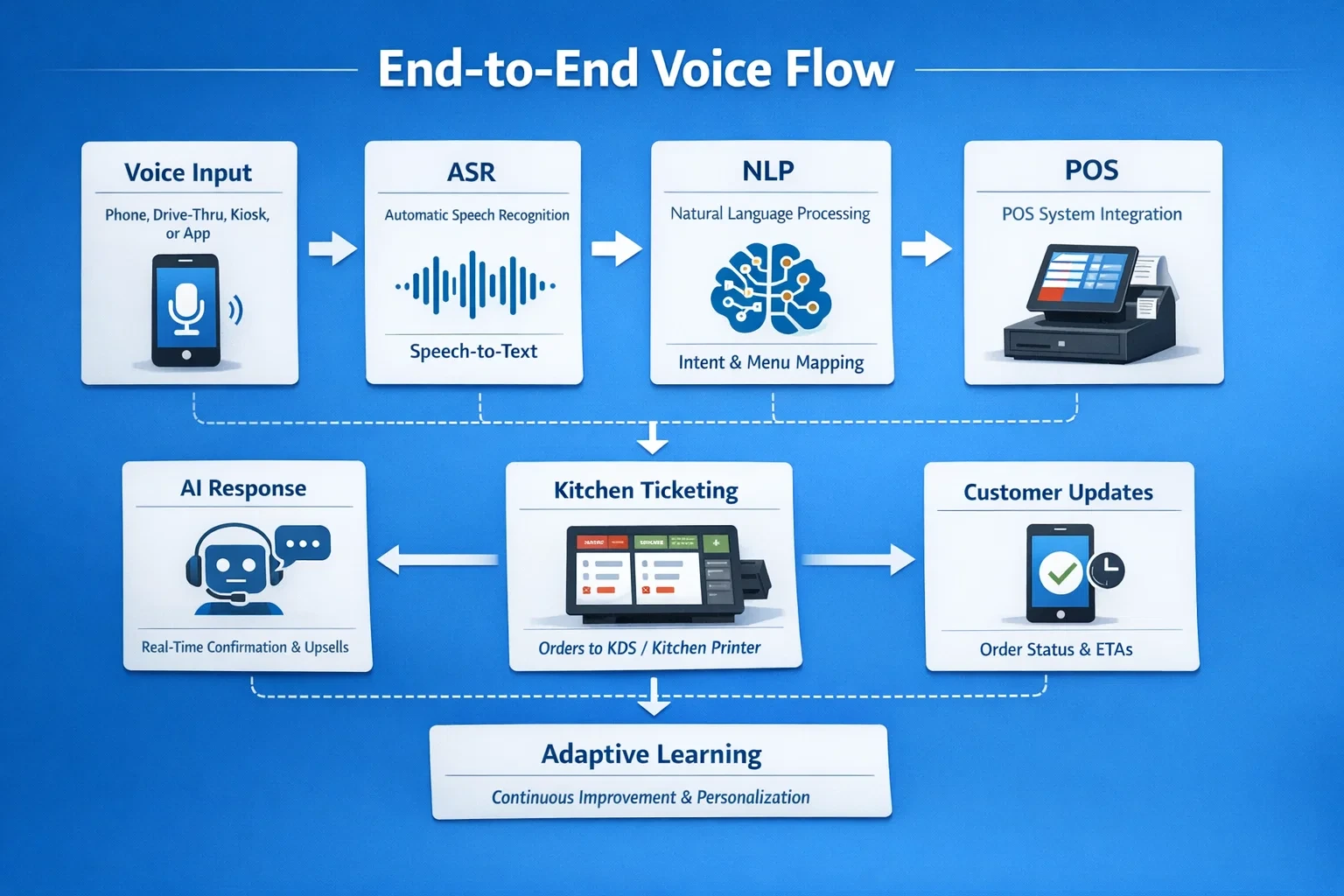
Despite the simplicity of natural, conversational interactions, every AI voice order relies on a sophisticated stack of real-time technologies and business logic. Here’s how it works behind the scenes:
End-to-End Voice Flow
For enterprise scale, some teams deploy services on Google Kubernetes Engine and use Cloud CDN to reduce latency across locations.
Automatic Speech Recognition (ASR): Converts speech to text using tools like Google Cloud Speech-to-Text or proprietary speech-to-text APIs.
Natural Language Processing (NLP): Maps requests to menu items, modifiers, and combos using menu mapping and intent recognition.
In many deployments, the NLP layer is built on Vertex AI and a Gemini model, with menu retrieval powered by Vertex AI Search and structured data stored in Google Cloud Storage. For image-based menu inputs and scans, teams may use Vertex AI Vision and Document AI to convert messy PDFs into clean menu entities.
POS System Integration: The order is pushed directly to the point of sale system, inventory, and Kitchen Display System (KDS).
For image-based menu inputs and scans, teams may use Vertex AI Vision and Document AI to convert messy PDFs into clean menu entities.
Real-Time AI Response
The AI voice assistant for restaurants confirms selections, suggests upsells, or asks for clarifications, with response generation happening in milliseconds.
Kitchen Ticketing & Order Status
Orders go to the KDS or kitchen printer. Customers receive real-time order confirmations, ETAs, and reorders through the same system, improving customer satisfaction and operational efficiency.
Adaptive Learning
The AI engine uses machine learning to refine accuracy, understand slang, support accents, and personalise upselling based on customer behaviour tracking.
Yes, significantly. Phone ordering is one of the most disruptive, high-friction tasks in restaurant operations. With AI-powered restaurant phone order systems, staff avoid distractions and burnout, while the AI handles repetitive, low-value interactions.
Teams can then focus on hospitality, table service, or delivery coordination, improving user experience across touchpoints.
AI Voice Ordering System Cost, ROI, and Investment Breakdown
Voice ordering systems deliver measurable ROI by increasing throughput, reducing order errors, and recovering missed phone orders.
AI Voice Ordering System Cost Element
Range
Notes
Setup Fee
$3,000 – $10,000
Includes menu mapping, POS integration
Monthly SaaS Fee
$200 – $1,500/location
Based on features: phone, drive-thru, kiosk
Per Order Fee
$0.10 – $0.50/order
Optional, based on usage
Custom Support
Optional
APIs, loyalty program sync, chain-wide rollout
ROI Drivers for an AI Voice Ordering System
Labour savings: Reallocate or reduce 1–2 phone staff per shift
Order accuracy: Fewer remakes/refunds via real-time confirmation
Higher AOV: Consistent upselling with no training gaps
Zero missed calls: Recover $1K–$7K/month/location in lost revenue
Bonus: These systems also unlock data-driven insights, allow for voice UX personalisation, and support multilingual interactions, increasing value without increasing staff.
Real-World Metrics for Restaurants that deploy an AI voice ordering system: What to Expect
Restaurants that deploy AI voice ordering systems typically track the following KPIs:
Call Capture Rate: Improves from ~60–80% to 95–100%, especially in drive-thru voice AI and phone ordering.
Order Error Reduction: NLP and ASR reduce inaccuracies by 30–50%, especially with complex modifiers.
Labour Cost Reduction: Saves 0.5–1 FTE per shift or reallocates them to higher-value tasks.
Customer Satisfaction (CSAT): 10–20% lift in CSAT due to faster service and fewer mistakes, boosting loyalty and repeat visits.
Use Product Analytics to track drop-offs, conversions, and upsell acceptance, and pair it with session replay to diagnose friction in real conversations.
If a guest is routed to a web fallback, ensure the handoff lands cleanly on the checkout page, with correct shipping address capture for delivery.
Best AI Voice Ordering Apps and Platforms for Restaurants
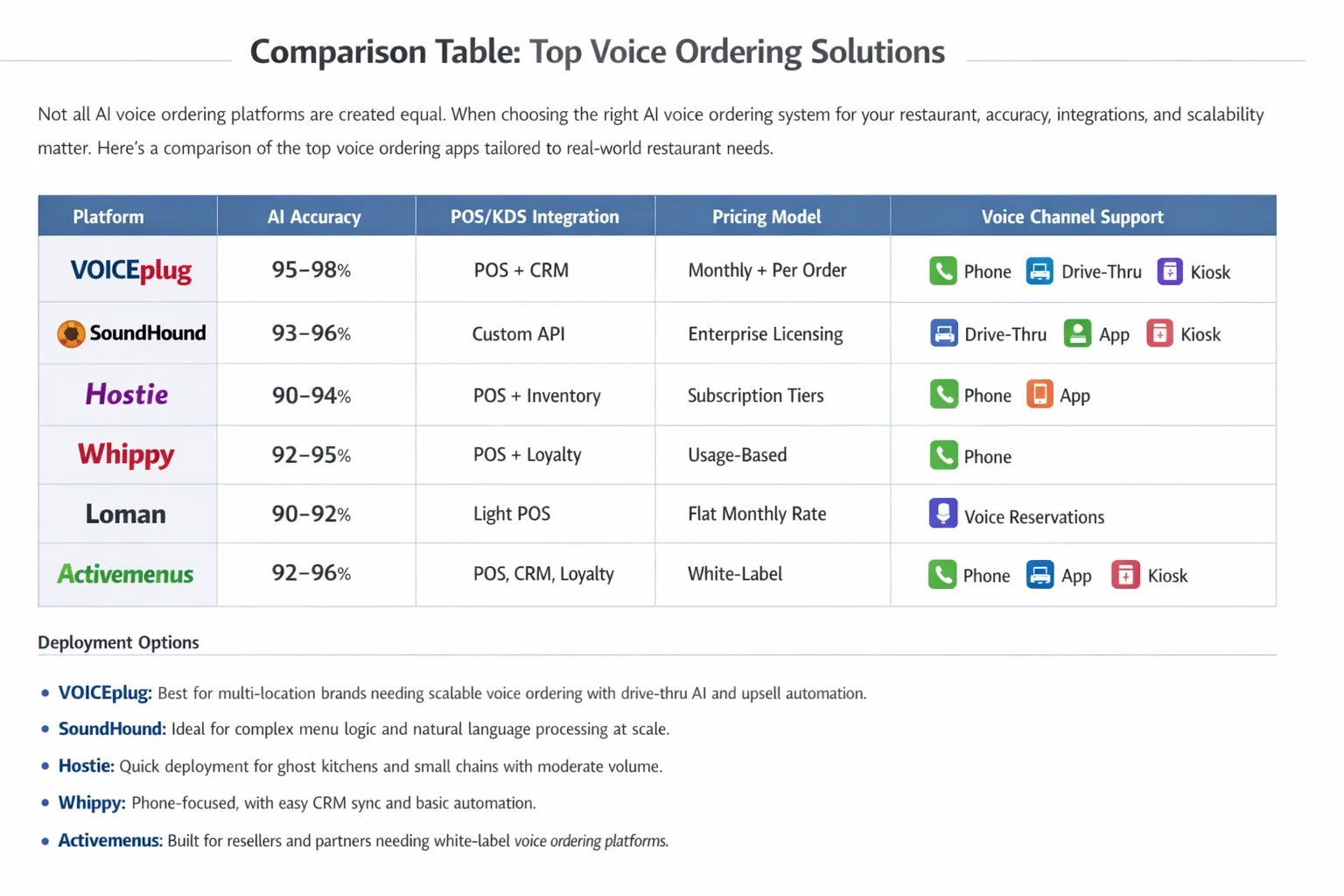
Not all AI voice ordering platforms are created equal. When choosing the right AI voice ordering system for your restaurant, accuracy, integrations, and scalability matter. Here’s a comparison of the top voice ordering apps tailored to real-world restaurant needs.
AI Voice Ordering Platform
AI Accuracy
POS/KDS Integration
Pricing Model
Voice Channel Support
VOICEplug
95–98%
POS + CRM
Monthly + per order
Phone, Drive-thru, Kiosk
SoundHound
93–96%
Custom API
Enterprise licensing
Drive-thru, App, Kiosk
Hostie
90–94%
POS + Inventory
Subscription tiers
Phone, In-app
Whippy
92–95%
POS + Loyalty
Usage-based pricing
Phone only
Loman
90–92%
Light POS
Flat monthly rate
Voice reservations only
Activemenus
92–96%
POS, CRM, Loyalty
Custom white-labeled
Multichannel (Phone, App, Kiosk)
APPWRK Voice Ordering System – Real Implementation Snapshot
APPWRK implemented its Voice AI Agent SaaS Platform for a pizza-focused quick-service restaurant handling high volumes of inbound phone orders.
Restaurant Challenges:
During peak hours, staff availability limited call handling, creating delays and added pressure on both front-of-house and kitchen teams.
Features Delivered by APPWRK:
A voice-enabled ordering agent was connected to a dedicated phone number and restaurant dashboard, allowing customers to place orders through natural voice conversations with conversational AI.
Orders were confirmed automatically and routed to a kitchen dashboard in near real time, where chefs could manage preparation and completion.
Measurable Outcomes of APPWRK’s Voice Ordering System:
Near-instant capture of inbound phone orders
Orders visible to the kitchen within 1–2 seconds
Reduced staff involvement in phone-based order taking
Better focus on food preparation and in-store service
Deployment Options of the AI Voice Ordering System:
VOICEplug: Best for multi-location brands needing scalable voice ordering with drive-thru AI and upsell automation.
SoundHound: Ideal for complex menu logic and natural language processing at scale.
Hostie: Quick deployment for ghost kitchens and small chains with moderate volume.
Whippy: Phone-focused, with easy CRM sync and basic automation.
Activemenus: Built for resellers and partners needing white-label voice ordering platforms.
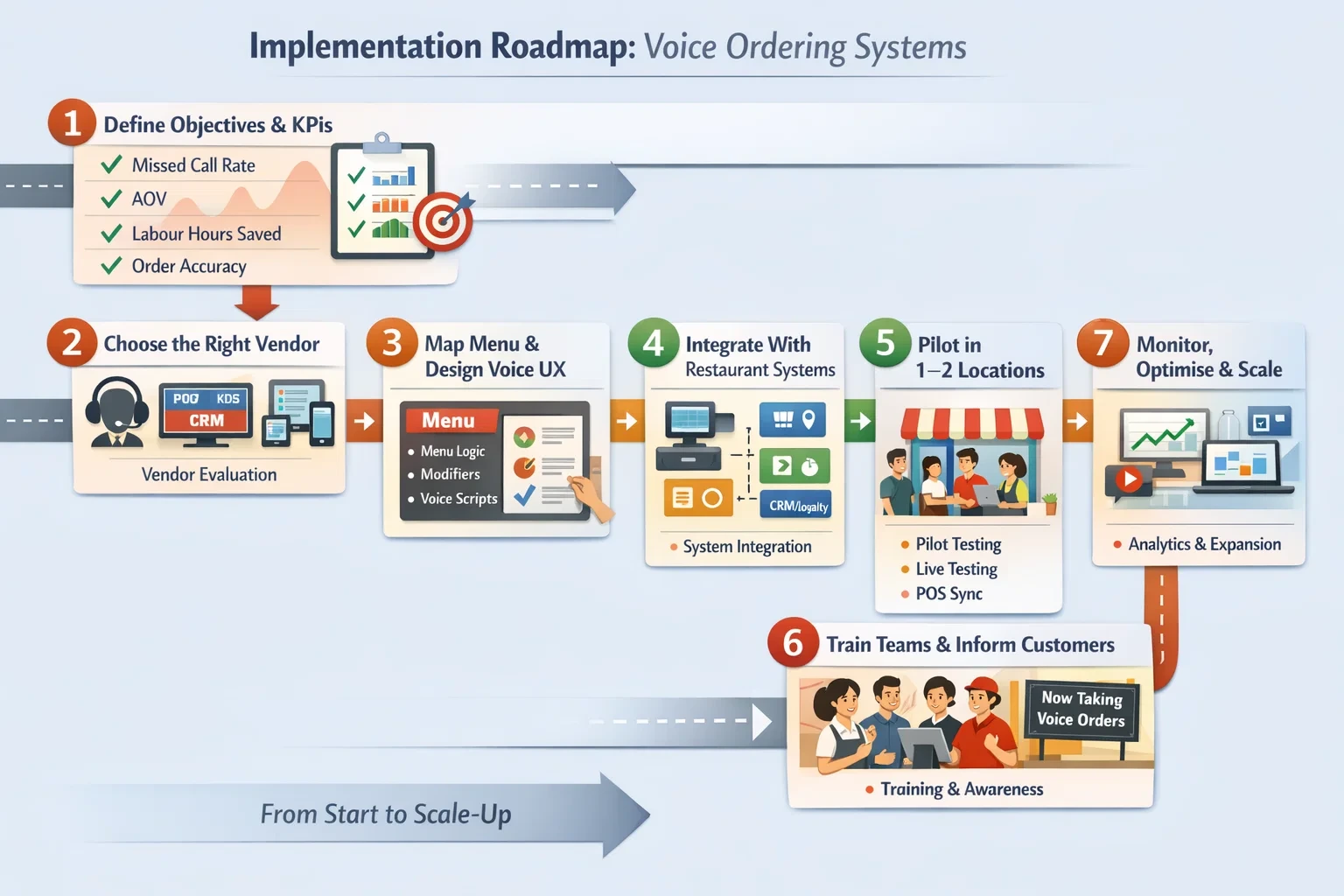
Implementation Roadmap: Voice Ordering Systems
Rolling out a restaurant voice ordering system requires a structured approach.
Step 1: Define Objectives & KPIs
Align on metrics like:
Missed call rate
Average order value (AOV)
Labour hours saved
Order accuracy
(Validate the system use case with real user research, mapping key user scenarios into User Stories so product teams can QA edge cases. For building clarity, document sequence diagrams showing the full sequence of actions from intent → modifiers → POS → kitchen ticket.)
Educate staff on system behaviour and fallback options. Use signage or voice prompts to guide guests.
Step 7: Monitor, Optimise & Scale
Track usage, missed upsells, and customer satisfaction. Fine-tune scripts and expand based on real ROI.
From a product management lens, teams should combine system analysis and system design with Agile development practices, writing each business use case into a customer journey, supported by a robust test case library during software development.
Timeline and Team Composition for AI Voice Ordering Projects
Implementing AI voice ordering systems for restaurants requires tight coordination between technology providers, internal teams, and operations leaders. Marketing teams can prototype flows using UX design tools and produce quick user manuals for staff training and escalation behaviour. A clearly defined rollout timeline minimises disruption, reduces operational risk, and accelerates ROI, especially for phone-heavy or high-volume locations.
Typical Project Phases: Week 1 to Week 8+
Phase
Timeline
Key Activities
Discovery & Planning
Week 1–2
Define business goals, map use cases, select the voice AI vendor, and align POS, KDS, CRM, and payment system integration requirements
Menu & Conversation Mapping
Week 3–4
Build structured menu logic, map modifiers and substitutions, define upsell triggers, and design Voice UX flows
Integration & Testing
Week 5–6
Connect Speech-to-Text and Text-to-Speech APIs, integrate with POS systems, test order accuracy, and validate data synchronisation
Staff Training & Readiness
Week 7
Train frontline teams, test live calls in sandbox mode, and refine escalation paths and fallback workflows
Some AI voice ordering vendors can compress this timeline for phone-only deployments or non-integrated setups, making them suitable for pilot programs or single-location restaurants.
Team Roles for Successful Deployment of a Scalable Restaurant Voice Ordering System
A scalable restaurant voice ordering system typically involves four core stakeholder groups:
Voice AI Vendor Owns the voice assistant platform, speech recognition models, NLP logic, integrations, and ongoing optimisation.
Internal IT / Systems Team Manages POS access, API security, data privacy, cloud infrastructure, and system reliability.
Restaurant Operations Team Oversees menu accuracy, fulfillment flows, kitchen display system (KDS) alignment, and frontline readiness.
Marketing or Brand Team Shapes customer interaction design, Voice UX consistency, brand tone, and guest education messaging.
For multi-location or enterprise deployments, assigning a dedicated restaurant tech champion or project lead is critical for coordination, issue escalation, and rollout consistency.
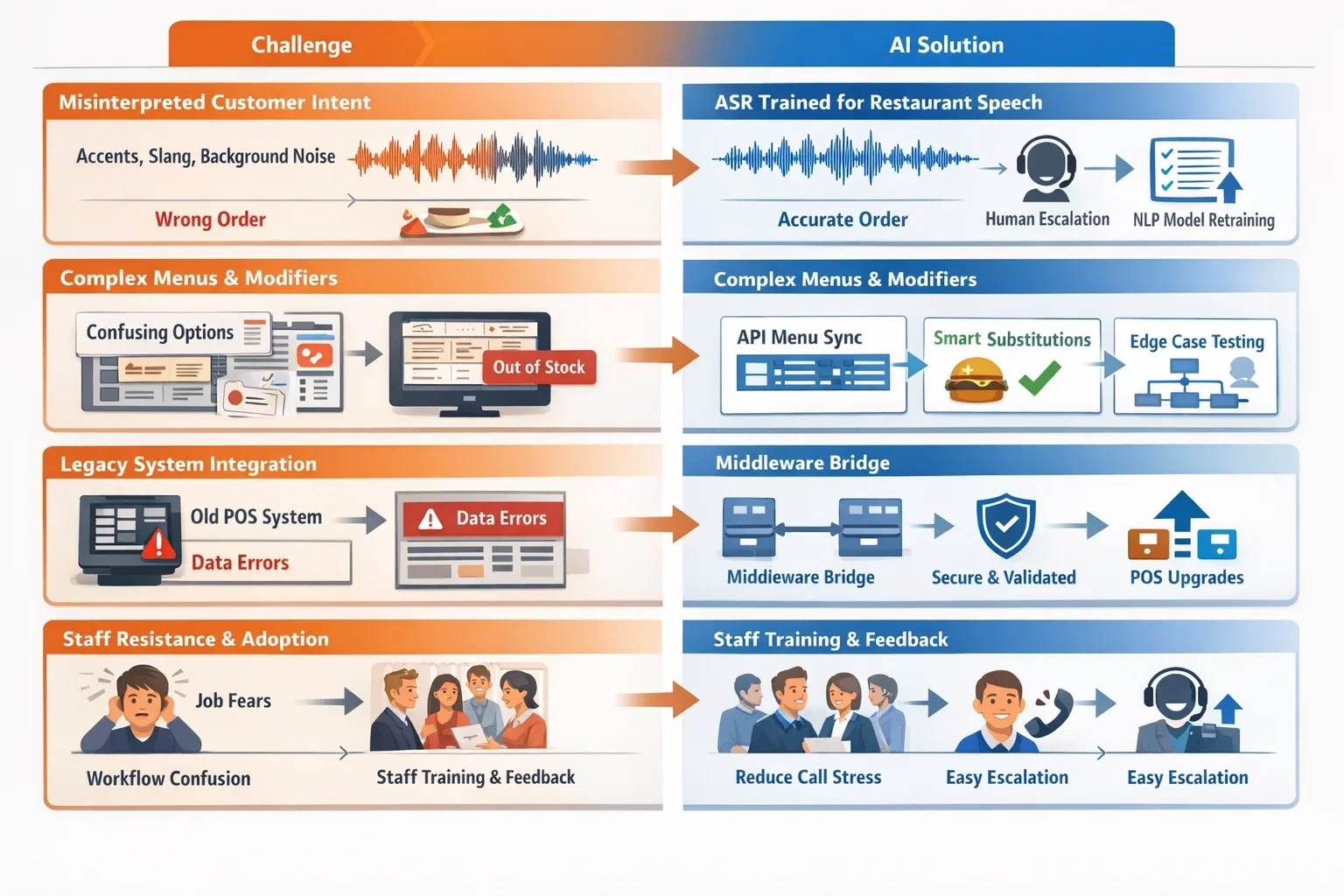
Challenges in Restaurant Voice Ordering and How to Solve Them
While AI-powered voice ordering systems deliver measurable business value, early-stage implementation often encounters predictable challenges. Addressing these upfront improves system accuracy and staff confidence.
Misinterpreted Customer Intent
Challenge: Accents, slang, background noise, or fast speech can reduce speech recognition accuracy.
Solution:
Use ASR models trained specifically for foodservice environments
Enable fallback-to-human escalation triggers
Review call transcripts and retrain NLP models regularly
Deploy middleware or API bridges to connect legacy systems. Prioritise upgrades at high-traffic locations. Middleware should validate inputs to prevent malformed data, block suspicious SQL command patterns, and defend against common online attacks.
Choose voice-first POS vendors where feasible.
For enterprises, define a security plan with documented security controls and consistent control implementation across every location.
Log edge security events (for example, via Cloudflare Ray ID) and watch for risky inputs; any suspicious word or phrase patterns can trigger human escalation.
Staff Resistance or Adoption Gaps
Challenge: Frontline teams may fear displacement or feel overwhelmed by new workflows.
Solution:
Involve staff early through pilot testing and feedback loops.
Reinforce that AI reduces call pressure and stress, not jobs.
Maintain simple, visible human escalation paths.
What Are Alternatives to Phone Ordering for Busy Restaurants?
Not every restaurant is ready for full voice AI ordering. These alternatives can still reduce call volume, improve customer satisfaction, and support automation goals.
1. Online Ordering Platforms
Platforms like Toast, Square, and Olo offer digital menus, loyalty integration, and real-time POS synchronisation. Best for: Off-premise orders and self-service customers
2. Chatbots & SMS Ordering
Text-based conversational systems guide customers through menu selection and promotions. Best for: Off-hours ordering and low-noise environments
3. QR Code Menus with Voice Support
Voice-enabled web menus allow customers to speak orders after scanning a QR code. Best for: Fast-casual restaurants, food halls, and staff-light formats
4. Loyalty App Push Ordering
AI-powered triggers prompt one-tap reorders or personalised offers through mobile apps. Best for: Repeat customers and loyalty-driven upsells
5. AI Receptionists for Restaurants
Voice AI handles inbound calls for hours, directions, reservations, and FAQs. Best for: Independent restaurants without front desk teams
Prebuilt modules from platforms like VOICEplug or Activemenus embed voice ordering technology into existing mobile apps. Best for: Tech-forward independents and chains with established app users
Voice AI Ordering Trends to Watch in 2026 and Beyond
Restaurant voice AI is evolving from task execution to context-aware, emotionally intelligent systems.
Emotion-Aware AI for Tone-Sensitive Orders
Next-gen systems analyse tone, pacing, and sentiment using advanced natural language processing. This allows dynamic responses such as slowing speech, offering clarification, or triggering human escalation.
Multilingual Fallback Systems
Instead of rigid language selection, future systems will adapt mid-conversation, switching languages or simplifying phrasing automatically when users struggle.
AI-Powered Upsell Agents
Context-aware AI will recommend add-ons based on:
Time of day
Past orders
Location-level KPIs
Active promotions
Similar to Netflix or Spotify recommendations, but tuned for food ordering.
Smart Integrations with AR Menus
Voice AI will pair with AR menus and visual browsing, letting customers order by speaking what they see, bridging visual UX, voice UX, and omnichannel journeys.
How APPWRK Delivers Scalable AI Voice Ordering Systems
APPWRK builds AI voice ordering systems tailored for QSRs, cloud kitchens, and dine-in restaurants. We don’t just plug in software; we customise everything from voice UX to POS integrations based on your format and scale.
Post-launch, we monitor KPIs, tune scripts, improve ASR/NLP accuracy, and push updates to maintain high ROI and order quality.
Founder’s Guide: When Does Voice Ordering Make Sense, and When It Doesn’t
Voice AI ordering systems are most effective when high call volume, staffing strain, and digital readiness align. They’re not a one-size-fits-all fix. Here’s how to evaluate fit for your restaurant format.
Best Fit for Voice AI Ordering
50+ daily calls per location → missed calls = lost revenue
Rush-hour pressure → phone orders disrupt dine-in and kitchen flow
QSRs, drive-thrus, fast casual → simple menus, repeat orders
Digital-ready restaurants → POS, CRM, KDS integrations in place
Customers expect speed → ideal for contactless, voice-first journeys
When to Skip or Start Small
Low or seasonal call volume
Chef-driven or rotating menus
Human interaction = core brand value
Most orders come through the app/web already
Smart Hybrid Voice Ordering Use
Handle overflow or late-night calls
Reorders via loyalty data
Automate FAQs, delivery, hours, and reservations
FAQs: AI Voice Ordering for Restaurants
Why do restaurants miss so many phone orders during peak hours?
Because staff juggle dine-in service, kitchen coordination, and digital platforms, phone calls are often deprioritised during rush periods.
How much revenue do restaurants lose from unanswered calls?
Typically $1,000–$7,000 per month per location, which can exceed $50,000 annually for busy stores.
How do high-volume restaurants manage phone orders today?
Dedicated phone staff, call centres, IVRs, or increasingly, AI voice ordering systems that scale without burnout.
Does automating phone orders reduce staff stress?
Yes. It removes a high-friction task and lets teams focus on in-person service and fulfilment.
How is AI voice ordering different from IVR systems?
AI uses natural language processing to handle real conversations, modifiers, and clarifications; IVRs rely on static button flows.
What payment and identity data should voice ordering never expose?
A voice flow should never capture a personal identification number (PIN) or store bank card data; those belong to tokenised payment rails and secure payment options. Voice assistants should also avoid banking actions like withdrawing cash or reading details tied to a checking account.”
How accurate are AI voice ordering systems in noisy environments?
Leading systems achieve 90–98% order accuracy using noise filtering and contextual training. Want to set up a supremely accurate AI voice ordering system for your organisation? Contact APPWRK today.
Can voice AI integrate with POS and kitchen systems?
Yes, especially where staffing is tight or call volume is consistent. Cloud deployments allow gradual scaling.
How long does implementation take?
Typically 6–8 weeks, including menu mapping, integrations, training, and pilot testing.
Is customer data secure with voice AI ordering?
Yes, provided vendors comply with PCI DSS, SOC 2, and relevant regulatory frameworks. Always review security documentation. Ask vendors for proof of Payment Card Industry Data Security Standard compliance, plus governance aligned to NIST Risk Management Framework and, where applicable, Federal Information Security Modernisation Act practices.
Gourav Khanna is the Co-founder and CEO of APPWRK, leading the company’s vision to deliver AI-first, scalable digital solutions for enterprises and high-growth startups. With over 16 years of leadership in technology, he is known for driving digital transformation strategies that connect business ambition with outcome-focused execution across healthcare, retail, logistics, and enterprise operations.
Recognized as a strategic industry voice, Gourav brings deep expertise in product strategy, AI adoption, and platform engineering. Through his insights, he helps decision-makers prioritize market traction, operational efficiency, and long-term ROI while building resilient, user-centric digital systems.
Subscribe to APPWRK Blogs, We'll Do the Rest!
Get Blogs on UI/UX, Mobile Apps, Online Marketing, and Web development technology.
Unlock worthy and priceless suggestions from the masters of mobile and web app development