150+ minds across 4 countries. Join a culture of innovation, ownership & growth.
Rewire for AI
From machine learning to deep learning, from classification tools to overall process automation – our AI engineers will help you retool your existing system or enhance your company results.
Ship faster, scale smarter, built for product companies and SaaS teams
Our Latest Work
We strive hard to deliver result-driven digital solutions across the globe. Check out our case studies to get a glimpse of how we ideate, innovate, and create unconventional digital solutions according to the requirements of our clients.
Discover diverse and passionate insights from our tech enthusiasts. We collaborate across various sectors to streamline operations and drive innovation. Explore our rapidly growing collection of articles to see why we’re at the forefront of IT solutions.
The decision to move from Magento to Shopify is one of the most significant replatforming choices an ecommerce business can make. Magento is powerful, but its power comes with...
Accuracy gap is real: Traditional CPG forecasting carries a 25-40% MAPE error rate. AI-powered models bring that down to 8-15%, according to McKinsey research....
Real stories from global leaders who trusted us with their ideas.
Partnering with APPWRK helped us build a compliant and scalable healthcare platform, accelerating our time-to-market by 35%. Their team consistently delivered outstanding work.
Beesers
Digital Healthcare Client
Collaborating with APPWRK, Sportskeeda modernized its platform into a real-time sports engagement ecosystem, enabling seamless content delivery, scalable fan interactions, and high-velocity performance.
Sportskeeda
Sports & Entertainment Partner
Working with APPWRK was effortless. They captured our vision, maintained full compliance, and delivered a digital experience that built trust and elevated how customers interact with our fintech brand.
PayPenny
Fintech Partner
Working with APPWRK gave us confidence in adopting AI responsibly. Their team built a safe, intelligent bot that transformed how we engage with leads and helped us achieve measurable revenue growth.
IFB
AI Transformation Partner
Leveraging APPWRK’s digital expertise, Nemesis launched a scalable, compliant, and safe super app that connects content delivery, real-time communication, and logistics management within a single platform.
Nemesis
Super App Partner
Modernize Your Hiring Infrastructure with APPWRK
APPWRK partners with founders and enterprises to design, build, and scale AI-powered hiring platforms that reduce cost-per-hire and accelerate growth.
The cost to build an AI recruitment platform starts from $8,000 for a basic AI ATS and can range up to $320,000 for an enterprise AI recruitment platform, depending on AI complexity and integrations.
AI recruitment platform development cost depends heavily on platform maturity. An MVP AI recruitment tool can launch within $8,000 to $25,000, while predictive enterprise systems demand a six-figure investment.
AI recruitment software development cost is driven by AI engineering, data training, ATS/HRMS integrations, compliance layers, and pricing considerations such as implementation fees, data migration costs, and support and maintenance.
AI recruitment software pricing varies widely. A recruitment software price comparison shows models such as subscription-based, pay-per-user pricing, tiered pricing, and custom pricing, ranging from about $99 per user/month to $60,000+ annually for enterprise SaaS.
The total cost of ownership includes potential additional costs of recruitment software, like model retraining, bias audits, additional storage, rising subscription fees, overages, and vendor minimum billing fees that affect predictability in costs.
Whether it is cheaper to build or buy AI recruitment software depends on hiring volume, internal capability, and ROI modelling. Many companies see positive ROI within 3–6 months, while traditional recruitment methods cost 3x more than AI-assisted hiring in high-volume scenarios.
The best platforms provide transparent pricing, flexible plans negotiated directly with the vendor, and cost clarity to prevent tools from becoming cost-prohibitive as hiring scales.
This guide is designed for HR tech founders, CTOs, enterprise CHROs, and recruitment agencies, comparing types of recruitment software pricing and evaluating the reduction in recruitment costs per hire before committing capital.
Cost to Build an AI Recruitment Platform by Maturity Level
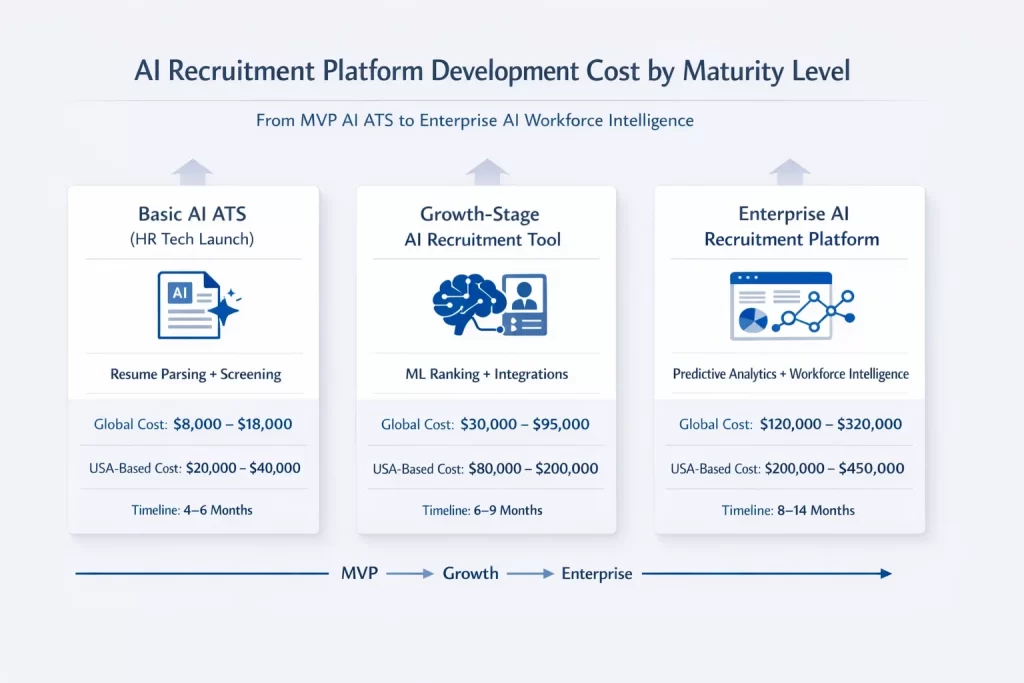
AI recruitment platform development cost in 2026 starts from $8,000 for a basic AI ATS and can range up to $320,000 for an enterprise AI recruitment platform, depending on AI complexity and integrations.
The cost to build an AI recruitment platform varies significantly depending on whether you are launching a basic AI ATS, scaling into a growth-stage AI recruitment tool, or building a full enterprise AI recruitment software ecosystem.
Below is a benchmark view from MVP to enterprise scale.
AI recruitment platform Type
Scope
Global Cost
USA-Based Cost
Timeline
Basic AI ATS (HR Tech Launch)
Resume parsing + screening
$8,000 to $18,000
$20,000 to $40,000
4–6 months
AI Recruitment Tool (Growth Stage)
ML ranking + integrations
$30,000 to $95,000
$80,000 to $200,000
6–9 months
Enterprise AI Recruitment Platform
Predictive analytics + workforce intelligence
$120,000 to $320,000
$200,000 to $450,000
8–14 months
Basic AI ATS
Focuses on resume parsing, structured screening logic, and minimal integrations. Many HR tech founders start here to validate demand before investing in advanced pricing models.
Growth-Stage AI Recruitment Tool
Introduces machine learning ranking, deeper integrations, and candidate scoring. Development cost rises due to training data, API complexity, and implementation fees.
Enterprise AI Recruitment Platform
Adds predictive intelligence, analytics dashboards, explainable AI modules, and compliance frameworks. At this level, cost shifts from product build to long-term ownership economics.
Cost Breakdown for Building AI Recruiting Software from Scratch
When evaluating the cost breakdown for building AI recruiting software from scratch, the real driver is architecture depth, AI sophistication, integrations, and compliance readiness, not just coding effort.
Below is a realistic allocation model used in enterprise planning and pricing considerations.
Component of the AI recruitment tool Development
% of Budget
Key Drivers
AI/ML Engineering
25–35%
NLP, ranking models, LLM integration
Backend Architecture
15–20%
Multi-tenant SaaS design
Frontend & UX
10–15%
Recruiter workflows and dashboards
ATS/CRM Integrations
10–15%
API complexity and mapping
Cloud & GPU Infrastructure
10–20%
Inference and scaling
Security & Compliance
5–10%
GDPR, EEOC readiness
QA & Bias Testing
5–10%
Explainable AI validation
Why AI/ML Engineering Dominates the Budget
AI/ML engineering represents the largest cost component because the effectiveness of a recruitment platform depends on model accuracy, fairness, and scalability.
Resume classification, candidate ranking, semantic matching, and bias mitigation require specialized machine learning expertise, curated training datasets, and continuous model refinement.
Underinvesting in AI engineering often results in poor candidate matching, recruiter distrust, and delayed improvements in cost-per-hire metrics. Organizations that invest in robust model design and validation achieve faster automation gains, improved hiring accuracy, and stronger ROI outcomes.
AI Recruitment Software Pricing Models & Market Rates
Before deciding whether to build or buy, organisations should understand the types of recruitment software pricing used by vendors. Most platforms follow structured tiers:
AI Recruitment Software Pricing Model
Market Range
Pay-per-user pricing
$99 to $699/month
Per-job pricing
$5 to $25 per requisition
Usage-based
Based on candidate volume
Enterprise flat fee
$10,000 to $60,000/year
Custom pricing contracts
$50,000+ annually
Some vendors also offer:
tiered pricing based on features
free trial access for evaluation
custom pricing negotiated directly with the vendor
These structures influence buy-vs-build decisions. For smaller teams, predictable subscription-based pricing simplifies budgeting. For enterprises, rising subscription fees over several years may exceed the cost of custom platform development.
Factors Affecting AI Recruitment Platform Development Cost
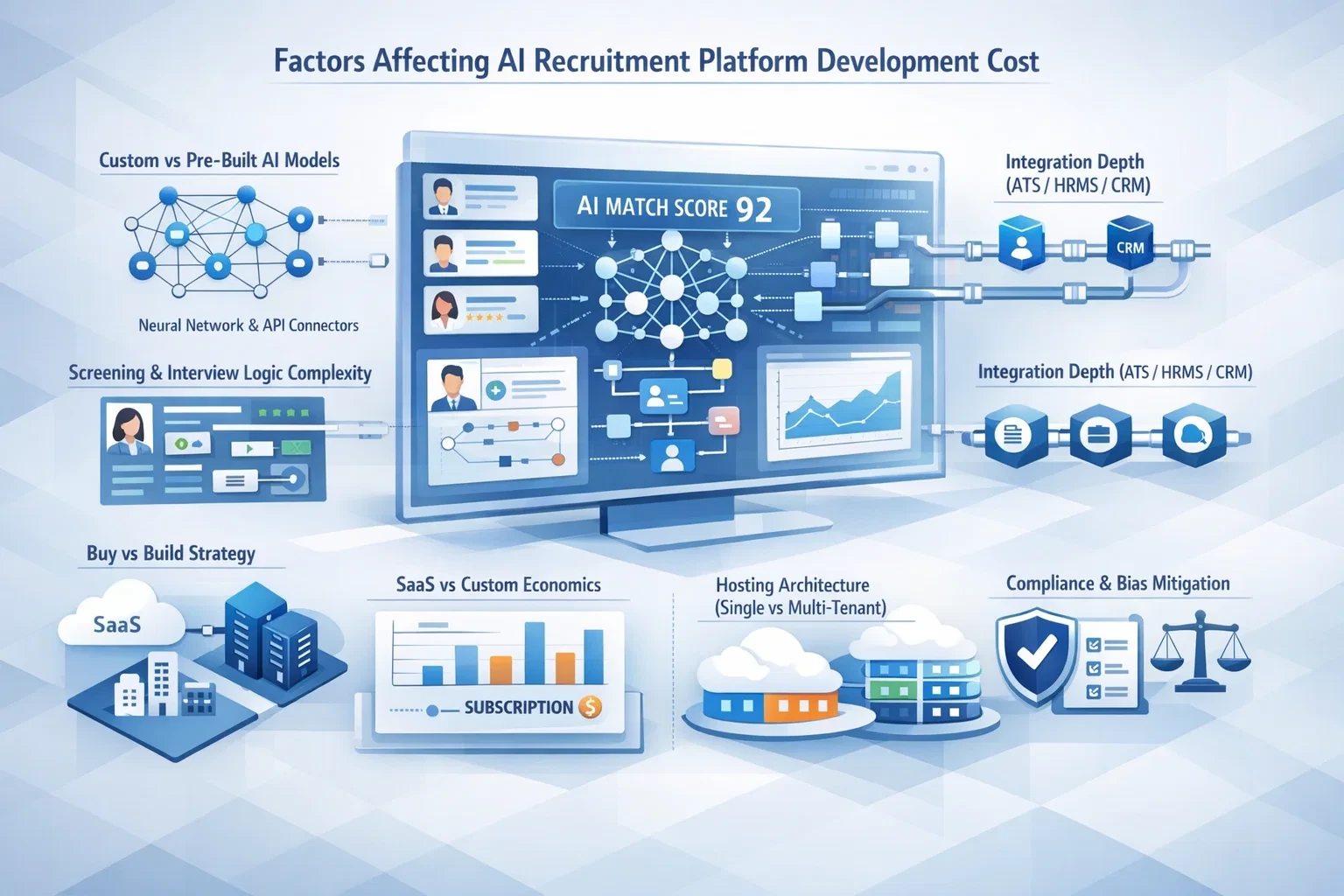
Before finalising budgets, organisations must understand what truly drives AI recruitment platform development costs. Two platforms with similar features can have very different investment requirements depending on architecture, integrations, and pricing strategy.
Below are the core variables influencing total cost and long-term ROI:
Custom vs Pre-Built AI Models
Using third-party APIs lowers initial cost and accelerates launch timelines, which works well for early-stage platforms or teams testing pricing structures such as free trial, minimum billing amount, or negotiated directly with the vendor contracts.
Building custom models increases development cost due to training cycles and infrastructure, but it delivers stronger differentiation, data ownership, and a faster path to positive ROI within 3–6 months once scale is achieved.
Complexity of Screening & Interview Logic
Basic filtering keeps platform cost controlled. Introducing contextual matching, behavioural scoring, or video intelligence increases engineering complexity and long-term support and maintenance requirements.
Advanced logic layers raise both development and operational expenses but significantly improve hiring accuracy and automation efficiency.
Data Scale & Training Requirements
AI improves with data volume. Platforms handling high hiring throughput require continuous ingestion, labelling pipelines, and retraining workflows. Larger datasets increase infrastructure usage and affect the total cost of ownership, especially when scaling across enterprise deployments.
Integration Depth (ATS, HRMS, CRM)
Standalone MVPs are cheaper, but enterprise deployments typically require integrations with ATS, HRMS, payroll, and assessment tools. Each integration adds engineering time, implementation fees, and data migration costs, making integration depth one of the most underestimated pricing considerations.
Buy vs Build Cost Impact
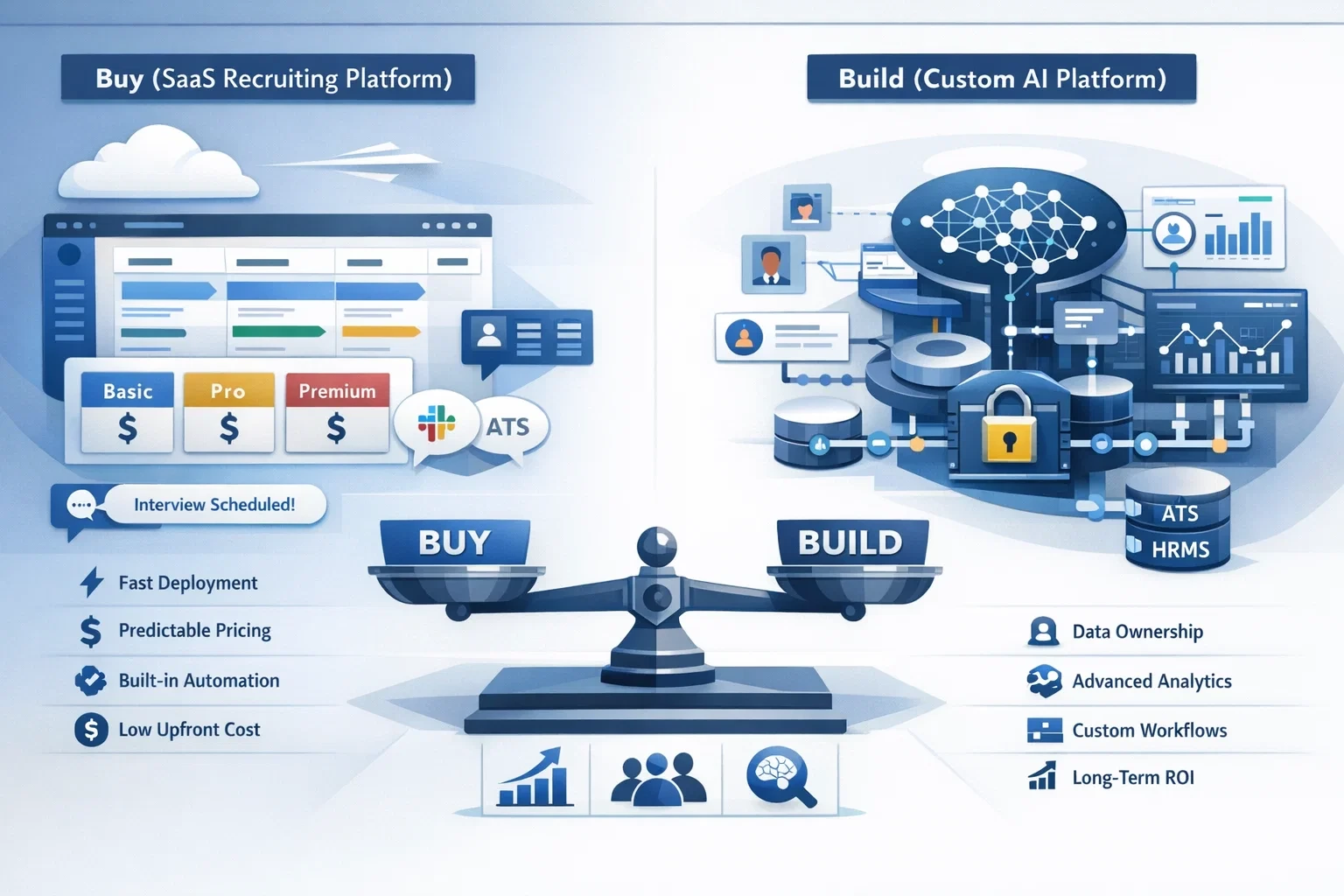
Buying reduces initial costs and enables faster deployment, making it ideal for teams seeking quick productivity gains. However, recurring subscription fees, add-ons, and usage overages can increase total spending over time.
Building requires a higher upfront investment but provides data ownership, deeper customization, and freedom from vendor dependency. For high-volume hiring environments, custom platforms often deliver stronger long-term ROI.
SaaS Pricing vs Custom Development Economics
SaaS recruiting platforms offer predictable pricing and lower entry barriers, simplifying budgeting for small and mid-size teams. Common models include per-user fees, usage-based billing, and enterprise licensing.
Custom platforms involve higher initial development costs but reduce recurring vendor expenses and allow automation tailored to internal workflows. Over time, organizations with large hiring volumes may find custom systems more cost-efficient by avoiding subscription escalation and integration limits.
Understanding these tradeoffs helps organizations choose a model aligned with hiring scale, control, and long-term cost predictability.
Hosting Architecture (Single vs Multi-Tenant)
Single-tenant systems may work for pilots. Multi-tenant SaaS architecture is required for scalable platforms and supports pricing models like tiered pricing or pay-per-user pricing. However, it demands stronger backend systems, security layers, and data isolation frameworks.
Cloud infrastructure, auto-scaling, and GPU workloads increase operational costs but improve predictability in costs and simplify budgeting at scale.
Compliance & Bias Mitigation Requirements
Recruitment platforms operate in regulated environments. GDPR, EEOC compliance, audit logging, and bias testing are essential for enterprise adoption.
Adding these frameworks increases development cost but prevents legal exposure and strengthens platform credibility. Vendors offering transparent pricing and clear compliance structures are typically preferred because they reduce the risk of hidden fees, rising subscription fees, or unexpected minimum billing fees.
Real-World Cost Case Study: Startup vs Enterprise Build
Before comparing startup and enterprise investment models, it helps to review a real deployment showing how structured implementation translates into measurable outcomes and realistic return on investment (ROI).
Real Implementation by APPWRK: AI Recruitment Platform in Action
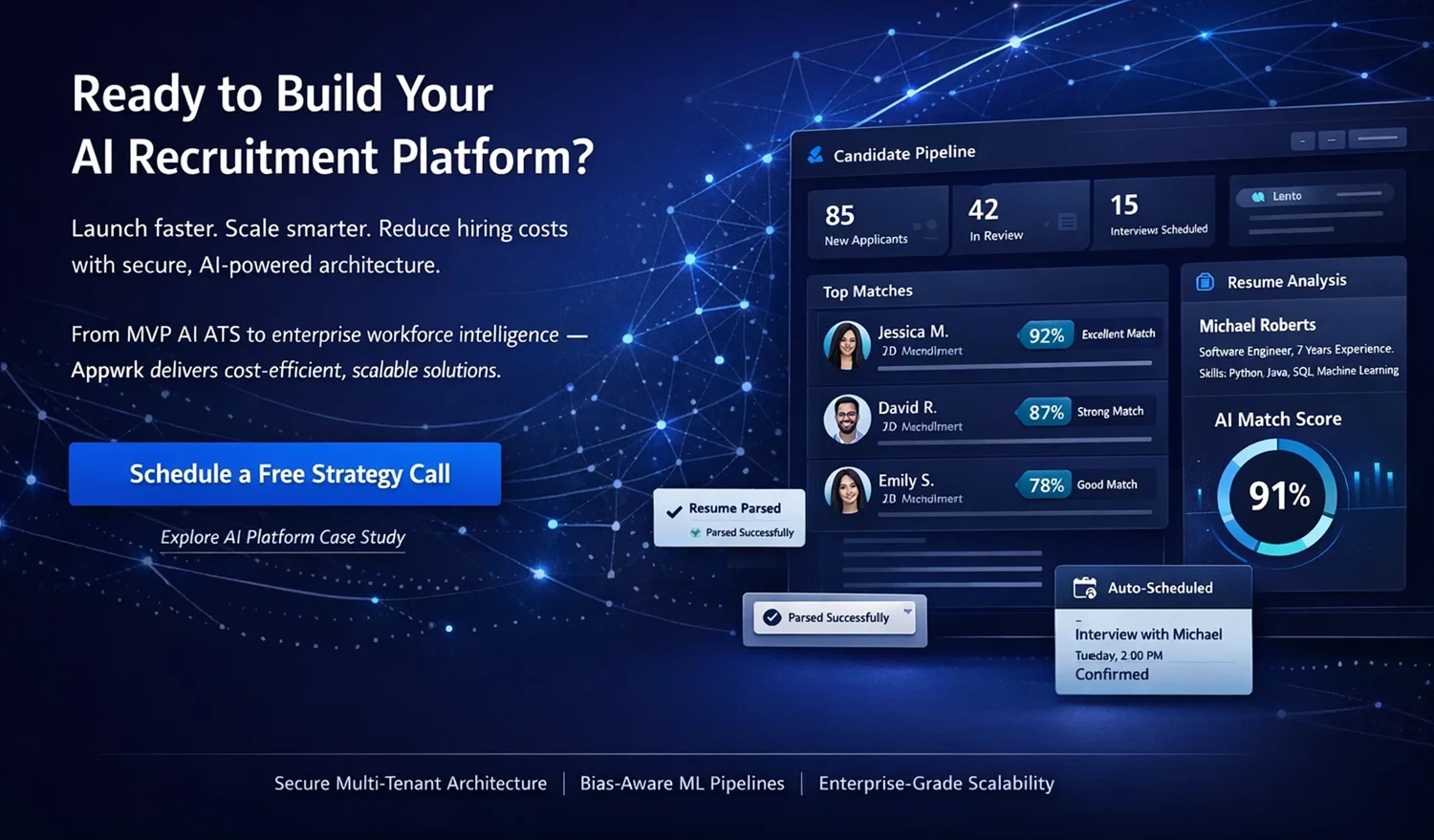
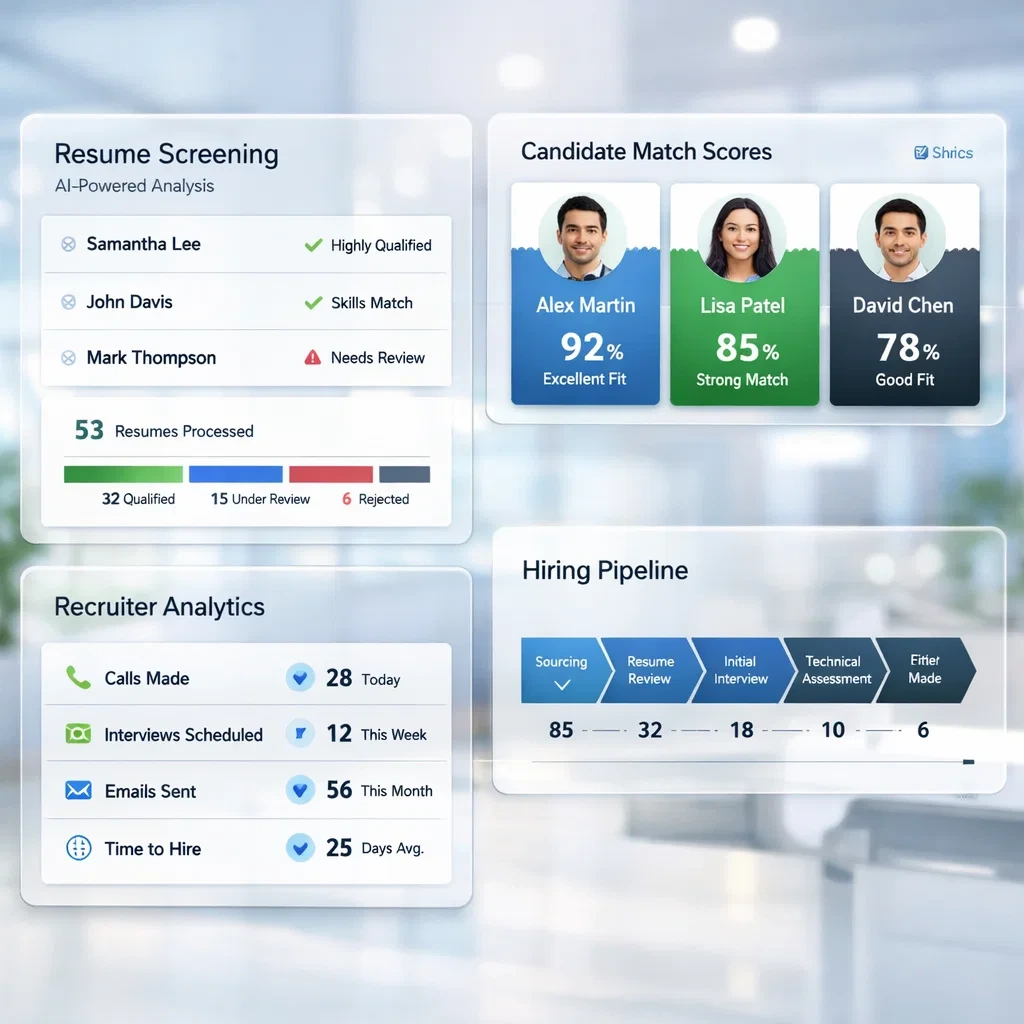
APPWRK deployed an AI-powered platform to automate screening, improve candidate pipeline visibility, and accelerate interview scheduling across high-volume hiring environments.
Instead of replacing existing infrastructure, the solution is integrated directly with the client’s applicant tracking system, minimising implementation fees, preserving workflows, and ensuring predictable rollout timelines.
Seamless integration avoided operational disruption and reduced initial subscription costs for tools already in use
Business Use Cases
Enterprises managing large recruitment volumes, organizations facing high attrition, or hiring inefficiencies
Recruitment firms optimising sourcing at scale.
This implementation proves that automation reduces time-to-hire, lowers cost-per-hire, and enables a measurable reduction in recruitment costs per hire while avoiding the hidden costs of recruitment common in manual processes.
SaaS Pricing Model: subscription-based or pay-per-user pricing ($149 to $299/month)
Break-even Target: 18–24 months
At this stage, development cost stays controlled by limiting custom models and focusing on automation. Many startups choose this route after a Recruitment Software Price Comparison confirms that enterprise SaaS platforms may be cost-prohibitive during validation.
This phase allows product testing before scaling AI sophistication.
Scenario 2: Enterprise AI Recruitment Platform Build
Enterprises modernising talent acquisition require predictive analytics, workforce dashboards, compliance frameworks, and deep integrations.
Enterprise Cost Model
Initial Development: $180,000 to $300,000, depending on complexity
Annual Infrastructure: $60,000 to $120,000, depending on usage scale
Compliance & Audit: $30,000 to $50,000 annually
Expected 20–30% reduction in recruitment costs per hire
At enterprise scale, cost expands beyond engineering into governance, integrations, and long-term architecture.
However, high hiring volumes amplify return on investment (ROI). In many cases, organisations achieve positive ROI within 3–6 months once automation replaces manual sourcing, agency fees, and repetitive screening.
These scenarios show that development cost is not just technical. It is a strategic decision tied to hiring volume, differentiation, and long-term cost control. In high-volume environments, traditional recruitment methods cost 3x more than AI-assisted hiring.
Popular AI Recruitment Platforms & Vendor Comparison
Below are tools commonly analysed in Recruitment Software Price Comparison studies. Each differs in automation depth, scalability, and pricing flexibility.
HireVue
Known for AI-driven video interview intelligence and enterprise hiring automation.
Workable
Mid-market ATS with AI screening and collaborative hiring workflows.
Greenhouse
Enterprise ATS platform with a strong integration ecosystem and structured hiring support.
Manatal
Budget-friendly AI recruitment tool targeting agencies and SMBs.
Eightfold
Enterprise-grade AI talent intelligence platform focused on predictive workforce analytics.
Total Cost of Ownership (TCO) of AI Recruitment Software
The real cost to build an AI recruitment platform extends beyond development. Total Cost of Ownership determines long-term sustainability.
TCO includes visible, hidden, and recurring costs.
Visible Costs
These are predictable investments:
Development and engineering
Licensing APIs or models
Infrastructure hosting
They form the foundation of AI recruitment software development costs.
Hidden Costs
Hidden expenses expand after launch and represent common Potential Additional Costs of Recruitment Software:
Model retraining
Compliance audits
Data Migration Costs
additional storage requirements
onboarding and training
Ignoring these leads to inaccurate projections.
Ongoing Annual Cost Model
Category
Annual Range
Cloud Infrastructure
$10K to $80K
AI Maintenance
$15K to $60K
DevOps & Support and Maintenance
$20K to $120K
Over five years, these recurring costs determine whether the building is financially viable or whether SaaS options with transparent pricing provide better predictability in costs.
Organizations should also review:
minimum billing amount or minimum billing fee clauses
overages for usage spikes
long-term pricing considerations
These factors directly affect whether a solution remains scalable or becomes cost-prohibitive.
Build vs Buy AI Recruitment Software: Cost, ROI & Strategic Tradeoffs
Whether it is cheaper to build or buy depends on hiring volume, data ownership needs, and long-term strategy. SaaS improves productivity fast. Custom platforms create competitive advantage.
When Buying Makes Sense
Buying works when speed and predictable pricing matter most.
Lower hiring volume
Limited engineering capacity
Fast deployment with tools like HireVue or Greenhouse
Pay-per-user or tiered pricing models
Platforms like SeekOut, hireEZ, and Eightfold improve sourcing and outreach immediately, often generating ROI within months.
When Building Makes Sense
Building is strategic when hiring infrastructure is core IP.
High-volume or global hiring
Deep ATS integration
Ownership of candidate pipeline data
Advanced analytics and proprietary matching
Custom systems reduce long-term dependency and support scalable cost control.
5-Year Cost Snapshot
Option
5-Year Cost
Control
SaaS Tools
$250K to 1M
Low
Custom Platform
$300K to 900K
High
SaaS lowers upfront spend but compounds recurring fees. Custom builds require a higher initial investment but deliver stronger long-term leverage.
Essential Features of AI Recruitment Software
Before committing budget, defining the scope is critical. The cost to build an AI recruitment platform is shaped by automation depth, integrations, and intelligence layers.
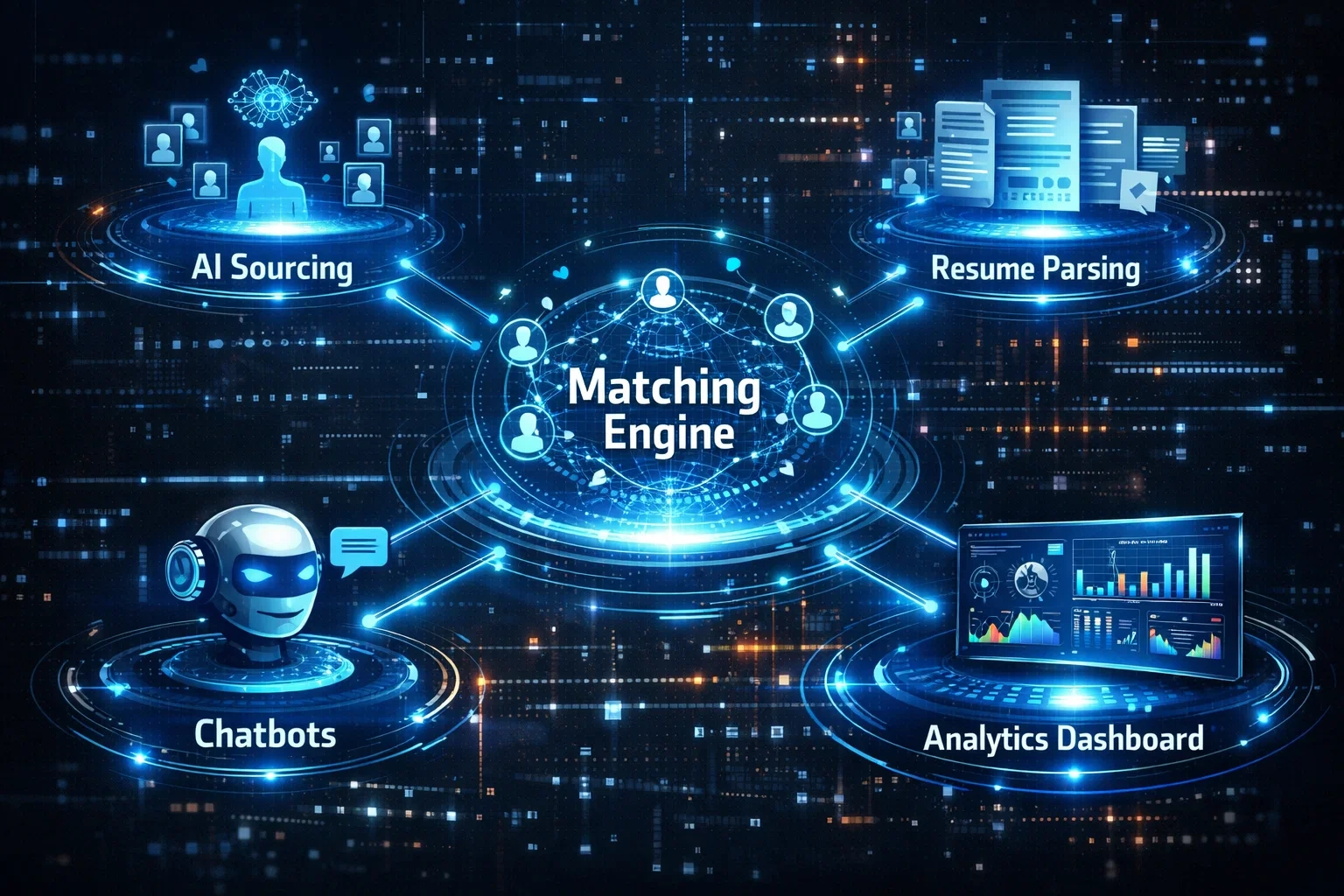
AI-Powered Candidate Sourcing
Modern platforms extend beyond LinkedIn searches. AI sourcing tools scan multiple databases simultaneously, expanding reach across developer networks, job platforms, and global talent pools.
This improves pipeline quality while reducing manual search effort.
Resume Parsing & Skill Extraction
Natural language processing converts resumes into structured candidate profiles automatically. This reduces manual screening and lowers internal recruiting costs while improving evaluation consistency.
AI Matching Engine
Matching models rank applicants using historical hiring data, behavioural signals, and skill patterns. Platforms combining structured data with predictive intelligence improve decision confidence and hiring quality.
Interview Automation
Scheduling tools, structured interview rubrics, and automated coordination reduce delays. Systems such as video interview platforms and conversational assistants streamline evaluation without increasing recruiter workload.
Chatbots & Conversational AI
AI assistants manage candidate outreach, follow-ups, and pre-screening. Integrated bots support engagement while freeing recruiters for strategic work.
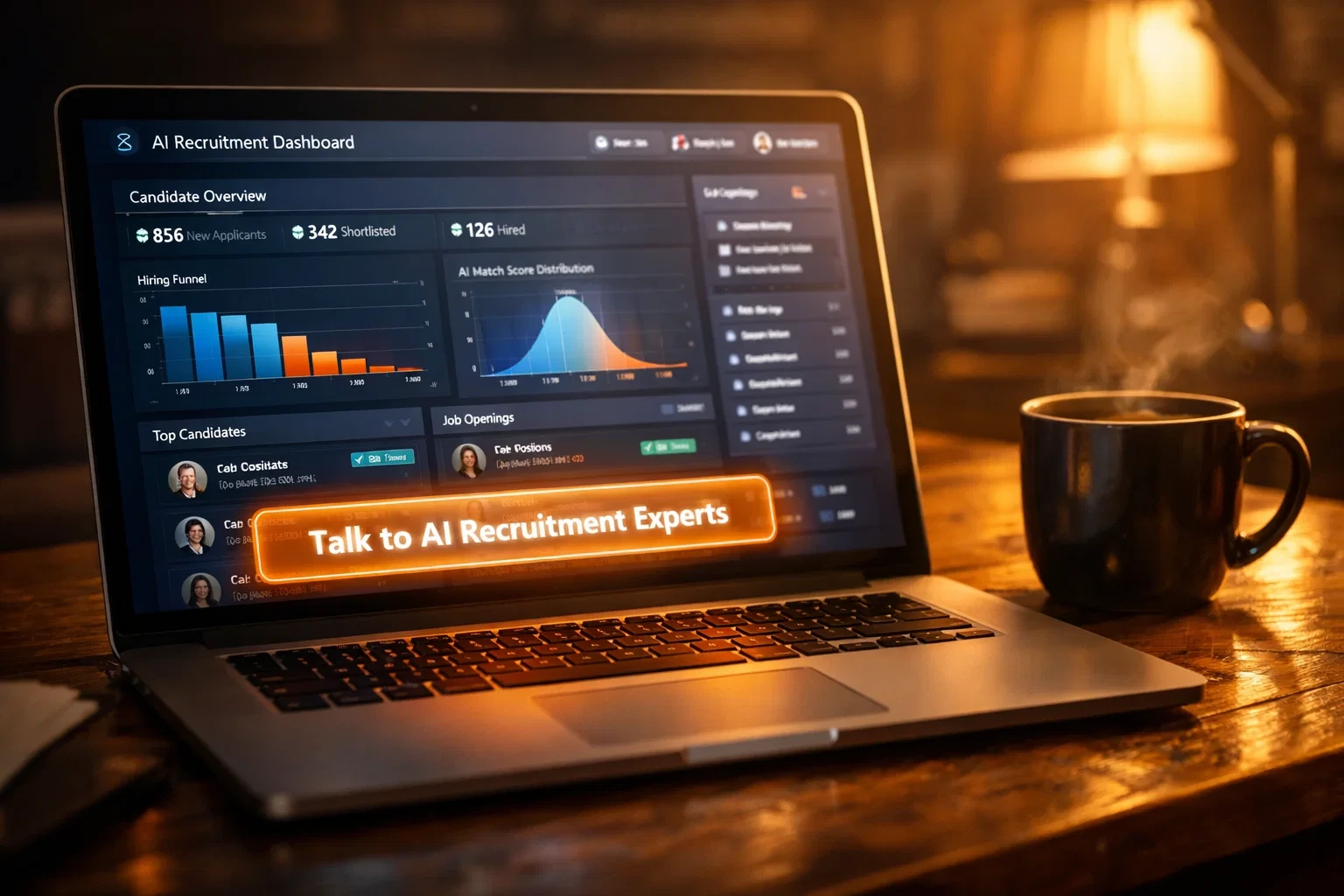
Analytics Dashboards
Modern recruiting software provides real-time dashboards showing pipeline movement, sourcing performance, and productivity metrics. These insights support data-driven decisions and help teams optimise hiring strategy.
Pricing Considerations Before Choosing
Before selecting a platform, organisations should review the types of Recruitment Software Pricing and evaluate Potential Additional Costs of Recruitment Software, including:
Implementation fees
Support and Maintenance charges
Data Migration Costs
infrastructure scaling
usage overages
Clear pricing considerations ensure transparent pricing, simplify budgeting, and prevent tools from becoming cost-prohibitive over time.
Advanced AI Features That Increase Recruitment Platform Cost
As platforms mature, AI recruitment tool development cost rises when shifting from automation to intelligence-driven systems. These advanced modules improve differentiation, hiring accuracy, and reduction in recruitment costs per hire, but require deeper engineering, infrastructure, and compliance investment.
Custom GPT wrappers and AI email generator workflows expand development scope yet improve personalisation, response rates, and hiring efficiency.
For companies evaluating Recruitment Software Price Comparison, these features often appear only in premium tiers or custom pricing enterprise plans.
Sentiment Analysis
Tracking candidate sentiment across interviews, chatbots, and emails requires behavioural models and analytics pipelines.
This increases development complexity but strengthens decision accuracy and candidate experience optimisation.
Advanced sentiment engines are typically available only in tiered pricing or enterprise subscription-based recruiting software packages due to infrastructure cost.
Predictive Attrition Modelling
Enterprise platforms integrate career pattern analytics and workforce history data to forecast retention risk.
Predictive hiring systems require long-term model training and validation layers, increasing cost but improving return on investment (ROI).
Organisations implementing these systems often report that traditional recruitment methods cost 3x more than AI-assisted hiring when turnover costs are included.
Multilingual LLM Integration
Global hiring requires multilingual conversational AI across sourcing, outreach, and interviews.
Supporting multilingual processing and compliance layers significantly expands infrastructure requirements.
These capabilities are typically offered under enterprise custom pricing models negotiated directly with the vendor.
Talent Intelligence Graphs
Platforms like Eightfold and Findem map skills, trends, and relationships across talent ecosystems.
Building internal graphs requires large-scale indexing and aggregation, making this one of the highest-cost AI features.
This capability often differentiates proprietary platforms from SaaS tools and can justify investment through positive ROI within 3–6 months for high-volume hiring organisations.
Use Cases of AI Recruitment Platform by Organisation Type
Different organisations adopt AI solutions for different strategic reasons. Understanding use-case alignment helps estimate the cost to build an AI recruitment platform and evaluate vendor pricing models realistically.
HR-Tech Startups Launching AI ATS
Startups prioritise fast launch and predictable costs. Typical focus areas:
Resume screening
Matching automation
Pipeline visibility
They often start with subscription-based or pay-per-user pricing tools before building proprietary systems.
Enterprise CHRO Modernisation
Large enterprises prioritise structured hiring, compliance frameworks, and integrations.
Typical enterprise deployments include:
Implementation fees
Support and Maintenance contracts
Data Migration Costs
These investments drive a measurable reduction in recruitment costs per hire.
Agencies use AI sourcing tools to scale outreach and tracking. Automation helps:
Improve recruiter productivity
Reduce manual effort
Simplify budgeting
Predictable usage-based or tiered pricing models make cost planning easier.
CTOs Building Proprietary AI Platforms
Organisations building internal platforms gain:
Full ownership of data
Deeper analytics insights
Competitive differentiation
However, this requires higher infrastructure investment, including:
Initial subscription costs
Additional storage
Model training pipelines
When evaluating Types of Recruitment Software Pricing, companies must compare build cost vs vendor pricing structures that may include Overages, Rising Subscription Fees, Minimum billing amount clauses, and Minimum billing fee commitments.
Understanding these hidden cost drivers ensures transparent pricing and long-term budget control.
Compliance & Legal Risks in AI Hiring Platforms
AI hiring systems operate in a legally sensitive environment, which means overlooking compliance can significantly increase AI recruitment platform development cost and long-term operational risk. Addressing compliance early also improves return on investment (ROI) by preventing penalties, redesign costs, and platform reengineering. Below are the core risk areas to plan for early:
EEOC Exposure
Automated screening and candidate matching models must avoid discriminatory patterns. Regular bias audits and explainable AI frameworks help maintain fairness and reduce regulatory exposure.
Ignoring bias validation can lead to legal costs that make traditional recruitment methods cost 3x more than AI-assisted hiring when remediation is required.
GDPR / CCPA
Candidate data storage, consent tracking, and cross-border processing must comply with privacy laws. A strong governance architecture protects organisations from compliance violations and prevents hidden costs that often appear as Potential Additional Costs of Recruitment Software after launch.
Explainable AI
Hiring teams and compliance officers need transparency into evaluation logic. Explainable AI improves trust, strengthens hiring decisions, and supports a reduction in recruitment costs per hire by preventing mismatches and rehiring cycles.
SOC 2 Readiness
Enterprise buyers expect security audits, access controls, and structured documentation. Building security early avoids expensive retrofitting and supports predictable implementation fees during enterprise onboarding.
30-60-90 Day AI Rollout Plan for Hiring Teams
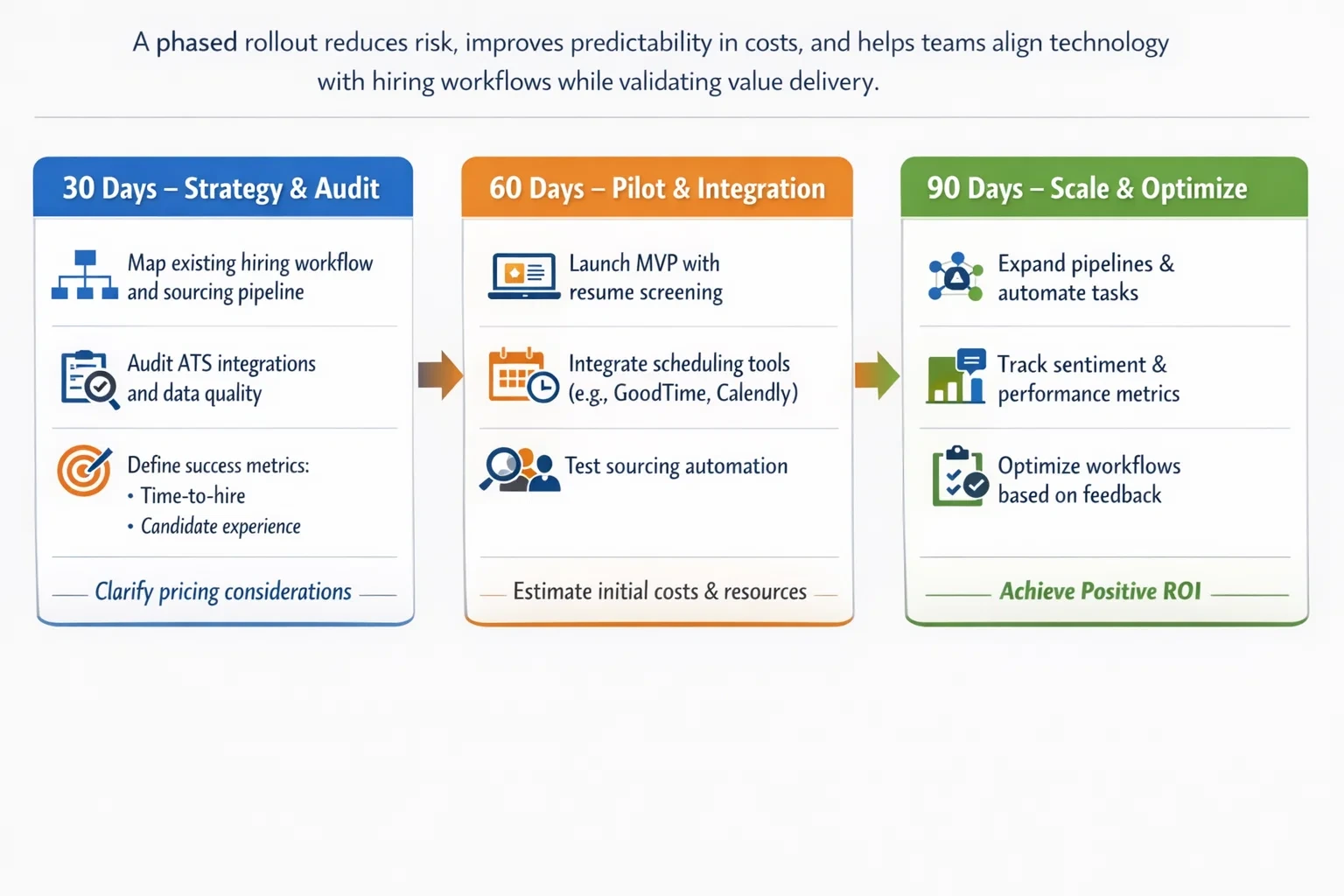
A phased rollout reduces risk, improves predictability in costs, and helps teams align technology with hiring workflows while validating value delivery.
30 Days – Strategy & Audit
Map existing hiring workflow and sourcing pipeline
Audit ATS integrations and data quality
Define success metrics such as time-to-hire and candidate experience
This phase clarifies pricing considerations and prevents tools from becoming cost-prohibitive later.
60 Days – Pilot & Integration
Launch MVP with resume screening and matching
Integrate scheduling tools such as GoodTime or Calendly
Test sourcing automation with limited talent pools
Pilot deployments help organizations estimate initial subscription costs, infrastructure usage, and resource allocation before full rollout.
90 Days – Scale & Optimize
Expand pipelines and automate recruiter tasks
Track sentiment, engagement, and performance metrics
Optimize workflows using recruiter and manager feedback
Companies that scale systematically often achieve positive ROI within 3-6 months because early inefficiencies are corrected before full deployment.
APPWRK supports organizations evaluating the cost to build an AI recruitment platform through a structured engineering and delivery model focused on measurable business outcomes.
Cost-efficient MVP launches for AI-powered ATS builds
Secure multi-tenant SaaS architecture with strong integrations
A hybrid development model to balance cost and quality
Bias-aware ML pipelines with compliance-first design
Enterprise scalability for high-volume sourcing
This approach simplifies budgeting, ensures transparent pricing, and reduces long-term infrastructure surprises.
Frequently Asked Questions
How much does it cost to build an AI recruitment platform?
Development typically starts around $8,000 for basic systems and scales beyond $320,000 for enterprise platforms, depending on integrations, AI complexity, and infrastructure.
How much does it cost to build an AI recruitment tool from scratch?
MVP builds range from $18,000 to $40,000, while advanced platforms with predictive analytics and automation can exceed six figures.
What is the AI recruitment software development cost for a startup?
Startup platforms generally fall between $20,000 to $60,000 using pre-trained APIs, lean infrastructure, and limited integrations.
How much to build a basic AI ATS for HR tech launch?
A basic ATS with resume screening and scheduling automation usually costs $8,000 to $25,000 and takes4–6 months. Ready to launch your AI-powered recruitment platform? Partner with APPWRK to design, build, and scale a custom recruitment software tailored to your hiring workflows.
Is it cheaper to build or buy AI recruitment software?
Buying tools with subscription-based, pay-per-user pricing, or tiered pricing lowers upfront investment. Building requires higher capital but offers long-term control and avoids rising subscription fees or minimum billing amount restrictions that may apply to vendor contracts.
What factors affect AI recruitment platform development cost?
Key drivers include AI model customisation, data scale, integration depth, infrastructure requirements, and compliance needs.
What are the hidden costs in AI recruitment software pricing?
Hidden costs often include data migration costs, support and maintenance, additional storage, overages, security audits, and model retraining.
How long does it take to develop an AI recruitment platform?
Timelines range from 4–6 months for MVP builds to 8–14 months for enterprise systems with advanced automation.
How do I reduce AI infrastructure costs?
Use hybrid cloud environments, optimise model inference cycles, monitor GPU usage, and leverage pre-trained APIs.
How should I price my AI recruitment software?
Common Types of Recruitment Software Pricing include subscription-based, pay-per-user pricing, usage-based, custom pricing, and enterprise licensing. Some vendors also offer free trial access or negotiate directly with the vendor contracts for large clients.
How accurate is AI candidate matching?
AI candidate matching accuracy depends heavily on data quality, model training, and role complexity. Organizations often see measurable improvements in screening efficiency and hiring accuracy when models are properly tuned and validated.
Can AI recruitment reduce hiring bias?
Yes, when properly designed and audited, AI recruitment systems can reduce bias by standardizing evaluations and removing subjective screening patterns.
Gourav Khanna is the Co-founder and CEO of APPWRK, leading the company’s vision to deliver AI-first, scalable digital solutions for enterprises and high-growth startups. With over 16 years of leadership in technology, he is known for driving digital transformation strategies that connect business ambition with outcome-focused execution across healthcare, retail, logistics, and enterprise operations.
Recognized as a strategic industry voice, Gourav brings deep expertise in product strategy, AI adoption, and platform engineering. Through his insights, he helps decision-makers prioritize market traction, operational efficiency, and long-term ROI while building resilient, user-centric digital systems.
Subscribe to APPWRK Blogs, We'll Do the Rest!
Get Blogs on UI/UX, Mobile Apps, Online Marketing, and Web development technology.
Unlock worthy and priceless suggestions from the masters of mobile and web app development