150+ minds across 4 countries. Join a culture of innovation, ownership & growth.
Rewire for AI
From machine learning to deep learning, from classification tools to overall process automation – our AI engineers will help you retool your existing system or enhance your company results.
Ship faster, scale smarter, built for product companies and SaaS teams
Our Latest Work
We strive hard to deliver result-driven digital solutions across the globe. Check out our case studies to get a glimpse of how we ideate, innovate, and create unconventional digital solutions according to the requirements of our clients.
Discover diverse and passionate insights from our tech enthusiasts. We collaborate across various sectors to streamline operations and drive innovation. Explore our rapidly growing collection of articles to see why we’re at the forefront of IT solutions.
The decision to move from Magento to Shopify is one of the most significant replatforming choices an ecommerce business can make. Magento is powerful, but its power comes with...
Accuracy gap is real: Traditional CPG forecasting carries a 25-40% MAPE error rate. AI-powered models bring that down to 8-15%, according to McKinsey research....
Real stories from global leaders who trusted us with their ideas.
Partnering with APPWRK helped us build a compliant and scalable healthcare platform, accelerating our time-to-market by 35%. Their team consistently delivered outstanding work.
Beesers
Digital Healthcare Client
Collaborating with APPWRK, Sportskeeda modernized its platform into a real-time sports engagement ecosystem, enabling seamless content delivery, scalable fan interactions, and high-velocity performance.
Sportskeeda
Sports & Entertainment Partner
Working with APPWRK was effortless. They captured our vision, maintained full compliance, and delivered a digital experience that built trust and elevated how customers interact with our fintech brand.
PayPenny
Fintech Partner
Working with APPWRK gave us confidence in adopting AI responsibly. Their team built a safe, intelligent bot that transformed how we engage with leads and helped us achieve measurable revenue growth.
IFB
AI Transformation Partner
Leveraging APPWRK’s digital expertise, Nemesis launched a scalable, compliant, and safe super app that connects content delivery, real-time communication, and logistics management within a single platform.
The cost to build a custom-built EHR (Electronic Health Record) software starts from $12,000 and ranges up to $210,000, delivering scalable features aligned with the standards of software like Epic Systems. These systems offer strategic cost advantages, deep compliance readiness, and strong clinical alignment. Builds often include HL7/FHIR integration, billing engines, clinical dashboards, and Epic-style user experiences.
EHR software like Epic ranges from simple charting tools to enterprise-grade interoperable platforms. Integration with LIS, RIS, or IoMT can increase total costs by 1.5x to 2x based on system complexity and location.
AI-driven decision support, predictive analytics, and triage automation boost care accuracy and user satisfaction, while raising EHR development budgets by 20-30%, especially in complex multi-site networks.
Strict healthcare compliance (HIPAA, GDPR, HITECH, FDA) often adds $20,000 to $50,000 to custom EHR costs due to regulatory audit readiness, access controls, and encryption layers, similar to Epic-grade standards.
Modular MVP strategies support phased rollouts by starting with features like registration, clinical workflows, or billing. This reduces upfront risk and helps validate real-time adoption before scaling to Epic-level complexity.
Hidden costs, such as compliance testing, HL7 vendor coordination, or stakeholder training, often add 10-18% more to the overall cost but are essential for long-term uptime and data governance.
This EHR-focused breakdown is tailored for CIOs, CTOs, and digital health leaders planning Epic-equivalent functionality without its vendor lock-in. The insights here help strategically benchmark pricing, compliance scope, interoperability challenges, and vendor ROI, all critical to future-proof digital health investments.
Global Healthcare IT Market Growth & the Shift from Outsourced EHR to Custom Platforms
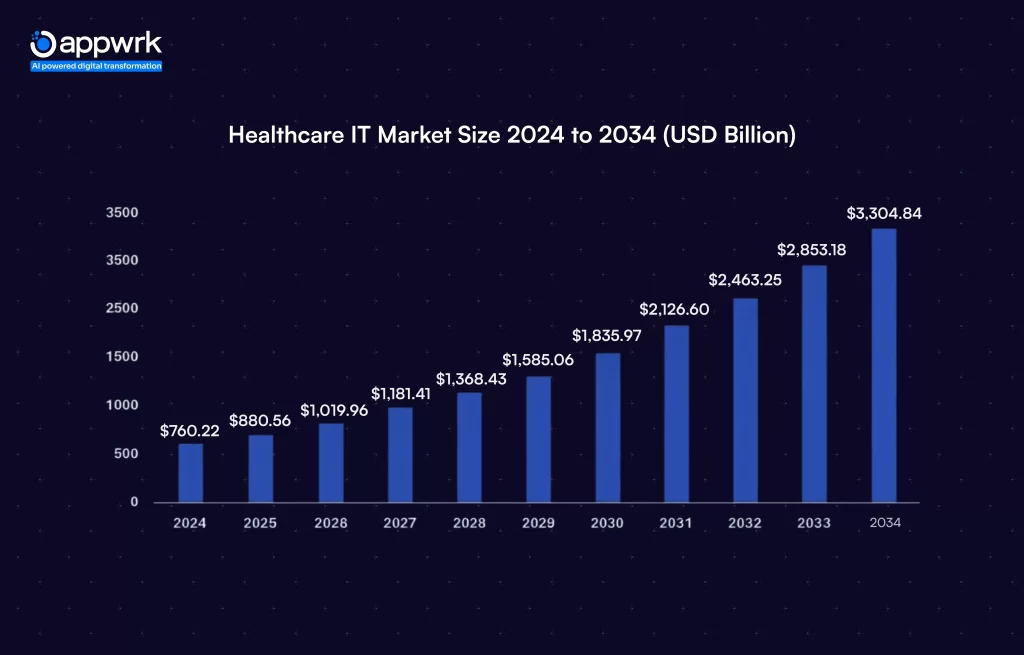
Over the years, the global healthcare IT market has evolved beyond basic digitization, now entering a transformative phase that redefines how care is delivered. Not to mention, the global healthcare IT market is expected to grow at a CAGR of 15.83% between 2025 and 2034. This explosive expansion is being driven by accelerated digitization, regulatory momentum, and the demand for seamless, patient-centric experiences. For example, Epic Systems dominates US EHR implementations with over 36% hospital market share, but many CIOs now seek lighter, custom EHR builds with comparable interoperability.
This digital acceleration is especially visible in major markets like the USA, Europe, and India, where evolving regulatory mandates and patient demand for personalized care are pushing providers toward custom software innovation.
Why Custom EHR Systems Outperform Outsourced Platforms
When compared to outsourced platforms, custom EHR systems offer greater control, adaptability, and alignment with clinical and operational goals, enabling healthcare providers to overcome integration, compliance, and scalability challenges more effectively. They allow teams to prioritize specific workflows, embed organizational standards, and streamline communication across departments.
On the other hand, outsourced EHRs like Epic often come with rigid contracts, high TCO, and slow adaptability. Custom EHRs provide flexibility, faster rollouts, and cost-efficient scalability aligned with evolving healthcare needs.
Compliance Assurance Custom EHRs embed HIPAA, GDPR, and FDA protocols into architecture-level encryption, audit logging, and consent flows, ensuring regulatory audit readiness from day one.
Seamless Interoperability EHRs must connect with LIS, PACS, billing engines, and IoMT. With modular APIs and HL7/FHIR support, custom EHR software delivers Epic-grade interoperability across diverse systems.
Enhanced Patient Experience Bespoke EHR platforms enable intuitive, mobile-first designs, chatbot interfaces, and telehealth readiness, improving satisfaction and access at every care touchpoint.
How Healthcare Sectors Are Powering Innovation with Custom EHRs
Custom EHR software is no longer a niche investment. From hospitals to healthtech startups, organizations are prioritizing Epic-grade flexibility and control by commissioning modular, scalable EHR builds aligned with their domain needs.
Hospital Enterprises Large networks are shifting from rigid EHR deployments to Epic Systems, like custom solutions that enable faster module rollouts, inter-departmental data flow, and HL7/FHIR compliance.
Decentralized Health Systems Regional care providers and rural hospitals now deploy custom EHR platforms with telemedicine and lab interfaces, improving accessibility and eliminating vendor lock-ins.
Medical Device Firms Manufacturers are integrating real-time diagnostics with custom-built EHR connectors to streamline data ingestion from IoMT and edge devices.
Digital Health & Insurtech Startups Custom EHR builds power advanced CRM, patient billing, RCM automation, and fraud prevention, designed from the ground up to rival Epic Systems’ capabilities while cutting total cost by 40-60%.
Why This Matters to You Right Now
Stakeholders, whether CIOs or healthcare investors, must understand that digital transformation isn’t optional; it’s mandated by compliance, patient expectations, and competitive pressure.
Custom software, when designed with precision, becomes a strategic asset, not just a cost center. It safeguards data, bridges systems, and delivers high-impact patient outcomes.
By embedding compliance, seamless data flow, and user-first design from day one, custom EHR platforms become scalable, future-ready solutions that deliver long-term value, while reducing total ownership costs by over 50% compared to EHR systems like Epic.
Cost Framework to Build a Healthcare Platform Like Epic
Determining the cost to build a custom Epic-style healthcare platform today requires an understanding of multiple factors such as feature complexity, regulatory compliance, integration demands, and support requirements. This section outlines an optimized budget framework with clear cost brackets and drivers, helping CTOs and hospital CIOs make strategic decisions.
Cost Breakdown for Building an EHR System
EHR Software Type
Key Features of the EHR Software
Cost for EHR Software Development (USD)
Timeline for EHR Software Development
MVP/Lean EHR System
Appointment booking, secure chat, and basic patient portal.
$12,000-$22,000
2-3 months
Mid-tier EHR Platform
EHR integration, role-based dashboards, and billing basics.
$30,000-$60,000
4-6 months
Enterprise EHR System (Epic-Style)
LIMS, PACS, IoMT, AI/ML modules, and full compliance.
$75,000-$110,000
6-9 months
While Epic Systems implementations in the US typically range from $500,000 to $1M+, a custom Epic-style EHR platform can be developed between $75,000 to $110,000 with comparable compliance, integration, and workflow design.
Regional Cost Comparison: Building an Enterprise EHR in USA, EU & India
Building a custom EHR system like Epic involves significantly different cost considerations depending on the development region. Labor rates, compliance demands, and access to skilled resources vary across the US, EU, and India, making location a critical factor in accurate budgeting and vendor selection.
Region
MVP Build Estimate (USD)
Enterprise Build Estimate (USD)
Estimated Timeline of EHR Build like Epic Systems
Compliance Overhead
India
$12,000-$24,000
$75,000-$110,000
8-14 weeks
Medium (HIPAA on request, DPDPA)
USA
$35,000-$60,000
$150,000-$210,000
10-18 weeks
High (HIPAA, HITECH, FDA)
Europe
$34,000-$62,000
$130,000-$195,000
12-20 weeks
Very High (GDPR, MDR, EMA)
Compared to Epic Systems’ implementation cost (commonly exceeding $500,000), these custom development ranges offer up to 60% lower total cost of ownership while retaining key functionalities like HL7/FHIR APIs, clinical dashboards, and billing automation.
Key Considerations:
India offers affordability with strong tech delivery, ideal for MVPs and offshore partnerships.
USA development costs are highest due to legal risk coverage and infrastructure costs.
Europe requires strict GDPR compliance and multilingual modules, increasing build complexity.
This regional mapping ensures you match software ambitions with realistic financial and regulatory planning, avoiding costly rebuilds later.
Factors Affecting Epic-Like EHR Development Costs
The cost of developing an EHR system like Epic is influenced by several factors, especially the region of execution. While India offers cost-effective development backed by skilled talent, projects targeting the US or EU must factor in higher costs due to strict compliance mandates such as HIPAA, GDPR, and FDA regulations. Listed below are the key factors that shape the overall budget and development timeline for Epic-style EHR platforms.
Development Model
Offshore teams can reduce hourly rates by 30-40 percent, while maintaining quality.
Onshore or hybrid models offer tighter communication but higher HR and infrastructure expenses.
Regulatory Requirements
Projects with HIPAA, GDPR, HITRUST, or FDA Class II compliance often incur 10-25 percent extra cost due to encryption, consent modules, and audit readiness.
User Roles and Complexity
Software supporting doctors, nurses, lab techs, admins, and patients increases dev and design complexity, typically adding 20%-30% more UX/logic work.
Legacy and API Integration
Connecting to legacy EHRs, lab systems, PACS, or billing APIs extends development time. It often increases costs by 15% to 25%.
Security Testing and Audits
Penetration testing, code reviews, QA automation, and compliance audits add another 15-20 percent on top of core development costs.
These factors also affect traditional platforms like Epic Systems, but custom builds offer flexibility and cost control.
Summary for Decision-Makers
Understanding these cost tiers allows you to:
Launch faster with a focused MVP before scaling features.
Control costs by selecting modules strategically and integrating features over time.
Build a clear technology roadmap with milestones tied to budget releases and compliance phases.
Key Technologies and Modules in Advanced EHR Systems Like Epic Systems
When it comes to building an EHR system like Epic, the process begins with deeply mapping core workflows, such as patient intake, diagnostics integration, and reimbursement logic. These insights help define automation priorities and ensure the system aligns with both clinical needs and compliance standards from day one.
Requirement Analysis & Use Case Mapping
When it comes to building an EHR system like Epic, the process begins with deeply mapping core workflows, such as patient intake, diagnostics integration, and reimbursement logic. These insights help define automation priorities and ensure the system aligns with both clinical needs and compliance standards from day one.
HIPAA and GDPR Compliance Features in EHR
EHR systems like Epic are engineered with end-to-end encryption, token-based authentication, consent tracking, and enterprise-grade controls such as SOC 2 and HITRUST. HIPAA and GDPR mandates are enforced directly at the data schema and API layers to ensure privacy and audit readiness.
Epic-Style API Integration for EHR, LIS & Billing
HL7, FHIR, and modular APIs enable seamless integration between EHRs, laboratories, billing systems, and IoMT devices, replicating the architecture used by Epic Systems to scale clinical networks securely and efficiently.
Intuitive Multi-role UI/UX
When building an EHR system like Epic, it’s essential to design interfaces that cater to multiple user roles such as patients, clinicians, and administrators. A well-structured UI ensures each user can navigate their workflows easily, reduces training time, and minimizes the chances of input errors during day-to-day operations.
Testing, Launch, and Ongoing Support
Robust QA processes, user acceptance testing, and phased rollouts ensure a smooth launch. Post-deployment, regular updates based on clinician feedback, compliance changes, and workflow optimization keep the system future-ready and stable.
Strategic Relevance of Epic-Grade Platforms for Healthtech Leaders
As the healthcare data compliance market approaches $8.5 billion by 2032, growing at 11.5% CAGR, the need for secure, interoperable, and regulation-ready platforms is no longer optional, but it’s foundational.
While Epic Systems remains the benchmark for enterprise EHRs, healthcare CIOs and healthtech investors are increasingly opting for custom Epic-grade platforms that deliver equivalent functionality at significantly lower cost and greater flexibility.
Key advantages of Epic-grade alternatives include:
Compliance-by-design aligned with HIPAA, GDPR, and FDA requirements.
Modular interoperability with IoMT, LIS, PACS, and clinical analytics engines.
Epic-level integration using HL7/FHIR protocols for seamless data exchange.
Patient-first UI/UX that replicates Epic Systems–like workflows for billing, scheduling, and engagement.
A well-architected custom platform modeled on Epic’s core architecture can reduce the total cost of ownership by up to 60%, while maintaining the enterprise-grade performance, compliance, and trust that healthcare systems demand.
Epic Systems Alternatives: Types of EHR Software for Full-Cycle Healthcare Management
In today’s healthcare market, Epic Systems has set the benchmark for integrated EHR solutions. From scheduling and billing to diagnostics and telehealth, custom platforms can now replicate Epic’s enterprise-grade functionalities, but with more flexibility, modular design, and cost efficiency. Below are the critical components that make up a full Epic-style EHR stack:
Core Electronic Health Records (EHR) Modules
Custom EHR systems store patient medical histories, medications, allergies, lab results, and doctor notes in a single encrypted platform. Like Epic, they enable clinical collaboration across departments and locations using HL7 and FHIR protocols.
Key Features:
Patient profiles, encounter notes, and longitudinal health records.
HL7/FHIR-based interoperability.
Role-based clinical dashboards.
Practice and Hospital Management Software
These systems mirror Epic’s administrative suite, helping manage patient registration, billing, insurance eligibility, and staff coordination.
Key Features:
Centralized scheduling, billing, and claims.
Integration with national insurance systems.
Role permissions for admin and front-desk workflows.
Virtual Care and Remote Monitoring Platforms
Epic’s telehealth and RPM tools enable providers to deliver care beyond clinics. Custom-built apps can replicate this with HIPAA-compliant video, data sync, and AI-driven triage.
Key Features:
Telemedicine consultation and e-prescriptions.
AI triage and vitals tracking.
Integrated care plans for chronic disease management.
Clinical Decision Support Systems (CDSS)
CDSS modules enhance care outcomes with real-time diagnostic recommendations, alerts, and care plans. Custom builds follow Epic’s real-time data logic.
Key Features:
Predictive analytics from past encounters.
Alerts for drug interactions, allergies, or missed labs.
Integration within the EHR workflow screens.
Diagnostic and Imaging Information Systems
These systems provide radiologists and clinicians access to patient images directly within EHR interfaces, replicating Epic’s imaging and PACS capabilities.
Key Features:
X-ray, MRI, and CT scan image sharing.
Structured reporting and annotations.
DICOM and HL7 integration.
Lab and Pharmacy Management Systems
Custom-built LIS and pharmacy modules enable automated test result processing and precise medication tracking. While Epic offers these features out of the box, modern custom platforms can now match and even exceed this level of functionality with greater flexibility.
Key Features:
Automated test result entry with barcode tracking.
Internet of Medical Things (IoMT) and Connected Devices
Integrating data from wearables and IoMT devices into patient records enables real-time monitoring on par with Epic Systems. Today, this is achievable through custom or open-source modules that offer greater adaptability and lower integration costs.
Clinics may benefit most from a combination of PMS, EHR, and CRM for seamless admin and patient engagement.
Large hospitals often require HIS with integrated EHR, LIMS, PACS, CDSS, and telehealth modules.
Startups in digital health may begin with telemedicine platforms or AI-driven CDSS and expand toward full EHR or CRM systems.
Pharmacies and labs frequently prioritize LIMS and pharmacy management software linked with EHRs.
Each system category serves more than a technical purpose as it addresses a strategic need. Recognizing which combination fits your organisation’s goals is essential before beginning software development.
Benefits of Custom EHR Software for Modern Healthcare Providers
Building a custom Electronic Health Records (EHR) system delivers more than operational efficiency as it gives providers full control over compliance, clinical workflows, and long-term digital strategy. Here’s how a purpose-built EHR solution modeled after Epic Systems can outperform generic tools across the board:
Seamless Fit for Clinical Workflow & Specialties
Unlike rigid, pre-packaged platforms, a custom EHR molds around existing care workflows, whether it’s oncology, pediatrics, or surgical departments. This precision reduces redundant clicks, eliminates duplicate entries, and improves physician satisfaction by up to 25%. Specialty modules can replicate Epic Systems’ workflow logic with added customization flexibility.
Real-Time Decision-Making with Unified Records
Custom dashboards consolidate vitals, labs, prescriptions, and diagnostic notes into a single view. With Epic-style real-time record syncing, providers gain faster triage and shorter diagnostic cycles, often cutting patient wait times by 2+ hours. These enhancements directly impact throughput and care outcomes.
Built-in Compliance from Day One
Custom EHR systems are engineered with HIPAA, GDPR, HITECH, and FDA requirements woven directly into their core infrastructure. By adopting Epic-grade security, including encrypted data models, detailed audit logs, and granular permission controls, your platform stays audit-ready without relying on constant patching or external compliance tools.
FHIR/HL7 Interoperability Without Legacy Bloat
Custom EHR platforms connect seamlessly with labs, imaging centers, pharmacies, and billing tools using HL7 interfaces and FHIR APIs. Organizations report up to 60% better interoperability success rates, minimizing rework and ensuring complete patient records.
Patient-facing portals modeled after Epic’s MyChart can include custom care dashboards, medication reminders, and secure chats, but with language localization, white-label branding, and modular add-ons. These UX improvements boost satisfaction, adherence, and brand loyalty.
Lower TCO, Full Code Ownership
Unlike off-the-shelf EHRs, custom systems give you total ownership of architecture, source code, and data governance. You eliminate ongoing license costs and retain freedom to scale features on your timeline. This reduces the total cost of ownership by 20-40% over 3 years compared to vendor-locked platforms.
Modular Scalability with No Vendor Lock-In
Whether expanding into AI diagnostics, telemedicine, or population health tools, a modular EHR architecture ensures plug-and-play extensibility. Custom systems offer Epic-level scale without Epic’s pricing and rigidity, perfect for future-proofing across multisite networks or public health programs.
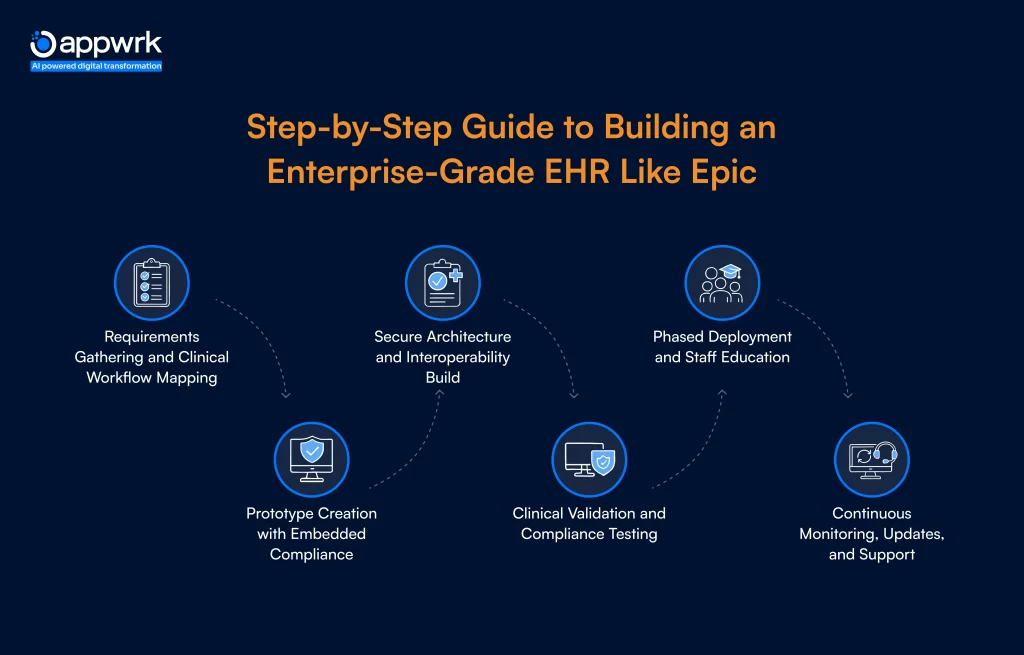
Step-by-Step Guide to Building an Enterprise-Grade EHR Like Epic
Building a custom EHR system at Epic’s level requires a development lifecycle purpose-built for healthcare, where every phase reflects clinical accuracy, data security, and regulatory alignment. This process turns technical planning into a scalable, compliant, and workflow-optimized platform.
Phase 1: Requirements Gathering and Clinical Workflow Mapping
Begin by engaging end users, such as doctors, nurses, lab technicians, billing specialists, and patients, to understand their daily workflows and pain points.
Capture user stories such as “Doctor needs auto-populated patient vitals from wearable IoMT devices” or “Billing staff needs automated denial tracking.”
Use this information to create use case maps and ensure the custom healthcare software will cater specifically to each role’s needs.
Phase 2: Prototype Creation with Embedded Compliance
Early prototypes should include data privacy features such as encrypted input fields, mock patient authorization, and audit trail indicators.
The goal is to validate usability and compliance flow, ensuring HIPAA and GDPR processes are baked in from the first wireframes.
Use tools like Figma and InVision to simulate approval workflows and screen-level encryption prompts.
Phase 3: Secure Architecture and Interoperability Build
The tech stack must enable robust encryption, secure authentication, and protected APIs. For an Epic-style EHR platform, you must use Node.js or Java Spring Boot on the backend and React or Flutter on the frontend to ensure high security, scalability, and seamless user experience.
Achieve Epic-grade interoperability using HL7 and FHIR-compatible API endpoints that mirror the seamless data exchange models found in Epic Systems.
Phase 4: Clinical Validation and Compliance Testing
Testing must include:
Unit and integration tests for clinical workflows.
Penetration and vulnerability scans.
Simulated breach scenarios.
User acceptance tests with real clinicians.
Engage certified auditors to review logs, encryption protocols, and role-based access. Compliance failures at this stage can cost over 10 percent of the total project rework.
Phase 5: Phased Deployment and Staff Education
A staged rollout minimizes risk. Begin with one department or clinic to gather real-world feedback.
Train administrators, providers, and support staff using role-based modules. Provide user manuals and quick-reference visual workflows.
Track adoption through analytics tools and adjust based on usage insights.
Phase 6: Continuous Monitoring, Updates, and Support
A CI/CD pipeline supports ongoing releases, compliance patches, and feature improvements.
Monitor system performance and user interactions through tools like Grafana and Sentry.
Ensure compliance updates for HIPAA, GDPR, FDA or HITECH are deployed within 30 days of regulation changes.
A well-maintained system reduces security incidents by over 40%.
Custom healthcare software development becomes a strategic asset when each SDLC phase reinforces compliance, data integrity, real-world testing, and scalability.
Top Trends in Custom Healthcare Software Development
In 2025, healthcare software is shaped by intelligence, interoperability, and scalability. Below are the most impactful trends driving innovation in custom digital healthcare solutions.
Artificial Intelligence for Smarter Diagnostics and Automated Clinical Workflows
AI is revolutionizing diagnostics by analyzing symptoms, medical images, and histories to deliver real-time decision support. Hospitals using AI-enhanced systems report 30% faster diagnostic turnaround with fewer errors. Custom builds ensure these models meet compliance and integrate seamlessly into care routines.
Internet of Medical Things and Wearable Device Integration
From glucose trackers to cardiac monitors, IoMT devices feed real-time data into EHR systems. When built into the software using secure protocols like FHIR and token authentication, they improve chronic care outcomes and enable proactive interventions.
Blockchain-enabled Patient Data Integrity and Consent
Blockchain brings immutable audit trails and smart contract–based consent. Health systems using blockchain-backed EHRs report 50% fewer audit issues and faster compliance cycles, which are critical for legal defensibility and patient trust.
Augmented Reality and Virtual Reality for Clinical Training and Rehabilitation
AR and VR tools are now integrated into clinical workflows, from guiding surgeons in real time to enhancing rehabilitation for stroke or trauma patients. These technologies improve skill acquisition and patient engagement when built into custom platforms.
Predictive Analytics and Population Health Management
Predictive tools identify high-risk patients and allocate care resources efficiently. Platforms using BigQuery or Spark deliver 20% better readmission prevention through real-time data dashboards and trend forecasting.
Cloud Native Microservices Architecture and Interoperability First Design
Custom EHR software now defaults to cloud-native microservices and HL7/FHIR-first architecture. This allows modular scaling, reliable uptime, and frictionless integration across labs, billing, and pharmacies, future-proofing your digital infrastructure.
How to Select the Best Vendor for Epic-Level EHR Builds
Choosing a vendor to develop EHR software like Epic goes far beyond technical capabilities. It requires a partner with deep healthcare domain knowledge, a proven track record in regulatory compliance, and the ability to architect scalable, interoperable systems. Here’s how to evaluate potential partners with the same rigor as a hospital CIO.
Healthcare Domain Expertise
Look for a partner experienced in EHR, LIMS, PACS, IoMT, telemedicine, and billing systems.
This streamlines integration and avoids repeated design mistakes.
Regulatory and Compliance Proficiency
Verify knowledge of HIPAA, GDPR, HITECH, and FDA SaMD regulations, similar to those followed by Epic Systems deployments.
Ask if they use secure development lifecycle processes and conduct regular compliance audits to reduce legal exposure.
Interoperability Capability
Ensure the vendor has built FHIR and HL7 interfaces for seamless EHR, lab, and pharmacy system integration.
This improves data flow and reduces manual reconciliation.
AI, Blockchain, and IoMT Technical Depth
Confirm if the team has experience with AI-driven diagnostics, smart contract-based consent systems, and continuous device data integration.
These advanced features are often overlooked but add massive future value.
DevOps, CI/CD, and Security Protocols
The vendor should run secure CI/CD pipelines with code scanning, test automation, and frequent penetration tests.
They must apply role-based access, audit logs, and encryption best practices.
Support, Maintenance, and SLA Guarantees
Look for SLAs covering patch updates, compliance rollouts, bug resolution, and incident response.
A stable support system reduces downtime and protects patient trust.
Domain-Focused Track Record
Ask for case studies involving hospitals, clinics, insurance firms, and national health systems.
Real-world performance metrics like clinician adoption rates, compliance scores, and uptime make a big difference.
Smart Questions to Ask Potential Vendors
How do you verify that data storage and access meet HIPAA and GDPR standards, down to the database schema level?
Can you walk us through a project where you implemented FHIR/HL7 integration between an EHR and a lab system?
How does your software handle encrypted consent for devices or care-sensitive data?
What is your plan for timely security patch deployment following new vulnerabilities or regulations?
What CI/CD tools and audit protocols do you use for healthcare deployments?
Warning Signs That Indicate Weakness in Healthcare Projects
Agencies without references in regulated environments.
Vague descriptions of compliance or no mention of security certifications.
No evidence of automated testing or code quality tools.
Contracts without clear SLAs or flexible scaling options.
Inflexible tech stacks that block future integrations.
Picking the right development partner shapes your software’s success, compliance, and long-term impact. Select a vendor that matches your strategic goals and supports both clinical and business outcomes.
Key Challenges When Building an Epic‑Style Platform & How to Mitigate
Custom healthcare software development involves navigating a complex mix of clinical requirements, regulatory frameworks, technical integrations, and user expectations. Without proactive mitigation, projects can suffer from delays, overspending, and even failure. The following challenges are the most prevalent, along with proven strategies to overcome them.
Healthcare applications must meet strict regulations such as HIPAA, GDPR, HITECH, and FDA SaMD. These standards cover data encryption, user authentication, patient consent, and audit trails. A failure in compliance can result in legal penalties, reputational damage, and compromised patient privacy.
Recommended Strategies
Embed compliance protocols from the architecture stage by building encrypted data repositories and multi-factor authentication.
Maintain audit logs that track every user action, change, and data access.
Run regular security testing, including penetration tests and vulnerability audits
For the USA, build encrypted audit trails per HIPAA’s Security Rule.
For Europe, implement multilingual consent flows and international data transfers.
For India, align with emerging data protection laws while addressing cost constraints.
Efforts to integrate compliance early reduce the risk of costly revisions later and help maintain deployment timelines.
Achieving Seamless Interoperability Across Diverse Healthcare Systems
Use industry-standard protocols such as FHIR and HL7 to ensure structured, scalable integration.
Deploy middleware layers to bridge between new applications and legacy systems.
Use API gateways for secure, reliable communication.
This approach improves data flow and reduces inconsistent records or manual reconciliation by up to 60%.
Aligning Software Workflows with Clinical Practices
Healthcare systems involve a wide range of users, like doctors, nurses, lab technicians, billing specialists, and non-technical staff. Misalignment between software design and user workflow reduces clinician adoption and weakens patient care.
Recommended Strategies
Include real users in discovery workshops and prototype testing.
Design role-specific interfaces that optimize the task and screen flow for each user type.
Conduct usability testing and iterative design cycles to ensure practical utility.
Clinician participation during development increases feature relevance and adoption.
Controlling Costs and Scope in Complex Custom Projects
Custom healthcare projects are prone to scope creep, especially when new compliance requirements or workflow needs emerge mid-development. Without clear phase planning, teams may end up over budget or overscheduled. Traditional vendors like Epic don’t offer MVP-first options, which can lock startups into oversized contracts.
Recommended Strategies
Start with a lean MVP that includes only core workflows and modules.
Structure the project with an iteration-based architecture so new modules can be added without disruption.
Define a roadmap that aligns new features with real deliverables and budget milestones.
An MVP-first strategy allows early validation and reduces unnecessary complexity.
Ensuring Post-Launch Adoption and Ongoing Improvement
Even well-built systems can fail if users do not adopt them. Without ongoing support and feature updates, software becomes outdated and fails to meet patient and clinician expectations.
Recommended Strategies
Implement analytics and monitoring to track usage, feature engagement, and performance.
Establish feedback loops with in-app surveys and clinician interviews.
Release updates regularly, generally every 30 to 60 days, based on usage insights and regulatory changes.
A survey by Deloitte and HIMSS found that 47% of failed healthcare IT implementations were due to compliance failures, poor workflow mapping, and the absence of user involvement. These findings highlight the critical need for strategic planning and risk management in healthcare software development.
By anticipating these common challenges and applying structured, domain-specific solutions, your custom healthcare software projects can achieve timely delivery, compliance adherence, and high user acceptance.
Advanced Features for Epic‑Level EHR: AI, Analytics, IoMT Integration
The future of healthcare software development lies in intelligent systems, patient-focused innovation, and ecosystem-wide integration. As technology evolves, custom healthcare applications will transform into adaptive platforms that improve clinical outcomes, boost operational efficiency, and define new care paradigms. The following developments outline the most impactful trends defining the next generation of digital health solutions.
Personalized Care Through Predictive Analytics and AI
Advanced EHR systems are moving beyond static records to enable real-time, personalized care. By combining AI with patient-specific data, such as medical history, genomics, and lifestyle patterns, custom platforms can anticipate health risks, optimize treatment plans, and guide proactive interventions. This results in improved patient outcomes, better adherence to care protocols, and a measurable reduction in chronic disease complications.
Smart Environments Powered by Ambient Intelligence
Hospitals and care facilities will adopt environments embedded with smart sensors, voice-driven documentation, and AI-based alert systems. For example, smart beds will monitor vitals without manual input, speech-to-text tools will automatically generate clinical notes, and embedded sensors will identify changes requiring immediate care. These innovations allow providers to focus on patient interaction rather than administrative tasks.
Decentralized Data Control and Consent with Blockchain
Patient privacy and data control are becoming central to healthcare software design. Blockchain-based consent mechanisms will empower patients to manage who accesses their data, when, and for what purpose. A blockchain audit trail ensures that each access request is recorded immutably. This transition enables secure data sharing among stakeholders such as insurance companies, labs, and telehealth providers while preserving patient control.
Federated AI for Privacy-Sensitive Model Training
Federated learning enables AI to be trained across multiple hospital databases without transferring raw data. Each institution trains models locally and shares only model updates, preserving patient privacy. This innovation is pivotal for rare disease identification, local health trend forecasting, and region-specific drug response modeling, all without compromising personal data security.
Growth of Digital Therapeutics and Mental Health Platforms
Custom healthcare software will integrate evidence-based digital therapeutics such as virtual cognitive behavioral therapy and at-home rehab tools. These platforms will offer structured mental health programs, track progress, and feed data into primary care systems. The availability of scalable, software-driven mental health care supports clinicians and meets patient demand more efficiently.
Cloud-Native Ecosystems and Interoperability Frameworks
Modern EHR platforms are increasingly built with a cloud-native foundation to ensure scalability, resilience, and agility. Leveraging microservices and containerized development, these systems enable modular updates and efficient load handling. Embedded interoperability frameworks, such as HL7 FHIR and secure RESTful APIs, facilitate real-time data exchange across hospitals, diagnostic labs, pharmacies, and payers. By adopting a cloud-first and standards-driven approach from day one, healthcare organizations unlock greater performance, simplified compliance, and long-term adaptability.
Why APPWRK Is the Ideal Partner for Building an Epic-Grade EHR Platform
APPWRK brings deep healthcare expertise, regulatory assurance, and modern tech stacks to help build secure, scalable, and Epic-grade EHR platforms. Here’s how we ensure performance across every development stage.
Deep Healthcare Domain Expertise Across Diverse Systems
APPWRK has delivered custom solutions for hospital EHRs, LIMS, PACS, telehealth, and RCM systems. This ensures accurate workflows, quick development cycles, and domain-aligned scope planning from the start.
Embedded Regulatory Compliance and Security Architecture
We integrate HIPAA, GDPR, and FDA compliance at the architecture level:
End-to-end encryption and user-level access control
Role-based permissions and audit logs
Regular penetration tests and certifications (SOC 2, HITRUST)
This architecture-first security reduces breach risks and audit failures.
Interoperability-Ready API Development with FHIR and HL7
APPWRK delivers custom-built HL7 and FHIR APIs that integrate seamlessly with EHRs, labs, imaging, and insurance systems. This ensures fast data exchange, clean workflows, and scalable connectivity.
Advanced Technology Integration of AI, Blockchain, and IoMT
We embed:
AI for diagnostics and triage
Blockchain for secure patient consent
IoMT interfaces for wearable data syncing
These tools future-proof your EHR and boost care intelligence.
Proven DevOps, CI/CD, and 24/7 Support Infrastructure
With secure CI/CD pipelines and 24/7 support, APPWRK offers:
Regular patching and rapid deployment
30-minute incident SLAs
Usage and audit analytics
Quarterly compliance checks
This setup supports uptime, compliance, and ongoing efficiency.
Why Healthcare Organizations Trust APPWRK
Niche Focus: 100% healthcare tech
Security-Driven: Encryption, access, and audit compliance
Fully Interoperable: APIs that connect from day one
Innovation-Ready: AI, IoMT, blockchain built-in
Reliable Support: SLA-based service and CI/CD precision
APPWRK delivers more than software, as they deliver trusted digital health infrastructure ready to scale alongside clinical demands. Contact us to get your healthcare software built right away.
FAQs
1. What is custom EHR software development? Custom EHR development involves building Electronic Health Record platforms tailored to your clinical workflows, patient data needs, and compliance mandates. Unlike rigid off-the-shelf EHRs, custom systems match your unique hospital processes, whether it’s ambulatory care, chronic disease management, or virtual consultations. Leading benchmarks like Epic Systems inspire many of these custom-built architectures.
2. How much does it cost to develop a custom EHR system? The cost to develop a custom EHR starts at $12,000 and ranges from $15,000 to $210,000, depending on feature depth, compliance requirements, and geographic location. Epic Systems–level builds covering HL7/FHIR, billing, scheduling, and analytics, and can be achieved at up to 60% lower cost via custom development.
3. What core features define a custom EHR platform? A robust EHR includes clinical records, multi-role dashboards, appointment scheduling, prescription management, and billing engines. Custom solutions match Epic Systems in terms of HIPAA/GDPR compliance and FHIR interoperability, and can also embed telehealth, AI diagnostics, or IoMT integrations.
4. Why is a custom EHR better than off-the-shelf systems like Epic? Off-the-shelf EHRs often lock you into fixed roadmaps and high license costs. A custom EHR offers code ownership, modular upgrades, and workflow-specific design. It mirrors Epic’s capabilities in compliance and scalability without its recurring fees or limited flexibility.
5. How does HIPAA impact custom EHR app development? HIPAA requires end-to-end data protection, from encrypted data storage to role-based access control. Your custom EHR must implement audit logs, breach alerts, consent workflows, and secure APIs from day one, just like Epic Systems’ architecture ensures.
6. What’s the average MVP timeline for custom EHR software? A minimal viable product (MVP) for a custom EHR typically takes 10-16 weeks, depending on the modules. Builds covering HL7/FHIR integration, billing, and patient portals can go live faster with agile SDLC models and DevOps pipelines.
Gourav Khanna is the Co-founder and CEO of APPWRK, leading the company’s vision to deliver AI-first, scalable digital solutions for enterprises and high-growth startups. With over 16 years of leadership in technology, he is known for driving digital transformation strategies that connect business ambition with outcome-focused execution across healthcare, retail, logistics, and enterprise operations.
Recognized as a strategic industry voice, Gourav brings deep expertise in product strategy, AI adoption, and platform engineering. Through his insights, he helps decision-makers prioritize market traction, operational efficiency, and long-term ROI while building resilient, user-centric digital systems.
Subscribe to APPWRK Blogs, We'll Do the Rest!
Get Blogs on UI/UX, Mobile Apps, Online Marketing, and Web development technology.
Unlock worthy and priceless suggestions from the masters of mobile and web app development