









Key Takeaways
The cost to build an AI chatbot starts at around $3,000 for basic rule-based bots, while custom GPT-powered or LLM-driven chatbots built on deep learning architectures can cost anywhere between $12,000 and $85,000+, depending on complexity, integrations, and compliance needs.
- The AI chatbot market is on track to surpass $27 billion by 2030, fueled by demand in customer support automation, enterprise assistants, and Generative AI SaaS-driven AI tools.
- Development costs can be optimized using hybrid chatbot development models, pretrained NLP pipelines, machine learning, and offshore agile teams. These are the strategies Appwrk frequently implements for global clients.
- Major cost triggers include real-time conversation memory, domain-specific LLM training, and compliance-ready chatbot builds (HIPAA, GDPR, SOC 2).
- Businesses must also account for monthly chatbot costs, covering OpenAI API usage, Claude or other LLM fees, cloud hosting (AWS, GCP, Azure), monitoring, and DevOps support.
- This guide gives you a chatbot cost breakdown across types, platforms, and regions, along with ROI calculations and pricing model comparisons, so you can plan smarter without overspending.
The exact price depends on the type of chatbot, deployment platform, complexity of features, integrations, and compliance needs. This blog is designed to help CTOs, SaaS founders, and enterprise decision-makers evaluate realistic AI chatbot development costs and make informed investment choices.
Below is a complete breakdown of AI chatbot development costs by type, intelligence, platform, and use case.
Table of contents
- AI Chatbot Cost Development Breakdown by Type and Intelligence
- AI-based Chatbot Cost Breakdown by Platform and Deployment
- AI Chatbot Development Cost by Business Use Case
- One-Time AI Chatbot Development Costs
- Chatbot Migration Cost
- On-Premise Chatbot Cost
- Ongoing Monthly Chatbot Running Costs
- Custom vs Prebuilt vs Outsourced AI Chatbot Pricing
- Types of Chatbots and Their Development Costs
- Enterprise AI Chatbot : Case Studies
- DrHR : AI-Driven HRMS Chatbot
- AI Receptionist : Voice-Enabled Hotel & Dental Booking Voice Chatbot
- AI Sales Chatbot
- RFP Response Chatbot : AI RFP (Requests for Proposals) Parser & Response Generator
- Soul Sniper TG Automated Bot : Trading Bot :
- Gulerler AI Trading Suite : AI-powered cryptocurrency trading bot
- Which Factors Affect the Cost of an AI Chatbot?
- Business Goals
- Chatbot Type
- Data Analysis
- Chatbot Scalability Cost Factors
- The Type of Chatbot You Want to Build (Rule-Based, Scripted, AI-Powered, LLM, Hybrid)
- Required Functionalities and Features in AI Chatbots
- Complexity of the Chatbot (Platforms, Channels, and API Integrations) and its effect on Chatbot total Cost of Ownership (TCO)
- AI Chatbot Design Cost (UI/UX and User Experience)
- Expertise of the Developers (UI/UX, Location, and Team Structure)
- Time to Market (Team Model, Delivery Speed, and Outsourcing Impact)
- Cost of Maintenance and Support (APIs, Hosting, QA, and Updates)
- Scale of Training Data (Compliance, Fine-Tuning, and Security Standards)
- What Hidden Costs Should You Expect in AI Chatbot Development?
- 1. Rising LLM and API Usage Costs
- 2. Continuous Prompt Engineering Expenses
- 3. Cloud Hosting and Compute Overheads
- 4. Third-Party Licensing and Plugin Fees
- 5. Training Data Cleanup and Rework Costs
- 6. Monitoring, Debugging, and Analytics Tools
- 7. Compliance and Data Privacy Upgrades
- 8. Team Training and Onboarding Costs
- 9. Brand Voice and Hidden Conversational AI Cost Structure
- 10. Iteration and Post-Launch Optimization Costs
- Use Cases of AI Chatbots and Their Development Costs
- 1. eCommerce : Smart Shopping Assistant
- 2. Customer Support : 24/7 Help Desk Bot
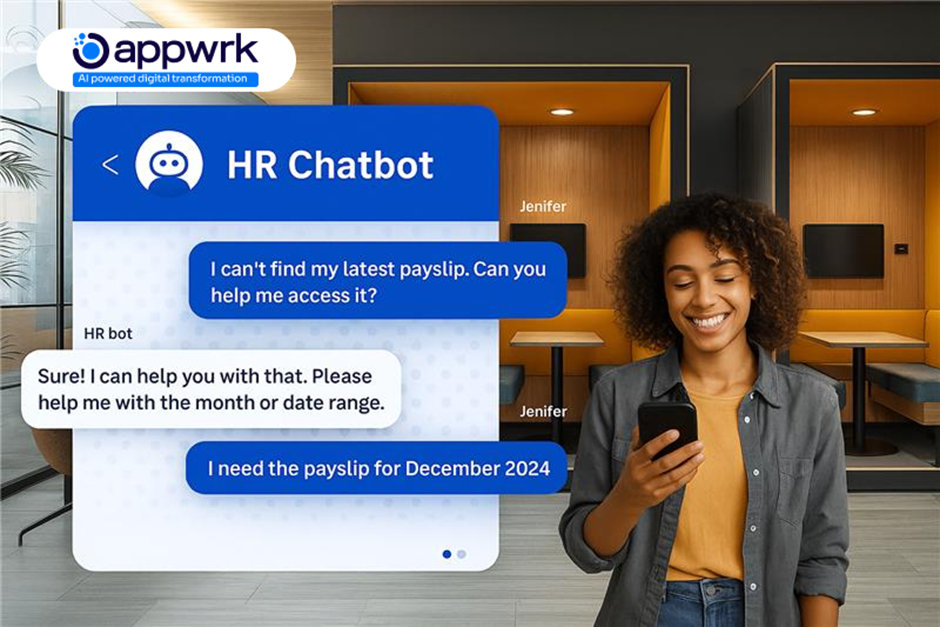
- 3. Internal HR & Workflow Bot
- 4. EdTech Tutor – Interactive Learning Bot
- 5. FinTech Assistant – Secure Financial Support Bot
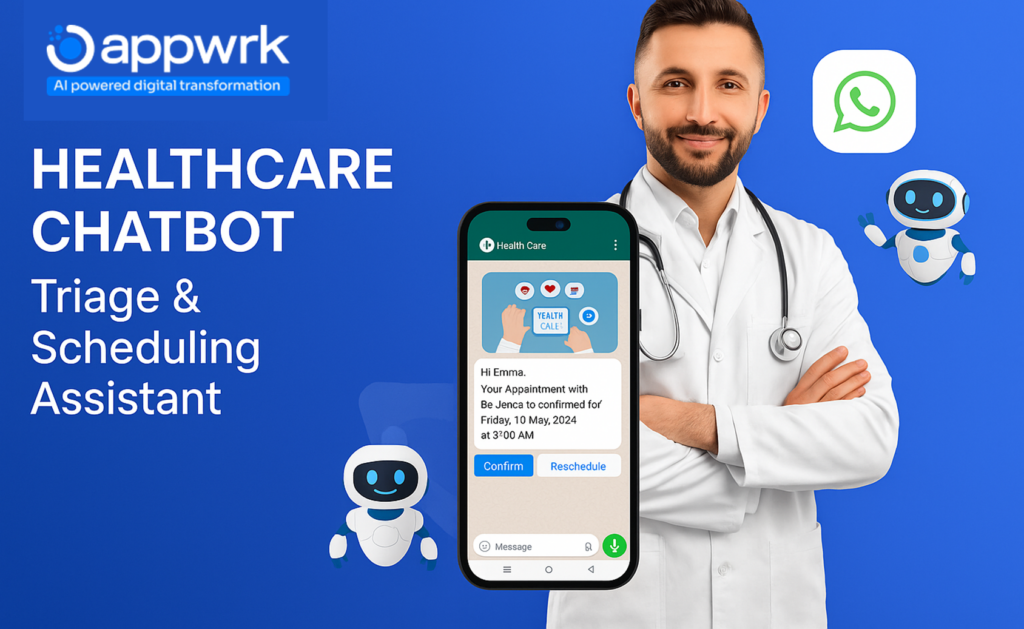
- 6. Healthcare Chatbot – Triage & Scheduling Assistant
- 7. LegalTech – Document Assistant
- 8. Real Estate – Lead Nurture & Site Booking Bot
- 9. Logistics & Supply Chain – Order Tracking Bot
- How Much Does AI Chatbot Development Cost Across Different Regions?
- United States – Expensive but Becoming More Accessible
- Western Europe – Premium Talent, Premium Price
- Eastern Europe – The Sweet Spot of Cost and Quality
- Asia – Affordable and Scalable
- UAE – The Middle East’s AI Rising Star
- Australia – Secure and Specialized
- Where Does Appwrk Fit Into the Regional Cost of Building an AI Chatbot?
- What Is the Cost of Building a ChatGPT-Style Chatbot?
- How to Reduce AI Chatbot Development Costs Without Losing Value?
- Adopt Open-Source AI Models for Long-Term Savings
- Use Pretrained NLP Pipelines and Conversational AI Templates
- Leverage Third-Party Platforms for Faster Deployment
- Utilize Development Tools to Cut Engineering Hours
- Ensure (Minimum Viable Product) MVP Development First
- Consider Outsourced Development for Cost Flexibility
- Appwrk’s Advantage
- Why AI Chatbots Are Essential for Businesses
- How Appwrk Can Help in AI Chatbot Development?
- FAQs
AI Chatbot Cost Development Breakdown by Type and Intelligence
The cost of AI-based chatbot development by type and intelligence ranges from $3,000 for simple rule-based bots to $85,000+ for advanced LLM-powered chatbots with custom training and integrations. The type of chatbot you choose is the single biggest driver of cost.
Rule-Based Chatbots ($3,000 – $7,000)
- Designed with if-else logic or decision trees.
- Best suited for FAQs, lead capture, lead generation, and appointment booking.
- Low cost, fast deployment, and generates ROI quickly for small businesses.
NLP-Driven Chatbots ($8,000 – $22,000)
- Use Natural Language Processing (NLP) to interpret customer intent.
- Ideal for customer support chatbots or sales assistants.
- Mid-range cost but adds significant value through context-aware conversations.
LLM-Powered Chatbots ($25,000 – $85,000+)
- Powered by large language models like OpenAI GPT, Claude, or Mistral.
- Enable human-like conversations, real-time memory, and multilingual support.
- Require advanced training, integrations, and compliance → making them the highest-cost option, but with enterprise-grade scalability.
AI-based Chatbot Cost Breakdown by Platform and Deployment
AI chatbot development by platform ranges from $1,000 for basic Messenger bots to $15,000+ for secure in-app and internal workflow chatbots. The deployment platform also affects pricing due to integrations, APIs, and compliance.
Messenger & Social Media Chatbots ($1,000 – $10,000+)
- Built for WhatsApp, Facebook Messenger, and Instagram.
- Affordable entry point, but costs rise with multi-platform deployment via Messenger, Instagram, and the WhatsApp Business API.
In-App Chatbots ($1,500 – $12,000+)
- Integrated into mobile apps or SaaS platforms.
- Commonly used for customer support, onboarding, and loyalty programs.
Internal Workflow Chatbots ($3,000 – $15,000+)
- Built for HR automation, IT ticketing, or compliance-heavy workflows.
- Costs rise due to secure login, role-based access, and GDPR/HIPAA compliance.
Also Read: How to Reduce Android App Development Cost 2025?
AI Chatbot Development Cost by Business Use Case
Depending on use case, AI chatbots cost between $3,000 for simple static bots and $85,000+ for high-grade GPT-powered assistants with predictive logic. Business use case complexity determines how simple or advanced the chatbot must be.
Simple Chatbot Apps ($3,000 – $7,000)
- Basic replies, static lead capture, and appointment scheduling support tickets, and low chat volume interactions.
- Best fit for startups needing quick wins at low cost.
Slightly Complex Chatbots ($8,000 – $15,000)
- Add CRM integration, multilingual replies, and customer feedback collection.
- Suitable for SMBs scaling automation with E-commerce chatbots and CRM links.
High-Grade AI Chatbots ($20,000 – $85,000+)
- Advanced features: GPT-powered intelligence, predictive analytics, multi-language, and real-time personalization.
- Best for enterprises needing scale, compliance, and global deployment, with multichannel deployment across apps, web, and messaging.
Also Read: CRM Development Cost Guide: Pricing, Features, and ROI Factors
One-Time AI Chatbot Development Costs
On average, the one-time development cost of an AI chatbot is $25,000 – $35,000. This covers:
- Conversational Logic Development → $3,050
- Payment System Integration → $2,025
- Geolocation + Personalization → $3,425
- User Account Syncing → $1,050
- Framework & Library Integration → $800
- UI/UX Design → $3,500
- QA & Testing Services → $10,500
- DevOps & Backend Setup → $2,750
- Chatbot Project Management Pricing → $5,000
With hybrid sourcing models like Appwrk, these costs can be reduced by up to 20% compared to traditional builds.
Chatbot Migration Cost
When businesses move from a legacy chatbot system or a third-party vendor to a custom AI-powered chatbot, migration becomes an important one-time cost consideration. Migration costs typically include:
- Data transfer (importing historical conversations, intents, and user profiles)
- Rebuilding integrations with CRMs, ERPs, or ticketing systems
- Testing and validation to ensure continuity of user experience
- Retraining AI models on migrated datasets for accuracy
Depending on complexity, chatbot migration can range from $5,000 – $20,000+. Large enterprises with extensive integrations or compliance-heavy data (like healthcare or finance) often fall at the higher end of this range.
On-Premise Chatbot Cost
For businesses in highly regulated industries like healthcare, banking, or government, deploying a chatbot on-premise instead of cloud-based infrastructure is sometimes mandatory. While on-premise chatbots offer greater control, data security, and compliance readiness (HIPAA, GDPR, SOC 2), they come with higher upfront costs.
Key cost contributors include:
- Infrastructure setup – dedicated servers, storage, and networking hardware.
- Licensing & security tools – enterprise-grade firewalls, encryption, and monitoring systems.
- Customization & maintenance – more engineering hours for integration, patching, and updates.
- In-house IT resources – teams required to manage uptime, scaling, and performance.
On-premise chatbot deployments generally cost $30,000 – $100,000+ upfront, depending on infrastructure size and compliance scope. While the investment is high, enterprises benefit from full ownership of data, tighter security, and reduced long-term vendor dependency.
Ongoing Monthly Chatbot Running Costs
After launch, chatbots incur $400 – $1,500 per month in operating costs, depending on scale:
- LLM/API Usage (OpenAI, Claude, etc.) → $50 – $1,500
- Cloud Hosting (AWS, GCP, Azure) → $100 – $800
- Monitoring & Analytics Tools → $50 – $200
- DevOps & Bug Patching → $150 – $300
Startups typically stay under $900/month, while enterprise-grade bots may exceed $2,000/month.
Custom vs Prebuilt vs Outsourced AI Chatbot Pricing
Prebuilt chatbot platforms start as low as $0–$1,000, while fully custom AI chatbots cost $12,000 to $85,000+, depending on features and ownership needs. Another cost-effective route is outsourced development, where businesses hire offshore or nearshore teams at hourly rates instead of building in-house. The overall cost of a chatbot depends on whether you choose a prebuilt SaaS chatbot, invest in a custom-built AI assistant, or outsource development to a specialized vendor.
Another common pricing distinction is between custom chatbots and white-label solutions—custom builds demand higher upfront costs but provide full ownership and scalability, while white-label bots are cheaper to launch but come with subscription fees and limited flexibility.
Cost of Pre-Made Chatbot Solutions (Low Upfront, Subscription Model, Chatbot vendor selection criteria)
Cost Range: $0 – $1,000 initial setup + $50–$500/month subscription
- Examples: Drift, Tidio, Intercom
- Pros: Instant deployment, no coding required, low upfront cost
- Cons: Limited customization, vendor lock-in, and higher long-term cost due to subscriptions
Cost of Custom Chatbot (Higher Upfront, Long-Term Savings)
Cost Range: $12,000 – $85,000+ one-time build
- Full ownership of IP, training data, and features
- Pros: Tailored logic, LLM integration, compliance-ready, and scalable
- Cons: Higher upfront investment, longer deployment time
Cost of Outsourced Development (Balanced Costs & Expertise)
Cost Range: $25 – $100+ per hour, depending on region (US: $75–$100+, Europe: $50–$75, Southeast Asia: $25–$50)
- Includes global development firms or dedicated offshore teams
- Pros: Access to wide expertise, flexible collaboration models, lower costs than in-house
- Cons: Quality and communication depend on vendor experience and alignment
Which Option Delivers Better Chatbot ROI Calculation?
- Prebuilt SaaS works best for startups or SMBs testing chatbot adoption
- Custom chatbots deliver long-term ROI for enterprises needing compliance, integrations, and scalable automation
- Outsourced development offers a middle ground by lowering costs by 40–60% compared to hiring full in-house teams, while maintaining high-quality builds
Consolidated AI Chatbot Cost Comparison
|
Chatbot Category |
Best For |
Consolidated AI Chatbot Cost |
Complexity Level in Building the AI Chatbot |
|
Rule-Based Chatbot |
FAQs, lead capture, static flows |
$3,000 – $7,000 |
Low |
|
NLP-Driven Chatbot |
Contextual replies, CRM integration |
$8,000 – $22,000 |
Medium |
|
LLM-Powered Chatbot |
GPT/Claude/Mistral-powered bots |
$25,000 – $85,000+ |
High |
|
Messenger/Social Bots |
WhatsApp, Messenger, Instagram |
$1,000 – $10,000+ |
Low–Medium |
|
In-App Chatbots |
SaaS onboarding, customer support |
$1,500 – $12,000+ |
Medium |
|
Internal Workflow Bots |
HR, IT, ticketing, compliance |
$3,000 – $15,000+ |
Medium–High |
|
Simple Chatbot Apps |
Lead capture, static replies |
$3,000 – $7,000 |
Low |
|
Slightly Complex Chatbots |
CRM integration, context-aware support |
$8,000 – $15,000 |
Medium |
|
High-Grade AI Chatbots |
GPT, predictive analytics, compliance |
$20,000 – $85,000+ |
High |
The total AI chatbot development cost depends on type, platform, and complexity, ranging from $3,000 for simple bots to $85,000+ for enterprise-grade solutions. Beyond one-time build costs, businesses should budget for $400–$1,500 in monthly running costs for hosting, monitoring, and API usage.
Types of Chatbots and Their Development Costs
Rule-Based Chatbots
These are the most basic chatbots that work on predefined rules, decision trees, and flowcharts. They are best suited for FAQs, lead capture, and simple support tasks where queries follow predictable patterns.
Cost: $3,000 – $7,000
Scripted Chatbots
Scripted bots respond with pre-written answers and follow fixed dialogue paths. They lack adaptability but are easy to implement for businesses needing standard responses with minimal AI.
Cost: $2,000 – $6,000
AI-Powered (NLP) Chatbots
These chatbots leverage Natural Language Processing to understand user intent and context. They enable more dynamic and human-like conversations, making them ideal for customer service and sales.
Cost: $8,000 – $22,000
LLM-Powered / GPT Chatbots
Built on advanced large language models like GPT, these bots can generate human-like responses, remember past interactions, and handle complex queries. They often require custom training and fine-tuning.
Cost: $25,000 – $85,000+
Hybrid Chatbots
Hybrid bots combine the structured reliability of rule-based systems with the intelligence of AI/NLP. They balance cost and performance, making them suitable for businesses scaling from simple to advanced use cases.
Cost: $10,000 – $30,000
AI Voice Chatbot
AI voice chatbots use automatic speech recognition (ASR) and text-to-speech (TTS) technologies to enable real-time, natural conversations. They are widely used in call centers, customer support lines, and voice assistants like Alexa or Google Assistant.
Costs are higher compared to text-based bots because of:
- Speech-to-text & Text-to-speech integration (using APIs like Google Speech, Amazon Polly, or Azure Cognitive Services).
- Multilingual voice support for global deployment.
- Infrastructure needs for handling large volumes of concurrent voice calls.
AI Voice Chatbot Development Cost: $15,000 – $40,000+ for mid-level voice bots, while enterprise-grade solutions with omnichannel voice + text integration can reach $60,000 – $100,000+.
Voice Assistants
Voice-enabled bots use AI and speech recognition to interact naturally through spoken commands. Popular in industries like retail, healthcare, and IoT, they offer hands-free convenience to users.
Cost: $15,000 – $45,000+
Application-Based Chatbots
These chatbots are integrated within mobile or web applications to perform dedicated functions like appointment booking, order tracking, or onboarding flows. They are highly task-specific and easy to use.
Cost: $5,000 – $20,000+
Enterprise-Level Chatbots
Enterprise chatbots are built for large-scale operations with requirements like compliance, multilingual support, integrations, and scalability. They offer custom AI features aligned with industry standards.
Cost: $50,000 – $100,000+
Chatbot build time estimation based on its type, and key features
|
Chatbot Type |
Key Features |
Chatbot Build Time Estimation |
Development Cost |
Best For |
|
Rule-Based Chatbots |
Decision-tree logic, predefined keywords, and simple FAQ handling |
4–6 weeks |
$3,000 – $7,000 |
Startups and small businesses need FAQ automation |
|
Scripted Chatbots |
Pre-written responses, fixed dialogue paths, and low adaptability |
3–5 weeks |
$2,000 – $6,000 |
Small businesses with limited queries, static customer support |
|
AI-Powered (NLP) |
Intent recognition, contextual understanding, multilingual, sentiment analysis |
8–12 weeks |
$8,000 – $22,000 |
Customer support, sales bots, and medium-sized businesses |
|
LLM/GPT Chatbots |
Human-like responses, context retention, knowledge base integration, fine-tuning |
12–20 weeks |
$25,000 – $85,000+ |
Enterprises, advanced support, fintech, SaaS platforms |
|
Hybrid Chatbots |
Mix of rule-based & NLP, escalation to humans, scalable workflows |
8–14 weeks |
$10,000 – $30,000 |
Businesses scaling from basic to AI-based bots |
|
AI Voice Chatbots |
Speech-to-text & TTS, multilingual support, omnichannel integration |
12–18 weeks (mid) / 20–24 weeks (enterprise) |
$15,000 – $40,000+ (mid) / $60,000 – $100,000+ (enterprise) |
Call centers, customer support, healthcare, telecom |
|
Voice Assistants |
Voice recognition, contextual AI, IoT & smart device integration |
14–20 weeks |
$15,000 – $45,000+ |
Retail, healthcare, smart home & IoT, automotive |
|
Application-Based |
App integration, task-specific workflows (booking, tracking), notifications |
6–10 weeks |
$5,000 – $20,000+ |
On-demand apps, healthcare, food delivery, retail |
|
Enterprise Chatbots |
Omnichannel, enterprise compliance, analytics, multi-language, high concurrency |
16–24 weeks+ |
$50,000 – $100,000+ |
Banks, large enterprises, and global customer service teams |
Enterprise AI Chatbots : APPWRK Case Studies
DrHR : AI-Driven HRMS Chatbot
A comprehensive HRMS solution integrating enterprise chatbots to automate employee management, resolve HR queries, and streamline communication.
Key Features:
- AI-powered employee query handling
- Self-service modules for payroll, leave, and attendance
- Intelligent document processing
Chatbot Role: Virtual HR assistant reducing manual tasks and enabling 24/7 support.
AI Receptionist : Voice-Enabled Hotel & Dental Booking Voice Chatbot
An AI receptionist enabling voice-based room booking, dental appointment scheduling, and verbal inquiry management with text-to-speech responses.
Key Features:
- Hotel booking and inquiry via voice commands
- Dental booking with GROQ API (600ms response time) + Eleven Labs TTS (avg. 1.5s audio)
Chatbot Role: Acts as a front-desk receptionist, delivering instant voice-based support for hospitality and healthcare.
AI Sales Chatbot
An intelligent sales assistant designed to engage customers, answer queries, and recommend products in real time.
Key Features:
- Personalized product recommendations
- Conversational customer engagement
Chatbot Role: Virtual sales rep boosting conversions and customer experience.
RFP Response Chatbot : AI RFP (Requests for Proposals) Parser & Response Generator
Automates the entire RFP (Requests for Proposals) lifecycle with AI-powered parsing, scoring, and draft generation.
Key Features:
- RFP analysis & eligibility scoring
- Automated response draft generation
Chatbot Role: Cuts manual RFP work, boosting speed, accuracy, and efficiency in proposals.
Soul Sniper TG Automated Bot : Trading Bot :
A trading bot designed for Telegram, automating Solana contract trading and balance deposits.
Key Features:
- Algorithmic Solana trading
- Secure balance deposits in SOL
Chatbot Role: Automates high-speed trading, reducing manual intervention for traders.
Gulerler AI Trading Suite : AI-powered cryptocurrency trading bot
AI-powered cryptocurrency trading bot enabling advanced strategies for efficient, automated trading.
Key Features:
- AI-driven crypto trading strategies
- Automated execution for better market timing
Chatbot Role: Streamlines crypto trading with data-driven AI decisions.
Which Factors Affect the Cost of an AI Chatbot?
There isn’t a single fixed price tag for chatbot development, and that’s because every build is different. The AI chatbot development cost in 2025 can vary widely depending on your use case, the level of intelligence required, deployment platforms, and the team you hire. Below is a chatbot cost breakdown that explains the major factors influencing both upfront spend and long-term OPEX.
Listed below are the general business factors that affect the Cost of an AI Chatbot:
Business Goals
Your chatbot’s primary purpose, whether it’s customer support, lead generation, or internal automation directly impacts costs. Bots designed for simple FAQs cost less, while those built for enterprise-grade personalization, sales, or healthcare compliance demand higher budgets.
Chatbot Type
The category of chatbot (rule-based, scripted, AI-powered, or LLM) influences complexity and cost. A basic rule-based bot can be built affordably, but advanced AI and generative models require larger investments in training, data, and infrastructure.
Data Analysis
The level of data handling and insights your chatbot needs will also shape costs. Simple bots work with pre-fed scripts, while advanced bots may require analytics pipelines, real-time tracking, or predictive insights, each adding to development and maintenance costs.
Chatbot Scalability Cost Factors
Scalability is a long-term cost driver often tied to your business goals. A chatbot built for small-scale customer support may initially seem cost-efficient, but scaling it to handle millions of queries, multiple languages, and cross-channel deployments adds significant expense.
Key scalability cost factors include:
- Infrastructure upgrades (cloud hosting, load balancing, autoscaling servers)
- Database optimization to handle higher conversation volumes
- AI model retraining as new queries and domains are introduced
- Monitoring and analytics tools to ensure performance at scale
On average, preparing for enterprise-level scalability can increase chatbot costs by 15–25% compared to small-scale deployments.
The Type of Chatbot You Want to Build (Rule-Based, Scripted, AI-Powered, LLM, Hybrid)
The biggest factor in AI chatbot pricing is the level of intelligence. A rule-based chatbot with decision trees and pre-coded flows is fast and affordable, perfect for FAQs and lead capture. On the other end, a GPT-powered chatbot or LLM-powered chatbot with real-time conversation memory, custom training, and natural language understanding can push costs into the $25,000–$85,000+ range. These builds require NLP libraries, model fine-tuning, and ongoing prompt engineering.
Required Functionalities and Features in AI Chatbots
The more features you add, the higher the chatbot development cost. Multilingual support, secure payments, calendar syncing, and sentiment analysis all require backend work. For instance, building a healthcare chatbot with HIPAA compliance or an AI chatbot for e-commerce with order tracking can increase scope by 20–30%.
Complexity of the Chatbot (Platforms, Channels, and API Integrations) and its effect on Chatbot total Cost of Ownership (TCO)
The cost to build an AI chatbot depends on where it lives and how it integrates.
- A single deployment on your website or app is relatively simple.
- Rolling out to WhatsApp, Messenger, Slack, or Instagram means building platform-specific integrations, adding authentication, and keeping tone consistent across channels.
- Modern bots rarely operate in isolation. They connect to CRMs like Salesforce, ERPs, or payment platforms. Each API integration for chatbots adds development time and security testing.
A simple lead capture bot may cost $3,000–$7,000, while complex API-driven workflows can add 15–25% more to the chatbot’s total cost of ownership (TCO).
AI Chatbot Design Cost (UI/UX and User Experience)
Design plays a critical role in how users interact with a chatbot. Beyond the backend intelligence, the UI/UX design—including chat widgets, buttons, avatars, and conversational flows—directly impacts engagement and trust. A well-designed interface ensures smooth interactions, reduces friction, and drives higher adoption rates.
Custom UI/UX design typically adds 10–20% to the overall chatbot development cost, depending on complexity. Simple designs with prebuilt templates may cost around $2,000 – $5,000, while fully customized, branded chatbot experiences with animations, multi-language flows, and adaptive interfaces can push costs into the $8,000 – $15,000 range.
Expertise of the Developers (UI/UX, Location, and Team Structure)
Conversation UI isn’t just “text in a box.” Buttons, flows, avatars, and feedback prompts shape user trust. Custom AI chatbot design costs usually add 15–20% to the budget, but improve retention and conversion.
At the same time, team type and location play a major role:
- Chatbot development in India or Eastern Europe costs 3–4x less than hiring in the US or UK.
- Hybrid sourcing models, like Appwrk’s, combine offshore engineers with in-house architects, reducing AI chatbot software cost by up to 50% while maintaining enterprise standards.
Time to Market (Team Model, Delivery Speed, and Outsourcing Impact)
The time to market depends on whether you hire a local, outsourced, or hybrid team. Outsourced chatbot development can reduce delivery timelines while lowering costs. Appwrk’s hybrid sourcing model speeds up implementation by using pre-built frameworks and offshore expertise without compromising enterprise quality.
Cost of Maintenance and Support (APIs, Hosting, QA, and Updates)
Running an LLM-powered chatbot involves recurring API licensing fees from providers like OpenAI or Claude. Add cloud hosting (AWS, GCP, Azure), uptime SLAs, and DevOps, and your monthly chatbot cost can range from $300 to $1,500+, scaling with user volume.
Testing, QA, and maintenance are also crucial. Testing for edge cases, multilingual inputs, and concurrent traffic is essential. Post-launch, bots need ongoing QA, bug fixes, and analytics tracking. QA typically makes up 15–20% of the chatbot build time estimation but ensures long-term ROI and reliability.
Scale of Training Data (Compliance, Fine-Tuning, and Security Standards)
For custom AI chatbots, training data is critical. Fine-tuning GPT, Mistral, or Falcon on domain-specific knowledge (legal, healthcare, logistics) requires curated datasets, feedback loops, and prompt testing. This is often one of the most expensive stages in the AI chatbot cost optimization journey.
Industries like healthcare, banking, or government also require compliance-ready builds. Implementing data encryption, 2FA, audit logs, and certifications like HIPAA, GDPR, or SOC 2 can raise chatbot pricing by 20–30% upfront, but it prevents fines and strengthens brand trust.
What Hidden Costs Should You Expect in AI Chatbot Development?
When most businesses ask about the cost to build an AI chatbot, they focus only on the upfront development quote. But the reality is, long-term ownership always comes with extra layers of spend, beyond scripting and deployment, operational, infrastructural, and optimization costs begin to stack up, many of which never show up in initial vendor estimates or DIY chatbot cost calculators.
If you’re a startup founder, CTO, or product manager, you need to budget not only for development but also for the total cost of ownership (TCO). Here are the hidden costs that nearly every chatbot project encounters.
1. Rising LLM and API Usage Costs
Chatbots powered by GPT, Claude, or other LLM-powered chatbot APIs run on usage-based pricing. Every query consumes tokens and API calls, and real-world users don’t always stick to short questions. Longer conversations, follow-ups, and multi-turn queries can quickly drive up monthly chatbot costs.
What looks affordable during prototype testing often grows into hundreds or even thousands per month once your user base scales. Many businesses underestimate this line item, especially after marketing campaigns boost traffic.
2. Continuous Prompt Engineering Expenses
Launching isn’t the finish line; in fact, it’s the starting point. Even the best chatbots need prompt tuning to stay accurate across informal, multilingual, or unpredictable inputs. This includes:
- Optimizing system prompts
- Chaining multiple prompts
- Reworking fallback responses
- Regularly testing conversation flows
On average, ongoing prompt engineering costs add 10–15% on top of the original build, but without it, your bot risks poor performance and lower ROI.
3. Cloud Hosting and Compute Overheads
An LLM-powered chatbot demands reliable infrastructure. As concurrency grows, you’ll need to move from shared servers to dedicated GPUs, low-latency edge hosting, and scalable containerized environments. This means higher cloud hosting costs with AWS, GCP, or Azure.
These overheads, like serverless deployments, horizontal scaling, and content delivery, can easily add hundreds or thousands per month, depending on scale and uptime SLAs. Enterprise-grade compute like Nvidia A100 GPUs often drives cloud costs higher.
4. Third-Party Licensing and Plugin Fees
The base deployment rarely covers everything. Premium add-ons like Salesforce or Shopify integrations, visual analytics dashboards, or enterprise-grade access controls often run on monthly SaaS subscriptions.
As usage grows, these third-party licensing costs scale with it, creating a recurring OPEX burden. Integrations with Stripe, PayPal, or other payment portals often require monthly fees.
5. Training Data Cleanup and Rework Costs
If your custom AI chatbot is fine-tuned on FAQs, documents, or compliance manuals, the quality of that dataset directly impacts performance. Messy or outdated training data leads to hallucinations and costly rework.
Fixing this later often means hiring domain experts, linguists, and data cleaners, an overlooked but common cost.
6. Monitoring, Debugging, and Analytics Tools
Real-time chatbot monitoring is essential to catch conversation drop-offs, failed user intents, or drift in accuracy. Setting up dashboards, analytics tools, and error alerting systems takes time and budget. Monitoring requires dashboards, data analysis tools, and bug patching support.
Commercial tools typically charge per MAU or session, while open-source dashboards demand ongoing developer support. Either way, monitoring becomes a long-term cost.
7. Compliance and Data Privacy Upgrades
If you’re in finance, healthcare, or global markets, expect compliance-ready chatbot costs to rise. Upgrades for GDPR, HIPAA, or PCI DSS mean encryption, local data storage, and regular audits. Monitoring requires dashboards, data analysis tools, and bug patching support.
These aren’t included in basic builds, but they become unavoidable as your bot scales into regulated industries.
8. Team Training and Onboarding Costs
Chatbots only add value if your internal teams know how to use them. Support, marketing, and sales need onboarding workshops and documentation to understand escalation paths, reporting, and workflows.
These change management costs are rarely mentioned upfront, but are critical for adoption and ROI.
9. Brand Voice and Hidden Conversational AI Cost Structure
Your chatbot isn’t just functional, it’s customer-facing. Aligning its tone, scripts, and fallback responses with your brand takes expert copywriting and localization.
This chatbot design cost is often overlooked during sprints, yet it plays a key role in engagement and long-term trust.
10. Iteration and Post-Launch Optimization Costs
No chatbot is “done” at launch. Most go through 2–3 major iteration cycles based on user analytics, business changes, or unexpected behavior. Iterations often require new data acquisition and fresh training data for fine-tuning. These iterations also include:
- Workflow restructuring
- Prompt rewrites
- UX refinements to reduce drop-offs
- New feature integrations
Each cycle usually adds 15–25% of the original project budget, but without them, you risk stagnant performance and declining ROI.
The Takeaway: The true AI chatbot cost isn’t just about development. Between API licensing, cloud hosting, compliance audits, and iteration cycles, the TCO can be 30–50% higher than initial quotes. Businesses that plan for these hidden costs from day one avoid scope creep, budget shocks, and poor adoption.