150+ minds across 4 countries. Join a culture of innovation, ownership & growth.
Rewire for AI
From machine learning to deep learning, from classification tools to overall process automation – our AI engineers will help you retool your existing system or enhance your company results.
Ship faster, scale smarter, built for product companies and SaaS teams
Our Latest Work
We strive hard to deliver result-driven digital solutions across the globe. Check out our case studies to get a glimpse of how we ideate, innovate, and create unconventional digital solutions according to the requirements of our clients.
Discover diverse and passionate insights from our tech enthusiasts. We collaborate across various sectors to streamline operations and drive innovation. Explore our rapidly growing collection of articles to see why we’re at the forefront of IT solutions.
The decision to move from Magento to Shopify is one of the most significant replatforming choices an ecommerce business can make. Magento is powerful, but its power comes with...
Accuracy gap is real: Traditional CPG forecasting carries a 25-40% MAPE error rate. AI-powered models bring that down to 8-15%, according to McKinsey research....
Real stories from global leaders who trusted us with their ideas.
Partnering with APPWRK helped us build a compliant and scalable healthcare platform, accelerating our time-to-market by 35%. Their team consistently delivered outstanding work.
Beesers
Digital Healthcare Client
Collaborating with APPWRK, Sportskeeda modernized its platform into a real-time sports engagement ecosystem, enabling seamless content delivery, scalable fan interactions, and high-velocity performance.
Sportskeeda
Sports & Entertainment Partner
Working with APPWRK was effortless. They captured our vision, maintained full compliance, and delivered a digital experience that built trust and elevated how customers interact with our fintech brand.
PayPenny
Fintech Partner
Working with APPWRK gave us confidence in adopting AI responsibly. Their team built a safe, intelligent bot that transformed how we engage with leads and helped us achieve measurable revenue growth.
IFB
AI Transformation Partner
Leveraging APPWRK’s digital expertise, Nemesis launched a scalable, compliant, and safe super app that connects content delivery, real-time communication, and logistics management within a single platform.
Nemesis
Super App Partner
Build the Future of Insurance Together
Strategic partnerships that turn insurance ideas into high-performing digital products.
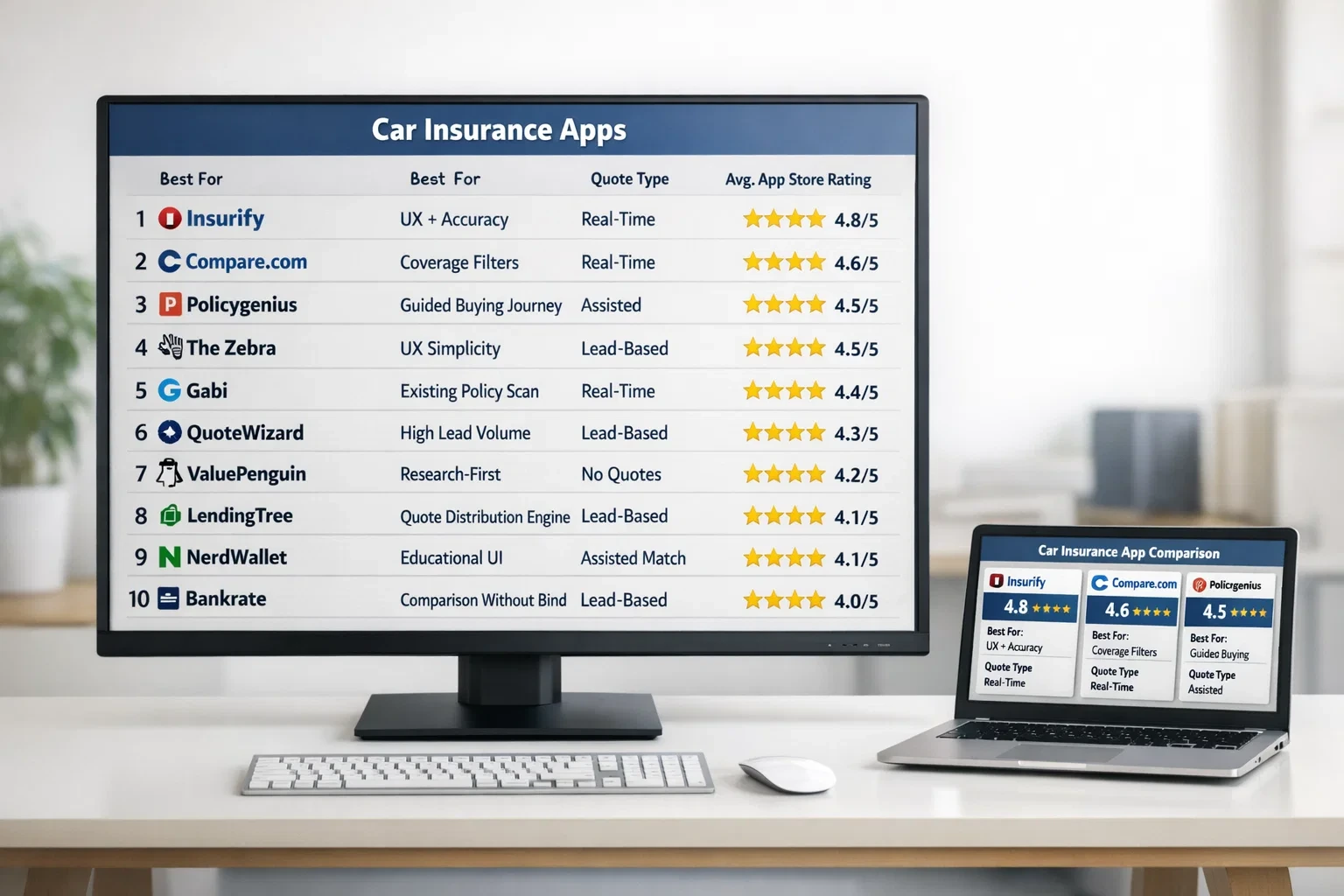
This guide highlights the top rated car insurance apps of 2026, comparing leading platforms like Insurify, Compare.com, and Gabi with others such as Policygenius, The Zebra, and Root Insurance. It benchmarks quote accuracy, data privacy, app performance, and usability across both auto insurance apps and car insurance websites.
These car insurance apps now go beyond basic quote comparison. They offer telematics programs, AI-powered personalization, coverage filters, and even in-app policy management, helping drivers reduce premiums and make informed coverage choices.
The top performers offer real-time insurance quotes, secure integrations with major insurance companies like GEICO, Progressive, and USAA, and frictionless mobile journeys from quote to bind, often rated highly across the Google Play Store and the Apple App Store.
In contrast, some insurance comparison sites rely on lead generators, creating data privacy risks, spam calls, and inflated teaser rates. Users must carefully evaluate mobile app permissions and post-submission flows.
This evaluation provides a framework for selecting the best auto insurance apps based on quote delivery speed, digital proof of insurance, ZIP code-level rate insights, and long-term user trust, so you know which insurance apps are worth downloading in 2026.
This guide is designed for insurance leaders, product owners, founders, and digital decision-makers evaluating car insurance apps for accuracy, compliance, scalability, and long-term platform viability.
Some apps excel at quoting speed but fall short on policy accuracy. Others are transparent but function primarily as lead generation apps. The rankings below reflect a composite performance score, not just app store reviews.
Insurify leads 2026’s best car insurance apps with real-time quotes, no lead selling, and in-app policy binding. It combines strong UX, AI-powered match scoring, and secure data practices to give users a seamless quoting experience across top auto insurance apps.
App Store Rating: 4.8 (iOS), 4.7 (Android) Pricing Transparency: 5/5 Data Handling: 5/5
Compare.com — Best for Coverage Breadth
Compare.com stands out among car insurance comparison sites for deep coverage filtering and quote clarity. Users can customize limits, add-ons, and deductibles before seeing rates, ideal for shoppers who value policy-level detail.
App Store Rating: 4.6 (iOS), 4.5 (Android) Coverage Customization: 5/5 User Control: 5/5
Policygenius — Best Guided Buying Experience
Among the top rated car insurance apps, Policygenius is best for users who want guided education. It explains coverage types, uses smart plan suggestions, and avoids information overload, perfect for first-time buyers.
Highlights:
Interactive explainer UX
Smart defaults based on lifestyle
Top-match quotes, not bulk listings
Neutral carrier positioning
App Store Rating: 4.5 (iOS & Android) Ease of Understanding: 5/5 Best For: First-time buyers
The Zebra — Clean UX, Less Control
The Zebra is a fast and clean car insurance mobile app built for quick estimates. But as a lead-generation platform, most quotes result in redirection or agent calls, not full app-based control.
Among the top rated car insurance apps, Gabi helps users compare their current auto insurance policies with real-time offers from other insurance companies. Upload a PDF or link your policy, Gabi scans it, then surfaces side-by-side comparisons.
Why Gabi Stands Out:
Policy Scan: Parses current plans for instant comparison
Auto-Match Quotes: Shows bindable alternatives for the same coverage
No Re-Entry: No need to re-input vehicle or driver data
Best for optimizing plans, not first-time buyers
App Store Rating: 4.4 (iOS), 4.3 (Android) Best For: Existing policyholders Ease of Switching: 5/5
QuoteWizard — High Lead Volume Risk
QuoteWizard is one of the most visible car insurance websites, but also one of the most aggressive lead generators. It collects your data, then distributes it to brokers, resulting in agent calls and limited real-time quotes.
Key Trade-Offs:
Fast intake form, broad insurer reach
Operates as a lead resale platform
Quotes may require follow-up calls
App Store Rating: 4.3 (iOS), 4.1 (Android) Best For: Users open to agent outreach Lead Management Risk: 1/5
ValuePenguin — Research-Heavy, Transaction-Light
ValuePenguin ranks high among insurance comparison sites for its data depth, not quoting power. It’s perfect for those researching auto insurance coverage types, average insurance quotes by ZIP code, and carrier trust scores.
Strengths:
Rate breakdowns by age, location, and vehicle
Carrier performance insights and car insurance ratings
No live quotes or policy binding
App Store Rating: 4.2 (web-first) Best For: Research-driven shoppers Quote Capability: 1/5
LendingTree — Lead-Centric Model
LendingTree’s auto insurance app is built for speed and volume, not quote control. It quickly captures user data and pushes it to multiple insurance carriers, requiring users to complete their purchase outside the app.
What to Expect:
Access to niche and national carriers
High data sharing risk
No in-app policy binding
App Store Rating: 4.1 (iOS), 4.0 (Android) Best For: Users exploring broad market options Quote Integrity: 2/5
NerdWallet — Education-Focused App
NerdWallet’s car insurance mobile app is built around education. It helps users understand how auto insurance works, from liability to bundling discounts, great for comparison shoppers who want to learn before switching.
Where It Excels:
Coverage calculators and liability explainers
Rate simulators: test how ZIP code, mileage, and credit affect pricing
Bundling insights for home insurance, renters insurance, and more
Trade-Offs:
Limited quoting functionality
No in-app binding
App Store Rating: 4.1 (iOS & Android) Best For: DIY insurance planners Transaction Capability: 2/5
Bankrate — Comparison Without Execution
Bankrate ranks high among the best car insurance websites for content, but lacks full quoting functionality. It offers editorial reviews, price maps, and policy guides, but all transactions happen off-platform.
Bankrate Strengths:
Insightful insurer and rate comparisons
Cross-product overviews (e.g., auto loans + insurance)
State-by-state coverage benchmarks
Limitations:
No live quotes or integrations
Designed for early research only
App Store Rating: 4.0 (web-optimized) Best For: Financial researchers, cross-shoppers Quote/Bind Capability: ⅕
Not all car insurance apps are created equal, and neither are the rates they return. In 2026, pricing is influenced not only by the insurer’s algorithm, but also by how the app sources its quotes, whether it applies AI or telematics, and whether it uses real-time carrier integrations or lead resale models.
To benchmark price competitiveness, we ran test quotes across five driver personas in four U.S. states using the top-performing apps from our comparison. The following table showcases the lowest legitimate quotes surfaced, based on fully-disclosed, bindable rates,n ot teaser estimates.
Driver Profile
State
App Used
Lowest Quote (6-Mo)
Notes
28 y/o, clean record, 2020 Honda Civic
Texas
Insurify
$394
Real-time, no follow-up call needed
42 y/o, minor accident, 2018 Ford F-150
Florida
Compare.com
$486
Fully bindable with progressive filters
35 y/o, married, 2022 Toyota Camry
California
Policygenius
$412
Excellent UX, limited carrier pool
30 y/o, clean record, 2019 Subaru Outback
Illinois
The Zebra
$437
Quote required agent follow-up
26 y/o, single, 2021 Hyundai Elantra
Georgia
Gabi
$401
Pulled against the existing Allstate policy
Key Learnings from the Rate Benchmark
Real-time apps consistently return cheaper, bindable quotes, especially Insurify and Gabi.
Lead-based platforms inflate short-term quotes to attract clicks, then hand off for upselling.
State and vehicle age matter more than age or marital status in 2026’s pricing algorithms.
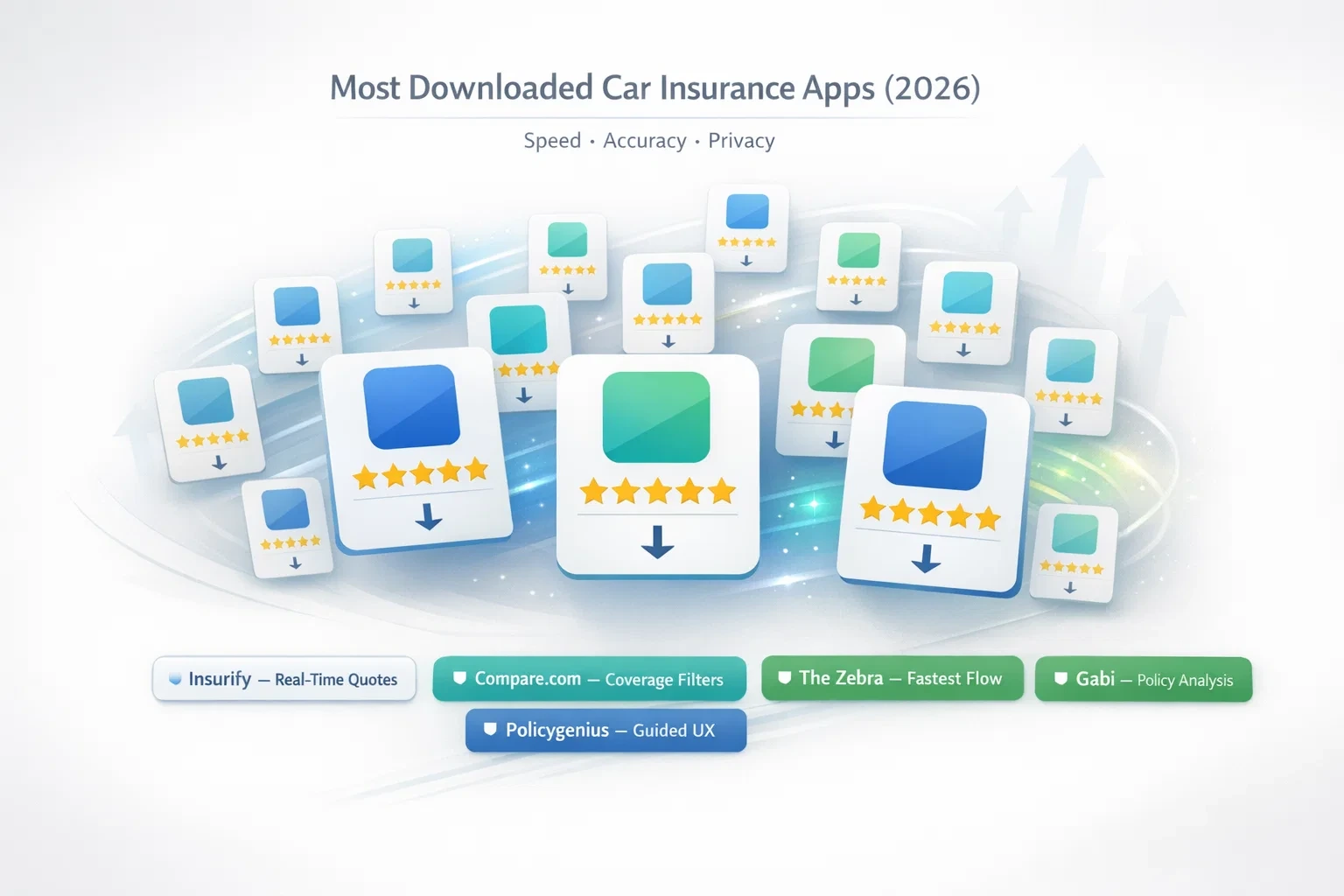
Most Downloaded Car Insurance Apps (2026)
The most downloaded car insurance apps in 2026 combine speed, accuracy, and privacy. These top rated car insurance apps consistently lead the Apple App Store and Google Play Store charts for their user-friendly design and real-time quoting:
Insurify – Best for real-time quotes without data resale
Compare.com – Most detailed coverage filters
The Zebra – Fastest quote flow, minimal setup
Policygenius – Most guided, beginner-friendly UX
Gabi – Top choice for analyzing existing policies
These apps are considered the best car insurance apps by download volume and user satisfaction, making them go-to options for those seeking trustworthy, mobile-first auto insurance apps.
Which Car Insurance Apps Are Actually Used Long-Term?
While many car insurance apps attract downloads with flashy quote tools, only a few are consistently used for ongoing policy management, claims, and renewals. In 2026, the auto insurance apps that retain users long-term offer more than just quotes; they deliver full policy lifecycle support.
GEICO Mobile – Offers claims filing, roadside assistance, digital ID cards, and usage-based insurance via DriveEasy.
State Farm – Known for Drive Safe & Save, plus robust in-app policy management and telematics programs.
Progressive – Users stay for Snapshot, claims tracking, and multi-policy bundling.
USAA – Serves military families with reliable mobile access to auto, home, and life insurance policies.
Liberty Mutual – Offers policy customization, claims photo upload, and safe driving rewards.
Root – Keeps users engaged with driving score feedback and usage-based insurance features.
These best car insurance apps go beyond price comparison, making them valuable everyday tools for policyholders. They dominate in retention by blending telematics, support, and self-service, key to long-term relevance in mobile app ecosystems.
Types of Car Insurance App
Not all apps fit every user. The right choice depends on how you shop, your need for control, and where you are in the buying journey.
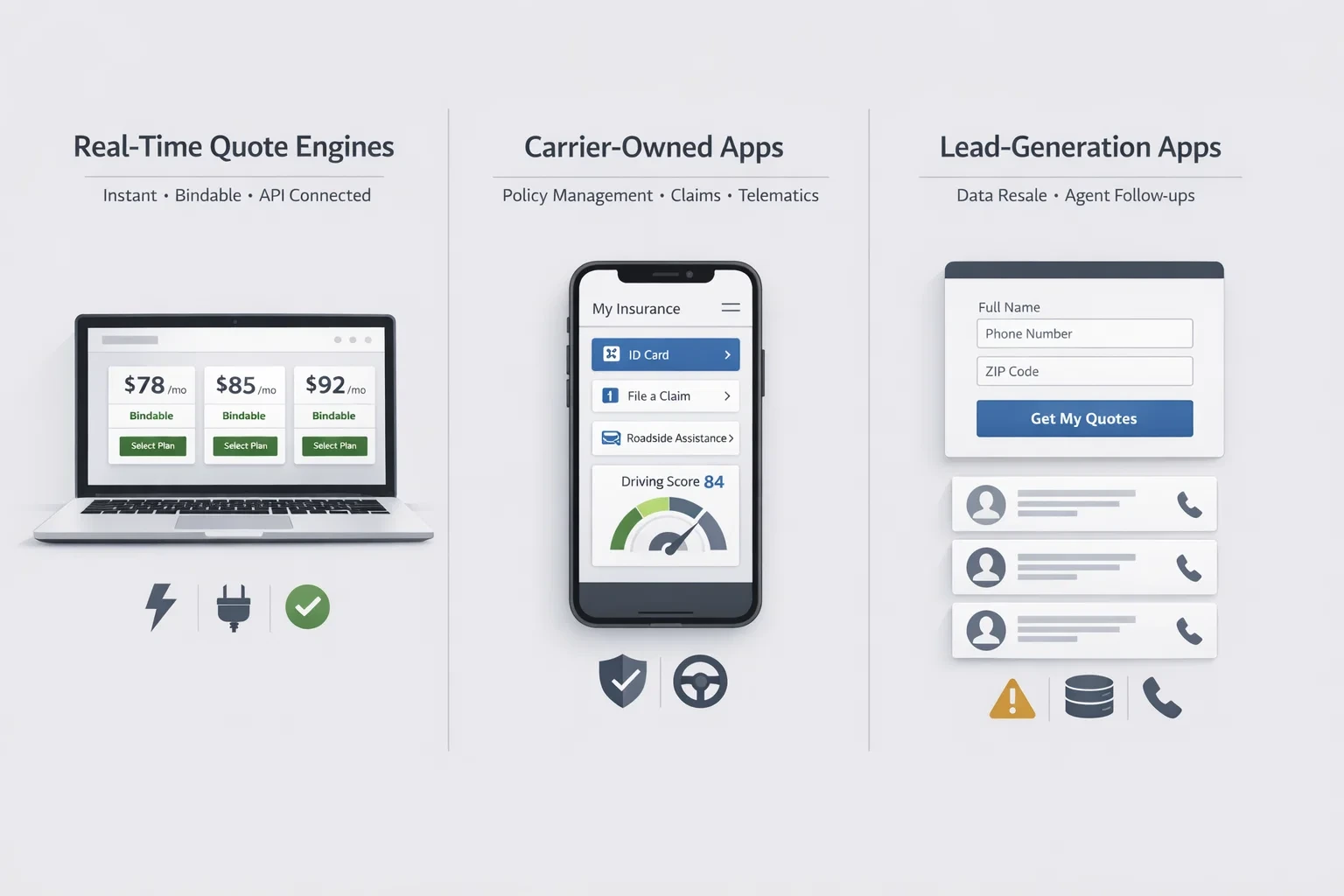
Real-Time Quote Apps
These auto insurance apps connect directly with insurance carriers via APIs to deliver instant, accurate quotes.
Examples: Insurify, Compare.com, Gabi
Best for: Users ready to compare and bind policies immediately
These apps collect your information and distribute it to multiple agents or providers.
Examples: QuoteWizard, LendingTree, EverQuote
Best for: Users open to agent follow-ups
When to Avoid Lead-Selling Apps
Red flags:
No clarity on data use after submission
Teaser quotes without binding
Flood of broker calls/emails
Apps like QuoteWizard and LendingTree operate as insurance comparison websites but prioritise quote distribution engines over user control. Look for platforms that state “GDPR/CCPA compliant” or “no data resale.”
Carrier-Owned Apps
Best for policy management:
View or update deductibles, ID cards
Access roadside assistance
Handle claims and bundling
Apps from GEICO, State Farm, and USAA focus on service over discovery.
Research-First Insurance Apps
Focused on content, coverage insights, and educational tools over transactions.
Examples: NerdWallet, ValuePenguin, Bankrate
Best for: Early-stage shoppers comparing insurance policies, coverage types
Benefits of Using Car Insurance Apps
By 2026, nearly 70% of shoppers interact with car insurance apps during their journey. These platforms have evolved into full-service tools for comparing, customizing, and purchasing auto insurance with minimal friction.
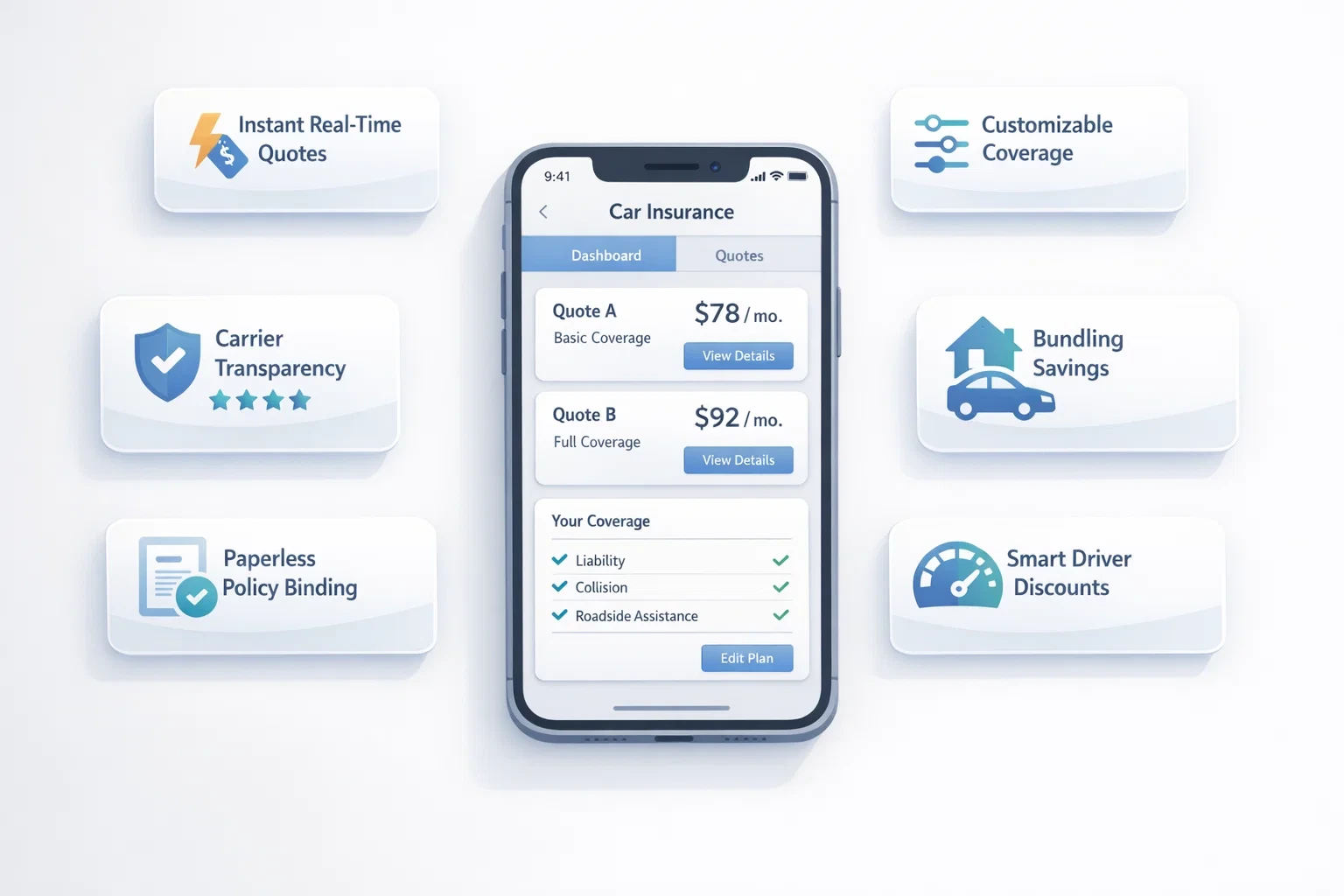
Instant, Real-Time Quotes
Top rated apps like Insurify and Compare.com use insurer APIs to return bindable quotes instantly, no teasers, no callbacks.
Customizable Coverage Filters
Adjust liability, deductibles, and add-ons to see pricing updates in real time across auto insurance apps.
Carrier Transparency
Apps like Policygenius and The Zebra highlight insurer ratings, claims performance, and financial strength, not just price.
Bundling Opportunities
Tools like Gabi detect home insurance and renters insurance bundling options, unlocking savings with major insurance companies.
Paperless Policy Binding
Many of the best car insurance apps now allow users to bind policies directly, without forms or phone calls.
Smart Driver Discounts
Apps with usage-based insurance or telematics programs offer lower premiums for low-risk drivers based on real behavior.
Data Privacy Compliance
The best insurance apps are GDPR and CCPA-compliant, with clear policies and no behind-the-scenes lead generators.
How to Compare Auto Insurance Apps
The app you choose influences not just what you see, but what you pay, who gets your data, and how much control you have over the process. In a landscape full of insurance comparison websites, knowing how each app works is key.
Quote Integrity
Real-time apps (like Insurify) return accurate, bindable rates. Lead-gen apps (like QuoteWizard) often present teaser prices that vanish once a broker contacts you.
Data Safety
Apps like Compare.com share data only with the insurers you select. Others push your profile into wide quote distribution engines, where it’s resold to dozens of agents.
Buying Experience
Some apps (e.g., Policygenius) offer a guided buying experience, walking you through terms and trade-offs. Others send you off-platform for the final transaction.
Transparency in Tech
Real-time quote engines are powered by insurer APIs and deliver better outcomes. Lead-generation apps exist mainly to collect your info for resale.
Car insurance apps may look global, but their performance varies heavily by region due to differences in insurer integration, regulatory environments, and user behaviour. In 2026, region-specific optimisation is a competitive edge.
United States: Most Mature Market
The U.S. leads in real-time quote engines, with strong API integrations, widespread telematics adoption, and regulated data standards. Best apps: Insurify, Gabi, Policygenius
Highlights:
Deep carrier connectivity (GEICO, Allstate, Progressive)
India’s insurance app space is rapidly growing, but real-time digital binding remains limited. Most platforms simulate quotes, with final pricing often confirmed offline. Best apps: Turtlemint, Coverfox, InsuranceDekho
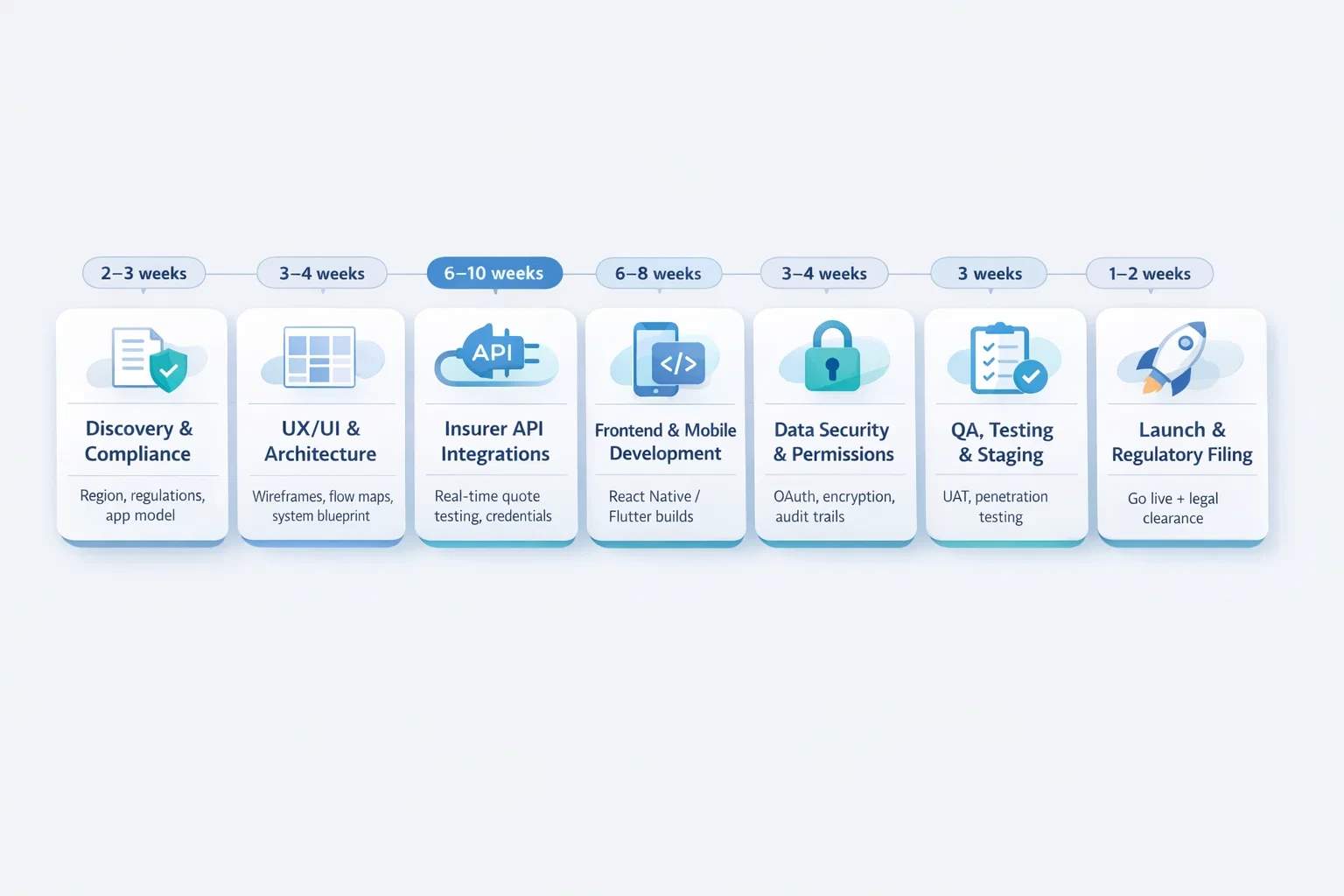
Creating a car insurance comparison app today is a complex, fintech-grade build, requiring insurer trust, API access, and legal compliance from day one.
How to Avoid Data & Privacy Risks in Car Insurance Apps
In 2026, car insurance apps collect everything from driving behaviour to location to financial identifiers. Choosing the wrong app can result in data leaks, relentless broker calls, or exposure to third-party data brokers.
Apps are not uniformly regulated; some follow financial compliance, others operate in grey zones. Users need to stay alert before tapping “Get Quotes.”
Common Privacy Pitfalls
Even slick apps can mishandle your data. These are the top risks:
Lead syndication: Data from one app shared across 5–15 others
Unencrypted personal info: Especially in quote API calls
Behavioural tracking: Taps, scrolls, dwell time, even on sensitive screens
No opt-out path: Can’t revoke or delete submitted info
Shadow vendors: Unknown third parties receiving your data
Lead-based models are the worst, especially those offering “instant quotes” without showing how they source them.
Protecting Your Insurance Data
Use car insurance apps smartly by following these steps:
Look for CCPA/GDPR compliance – Apps like Insurify and Policygenius publish clear privacy standards
Use masked contact info – Apple’s Hide My Email or Google Voice reduces spam risk
Read the privacy policy – Watch for phrases like “marketing partners” or “third-party affiliates.”
Skip apps asking for full SSN or driver’s license upfront – Not needed for quote-only flow
Restrict permissions – On Android, disable location and storage unless absolutely needed
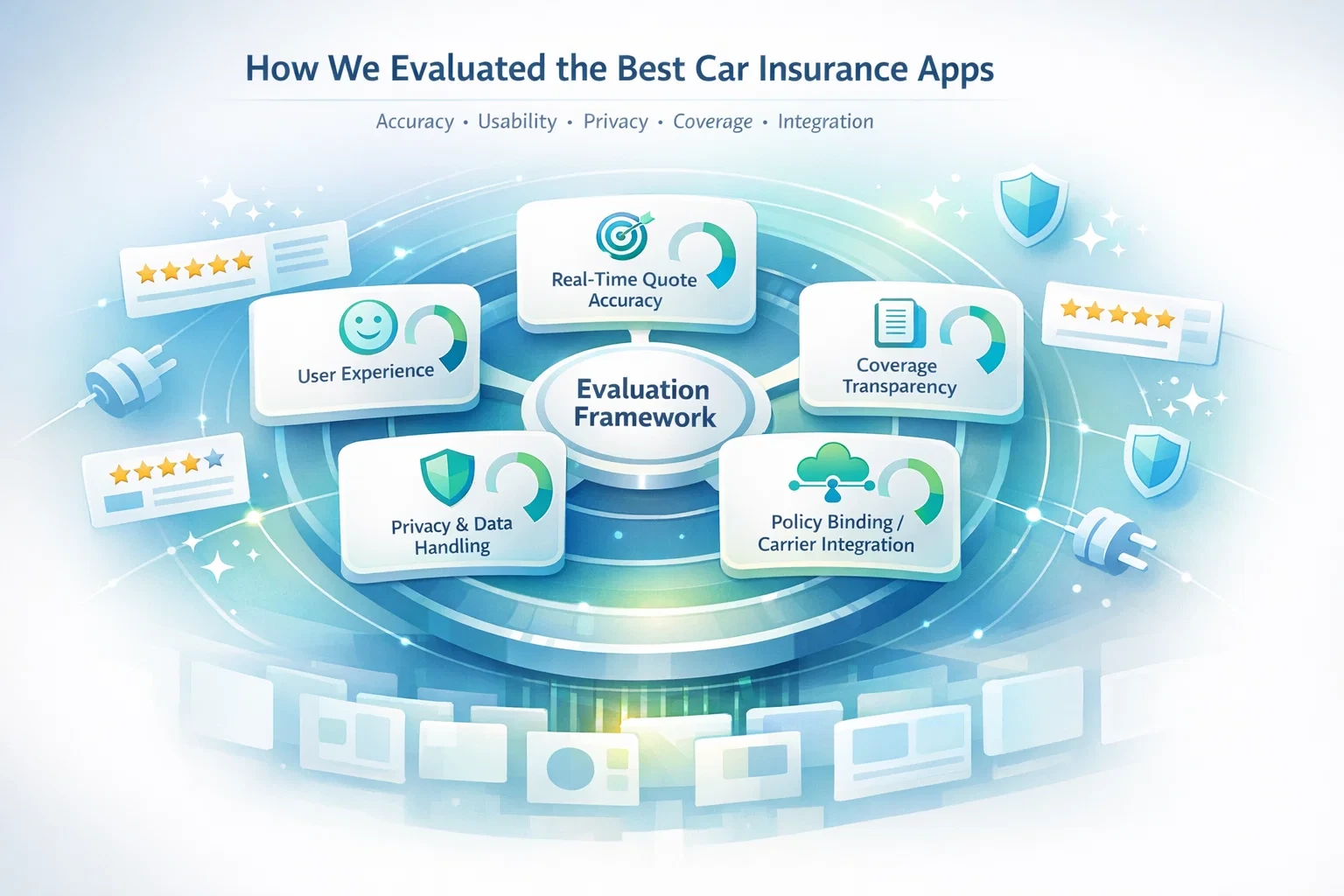
To identify the best car insurance apps of 2026, we analyzed over 20 of the most downloaded and top rated car insurance mobile apps across the Apple App Store and Google Play Store. Our evaluation focused not just on user reviews, but on actual functionality and value for drivers.
Each auto insurance app was scored using five core criteria:
Real-Time Quote Accuracy – We prioritized apps offering real, bindable car insurance quotes from licensed insurance companies, not just lead-generation forms.
Coverage Transparency – Apps had to allow users to adjust liability, deductibles, and add-ons with clear pricing updates.
User Experience – From quote funnel flow to policy management, we assessed the full journey.
Privacy & Data Handling – We evaluated whether apps were CCPA/GDPR compliant and if they sold personal information to lead generators.
Policy Binding or Carrier Integration – Extra weight was given to apps that allow binding in-app or via a secure handoff to verified insurance carriers.
This approach allowed us to rank only those top rated car insurance apps that deliver genuine value, whether you’re looking for a new policy, managing existing insurance coverage, or comparing multiple auto insurance rates side-by-side.
What Sets APPWRK Apart in Car Insurance App Development
API-Ready Architecture Built for fast, real-time quotes via REST, SOAP, and GraphQL integrations with top insurance carriers. Supports telematics and AI-based pricing, ideal for building the best car insurance apps in 2026.
Full-Stack Ownership We design and deploy end-to-end auto insurance app solutions, including quote engines, policy comparison views, and in-app binding for seamless car insurance mobile apps.
Compliance & Data Privacy Apps are pre-aligned with CCPA, GDPR, and PCI-DSS, with optional support for IRDAI or HIPAA. Full insurance data privacy tools: audit trails, opt-ins, and masked personal information handling.
Conversion-Focused UX Guided quote flows, quote reminders, and existing policy analysis. Analytics via Mixpanel or Firebase power smarter funnels in top rated car insurance apps.
Founder’s Guide to Building a Car Insurance App
Entering the car insurance apps market in 2026 requires more than just a working product; it demands licensing, insurer trust, and data transparency.
Business Model Clarity Choose between quote engine, lead gen, or usage-based auto insurance apps. Your model drives tech and compliance needs.
Licensing Setup Follow NAIC (U.S.), IRDAI (India), or GDPR (Europe), especially for apps handling insurance quotes or policy data.
Carrier API Partnerships Access isn’t public; you’ll need insurer contracts and testing environments.
Modular Product Design Build scalable features like telematics, multi-driver inputs, or quote bundling.
Privacy-First UX Users expect control over their personal information. Add consent tools from day one.
Frequently Asked Questions (FAQs)
1. What is the best app to compare car insurance quotes?
Insurify and Compare.com currently lead in delivering real-time, accurate quotes with full policy control and minimal data resale risk.
2. Are car insurance apps accurate?
Accuracy depends on the app type. Real-time quote apps connected to insurer APIs are reliable. Lead-gen apps often display teaser rates that change later.
3. Can I actually buy a policy through a car insurance app?
Yes, apps like Insurify, Gabi, and some carrier apps (like GEICO, State Farm) offer full quote-to-bind flows without leaving the app.
4. Do these apps sell my personal data?
Some do. Look for clear privacy disclosures. Avoid apps that promise instant quotes but don’t name their carrier sources or data partners.
5. Are car insurance app quotes cheaper than going directly?
Sometimes. Apps may expose discount-eligible carriers you wouldn’t have found manually, but some insurers offer “direct-only” promos via their own portals.
6. What’s the safest car insurance app for privacy?
Policygenius, Gabi, and Insurify rank highest for privacy transparency, offering CCPA/GDPR compliance and no third-party data resale. Want to build a secure Car Insurance app? APPWRK is here. Contact us now!
7. Can I use these apps if I already have insurance?
Yes. Apps like Gabi specialise in scanning and benchmarking your existing policy to find savings without requiring a fresh quote.
8. What should I avoid in a car insurance app?
When choosing a car insurance app, avoid those that lack transparency, especially apps that don’t reveal carrier names before you submit your information. Steer clear of platforms that request your full Social Security Number (SSN) upfront, as this can raise data privacy concerns.
9. Are car insurance apps legal in every state/country?
Most are, but quoting capabilities vary. In the U.S., for example, insurance regulation is state-specific. In India, IRDAI governs app-based distribution.
10. What tech stack is ideal to build a car insurance app?
Gourav Khanna is the Co-founder and CEO of APPWRK, leading the company’s vision to deliver AI-first, scalable digital solutions for enterprises and high-growth startups. With over 16 years of leadership in technology, he is known for driving digital transformation strategies that connect business ambition with outcome-focused execution across healthcare, retail, logistics, and enterprise operations.
Recognized as a strategic industry voice, Gourav brings deep expertise in product strategy, AI adoption, and platform engineering. Through his insights, he helps decision-makers prioritize market traction, operational efficiency, and long-term ROI while building resilient, user-centric digital systems.
Subscribe to APPWRK Blogs, We'll Do the Rest!
Get Blogs on UI/UX, Mobile Apps, Online Marketing, and Web development technology.
Unlock worthy and priceless suggestions from the masters of mobile and web app development