150+ minds across 4 countries. Join a culture of innovation, ownership & growth.
Rewire for AI
From machine learning to deep learning, from classification tools to overall process automation – our AI engineers will help you retool your existing system or enhance your company results.
Ship faster, scale smarter, built for product companies and SaaS teams
Our Latest Work
We strive hard to deliver result-driven digital solutions across the globe. Check out our case studies to get a glimpse of how we ideate, innovate, and create unconventional digital solutions according to the requirements of our clients.
Discover diverse and passionate insights from our tech enthusiasts. We collaborate across various sectors to streamline operations and drive innovation. Explore our rapidly growing collection of articles to see why we’re at the forefront of IT solutions.
The decision to move from Magento to Shopify is one of the most significant replatforming choices an ecommerce business can make. Magento is powerful, but its power comes with...
Accuracy gap is real: Traditional CPG forecasting carries a 25-40% MAPE error rate. AI-powered models bring that down to 8-15%, according to McKinsey research....
We’re now in an era where almost everything can be done online through our smart mobile devices- shopping, banking, searching for products or services, medical consultation, getting an education, working, entertainment, communication, gaming, getting legal services, and more. You can do all these activities using a smartphone and with the help of different mobile applications.
With the availability of mobile app development tools, building a simple mobile application has become pretty easy. If you simply want an app that you can use to present your services or products to your target users, you may choose to build a simple business app. However, if your goal is to create an app you can leverage to advance your business further, you must develop a better plan and more robust strategies.
This post will focus on the key factors you need to consider before building a mobile app. Knowing these key factors can help you create a better plan and more powerful strategies for your next mobile app development project.
But does your business really need to have a mobile app? Let’s find out below.
As the number of mobile applications and app users continues to multiply exponentially over the past years, it has become imperative for all companies aiming to stay relevant in today’s highly competitive market to build their own mobile applications.
Mobile apps have become an invaluable tool for many companies. But will it serve the same purpose for your business as well? Does your business need a mobile app right now, or are you just building one because your competitors are doing so?
Creating a mobile business app is a serious endeavor and a significant investment, especially for startups and small enterprises. That is why before you even start creating the plan, make sure to know first if your business really needs an app. Here are a few helpful questions you may ask yourself to know whether or not your business needs a mobile application.
Are your competitors also using an app?
Will the app solve the current problems your business is facing?
Will having an app make your business more competitive?
Does your business depend heavily on brand?
Can your app help extend your selling workflow?
How do you mainly interact with your clients or customers (via online portals, phone, or face-to-face)?
If your answer to the first five questions is yes, then creating an app may be relevant to your business.
Not sure about your decision yet? Knowing the benefits of creating a mobile business app might help make things more apparent to you.
Benefits of building a mobile app
Building a mobile app for your business offers many benefits- below are some of them.
A mobile app allows you direct engagement and communication with your customers.
It helps improve brand awareness.
It is a brilliant marketing tool you can use as a channel where you can easily promote your services or products.
It helps boost customer engagement.
It allows you to create compelling customer loyalty programs.
It provides your customers with a great mobile experience.
It helps your business expand its customer base.
It allows you to extend your selling workflow.
It gives your business a more competitive edge.
Let us say you have already decided to push through your mobile app development project; the next factor you need to consider is picking a platform.
Will You Build an App for iOS, Android, or Both?
Picking the platform is critical to the success of your mobile app project. You can create a mobile app for iOS, Android, or both. However, if this is your first time developing an app, it would be best to start and focus on one platform first. When picking a platform, consider important things like app features and functionalities, pricing strategy, target users, and app purpose.
You may take a quick look at the comparison table below to give you an idea of which between iOS and Android is best suited for your app.
iOS
Android
Programming language
Swift proprietary language- specifically designed for mobile application development. Swift has high readability and a shorter learning curve. It also allows faster coding, making it easier to create a mobile app.
Java or Kotlin – have a longer learning curve, and are more challenging to learn and use than the programming languages designed for iOS app development.
Smallest clickable areas
44px
48px
Development ecosystem
Closed ecosystem
Open-source ecosystem
Distribution models
App Store
Google Play Store and Amazon App Store
Architecture and navigation organization
Developed using a view controller.
Developed using partitions.
Mobile app accessibility
Accessible only through iPhone or iPad.
Accessible through a wide range of Android devices.
Development environment
Proprietary XCode tool- offers support for all iOS devices and multiple bug fixing tools.
Android Studio- offers cross-platform support, multiple debugging and development features, and high readability.
The complexity of the development process
Less complicated, easier to handle, and less time-consuming.
Device fragmentation makes development more complex.
Application store approval and friendliness to developers
Less developer-friendly. Approval can take days.
More developer-friendly. Less strict reviews and less approval time (get approved within hours).
We hope this comparison table has helped you decide whether you will develop an app for iOS, Android, or both. Now, let’s move on to the cost of developing a mobile application.
The Cost of Developing a Mobile App
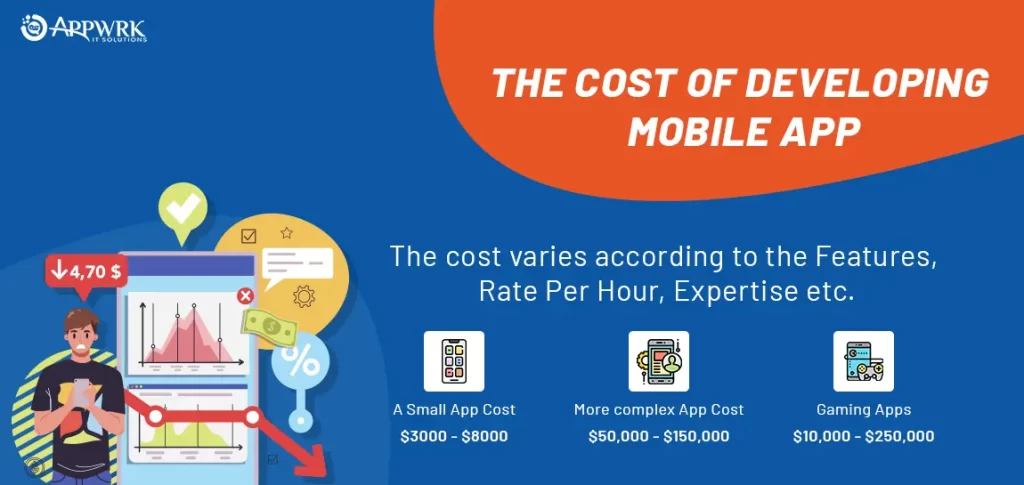
Another critical consideration you need to determine when creating a mobile app is the development cost. The app development cost depends on a few factors, including:
The type and complexity of the app you want to build (including features, functionalities, design, coding or code reuse, and more)
On average, the time needed to develop a mobile app is:
Simple mobile application – 300 hours
Medium complexity mobile application – 600 hours
Complex mobile application – 800 hours
Cost of hiring a developer
The cost of hiring a developer varies greatly depending on the development team’s size, location, pricing models, and expertise. Here at APPWRK, we offer pricing options:
Hourly – starts at $18/hour
Full-time – starts at $2800/month
Part-time – starts at $2000/month
Build Mobile Apps at 50% Less
110+ In-House Experts in iOS, Android, Native & Hybrid or Cross-platform App Development
Please note that the development cost does not end with the app’s development only. Maintaining the app can also add to the total development cost. The app maintenance cost includes but is not limited to design changes and app bug fixes.
Apart from the costs mentioned above, the development cost also includes the cost for:
Quality assurance
App publishing
Infrastructure
App security
IT support
By this time, you might already have an idea of how much you need to invest when building a mobile app. Let’s continue with picking the right platform.
Picking the Right Mobile App Development Platform
To help ensure the success of your mobile app, you must pick the right app development platform. Choosing a mobile app development platform depends significantly on your project’s goals and the type of app you will build. For instance, if your goal is to offer an app specific to one operating system only, the best route is to develop a native app.
Below are the primary development platforms for mobile applications.
Native app development – is used to develop mobile apps for one mobile OS only. If you choose this platform, you can build either an iOS or Android app.
Cross-platform app development- is used to build mobile apps that run on different platforms, operating systems, and mobile devices.
Progressive web app development – is used to develop native mobile apps that can run on a browser.
Hybrid app development – is used to create an app that combines the features of a native and progressive app. It is based on UIWebView for iOS and WebView for Android.
So, we’ve already crossed out another key factor in our list. It’s time to check the next one – choosing the development company.
Partnering with the Right Mobile App Developers
Hiring the wrong mobile app developer can negatively impact the overall outcome of your app development project. It can likewise lead to unnecessary expenses, delays, and even failure. In order to move your mobile app project in a positive direction and ensure future success, it’s imperative to partner with the right mobile app development company. Here are a few handy tips for you.
Be specific with your business needs
Choose the location of the mobile app developer
Know the expertise and specialty of the mobile app development company
Check the company’s portfolio and case studies
Read some reviews and feedback from the company’s actual previous clients posted on reliable review sites like Clutch.co
Conduct interviews
If you want to know whether partnering with a mobile app development company is worth it or not, consider checking our more detailed post about hiring the right mobile app company.
We are down to the last key factors you must consider when building an app. Up next are the different ways to earn from your app.
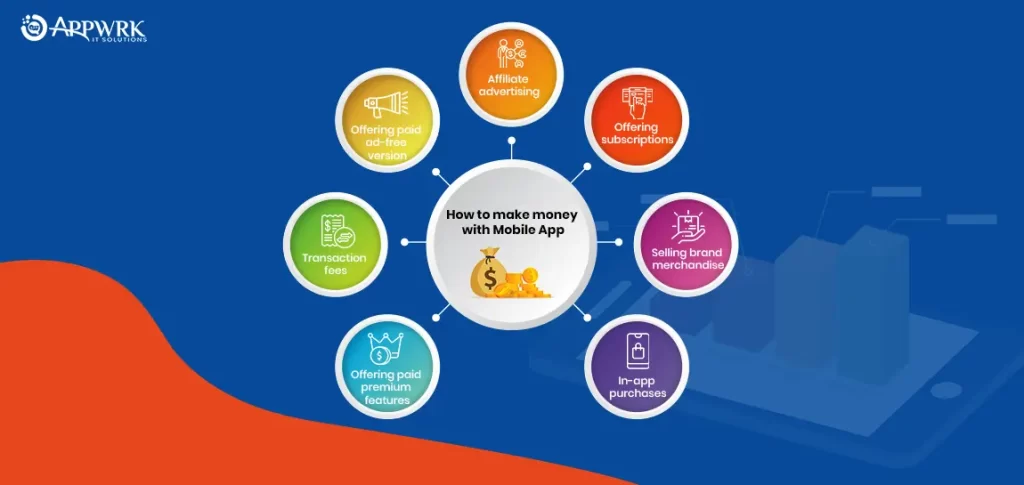
Different Ways to Earn from a Mobile App
How can I earn from my mobile app? Can I still monetize my mobile application even if I offer it as a free app, not a paid one? These two are the most common questions we hear from companies looking to make some money through a mobile app. The great news is; it is still possible to earn from a mobile app even if you initially offered it for free.
You can use different monetization strategies to earn from a mobile application. Here are some of them:
Affiliate advertising
Offering subscriptions
Selling brand merchandise
In-app purchases
Offering paid premium features (Freemium option)
Transaction fees
Offering paid ad-free version
The right question here is not about how to monetize your app but about finding the right monetization strategy suitable for your business. You must choose a way to monetize your app without compromising your goals and objectives.
For the final key factor, let’s talk about marketing an app.
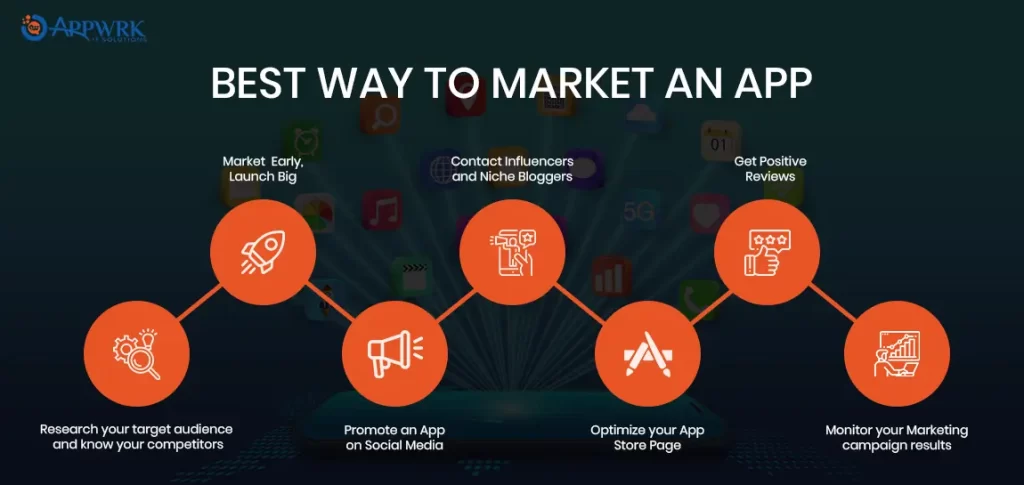
Marketing an App
A mobile application, regardless of how great the features and services it offers, is almost useless if no one knows of its existence. Thus, it would be best to let your target users know about your app before launching it. This is where marketing comes in.
The right timing and a solid marketing plan are essential for successful marketing. Making a noise about your upcoming mobile app at least two weeks before launching is a great way to promote it and ensure that the news reaches your target users at the right time.
One of the primary reasons many mobile applications fail to thrive in the highly competitive mobile app market is the failure to plan and execute the right marketing strategies on time. To help you iron out the most suitable marketing strategies for your app and to ensure they are correctly implemented, you may need the help of a professional marketing team. If you don’t have an in-house team to handle your app’s promotions, you may choose to work with a reliable digital marketing agency.
Choose a digital marketing agency specializing in mobile app promotions for a higher success rate. Digital app marketing agencies are well-versed in the ins and outs of app marketing, the latest marketing trends, as well as the entire industry in general. They can help you define and analyze your potential user base and craft the right strategies to reach them.
Conclusion
This concludes our list of key factors to consider before building a mobile application. Creating a mobile app is a lucrative investment that can help you grow your business and earn money. Considering all these key factors will help you create a better plan and more robust strategies for your next mobile app development project. It will also guide you toward building a robust, high-performing, lucrative, and intuitive mobile application.
APPWRK IT Solutions has a pool of highly experienced professional mobile app developers who are experts in their field. We can help you build a robust, high-performing, lucrative, and intuitive mobile app that meets your business requirements. Contact APPWRK to hire dedicated mobile app developers, and convert your fantastic idea into an excellent mobile app!
Gourav Khanna is the Co-founder and CEO of APPWRK, leading the company’s vision to deliver AI-first, scalable digital solutions for enterprises and high-growth startups. With over 16 years of leadership in technology, he is known for driving digital transformation strategies that connect business ambition with outcome-focused execution across healthcare, retail, logistics, and enterprise operations.
Recognized as a strategic industry voice, Gourav brings deep expertise in product strategy, AI adoption, and platform engineering. Through his insights, he helps decision-makers prioritize market traction, operational efficiency, and long-term ROI while building resilient, user-centric digital systems.